C. PLĪNIUS CALPURNIAE HISPULLAE SUAE S.
(1) Cum sīs pietātis exemplum, frātremque optimum et amantissimum tuī parī cāritāte dīlēxeris, fīliamque eius ut tuam dīligās, nec tantum amitae eī affectum vērum etiam patris āmissī repraesentēs, nōn dubitō maximō tibi gaudiō fore cum cognōveris dignam patre dignam tē dignam avō ēvādere. (2) Summum est acūmen, summa frūgālitās; amat mē, quod castitātis indicium est. Accēdit hīs studium litterārum, quod ex meī cāritāte concēpit. Meōs libellōs habet lēctitat ēdiscit etiam. (3) Quā illā sollicitūdine cum videor āctūrus, quantō cum ēgī gaudiō afficitur! Dispōnit quī nūntient sibi quem assēnsum, quōs clāmōrēs excitārim, quem ēventum iūdiciī tulerim. Eadem, sī quandō recitō, in proximō discrēta vēlō sedet, laudēsque nostrās avidissimīs auribus excipit. (4) Versūs quidem meōs cantat etiam fōrmatque citharā, nōn artifice aliquō docente sed amōre, quī magister est optimus. (5) Hīs ex causīs in spem certissimam addūcor perpetuam nōbīs maiōremque in diēs futūram esse concordiam. Nōn enim aetātem meam aut corpus, quae paulātim occīdunt ac senēscunt, sed glōriam dīligit. (6) Nec aliud decet tuīs manibus ēducātam, tuīs praeceptīs īnstitūtam, quae nihil in contuberniō tuō vīderit, nisi sānctum honestumque, quae dēnique amāre mē ex tuā praedicātiōne cōnsuēverit. (7) Nam, cum mātrem meam parentis locō verērēre, mē ā pueritiā statim fōrmāre, laudāre, tālemque, quālīs nunc uxōrī meae videor, ōminārī solēbās. (8) Certātim ergō tibi grātiās agimus, ego quod illam mihi, illa quod mē sibi dederis, quasi invicem ēlēgeris. Valē.
notes
Pliny writes a letter to the aunt and guardian of his third wife, Calpurnia, about how much he loves her.
Calpurniae Hispullae: Calpurnia Hispulla, daughter of Calpurnius Fabatus, and aunt of Calpurnia, Pliny's second (or third) wife, whom Hispulla had brought up. The fact of her having been brought up by her aunt makes it probable that her mother, as well as her father, must have died when she was a child (Prichard).
(1) Cum sīs ... dīlēxeris ... dīligās ... repraesentēs: cum causal clauses, looking forward to the main clause, nōn dubitō.
exemplum: "model."
optimum et amantissimum: "excellent and highly devoted.”
tuī: objective genitive with amantissimum, “most loving of you,” "highly devoted to you."
parī cāritāte: ablative of manner, “with equal tenderness.” Calpurnia Hispulla’s brother loved her as well as she loved him.
ut: = sicut.
nec tantum ... vērum etiam: "not merely ... but also."
affectum: "devotion," "love." OLD affectus 7. Direct object of repraesentēs.
āmissī: "deceased."
maximō tibi gaudiō: "a source of great joy for you," double dative. AG 382.
fore: = futūrum esse (AG 170.a), "that it will be," indirect statement after nōn dubitō.
dignam ... dignam ... dignam: the anaphora and lack of connectives (asyndeton) convey lively emotion.
ēvādere: “that (she has) turned out to be.” LS evado 6.
(2) Summum est acūmen: supply eī (dative of possession). Acūmen (or more fully, acūmen ingeniī) suggests astuteness, shrewdness, and good judgement (OLD acumen 4). "She is highly intelligent" (Radice).
frūgālitās: suggests sober habits and self-restraint, as well as careful management of the household finances.
Accēdit hīs: “comes in addition to these (virtues).” The subject is studium litterārum. LS accedo II.B.2.
ex meī cāritāte: meī is an objective genitive, “out of affection for me.”
concēpit: the word is apt and vivid here, for it is often used of the conception of a child (Poteat).
Meōs libellōs habet: we hear more about Calpurnia collecting Pliny’s speeches in 6.7.
lēctitat: “she reads (them) again and again.” “She pores over them.”
ēdiscit etiam: “she even learns them by heart.”
(3) Quā illā sollicitūdine: bring the afficitur from the next clause into this clause.
āctūrus: supply causam (Poteat).
cum videor āctūrus: supply esse, “whenever I seem to be about to deliver (a speech).” LS ago II.D.
cum ēgī: “whenever I have given (a speech).”
Dispōnit: supply servōs, or cursōrēs—'runners,' to report to her from on her husband's success in court.
quī nūntient sibi: the antecedent is the assumed servōs; nuntient is subjunctive in a relative clause of purpose (quī = ut). AG 531.2.
quem assēnsum: take excitārim with this clause as well.
in proximō: adv. “nearby.”
discrēta vēlō: the matchless Calpurnia sits discreetly behind a curtain while her husband recites his works to his friends (Poteat).
laudēsque nostrās: a case of Pliny’s use of the royal we, but also works if you think of them as a couple and Calpurnia getting a share in his glory.
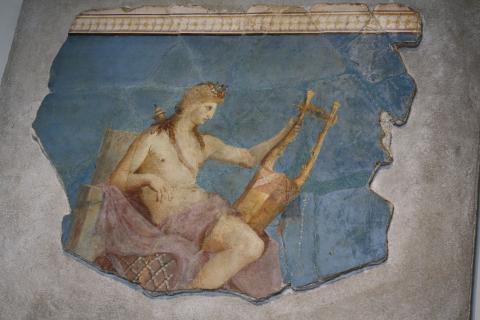
(4) fōrmatque citharā: “sets them (to music) with the cithara.” OLD formo 3. A fresco of Apollo playing the kithara was found in a building in the Forum of Rome dating to the Augustan period.
Modulārī is the more technical word in this sense (Church).
(5) in spem certissimam addūcor: + indirect statement.
nōbīs: dative with perpetuam.
in diēs: “day by day,” “daily.”
aetātem meam: one of the direct objects of dīligit. Pliny was around forty years old at this point.
Calpurnia was much younger than her husband who was now in his forties, and he admits with admirable frankness that his wife does not love him for his youth or his beauty of which he has progressively less and less (Poteat).
quae paulātim occīdunt ac senēscunt: plural because his aetātem and his corpus are both likely only going downhill from here.
glōriam diligit: this remark is really too complacent and pompous for words (Poteat).
(6) Nec aliud decet: “nothing else would be fitting (for a woman).”
contuberniō: contubernium, properly a military term ("a dwelling together in a tent"), was used by the post-Augustan writers to denote specially the society and friendship of a teacher (Church).
amāre mē ex tuā praedicātiōne cōnsuēverit: “(someone who) is inclined to love me because of your proclamation.” Pliny claims that Calpurnia loves him because her aunt set them up.
(7) cum mātrem meam parentis locō verērēre: causal cum-clause. Supply an in with parentis locō.
fōrmāre: "to train, influence" (Wescott). Supply solēbās with this infinitive.
laudāre: supply mē from the previous clause. Supply solēbās with this infinitive as well.
tālemque: take as the direct object of ōminārī solēbās, “and you were accustomed to predict (that I would become) just the sort (of man).” Correlative with qualis.
ōminārī: "to predict that I would be" (Wescott).
(8) agimus: the “we” in question is Pliny and his wife, Calpurnia.
invicem: "in turn," i.e. first a wife for Pliny, then a husband for Calpurnia (Prichard).
vocabulary
amāns –antis: loving, fond
cāritās cāritātis f.: dearness, love
amita –ae f.: paternal aunt
affectus –ūs m.: affection, attachment, love
repraesentō –āre: to exhibit, display
avus avī m.: grandfather
ēvādō ēvādere ēvāsī ēvāsus: to end up, turn out as, emerge
acūmen acūminis n.: intelligence 2
frūgālitās –ātis f.: thriftiness, self-restraint
castitās castitātis f.: integrity, uprightness; sexual purity, chastity
indicium indici(ī) n.: evidence
concipiō concipere concēpī conceptum: to produce, conceive
libellus libellī m.: little book, document
lectitō –āre: read repeatedly, be in the habit of reading
ēdiscō –discere –didicī: to learn thoroughly, study
sollicitūdō –inis f.: anxiety 3
dispōnō dispōnere dispōsuī dispōsitus: to place, arrange, distribute
nūntiō nuntiāre nuntiāvī nuntiātus: to announce
adsēnsus –ūs m.: approval, applause
excitō excitāre excitāvī excitātus: to cause
ēventus ēventūs m.: result
recitō recitāre recitāvī recitātus: to read aloud (poetry)
discrētus–a –um: set apart, separate
vēlum vēlī n.: curtain
avidus –a –um: keen, enthusiastic
versus versūs m.: line (of poetry) 4
cantō cantāre cantāvī cantātus: to sing, play
fōrmō fōrmāre fōrmāvī fōrmātus: to set to music
cithara –ae f.: the cithara or lyre, ancient stringed musical instrument from the yoke lutes family.
artifex –icis m.: an artist
concordia concordiae f.: agreement, harmony 5
paulātim: gradually
occidō occidere occidī occāsus: to go downhill
senescō senescere senuī: to grow old, deteriorate
ēducō –āre –āvī –ātum: to bring up educate 6
contubernium –ī n.: companionship
praedicātiō –ōnis f.: commendation
cōnsuēscō cōnsuescere cōnsuēvī cōnsuētus: to be accustomed to
pueritia pueritiae f.: boyhood 7
ōminōr –ārī –ātus sum: to predict
certātim: with striving or contention
invicem: alternately 8