C. PLĪNIUS TRAIĀNŌ IMPERĀTŌRĪ
Cum dīversam partem prōvinciae circumīrem, Nīcomēdīae vastissimum incendium multās prīvātōrum domōs et duo pūblica opera, quamquam viā interiacente, Gerūsian et Īsēōn absūmpsit. (2) Est autem lātius sparsum, prīmum violentiā ventī, deinde inertiā hominum, quōs satis cōnstat ōtiōsōs et immōbilēs tantī malī spectātōrēs perstitisse; et aliōquī nūllus usquam in pūblicō sīpō, nūlla hama, nūllum dēnique īnstrūmentum ad incendia compescenda. Et haec quidem, ut iam praecēpī, parābuntur; (3) tū, domine, dispice an īnstituendum putēs collēgium fabrōrum dumtaxat hominum CL. Ego attendam, nē quis nisi faber recipiātur nēve iūre concessō in aliud ūtantur; nec erit difficile cūstōdīre tam paucōs.
notes
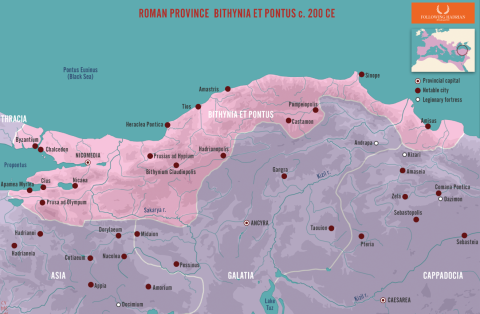
Pliny, now governor (legatus pro praetore) of the province of Bithynia and Pontus, writes to Emperor Trajan to describe a fire that broke out in Nicomedia and suggests setting up a fire department there on the Italian model.
- read more
-
Pliny was selected, probably in AD 111, by Trajan for governor (legatus pro praetore) of Bithynia and Pontus. Under the Empire the Roman provinces were divided into two classes. Those which had been long organized, which were tranquil and needed no military garrison, were administered by proconsuls sent out annually by the Senate. Those which were turbulent, or which lay on an exposed frontier, or which for any reason required a large military force, were governed by the emperor through legati appointed by himself, to serve during his pleasure. A province might at any time be transferred from one list to the other. Pontus and Bithynia had been senatorial provinces, but their administration had fallen into such disorder that Trajan found it necessary to take them over into his own hands, and to send out an imperial legate with extraordinary powers, to reorganize the government and restore order.
Book 10, containing the correspondence with Trajan, consists (with the exception of the first fifteen epistles) wholly of letters written during Pliny’s tenure of this important post. It breaks off suddenly at letter 121, and of the rest of Pliny’s life we know nothing (Wescott).
circumīrem: making a circuit, in his capacity as governor.
Nicomediae: Nicomedia was the capital of the province of Bithynia and Pontus; now called Ismid (Kingery). Founded by king Nicomedes I (Merrill).
opera: "buildings," LS opus II.B.1.
quamquam viā interiacente: the flames leaped across the street (Kingery). Ablative absolute.
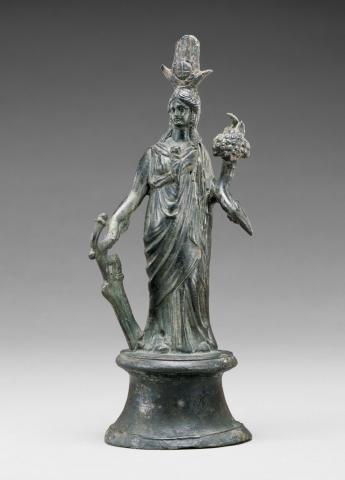
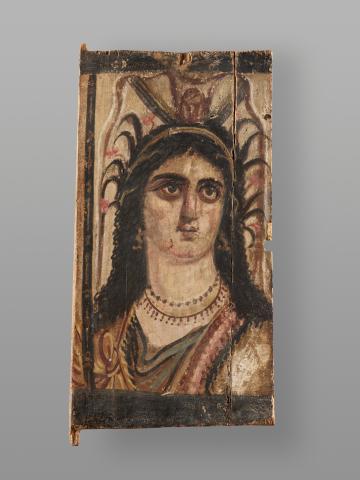
Gerusian et Iseon: Greek nouns, appositive to opera and meaning respectively “an old men’s home” and “a temple of Isis,” the Egyptian divinity (Kingery).
- read more 2
-
Gerusiae were institutions found in many Hellenistic cities, and known in Bithynia-Pontus at Nicaea, Prusias, Amastris, and Sinope. Primarily they were civic centers for the elder men of substance, organized around often around a gymnasium. They had officers, entrance fees, property, and regulations, and might also receive a subsidy from the civic revenues. Their members tended to be aristocratic, but were not always members of the decurional class. They meddle with politics, and have various religious functions, sometimes including of the imperial cult. But whether the Gerusiae had a specific administrative function besides the councils is in dispute (Sherwin-White).
The worship of the Egyptian deity Isis had spread through the Greek settlements of the Aegean Sea and of Asia Minor as early as the third century before Christ, following the lines of commerce with Egypt, perhaps because Isis was especially revered as mistress of the sea and guardian of sailors (Merrill).
absūmpsit: “destroyed.” Incendium is the subject.
sparsum: appropriate to describe the spreading of the fire by sparks and brands sown broadcast by the wind (Kingery).
violentiā … inertiā: ablatives of means describing how the fire was spread (sparsum).
satis cōnstat: "it is generally agreed that," a common idiom. LS consto II.B.2.b. Introduces indirect statement.
ōtiōsōs … perstitisse: “stood throughout as idle spectators” (Kingery).
alioquī: “and even apart from this” (Kingery).
sīp(h)ō: Greek σίφων, English “siphon,” here “fire engine” (Kingery). Probably on the principle of a large tabular syringe, with piston (Merrill).
hama: “water-bucket” for use at fires (Kingery), = ἄμη.
ad incendia compescenda: gerundive of purpose.
collēgium: in very early times the various crafts at Rome were organized into unions or “guilds,” those of each trade enjoying particular privileges and usually occupying a particular part of the city. Pliny here suggests the introduction of a similar plan in Nicomedia (Kingery).
collēgium fabrōrum: voluntary associations of this sort date often from tolerably early republican days, and appear, like certain of the “priesthoods,” to have been organized originally on a religious basis (Merrill). In their form during the late republic they may be differentiated into ritual-clubs, burial-clubs, and trade-unions (Merrill).
Pliny suggests the normal means used in Italy, but this conflicts with Trajan's mandata (Letter 10.96.7). Hence this consultation (Sherwin-White).
dumtaxat: “only” (Merrill).
nē quis nisi faber recipiātur: so that no demagogue might gain membership and manipulate the organization for political purposes (Merrill). Quis = aliquis after nē. Nisi faber: “except for a workman.” Recipiatur: “be admitted to membership” (Kingery).
iūre concessō: Trajan had ordered the dissolution of all clubs, and none could be formed without his special license (Merrill). Ablative absolute.
in aliud: “for any other purpose” (Kingery).
vocabulary
circumeo (circueō) –īre –iī (–īvī) circuitus: to go around, visit, make a circuit
Nīcomēdīa –ae, f.: Nicomedia (place)
vāstus –a –um: vast
interiaceō –ēre –uī —: to lie between
Gerūsia –ae, f.: Gerusia, old men's club
Īsēum (Īsīum) –ī, n.: Iseum, temple of Isis
absūmō –sumere –sūmpsī –sūmptum: to reduce, consume
violentia –ae, f.: violence2
inertia –ae, f.: laziness, lack of skill
ōtiōsus –a –um: at leisure
immōbilis –e: unmoved
malum malī, n.: evil, calamity
spectātor –ōris, m.: beholder, spectator
perstō perstāre perstitī perstātum: to continue standing; remain fixed
aliōquī (aliōquīn): otherwise
usquam: anywhere
sīphō(n) –ōnis, m.: a siphon; fire engine
hama –ae, f.: a water-bucket, fire bucket
instrūmentum –ī, n.: tool, furniture
incendium –I(ī), n.: fire
compescō –pescere –pescuī — : to restrain, hold back
dispiciō –ere –spexī –spectus: to see distinctly3
collēgium –iī, n.: trade-based association, guild
faber fabrī, m.: craftsman, artisan
dumtaxat: just, only, to this extent
quīnquāgēsimus –a –um: 50th (quīnquāgintā, 50)
attendō attendere attendī attentus: to pay attention
custōdiō –īre –īvī –ītus: to guard