C. PLĪNIUS TRAIĀNŌ IMPERĀTŌRĪ
Theātrum, domine, Nīcaeae maximā iam parte cōnstrūctum, imperfectum tamen, sēstertium (ut audiō; neque enim ratiō operis excussa est) amplius centiēs hausit: vereor nē frūstrā. (2) Ingentibus enim rīmīs dēsēdit et hiat, sīve in causā solum ūmidum et molle, sīve lapis ipse gracilis et putris: dignum est certē dēlīberātiōne, sitne faciendum an sit relinquendum an etiam dēstruendum. Nam fultūrae ac substrūctiōnēs, quibus subinde suscipitur, nōn tam firmae mihi quam sūmptuōsae videntur. (3) Huic theātrō ex prīvātōrum pollicitātiōnibus multa dēbentur, ut basilicae circā, ut porticūs suprā caveam. Quae nunc omnia differuntur cessante eō, quod ante peragendum est. (4) Iīdem Nicaeēnsēs gymnasium incendiō āmissum ante adventum meum restituere coepērunt, longē numerōsius laxiusque quam fuerat, et iam aliquantum ērogāvērunt; perīculum est, nē parum ūtiliter; incompositum enim et sparsum est. Praetereā architectus, sānē aemulus eius ā quō opus incohātum est, adfirmat parietēs quamquam vīgintī et duōs pedēs lātōs imposita onera sustinēre nōn posse, quia sint caementō mediī fartī nec testāceō opere praecīnctī.
(5) Claudiopolītānī quoque in dēpressō locō, imminente etiam monte ingēns balineum dēfodiunt magis quam aedificant, et quidem ex eā pecūniā, quam buleutae additī beneficiō tuō aut iam obtulērunt ob introitum aut nōbīs exigentibus cōnferent. (6) Ergō cum timeam nē illīc pūblica pecūnia, hīc, quod est omnī pecūniā pretiōsius, mūnus tuum male collocētur, cōgor petere ā tē nōn sōlum ob theātrum, vērum etiam ob haec balinea mittās architectum, dispectūrum utrum sit ūtilius post sūmptum quī factus est quōquō modō cōnsummāre opera, ut incohāta sunt, an quae videntur ēmendanda corrigere, quae trānsferenda trānsferre, nē dum servāre volumus quod impēnsum est, male impendāmus quod addendum est.
notes
Two unfinished buildings and a gymnasium badly located.
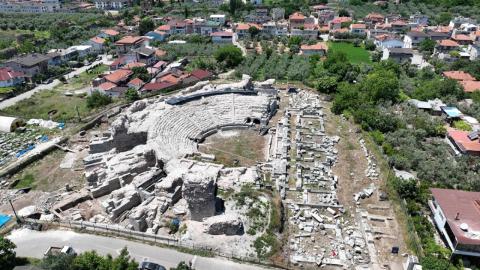
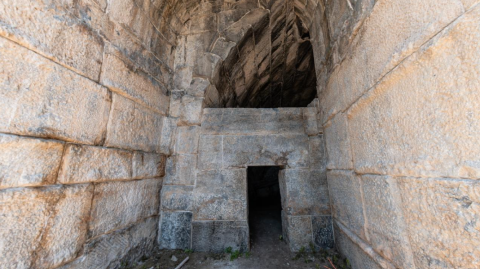
Theatrum: the Roman theatre of Nicaea is still being excavated and restored. See the photos of the site in 2024 by Carole Raddato at Following Hadrian and in Ali Kazim Öz, "The Location and Significance of the Theater at Nicaea in the Context of Roman Theaters," Oannes 2 (2025): 249–271.
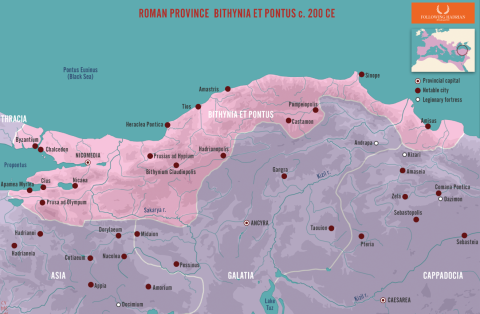
Nicaeae: a very famous city of Bithynia, scene of the first general council of the Christian Church, in AD 325. Its modern name is Iznik (Kingery).
- read more
-
The geographical situation of Nicaea was particularly fortunate. Its position on the shore of Lake Ascania (Iznik Gölü), on level and fertile ground, with wide roads for traffic that radiated from the city, made Nicaea a great Hellenistic center. Strabo (Geography 12.4.7) minutely described the foundation of the new Lysimachan city: It had a square plan 700 m to a side; the roads were arranged with perpendicular axes, following the perfect regularity of the rectangular scheme; two large arteries crossed at right angles at the center of the inhabited area; the extensions of the roads led to the four gates of the city, visible from a fixed stone placed at the center of the gymnasium, a building that thus must be supposed at the heart of the urban plan. The theater was to the SW of the city, though little remains of the building itself. Its recognizable dimensions reach a maximum of 85 x 55 m, and only part of the cavea is conserved; the orchestra and the skene have been lost. Its plan must have been Hellenistic but has been repeatedly modified (Princeton Encyclopedia of Classical Sites, "Nicaea").
maximā iam parte: “already for the most part.” Take with cōnstrūctum.
sēstertium ... amplius centiēs: sēstertium is genitive plural (i.e. sestertiōrum). By a common ellipse, this = centēna millia sestertium, "a hundred (each) thousands of sesterces" (AG 138.a). Centiē(n)s = "100 times." 100 x 100,000 = 10,000,000. Thus, "more than ten million sesterces." This is a normal way to express sums in the millions. LS sestertius I.B.3.c. Compare the large sums spent on the aqueduct at Nicomedia in letter 10.37.
neque enim ratiō excussa est: “for the records have not been investigated” (Kingery).
hausit: “has swallowed up” (Kingery).
vereor nē frūstrā: fear clause with an implied verb, “I fear that (they have done this) in vain.”
(2) dēsēdit: “has sunk," pf. > dēsīdō.
gracilis: “too light” (Kingery).
dēlīberātiōne: ablative after dignum, as normal.
sitne faciendum an sit relinquendum an etiam dēstruendum: passive periphrastics within indirect questions governed by dēlīberātiōne.
fultūrae: "buttresses," as contrasted with underground supports (Church and Brodribb).
quibus subinde suscipitur: "by means of which it is from time to time kept up." Suscipere is "to catch up something falling," hence it is here a well-chosen word (Church and Brodribb).
tam … quam: correlatives.
(3) pollicitātiōnibus: some had promised to pay for the colonnades, balconies, or galleries at the top of the cavea (Kingery).
multa dēbentur: "many (features) are owed," i.e. money for them.
ut…ut: "such as ... and," giving examples. LS ut II.A.2.c.
circā ... suprā: both govern the accusative caveam.
cessante eō: ablative absolute.
(4) āmissum: “destroyed.”
numerōsius: "more capacious," referring perhaps to the number of rooms or wings (Kingery). See OLD numerosus 1, "containing many units."
In Hellenistic cities the gymnasium was a complex of changing-rooms, exercise rooms, lecture halls, and porticoes around an open space, which acted as a wrestling ground and running track. The whole was used for the athletic and intellectual pursuit that formed a large part of Hellenistic culture. Some cities possessed several such entities. Something unusually elaborate was intended at Nicaea. But Pliny's adjectives show that the plan was for an interconnected group of buildings rather than a single pile: laxius … incompositum … et sparsum (Sherwin-White).
quam fuerat: “than it had been,” i.e. than the previous building.
aliquantum: supply pecuniae (Kingery).
perīculum est: impersonal construction, setting up a fear clause.
parum ūtiliter: “(this will be of) little use.”
eius ā quo: refers to the architectus who began the work (opus incohātum est).
adfirmat: "assert positively," "swears."
pedēs lātōs: “feet wide.” Take with quamquam vīgintī et duōs.
It is hard to understand why the buildings of a gymnasium required so vast a wall. Such a group should need only a narrow precinct wall, and the individual halls should be of no immensity, unless, as was sometimes done, the gymnasium included thermae. But that is not stated (Sherwin-White).
imposita onera: “the weight imposed (upon them) (i.e. the walls).” Direct object of sustinēre nōn posse.
quia sint caementō mediī fartī nec testāceō opere praecīnctī: order: quia mediī (pariētēs) fartī sint caementō, nec praecīnctī (sint) testāceō opere, "since the walls are filled in the middle with rubble, but are not faced with brick work." See LS neque II.D for nec = "but not." LS praecingo II. "The rubble core has no facing of brick" (Radice).
- read more 2
-
Is this whole sentence in its right place? Neither Pliny himself, nor Trajan in his reply, raises doubts about the strength of the structure, though Trajan deals briefly with every other point raised in letter 39. This sentence might have been transposed from the end of section 2, and refer to the theater. It would fit in that context as confirmation of Pliny's own view by an expert if biased witness: the outer walls, though thick, are criticized (wrongly) as merely decorative because there is no brick binding behind the stone surfacing. It would then seem that the theater was a stone building with a concrete core. The parietes would be the greater great outer wall of the complex of internal passages and arches supported by the substructiones of section 2. The topic requires local archaeological investigation (Sherwin-White).
"The theater, which was built with opus caementicium technique using rubble stone and mortar, is thought to have a height of approximately 24 m and a capacity of 10 thousand people. It differs from similar examples in Anatolia because it was raised on a flat area with vault and arch technology."
Ali Kazim Öz, "The Location and Significance of the Theater at Nicaea in the Context of Roman Theaters," Oannes 2 (2025): 250.
(5) Claudiopolītānī: Claudiopolis, modern Bolu, also known as Bythinion. It was the birthplace of Antinous, the favorite of Hadrian. The Roman stadium at Bolu has been excavated, but not the bath.
buleutae: Greek bouleutai (councillors) appointed by Trajan to the local senate (Kingery).
aut obtulērunt ... aut ... cōnferent: "either have given, or will contribute." Obtulērunt > offerō = "hand over," "deliver" (OLD 7). Conferō is the normal verb for contributing to a common fund (OLD 9). Only local funds are being used.
beneficiō tuō: ablative of cause with additī.
ob introitum: “on occasion for their introduction into office” (Kingery).
nobis exigentibus: “at my demand."
(6) illīc: at Nicaea.
hīc: at Claudiopolis.
omnī pecūniā: ablative of comparison with pretiōsius.
munus tuum: in appointing the buleutae (Kingery).
male collocētur: "be poorly spent," "badly invested," OLD colloco 10.
nōn sōlum … vērum etiam: correlatives, “not only…but also.”
dispecturum: refers to the architectus: “who shall decide.”
quōquō modo: “by any means.”
consummāre ... corrigere ... trānsferre: subjects of sit (Kingery).
opera, ut incohāta sunt: “the works as they have been begun.” Direct object of cōnsummāre.
quae videntur ēmendanda corrigere, quae trānsferenda trānsferre: “to correct what seems to need correcting, to transfer what seems to need transference.”
nē … male impendāmus: negative purpose clause.
vocabulary
Nīcaea –ae, f.: Nicaea (city)
cōnstruō –ere –strūxī –strūctus: to build
imperfectus –a –um: unfinished
sestertiūm: (gen. pl.) hundreds of thousands of sesterces
excutiō excutere excussī excussum: to investigate fully
centiēns: 100 times
hauriō haurīre hausī hastus: to drain, drink, swallow
rīma –ae, f.: cleft; crack 2
dēsīdō –ere –sēdī: to sink down
hiō hiāre hiāvī hiātus: to yawn, gape
solum –ī, n.: bottom, native territory
ūmidus –a –um: moist, damp
gracilis gracile: thin
pūtris –e: crumbling
dēlīberātiō –ōnis, f.: a deliberation, consultation, consideration
dēstruō –ere –strūxī –strūctus: to destroy
fultūra –ae, f.: a prop, buttress
substrūctiō –ōnis, f.: an under-building, foundation, substructure
subinde: here and there, occasionally
fīrmus –a –um: firm, strong
sūmptuōsus sūmptuōsa sūmptuōsum: expensive
theātrum theātrī, n.: theater 3
pollicitātiō –ōnis, f.: a promising, promise
basilica –ae, f.: a portico, basilica
porticus porticus, f.: covered walk, colonnade, portico
cavea –ae, f.: auditorium, seating area of a theater
cessō cessāre cessāvī cessātus: to cease
peragō peragere perēgī perāctum: to finish
Nicaeēnsis –e: Nicaean; of or from Nicaea 4
gymnasium –iī, n.: an athletic and social center
incendium incendi(ī), n.: fire
adventus adventūs m.: an arrival
restituō restituere restituī restitūtus: to restore
numerōsus –a –um: numerous; complex
laxus –a –um: wide, loose, spacious
aliquantum –ī, n.: some, a considerable amount
ērogō –āre: to pay out from the public treasury
incompositus –a –um: badly arranged
architectus –ī, m.: architect; inventor, designer
sānē: certainly, truly
aemulus –ī, m.: rival
incohō incohāre incohāvī incohātus: to lay the foundation; begin
affirmō affirmāre affirmāvī affirmātus: to assert
pariēs parietis, m.: wall
vīgintī; vīcēsimus –a –um: 20; 20th
caementum –ī, n.: rubble
farciō farcīre farsī fartum: to stuff
testāceus –a –um: consisting of bricks
praecingō –cingere –cinxī –cinctum: to encircle, face
Claudiopolītānus –a –um: of or from Claudiopolis 5
dēpressus –a –um: sunken, low
immineō imminēre: to threaten; overhang
balneum (balineum) –ī, n.: a bath; also balneus –ī (m.); balnae –ārum (f.)
dēfodiō –fodere –fōdī –fossus: to dig down
aedificō –āre –āvī –ātus: to build, erect, establish
būleuta –ae, m.: a councillor, a senator
introitus –ūs, m.: an entering
pretiōsus –a –um: expensive, costly, precious 6
collocō –āre –āvī –ātus: to arrange, invest
vērum: but indeed
dispiciō –spicere –spexī –spectus: to consider
sūmptus –ūs, m.: outlay, expense, cost, charge
cōnsummō –āre: to accomplish, complete, finish, perfect; unite
ēmendō –āre: to correct, amend
corrigō –rigere –rēxī –rēctus: to put right, reform
trānsferō –ferre –tulī –lātus: to bring across
impendō –pendere –pendī –pēnsum: to expend