C. PLĪNIUS TACITŌ SUŌ S.
Ais tē adductum litterīs quās exigentī tibi dē morte avunculī meī scrīpsī, cupere cognōscere, quōs ego Mīsēnī relictus (id enim ingressus abrūperam) nōn sōlum metūs vērum etiam cāsūs pertulerim. 'Quamquam animus meminisse horret, incipiam.'
(2) Profectō avunculō, ipse reliquum tempus studiīs (ideō enim remānseram) impendī; mox balineum cēna somnus inquiētus et brevis. (3) Praecesserat per multōs diēs tremor terrae, minus formīdolōsus quia Campāniae solitus; illā vērō nocte ita invaluit, ut nōn movērī omnia sed vertī crēderentur. (4) Inrūpit cubiculum meum māter; surgēbam invicem, sī quiēsceret excitātūrus. Resēdimus in āreā domūs, quae mare ā tēctīs modicō spatiō dīvidēbat. (5) Dubitō, cōnstantiam vocāre an imprūdentiam dēbeam (agēbam enim duodevīcēnsimum annum): poscō librum Titī Līvī, et quasi per ōtium lēgō atque etiam ut coeperam excerpō. Ecce amīcus avunculī quī nūper ad eum ex Hispāniā vēnerat, ut mē et mātrem sedentēs, mē vērō etiam legentem videt, illīus patientiam sēcūritātem meam corripit. Nihilō sēgnius ego intentus in librum.
(6) Iam hōra diēī prīma, et adhūc dubius et quasi languidus diēs. Iam, quassātīs circumiacentibus tēctīs, quamquam in apertō locō angustō tamen, magnus et certus ruīnae metus. (7) Tum dēmum excēdere oppidō vīsum; sequitur vulgus attonitum, quodque in pavōre simile prūdentiae, aliēnum cōnsilium suō praefert, ingentīque agmine abeuntēs premit et impellit. (8) Ēgressī tēcta cōnsistimus. Multa ibi mīranda, multās formīdinēs patimur. Nam vehicula quae prōdūcī iusserāmus, quamquam in plānissimō campō, in contrāriās partēs agēbantur, ac nē lapidibus quidem fulta in eōdem vestīgiō quiēscēbant.
(9) Praetereā mare in sē resorbērī et tremōre terrae quasi repellī vidēbāmus. Certē prōcesserat lītus, multaque animālia maris siccīs harēnīs dētinēbat. Ab alterō latere nūbēs, ātra et horrenda, igneī spīritūs tortīs vibrātīsque discursibus rupta, in longās flammārum figūrās dēhīscēbat; fulguribus illae et similēs et maiōrēs erant. (10) Tum vērō īdem ille ex Hispāniā amīcus ācrius et īnstantius, 'Sī frāter' inquit 'tuus, tuus avunculus vīvit, vult esse vōs salvōs; sī periit, superstitēs voluit. Proinde quid cessātīs ēvādere?' Respondimus nōn commissūrōs nōs ut dē salūte illīus incertī nostrae cōnsulerēmus. (11) Nōn mōrātus ultrā prōripit sē effūsōque cursū perīculō aufertur. Nec multō post illa nūbēs dēscendere in terrās, operīre maria; cīnxerat Capreās et absconderat, Mīsēnī quod prōcurrit abstulerat. (12) Tum māter ōrāre hortārī iubēre, quōquō modō fugerem; posse enim iuvenem, sē et annīs et corpore gravem bene moritūram, sī mihi causa mortis nōn fuisset. Ego contrā salvum mē nisi ūnā nōn futūrum; dein manum eius amplexus addere gradum cōgō. Pāret aegrē incūsatque sē, quod mē morētur.
(13) Iam cinis, adhūc tamen rārus. Respiciō: dēnsa cālīgō tergīs imminēbat, quae nōs torrentis modō īnfūsa terrae sequēbātur. 'Dēflectāmus' inquam 'dum vidēmus, nē in viā strātī comitantium turbā in tenebrīs obterāmur.' (14) Vix cōnsīderāmus, et nox nōn quālis inlūnis aut nūbila, sed quālis in locīs clausīs, lūmine exstīnctō. Audīrēs ululātūs fēminārum, īnfantum quirītātūs, clāmōrēs virōrum; aliī parentēs aliī līberōs aliī coniugēs vōcibus requīrēbant, vōcibus nōscitābant; hī suum cāsum, illī suōrum miserābantur; erant quī metū mortis mortem precārentur; (15) multī ad deōs manūs tollere, plūrēs nusquam iam deōs ūllōs aeternamque illam et novissimam noctem mundō interpretābantur. Nec dēfuērunt quī fictīs mentītīsque terrōribus vēra perīcula augērent. Aderant quī Mīsēnī illud ruisse illud ārdēre falsō sed crēdentibus nūntiābant. (16) Paulum relūxit, quod nōn diēs nōbīs, sed adventantis ignis indicium vidēbātur. Et ignis quidem longius substitit; tenebrae rūrsus cinis rūrsus, multus et gravis. Hunc identidem adsurgentēs excutiēbāmus; opertī aliōquī atque etiam oblīsī pondere essēmus. (17) Possem glōriārī nōn gemitum mihi, nōn vōcem parum fortem in tantīs perīculīs excidisse, nisi mē cum omnibus, omnia mēcum perīre miserō, magnō tamen mortālitātis sōlāciō crēdidissem.
(18) Tandem illa cālīgō tenuāta quasi in fūmum nebulamve discessit; mox diēs vērus; sōl etiam effulsit, lūridus tamen quālis esse cum dēficit solet. Occursābant trepidantibus adhūc oculīs mūtāta omnia altōque cinere tamquam nive obducta. (19) Regressī Mīsēnum cūrātis utcumque corporibus suspēnsam dubiamque noctem spē ac metū exēgimus. Metus praevalēbat; nam et tremor terrae persevērābat, et plērīque lymphātī terrificīs vāticinātiōnibus et sua et aliēna mala lūdificābantur. (20) Nōbīs tamen nē tunc quidem, quamquam et expertīs perīculum et exspectantibus, abeundī cōnsilium, dōnec dē avunculō nūntius. Haec nēquāquam histōriā digna nōn scrīptūrus legēs et tibi scīlicet quī requīsīstī imputābis, sī digna nē epistulā quidem vidēbuntur. Valē.
notes
In a sequel to letter 6.16, Pliny explains what happened to himself and his mother in Misenum during the eruption of Mt. Vesuvius, including a vivid and precise eye-witness description of the eruption.
Like 6.16, this letter was probably written in late 106 or early 107 AD.
Ais tē … cupere cognōscere: indirect statement.
adductum litterīs: “prompted by the letter.” LS adduco II B.
scrīpsī: the story continues from 6.16.21 (interim Mīsēnī ego et māter).
exigentī tibi: “at your request” (Kingery).
quōs: “the things which." The antecedents, metūs and cāsūs, are placed inside the relative clause, as happens very frequently in Latin, but rarely in English. AG 303.
Mīsēnī relictus: Pliny slightly misrepresents the situation here; he was not “left at Misenum” as he says. Rather, he remained at Misenum of his own accord; as he relates in 6.16.7, respondī studēre mē mālle—he “prefers to study” and would rather not accompany his uncle, Pliny the Elder, on his ultimately fatal journey.
id … ingressus: “after beginning on that topic.”
nōn sōlum … vērum etiam: correlatives, “not only…but also….”
Quamquam … incipiam: compare Aeneas to Dido, Aeneid 2.12 quamquam animus meminisse horret lūctūque refūgit, / incipiam (Kingery).
(2) Profectō avunculō: abl. absolute.
ipse: “I myself.”
mox: in Silver Latin “afterward,” rather than “soon” (Wescott).
balineum cēna somnus: supply fuit. Brisk asyndeton in a compressed narrative.
(3) solitus: “familiar” (Kingery), i.e., the earthquakes don’t make the people in that region too terrified, since they are common.
vertī: = ēvertī; supply terram as the subject of both movērī and vertī. The use of a simple verb for a compound is poetic. Compare Vergil, Eclogue 1.3 dulcia linquimus arva ("We leave our sweet fields"), where linquimus = relinquimus.
(4) sī … excitātūrus: “about to wake (her) if she were still asleep” (Kingery).
The residence of Pliny and his mother in his uncle's house suggests that Pliny's father was dead. His mother too was dead long before the date of letter 2.15, and possibly not long after 79 AD. Her name was presumably Plinia (Sherwin-White).
āreā: "courtyard." They went outdoors to avoid the danger of being crushed by a falling wall or roof.
mare ā tēctīs modicō spatiō dīvidēbat: “was dividing the sea from the house by a small space.” Ā tēctīs is ablative of separation with dīvidēbat. Modicō spatiō is ablative of means.
The house is within the town of Misenum and is built near the shore (Sherwin-White).
- read more
-
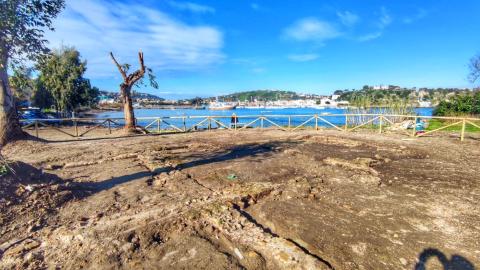
Recent cleanup efforts on an overgrown section of the beach at Bacoli uncovered the remains of a monumental Roman villa which may (or may not) have been that of Pliny the Elder. According to the 2024 announcement of the local archaeological soprintendenza, "Dating to around the first century AD, the villa was constructed in opus reticulatum, using carefully laid tufa blocks, and extends uninterrupted as far as the beach and into the seabed offshore. About ten large rooms have been identified, displaying several phases of construction, along with floor surfaces and traces of wall revetment."
(5) an: = utrum…an.
agēbam … annum: this passage determines Pliny’s exact age. He is past his 17th birthday at this moment in 79, so he must have been born between August 24th 61 and August 24th 62 (Sherwin-White).
ut coeperam: indicative in a temporal clause, “as I had begun.” Presumably this was the task that Pliny the Elder had assigned him earlier in the day.
excerpō: “I make selections.” LS excerpo II.A. Young Pliny was following his uncle’s methods of work. This is the same word that Pliny used at the end of 6.16 to invite Tacitus to excerpt his letter.
amīcus … ex Hispāniā: Pliny the Elder had been a procurator in Spain from a time late in Nero’s reign till the early part of Vespasian’s. One of his friends from that time period has come to visit.
ut … videt: supply videt with the first clause, and ut with the second. Note present tense with temporal ut, depending on historical present, “as soon as he sees.”
vērō etiam: the placement of this adverbial idiom between mē and legentem serves to emphasize how very strange anyone would find Pliny’s behavior.
illīus patientiam sēcūritātem meam corripit: “he reproaches the indolence of that (action) and my carelessness.” LS patientia II B; LS securitas I B; LS corripio II.
Nihilō sēgnius: "no less earnestly," (LS segnis b), a common phrase in Livy and other classical authors. Adverbial, modifying intentus.
ego: again, as so frequently in Pliny, the verb (eram here) is omitted (Poteat).
in librum: "upon my book."
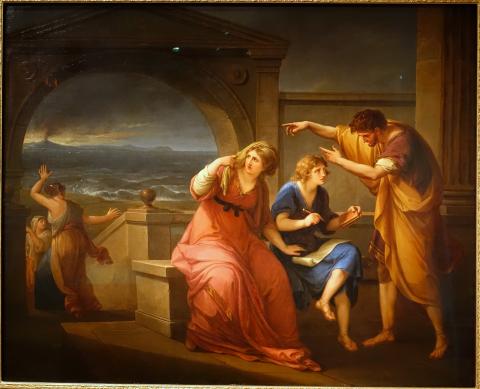
The scene was painted vividly in 1785 by Angelica Kauffmann, "Pliny the Younger and His Mother at Misenum, 79 A.D."
- read more 2
-
Pedar Foss aptly comments: "Observe the qualities Pliny ascribes to himself: constantia, imprudentia, securitas — all contextualized by the revelation of his age at the time. Constantia refers to steadiness, and evokes the elder Pliny’s lack of anxiety in 6.16. Absence of worry in the face of actual danger is a kind of foolishness; this is why his uncle’s Spanish friend is about to chastise him. Imprudentia refers not to idiocy, but simply a lack of knowledge and experience, which Pliny reflectively (and perhaps stereotypically) ascribes to his youth."
(6) hōra ... prīma: if the sun rose at 5:06 AM on August 24th, the first hour would be from then to 6:15 (Wescott).
About 6–7 am on the morning of August 25th, some time before his uncle’s death (Sherwin-White).
languidus: "faint"; this adj. involves poetic personification (Wescott).
diēs: “daylight." LS dies II.B.1.
quassātīs … tēctīs: ablative absolute.
in apertō locō: i.e., out of doors. Supply erāmus.
angustō: supply in locō.
ruīnae metus: “fear of building collapse.” Supply erat.
(7) vīsum: “it seemed best.” LS video II.B.7.c
oppidō: ablative after excēdere. The omission of the preposition ex is common.
vulgus: the common people of Misenum.
quodque in pavōre simile prūdentiae: the antecedent is provided by the following clause.
"a state of mind which, in the midst of panic, seems a sort of wisdom" (Poteat).
suō: = suō consiliō; dat. with praefert.
The residents of the little town who of course greatly respected the elder Pliny and his family and were ready now to follow blindly and in utmost confidence where the young man and his mother led (Poteat).
ingentīque agmine: “in a huge line.”
(8) Ēgressī tēcta: "after getting beyond the houses"; they had already gone outdoors (Wescott).
They pass along the neck of land to the north of the town till they reach the ground rising up to the hill behind Baiae, where they can look down onto the promontory and to the island of Capri beyond (Sherwin-White).
mīranda: supply a form of the verb esse.
vehicula: “carriages,” drawn there for their use if they decide to flee.
fulta: “propped up,” (> fulcio) agrees with vehicula which are the subject, + abl.
in eōdem vestīgiō: "in the same spot."
(9) Praetereā mare … vidēbāmus: a poetic coloring is given to this and the next to sentences by the use of verbs which suggest animate, rather than inanimate, subjects. (Wescott).
siccīs harēnīs: abl. of place where. The omission of in is poetic. AG 429.4.
igneī spīritūs tortīs vibrātīsque discursibus rupta: “burst by twisting and quivering ripples of fiery exhalation" (Foss), "rent by forked and quivering bursts of flame" (Radice). LS vibro II.A.1.
in longās flammārum figūrās dēhīscēbat: "was yawning into tall shapes of flames" (Foss), "parted to reveal great tongues of fire" (Radice).
fulguribus: “lightning flashes.” Dative with similēs and ablative with maiōrēs; translate twice.
(10) ille ex Hispāniā amīcus: ex Hispāniā has the function of an adjective to amīcus (Wescott).
tuus, tuus: the first tuus agrees with frāter and refers to Pliny's mother; the second agrees with avunculus and refers to Pliny himself (Wescott). The vōs in a later clause further solidifies the idea that he is addressing both Pliny and Pliny’s mother.
superstitēs voluit: "he wished that you would survive."
nōn commissūrōs nōs: indirect discourse dependent on respondimus: "we responded that we would not allow ourselves."
ut ... cōnsulerēmus: this clause is dependent on nōn commissūrōs nōs and answers the question of what they will not allow themselves to do.
dē salute illius incertī: “when we are uncertain about the health of that one ( Pliny the Elder).”
nostrae: supply salutī (Westcott), dative with cōnsulerēmus, “to consider our own safety.” LS consulo 4.
(11) prōripit sē: "rushed out." LS proripio I.A.
effūsōque cursū: "in full flight," "at a headlong pace," a phrase used several times by Livy and other historians.
perīculō aufertur: "hurried out of danger," vivid historical present. Aufertur = sē abstulit. OLD aufero 2.d.
dēscendere … operīre: historical infin.; translate as present tense verbs.
This seems to be the phase of the eruption when Pliny the Elder died in the great dust cloud. Hartleben suggests that the wind swung round and changed from north to north-east and east, driving the clouds seaward (Sherwin-White).
maria: direct obj.; the nūbēs continues to be the destructive force in all of these clauses.
Capreās: the island of Capri, at the south of the Bay of Naples (Westcott).
Mīsēnī quod prōcurrit: "(the part) of Misenum which juts forth," the promontory of Misenum, Capo Miseno.
(12) ōrāre hortārī iubēre: historical infin., translate as present tense verbs. Asyndeton showcases the speed with which his mother is moving.
quōquō modō fugerem: subjunctive, dependent on iubēre with ut implied; “(she orders) that I flee by any means (necessary).”
posse enim iuvenem: "I was able because I was young"; the context gives this a causal force (Westcott).
et annīs et corpore gravem: this phrase has a causal force, “(since she was) both heavy with years and in body”; apparently she was like her brother in figure (Westcott).
bene moritūram: supply esse in indirect statement with sē as its subject, “that she would die well,” i.e., die a good death. Has the effect of the apodosis of the following protasis.
sī mihi causa mortis nōn fuisset: “if she had not been the cause of my death.” Protasis of a past contrary-to-fact condition. Pliny’s mother will die happy as long as she has not been the cause of his death.
contrā: adverbial, "for my part."
manum eius amplexus: “having taken her hand.”
addere gradum: "to quicken (her) pace" (Westcott).
"I compelled her to hurry on"; the expression is colloquial (Poteat).
aegrē: adv., with pāret, “she obeyed reluctantly.”
quod mē morētur: take with incūsatque sē, “and she accused herself of slowing me down.” Subjunctive in a relative clause giving the thought of another, not the speaker.
(13) rārus: "not thick."
Stabiae and Misenum escaped the worst of the ‘precipitation’ that buried Pompeii and Herculaneum (Sherwin-White).
Respiciō ... sequēbātur: Pliny has nowhere written a more vivid sentence: thick darkness was rushing upon the refugees like a roaring torrent. The picture is terrific and magnificent. Indeed, it may fairly be said that this and the next two sections are unsurpassed in Roman literature for sheer descriptive power (Poteat).
tergīs: “at our backs.”
torrentis modō: "like a flood."
dum vidēmus: “while we (can still) see.”
strātī: "knocked down." OLD sterno 6.
comitantium turbā: “by the crowd of people following.”
The throng of terrified and helpless villagers referred to in section 7 (Poteat).
(14) nōn quālis ... quālis: correlatives, “not as if ... but as if.”
lūmine exstīnctō: ablative absolute.
Audīrēs: the vivid second person singular imperfect subjunctive pulls the reader directly into the scene: "You would hear ...," if you were there. Livy uses vidērēs in this way.
nōscitābant: "were attempting to identify" (Poteat).
hī ... illī: "some ... others."
erant quī: “there were those who.”
(15) plūrēs nusquam iam deōs ūllōs: “more (imagined) that there were no longer gods anywhere.” Supply interpretābantur and esse in indirect statement.
aeternamque illam: supply noctem, interpretābantur and esse in indirect statement.
novissimam noctem: one last indirect statement governed by interpretābantur. Supply esse.
mundō: “for the world,” take with novissimam noctem as a dative of disadvantage.
The idea that the world will end in a catastrophe of fire and flood is a common theme in Stoic thought. Pliny does not appear to share these beliefs (Sherwin-White).
quī augērent: rel. clause of characteristic, “who (were the sort of people who) would increase.”
fictīs mentītīsque terrōribus: “with made up terrors and lies,” abl. of means with augērent.
Dio (66.23) says there were "those who thought that the giants were rising again in revolt, for at this time many of their forms could be discerned in the smoke, and also the sound of trumpets was heard" (Sherwin-White).
Mīsēnī: locatve, “at Misenum,” Or could be taken as genitive with illud.
illud ruisse … illud ārdēre: in indirect statement with nuntiābant, “(they) were reporting that this part had fallen, that part was on fire.”
falsō sed crēdentibus: this is how they were reporting things (nuntiābant), “falsely but to believing (ears).”
(16) Paulum relūxit: take the lūx out of relūxit as your subject.
quod nōn diēs nōbīs: supply vidēbātur with this clause.
Hunc: refers back to the cinis.
identidem adsurgentēs: in apposition with the subject of excutiēbāmus, “standing up again and again, we were brushing it off.”
opertī atque etiam oblīsī essēmus: imperfect subjunctive verbs in the apodosis of a present contrary to fact condition with "if we had not shaken it off" implied.
(17) Possem glōriārī nōn gemitum mihi: “I could boast that there was not a groan to me,” i.e. I could boast that I didn’t make a noise. The protasis nisi crēdidissem involves a pluperfect subjunctive, making this a mixed contrafactual condition.
nōn vōcem parum fortem in tantīs perīculīs excidisse: take possem glōriārī to set up the indirect statement. The adverb parum modifies fortem, “insufficiently brave.”
nisi me, etc.: "I might boast, if I had not believed, etc." Pliny, of course, could not wish to survive the destruction of the universe (Wescott).
omnibus: neuter, "the universe" (Wescott).
mē cum omnibus, omnia mēcum perīre: indirect statement introduced by crēdidissem.
miserō: construe with solaciō, the construction of which is probably ablative of attendant circumstance or manner (Wescott).
"had not my support been founded in that miserable, though strong consolation, that all mankind were involved in the same calamity, and that I was perishing with the world itself" (Poteat).
miserō, magnō tamen mortālitātis sōlāciō: "a wretched, yet great consolation in my mortal lot."
(18) diēs vērus: not the uncertain glow of nōn diēs (“not daylight”) before (Kingery).
luridus: “discolored,” “murky.”
quālis esse cum deficit: “just as it is when there is an eclipse.” LS deficio III.B.β.
Occursābant trepidantibus adhūc oculīs: the subject is mūtāta omnia, "everything having been changed presented itself to (our) still trembling eyes,” or “we were terrified to see everything changed” (Radice). LS occurso II 2. Adhūc is nested between trepidantibus and oculīs because it modifies that phrase.
A very natural hypallage; trepidantibus properly should refer to the persons who were still trembling, rather than to their eyes (Wescott).
mūtāta: in predicate relation to omnia (Wescott).
altōque cinere tamquam nive: ablatives of means.
Regressī Mīsēnum: “having returned to Misenum.”
cūrātis utcumque corporibus: i.e., “having bathed and eaten as well as we could” (Wescott).
suspēnsum dubiamque: “full of suspense and uncertainty” (Kingery).
spē ac metū: “in (both) hope and fear.”
lymphātī: “frenzied, crazed” (Wescott). “Out of their minds with fear.” LS lympho II.
terrificīs vāticinātiōnibus: abl. of means with lūdificābantur.
lūdificābantur: "mocked," "made seem ludicrous."
This verb suggests that the lymphātī introduced into the tragic situation an element of rather horrible burlesque a sort of wild and nerve-shattering humor (Poteat).
Nōbīs: take with abeundī cōnsilium, “there was no plan for us of leaving.” i.e. we had no plan to leave.
quamquam et expertīs perīculum et exspectantibus: “although we had experienced danger and we were (still) expecting (more) danger.”
consilium: supply erat (Kingery).
donec: supply esset (Kingery).
histōriā: abl. with digna.
non scriptūrus legēs: “you will read them with no intention of writing (about them).”
tibi scīlicet quī requīsīstī imputābis: "you will of course lay the blame on yourself, who requested (them)," "you have only yourself to blame for asking for them" (Radice). OLD imputo 2.a.
This letter does not, as the 16th does, purport to be material for Tacitus’s history. Pliny's modesty about it seems exaggerated. It is a question whether he ever wrote anything finer; it is worthy, in style, of Tacitus himself (Wescott).
- read more 3
-
Antony Augoustakis writes, "Despite his final claim that this letter may not be included in his Historiae, Pliny seems strongly to believe the opposite, as becomes evident by the use of the ambiguous scilicet. By using historic infinitives and by giving the eruption of the volcano the tone of military narrative, Pliny takes pains to create an opus that his friend would appreciate: an account based on autopsy and objectivity, worthy to be incorporated in a historical work such as Tacitus' own." Antony Augoustakis, “Nequaquam Historia Digna? Plinian Style in Ep. 6.20,” Classical Journal 100.3 (2005): 272–73.
epistulā: abl. with digna.
vocabulary
abrumpō –rumpere –rūpī –ruptum: to break off, sever
vērum: but indeed, but
perferō –ferre –tulī –lātus: to endure
horreō –ēre –uī: to dread, shudder
remaneō –manēre –mānsī –mānsus: to stay behind2
impendō –pendere –pendī –pēnsum: to expend
balneum (balineum) –ī. n. (balneus –ī. m.; balnae –ārum. f.): a bath
cēna –ae, f.: dinner
inquiētus –a –um: restless, disturbed
praecēdō –cēdere –cessī –cessus: to go before3
formīdolōsus (formīdulōsus) –a –um: full of dread, frightening
Campānia –ae, f.: Campania
invalēscō –valēscere –valuī —: to become strong
irrumpō irrumpere irrūpī irrumptus: to burst in4
cubiculum –ī n.: bedroom
invicem: alternately, reciprocally
excitō –citāre –citāvī –citātus: to stir up, arouse, put into motion
resīdō –sīdere –sēdī: to sit down, sink down, shrink
area arae, f.: open space, forecourt
modicus –a –um: moderate, modest
cōnstantia –ae, f.: firmness, perseverance, bravery5
imprūdentia –ae, f.: lack of knowledge, ignorance; lack of foresight
duodēvīcēsimus –a –um: 18th (duodēvīgenti, 18)
Titus –ī, m.: Titus (name)
Līvius –ī, m.: Livy, the historian
excerpō –cepere –cerpsī –cerptum: to select, excerpt
avunculus –ī, m.: maternal uncle
nūper: not long ago
Hispānia –ae, f.: Spain
patientia –ae, f.: endurance, toughness
sēcūritās –ātis, f.: freedom from anxiety, obliviousness, carelessness
corripiō –ripere –ripuī –reptum: to rebuke, criticize
nihilum (nīlum) nihilī (nīlī), n.: nothing
sēgnis sēgne: slow
intentus –a –um: earnestly attentive
languidus –a –um: languid6
quassō –āre –āvī –ātus: to shake violently
circumiaceō –ēre — —: to border upon
angustus –a –um: narrow
ruīna ruīnae, f.: building collapse
dēmum: finally7
excēdō –cēdere –cessī –cessus: to go out/away
attonitus –a –um: astonished
pavor pavōris, m.: fear, trembling
prudentia –ae, f.: foresight
praeferō –ferre –tulī –lātus: to prefer
impellō –pellere –pulī –pulsum: to strike against
mīrandus –a –um: to be wondered at; wonderful8
formīdō–inis, f.: fear
vehiculum –ī, n.: vehicle
prōdūcō –dūcere –dūxī –ductus: to bring forward
plānus –a –um: level, flat
contrārius –a –um: opposite
fulciō fulcīre fulsī fultum: to reinforce, support
resorbeō –ēre: to suck back9
tremor –ōris, m.: trembling; quaking; tremor
repellō repellere reppulī repulsum: to drive back
siccus –a –um: dry
arēna (harēna) –ae, f.: sand
dētineō –tinēre –tinuī –tentus: to hold from or back; hold
āter atra atrum: black
horrendus –a –um: to be shuddered at; dreadful
igneus –a –um: fiery
torqueō torquēre torsī tortum: to twist
vibrō vibrāre vibrāvī vibrātus: to shake, quiver
discursus –ūs m.: a running to and fro
figūra –ae, f.: form, shape
dehīscō –hīscere –hīvī: to gape
fulgor –ōris, m. (fulgur –ūris, n.): lightning, flash, brightness
instanter: earnestly, pressingly10
superstes –itis: surviving, remaining alive after death
proinde (proin): just as
cessō cessāre cessāvī cessātus: to cease
ēvādō ēvādere ēvāsī ēvāsus: to go out
incertus –a –um: uncertain
prōripiō –ripere –ripuī –reptus: to snatch forth, rush forth11
multō: by much, greatly
nūbēs –is. f.: cloud
Capreae –ārum f.: Capri, the island
abscondō –condere –condī (abscondidī) –conditus (absconsus): to put out of sight
Mīsēnum –ī. n.: Misenum, a town in Campania
prōcurrō –currere –cucurrī (–currī) –cursus: to run forth or forward
quōquōmodō (quōquō modō): howsoever
iuvenis –is m.: youth, young man
salvus –a –um: safe, intact
ūnā: together, along with
amplector amplectī amplexus sum: to embrace
incūsō –āre –āvī –ātus: to bring a cause or case against any one; to accuse
dēnsus –a –um: thick, dense13
immineō –minēre: to threaten; overhang
torrens –ntis, m.: a rushing stream, torrent
īnfundō –fundere –fūdī –fūsus: to pour into or upon
dēflectō –flectere –flexī –flexus: to turn aside
sternō sternere strāvī strātus: to knock down, lay low
comitor –ārī –ātus sum: to accompany
obterō –terere –trīvī –trītum: to crush
cōnsīderō –āre –āvī –ātus: to consider14
illūnis –e (illūnius –a –um): moonless
nūbilus –a –um: cloudy
exstinguō –stinguere –stinxī –stinctus: to extinguish
ululātus –ūs, m.: yelling, ululation
īnfāns –antis: an infant
quirītātus –ūs, m.: wail, scream
līberī līberōrum: m. pl., children
noscitō –āre –āvī –ātum: to recognize (freqentative of nosco)
miseror –ārī –ātus sum: to feel or show pity15
nusquam: nowhere
interpretor –ārī (interpretō –āre): to explain, interpret
fīctus –a –um: feigned, false, invented
mentior mentīrī mentītus: to lie
terror terrōris, m.: fear
ruō ruere ruī rūtum: to rush
nūntiō –āre –āvī –ātus: to announce
paulum (paululum): a little16
relūceō –ēre –lūxī: to shine back or again
adventō –ventāre –ventāvī –ventātus: to come rapidly nearer
indicium –i(ī), n.: sign, evidence
sub-sistō, sistere, stitī, —: to stand still, remain standing; to stop, halt
identidem: again and again
adsurgō –surgere –surrēxī –surrēctus: to rise up; rise
excutiō –cutere –cussī –cussum: to shake off
operiō –īre –uī –tum: to cover, hide
aliōquīn (aliōquī): otherwise
oblīdō –līdere –līsī –līsum: to compress
glōrior –ārī –ātus sum: to boast of, glory in17
gemitus –ūs, m.: groaning; groan
excidō –cidere –cidī: to fall out, drop
mortālitās –ātis, f.: mortality
sōlācium –i(ī), n.: comfort
cālīgō –inis, f.: mist18
tenuō –āre –āvī –ātus: to make thin, make fine
fūmus –ī, m.: smoke
nebula –ae, f.: cloud
effulgō (effulgeō) –fulgere (–fulgēre) –fulsī : to shine forth or brightly; be effulgent
lūridus –a –um: pale yellow, discolored, murky
occursō –āre āvi –ātus: to run to meet
trepidō –āre –āvī –ātus: to be agitated
nix nivis, f.: snow
obdūcō –dūcere –dūxī –ductus: to draw over, cover over
regredior –gredī –gressus sum: to go back, return19
utcumque (utcunque; utquomque; ut cumque): in whatever way, however; according as, whenever; at any event, at any rate
suspendō –ere –ī –sum: to hang
praevaleō –valēre –valuī —: to be stronger, have superior power
persevērō –āre –āvi –ātus: to persist, persevere
lymphō, lymphāre: to drive out of one's senses, to distract with fear, to make mad
terrificus –a –um: causing terror
vāticinātiō –ōnis, f.: a prophecy, prediction
lūdificor, lūdificārī or lūdificō, lūdificāre: to mock, turn to ridicule
nēquāquam: by no means20
historia –ae, f.: a narrative of past events, history
requīrō –ere –sīvī –sītus: to seek
imputō –putāre –putāvi –putātus: to enter as a debt to (a person), impute, ascribe (fault) to + dat.