C. PLĪNIUS TACITŌ SUŌ S.
(1) Petis ut tibi avunculī meī exitum scrībam, quō vērius trādere posterīs possīs. Grātiās agō; nam videō mortī eius, sī celebrētur ā tē, immortālem glōriam esse prōpositam. (2) Quamvīs enim pulcherrimārum clāde terrārum, ut populī ut urbēs memorābilī cāsū, quasi semper vīctūrus occiderit, quamvīs ipse plūrima opera et mānsūra condiderit, multum tamen perpetuitātī eius scrīptōrum tuōrum aeternitās addet. (3) Equidem beātōs putō, quibus deōrum mūnere datum est aut facere scrībenda aut scrībere legenda, beātissimōs vērō quibus utrumque. Hōrum in numerō avunculus meus et suīs librīs et tuīs erit. Quō libentius suscipiō, dēposcō etiam quod iniungis.
(4) Erat Mīsēnī classemque imperiō praesēns regēbat. Nōnum kal. Septembrēs hōrā ferē septimā māter mea indicat eī adpārēre nūbem inūsitātā et magnitūdine et speciē. (5) Ūsus ille sōle, mox frīgidā, gustāverat iacēns studēbatque; poscit soleās, ascendit locum ex quō maximē mīrāculum illud cōnspicī poterat. Nūbēs—incertum procul intuentibus ex quō monte (Vesuvium fuisse posteā cognitum est)—oriēbātur, cuius similitūdinem et fōrmam nōn alia magis arbor quam pīnus expresserit. (6) Nam longissimō velut truncō ēlāta in altum quibusdam rāmīs diffundēbātur, crēdō quia recentī spīritū ēvecta, dein senēscente eō dēstitūta aut etiam pondere suō vīcta in lātitūdinem vānēscēbat; candida interdum, interdum sordida et maculōsa, prout terram cineremve sustulerat.
(7) Magnum propiusque nōscendum ut ērudītissimō vīrō vīsum. Iubet liburnicam aptārī; mihi sī venīre ūnā vellem facit cōpiam; respondī studēre mē mālle, et forte ipse quod scrīberem dederat. (8) Ēgrediēbātur domō; accipit cōdicillōs Rectīnae, Tascī, imminentī perīculō exterritae (nam villa eius subiacēbat, nec ūlla nisi nāvibus fuga): ut sē tantō discrīminī ēriperet ōrābat. (9) Vertit ille cōnsilium et quod studiōsō animō incohāverat obit maximō. Dēdūcit quadrirēmēs, ascendit ipse nōn Rectīnae modo sed multīs (erat enim frequēns amoenitās ōrae) lātūrus auxilium. (10) Properat illūc unde aliī fugiunt, rēctumque cursum rēcta gubernācula in perīculum tenet adeō solūtus metū, ut omnēs illīus malī mōtūs, omnēs figūrās, ut dēprēnderat oculīs dictāret ēnotāretque.
(11) Iam nāvibus cinis incidēbat, quō propius accēderent, calidior et dēnsior; iam pūmicēs etiam nigrīque et ambustī et frāctī igne lapidēs; iam vadum subitum ruīnāque montis lītora obstantia. Cūnctātus paulum an retrō flecteret, mox gubernātōrī ut ita faceret monentī 'Fortēs' inquit 'fortūna iuvat: Pomponiānum pete.' (12) Stabiīs erat dirēmptus sinū mediō (nam sēnsim circumāctīs curvātīsque lītoribus mare īnfunditur); ibi quamquam nōndum perīculō adpropinquante, cōnspicuō tamen et (cum crēsceret) proximō, sarcinās contulerat in nāvēs, certus fugae sī contrārius ventus resēdisset. Quō tunc avunculus meus secundissimō invectus, complectitur trepidantem cōnsōlātur hortātur, utque timōrem eius suā sēcūritāte lēnīret, dēferrī in balineum iubet; lōtus accubat cēnat, aut hilarīs aut (quod aequē magnum) similis hilarī.
(13) Interim ē Vesuviō monte plūribus locīs lātissimae flammae altaque incendia relūcēbant, quōrum fulgor et clāritās tenebrīs noctis excitābātur. Ille agrestium trepidātiōne ignēs relictōs dēsertāsque vīllās per sōlitūdinem ārdēre in remedium formīdinis dictitābat. Tum sē quiētī dedit et quiēvit vērissimō quidem somnō; nam meātus animae, quī illī propter amplitūdinem corporis gravior et sonantior erat, ab iīs, quī līminī obversābantur, audiēbātur. (14) Sed ārea ex quā diaeta adībātur ita iam cinere mixtīsque pūmicibus opplēta surrēxerat, ut, sī longior in cubiculō mora, exitus negārētur. Excitātus prōcēdit, sēque Pomponiānō cēterīsque quī pervigilāverant reddit. (15) In commūne cōnsultant, intrā tēcta subsistant an in apertō vagentur. Nam crēbrīs vastīsque tremōribus tēcta nūtābant, et quasi ēmōta sēdibus suīs nunc hūc nunc illūc abīre aut referrī vidēbantur. (16) Sub dīō rūrsus quamquam levium exēsōrumque pūmicum cāsus metuēbātur, quod tamen perīculōrum collātiō ēlēgit; et apud illum quidem ratiō ratiōnem, apud aliōs timōrem timor vīcit.
Cervīcālia capitibus imposita linteīs cōnstringunt; id mūnīmentum adversus incīdentia fuit. (17) Iam diēs alibī, illīc nox omnibus noctibus nigrior dēnsiorque; quam tamen facēs multae variaque lūmina solvēbant. Placuit ēgredī in lītus, et ex proximō adspicere ecquid iam mare admitteret; quod adhūc vastum et adversum permanēbat. (18) Ibi super abiectum linteum recubāns semel atque iterum frīgidam aquam poposcit hausitque. Deinde flammae flammārumque praenūntius odor sulpuris aliōs in fugam vertunt, excitant illum. (19) Innītēns servolīs duōbus adsurrēxit et statim concīdit, ut ego colligō, crassiōre cālīgine spīritū obstrūctō, clausōque stomachō, quī illī nātūrā invalidus et angustus et frequenter aestuāns erat. (20) Ubi diēs redditus (is ab eō quem novissimē vīderat tertius), corpus inventum integrum inlaesum opertumque ut fuerat indūtus: habitus corporis quiēscentī quam dēfūnctō similior.
(21) Interim Mīsēnī ego et māter—sed nihil ad historiam, nec tū aliud quam dē exitū eius scīre voluistī. Fīnem ergō faciam. (22) Ūnum adiciam, omnia mē quibus interfueram quaeque statim, cum maximē vēra memorantur, audieram, persecūtum. Tū potissima excerpēs; aliud est enim epistulam aliud historiam, aliud amīcō aliud omnibus scrībere. Valē.
notes
Pliny writes to the senator and historian Tacitus about the heroic death of Pliny's uncle, Pliny the Elder, in the eruption of Mt. Vesuvius in AD 79.
- read more
-
Based on its inclusion with other datable letters in Book 6, Sherwin-White (pp. 36 and 371) dates this letter to late 106 or early 107 AD, some 27 years after the events described. The structure is as follows:
Preface to Tacitus (1–3); Pliny the Elder observes the pine-tree shaped column of ash and pumice from afar (4–6); he sails boldly in to rescue residents of the coast (7–10); unable to reach Stabiae, he puts in at the villa of his friend Pomponianus and attempts to comfort him in his panic (11–12); Pliny's calm demeanor on the terrifying night of August 24–25 (13–16); his death on August 26 (16–20); a final note to Tacitus (21–22).
Carole Newlands writes: "According to Pliny, Tacitus asked for an account not of the eruption but of the death of Pliny's uncle, Pliny the elder, while on a rescue mission across the bay. Pliny's first letter is an example of a burgeoning genre of imperial times, exitus illustrium virorum, the deaths of famous men who often acted as martyrs either to a political cause, or, as here, to a heroic mission. In 5.5.3 Pliny places this genre “between everyday speech and history,” a classification that might also characterize the epistolary form, which in the ancient world traditionally endorsed a plain style combined with the more elevated quality of literary charm. By focusing moreover on one person, his uncle, rather than the thousands suffocated in volcanic fumes and ash, Pliny reduces the catastrophe to a human dimension." Carole Newlands, “The Eruption of Vesuvius in the Epistles of Statius and Pliny,” in John Miller and Anthony Woodman, eds., Latin Historiography and Poetry in the Early Empire: Generic Interactions (Brill, 2010), p. 108.
(1) ut … scrībam: indirect command, introduced by petis.
trādere posterīs: Tacitus's account of the eruption of Vesuvius and of the elder Pliny's death was probably in one of the lost books in his Histories; compare the expression of confidence in the immortality of Tacitus's work in 7.33 (Westcott).
Tacitus was writing the first of his great historical works, Historiae, covering the time from Nero’s death to that of Domitian. Only four books and part of the fifth remain, not including, unfortunately, his account of this catastrophe (Kingery).
quō: introduces a relative clause of purpose; “so that” or “in order that,” or simply “that.”
Grātiās agō: literally, “I give thanks to you,” but more idiomatically, “gladly!”
mortī: dative with propositām.
sī celebrētur ā tē: “if it should be celebrated by you,” pres. subj., in the protasis of a future less vivid condition.
prōpositam: "is in store for" (Westcott); “is set out for” ( + dat.).
(2) Two concessive clauses with perfect subjunctive are followed by a main clause with a confident future indicative: Quamvīs ... occiderit, quamvīs ... condiderit, multum tamen ... addet. Pliny expresses admiration for Tacitus' literary gifts and hopes that being included in Tacitus' work will give his uncle even more literary immortality than his (the elder Pliny's) writings will provide.
pulcherrimārum … terrārum: the lovely country around the Bay of Naples (Westcott).
clāde: “in the destruction,” take with occiderit, "perished" (LS occido2 II).
ut … ut: correlatives, “as did both … and.” Supply occiderint.
urbēs: Pompeii, Herculaneum, Stabiae (Westcott).
memorābilī cāsū: ablative of cause, “because of the memorable misfortune,” i.e., the eruption of Mt. Vesuvius.
quasi semper vīctūrus: supply Plinius, referring to Pliny the Elder (Westcott). Fut. act. ptc. > vivo, “as if he will live forever." Pliny will go down in history not only due to his own writings, but also due to the manner of his death.
mānsūra: lit., "things about to remain,” i.e., "destined to last" because of their scholarly and literary value. Pliny the Elder's encyclopedic Natural History survives. He also wrote now lost historical works.
condiderit: "composed," LS condo I.A.c.
multum: adverbial, "greatly."
perpetuitātī: "eternal fame," dative with addet.
scrīptōrum tuōrum aeternitās: it is curious that Tacitus's account should have been lost, and that this one should have survived. The historian can hardly have given as detailed a narrative as this (Westcott).
(3) beātōs: supply esse in indirect discourse dependent on putō.
quibus … datum est: "to whom it is given by the gift of the gods." The infinitives facere and scribere are the subjects of datum est.
scrībenda … legenda: "worth writing about … worth reading”; note the assonance. This is also an instance of substantival gerundive (Westcott).
beātissimōs vērō: supply putō from the previous clause.
quibus utrumque: supply datum est. Utrumque refers back to facere scribenda … legenda.
Hōrum: viros beātissimōs.
suīs librīs … tuīs: ablative of cause, “(both) because of his own book and because of yours” (Kingery).
Quō: “(this is) why,” “for this reason.” LS quo I.B.2.
libentius: “more willingly.”
dēposcō etiam: almost parenthetical: "I even demand (the task)," rather than simply agreeing to do it (suscipio). There’s an id understood before the quod.
(4) Erat: Plinius.
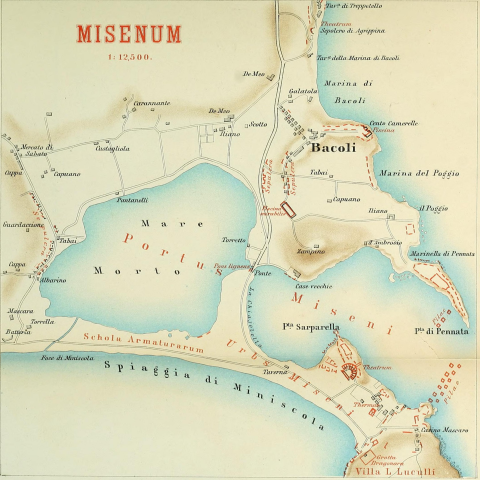
Mīsēnī: locative; Misenum (mod. Miseno) was the chief station of the Roman navy on the west coast, as Ravenna was the station on the Adriatic, from the time of Augustus. (Suetonius, Augustus 49 Classem Miseni et alteram Ravennae ad tutelam Superi et Inferi maris collacavit.) Misenum was ten or twelve miles from Neapolis, at the promontory forming the western point of the bay of Baiae. Map of the Roman Monuments of Misenum in 1890.
classemque ... regēbat: “was in control of the fleet.”
imperiō: “with power to command.”
Pliny is using the term loosely here. The prefect did not have the powers of an imperial legate. He needed only enough authority to maintain discipline in a peaceful establishment (Sherwin-White).
praesēns: adv., “at hand,” “in person.”
Nōnum kal. Septembrēs: i.e., ante diem nōnum Kalendās Septembrēs, the ninth day before the Kalends of September (counting inclusively), so August 24, although later scholars often take the date of the eruption to have been in mid-October.
The year, AD 79, is known from Cassius Dio (Xiphilinus) 66.21, who places it in the first year of Titus, and from Eusebius and other chronographers. The hour, counted from sunrise, would be between 2 and 3 p.m. (Sherwin-White).
Eī: dative with indicat, which sets up the indirect statement that follows.
inūsitātā et magnitūdine et speciē: ablatives of respect describing the nūbem.
In the account of Xiphilinus, which gives a description of the first phase of a Vesuvianic type of eruption, the catastrophe begins with the preliminary rumblings and a tremendous explosion, the volcano hurling out great rocks followed by torrents of flame and smoke. Pliny’s observation evidently begins at this moment, when the subterranean steam has cleared the vent of the material that was choking it. None of Pliny’s household appears to have heard a noise (Sherwin-White).
(5) Ūsus ille sōle: lit, “that one (i.e., Pliny) having used the sun,” "having been out in the sun."
frīgidā: = frīgidā aquā, ablative because of ūsus, “having taken a cold plunge."
gustāverat: "had had a light lunch." OLD gusto 3.
poscit: "asked (a servant) for." Historical present in a vivid narrative (AG 463). Likewise ascendit.
Maximē: "best," "most easily," modifying conspicī.
incertum: supply erat.
procul intuentibus: “to those watching from far off.”
ex quō monte: supply oriēbātur from the next clause.
Vesuvium: the previous eruptions of this mountain had been so long before that there was no record or tradition of them. The volcano was covered in vegetation up to its summit. The present cone of Vesuvius proper did not then exist; what is called Monte Somma was then the highest peak (Wescott).
Strabo (Geography 5.4.8), speaking as an eye-witness, shows that in his own day the top of the mountain was relatively level and that the crater was worn down and filled in. Diodorus (Library 4.21.5), likewise, confirms Strabo’s implication that the mountain was believed to be harmless. According to Livy (8.9.1), the mountain had played a historic part in the early wars. And according to Appian (Civil Wars 1.116), the mountain had been the base camp of Spartacus and his cohorts (Sherwin-White).
nōn alia … quam pīnus: “no other tree (more) than the pine.” The Mediterranean pine (Pinus pinea) is shaped like an umbrella. Note the interlocked word order.
(6) Pliny explains the shape of the cloud, then describes its color. The structure is Nam ... ēlāta ... diffundēbātur, crēdō quia ... ēvecta, dein ... dēstitūta aut ... vīcta ... vānēscēbat; candida (erat) interdum, interdum sordida et maculōsa, prout ... sustulerat.
longissimō velut truncō: “in a sort of very long trunk." Ablative with ēlāta. Note the series of five ablatives followed by a verb or participle.
in altum: “into the air,” “on high.”
quibusdam rāmīs: "into some branches," abl. with diffundēbātur.
crēdō quia: “I imagine (it behaved this way) because....”
recentī spīritū ēvecta: “thrust upwards by the first blast” (Radice).
Pliny shows himself to be a true pupil of his uncle. His speculation is as careful as his observation, despite his refusal to seek field experience. His account contains none of the nonsense about giant specters imported into the story by Dio (Sherwin-White).
senēscente eō dēstitūta: "abandoned as it (the first blast) became exhausted," (LS senesco II.B.2), “left unsupported as the pressure subsided” (Radice).
etiam pondere suō vīcta: “even having been conquered by its own weight.” Pondere suō is an ablative of means. The nūbēs continues to be subject of all of these parallel perfect participles.
in lātitūdinem vānēscēbat: vānēscēbat = ēvānēscēbat; “was disappearing into its width,” "it spread out and gradually dispersed" (Radice). This is the main clause after all those perfect participles.
interdum, interdum: (adv.) “sometimes…other times….”
prout: “in accordance with.”
sustulerat: > tollō, "lift up."
(7) The narrative become swift and vivid, with short clauses and verbs primarily in the historical present.
Magnum ... vīsum: supply est, "it seemed an important thing." LS video II.B.7.c.
ut: "as is natural (for)," "since he (was)." LS ut I.B.4.c.
ērudītissimō vīrō: dative with vīsum (est), as normal.
liburnicam: a light, swift galley, named from those of the Liburnian pirates of Dalmatia.
ūnā: (adv.) “together with (him),” "along." Supply sēcum.
facit cōpiam: "gave the opportunity” + dative mihi, which is emphatic by position. Historical present.
respondī: + indirect statement. Perfect tense.
quod scrīberem: “(a thing) which I was to write,” relative clause of purpose (AG 531.2). Pliny the elder had given Pliny the younger an assignment.
dederat: supply mihi.
(8) accipit cōdicillōs: “he received a note.”
RectīnaeTascī: "from Rectina (wife) of Tascius." Rectīnae is genitive with codicillos. Since Roman women typically had only one name, it was normal to identify them by their husband's name in the genitive. Compare Clodia Metellī.
imminentī perīculō: ablative of cause with exterritae, “frightened because of the imminent danger.” Exterritae modifies Rectīnae.
subiacēbat: supply sub monte.
nisi nāvibus: ablative of means, “except by ship(s).”
ut sē tantō discrīminī ēriperet ōrābat: order: orabat ut se eriperet tanto discrimini. Orabat introduces an indirect command.
tantō discrīminī: dative after ēriperet.
(9) Vertit ille cōnsilium: “he changed his plan.” Historical present.
quod: "(an enterprise) which."
obit maximō: supply animō. "He took on with a very great spirit," "he completed as a hero" (Radice). See OLD obeo 5.a, "to go (voluntarily) into, accept, take on (situations, tasks, etc.)."
quadrirēmēs: the main fleet, which Pliny the elder oversaw. A type of galley with four men per oar, much bigger ships than the Liburnica.
nōn Rectīnae modo sed multīs: “not just to Rectina but to many (people).” Datives with auxilium.
erat enim frequēns amoenitās ōrae: “for the pleasantness of the shore was crowded.” One might expect ōrae to be nominative with amoenitās in the ablative, but this unexpected combination foregrounds the beauty of the place. The shore is crowded because it is pleasant.
lātūrus auxilium: “intending to bring help.” Future participle used to express purpose. AG 499.2.
(10) illūc unde: “to the place from which.”
rēctumque cursum rēcta gubernācula: direct objects of tenet. Anaphora and asyndeton indicative of high emotion.
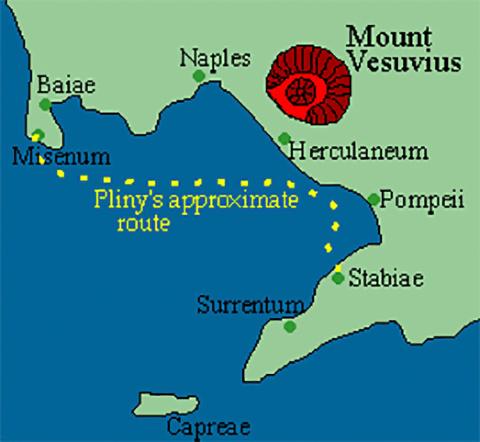
Sketch of Bay of Naples in 79AD showing the approximate route taken by Pliny the Elder.
adeō ... ut ... dictāret ēnotāretque: result clause.
ut … dēprēnderat: "as he had observed them." LS deprehendo II.B. Note the indicative mood.
illīus malī: “of that evil,” i.e., the eruption.
omnēs ... mōtūs, omnēs figūrās: anaphora and asyndeton indicative of high drama.
(11) quō propius accēderent: “the nearer they approached,” working with calidior et densior. Quō is ablative of degree of difference, common with a comparative. AG 414.a.
frāctī igne: “broken by fire.” Nigrī, ambustī, and frāctī all modify lapidēs.
The dust and stones predominate in this account. The main products of a Vesuvian type of eruption are steam, dust, and stones, sometimes accompanied by lava. In 79, Campania was spared the streams of lava that spread through the area in 1943–44 (Sherwin-White).
vadum subitum: supply est, “suddenly they were in shallow water" (Radice).
In 6.20.9 the rising of the sea-bed is more accurately attributed to terrestrial movement. Either way this is the reason for Pliny’s change of course (Sherwin-White).
lītora obstantia: “shores standing in the way,” i.e. "shores blocked by" ( + abl.). The anaphora (Iam ... iam ... iam) and omission of verbs indicate breathless drama.
paulum an: adv., “a little bit about whether.”
gubernātōrī ut ita faceret monentī: dative with inquit, “he says to the helmsman advising him to do this.” Monenti sets up the indirect command. The ut ita faceret refers to the fact that the helmsman is advising Pliny to turn around.
Pomponiānum pete: Pomponiānum = Pomponianus’ house. He decides to change course, since he cannot get to Rectina.
(12) Stabiīs erat dirēmptus sinū mediō: the subject is Pliny the elder, “he was separated from Stabiae by the intervening bay.” OLD medius 3. Pliny the younger makes it clear that Pliny the elder could not make it to Rectina. Stabiīs is an ablative of separation. Sinū mediō is ablative of means.
Sketch of Bay of Naples in 79AD showing the approximate route taken by Pliny the Elder.
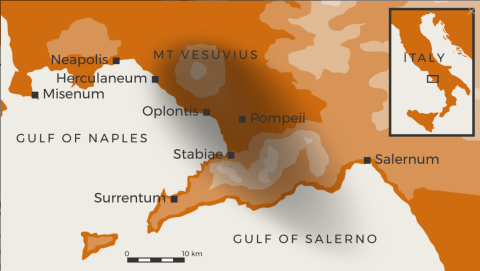
The width of the inner bay of Stabiae separated Pliny, who was somewhere in the neighborhood of Herculaneum at the time, from Stabiae. The Sarno delta has advanced the ancient shoreline some two miles westward from Pompeii (Sherwin-White).
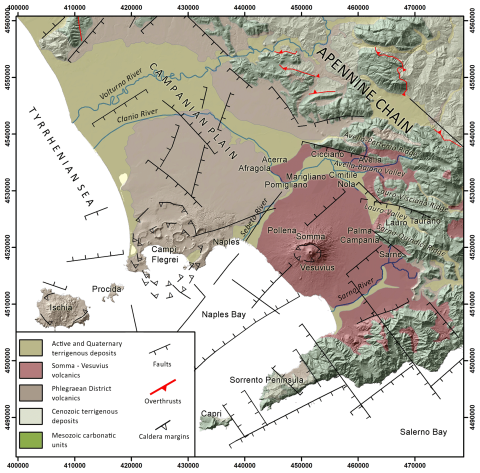
Geological and structural sketch of the Campania region.
sēnsim circumāctīs curvātīsque lītoribus mare īnfunditur: "the sea flows into shores (that are) gradually bent round and curved," i.e. "the shore gradually curves round a basin filled by the sea" (Radice).
ibi: at Pomponianus' villa.
cōnspicuō tamen et (cum crēsceret) proximō: "though it was evident, and (would be) very close, when it grew," or "since it was growing."
The danger would be immediate as soon as the shower of ashes, etc., from the mountain should extend itself. For the time being this was prevented by the wind blowing on shore (Wescott).
contulerat: the implied subject is Pomponianus or a member of his household.
certus fugae: like Vergil, Pliny uses certus + gen. meaning, “determined on flight,” or “determined to flee.”
sī contrārius ventus resēdisset: “if the contrary wind (had) settled down.”
Cooler air pouring into the hot centre from seaward makes a great sea rise too strong for Pomponianus’ crews or the quadriremes. Hence the many failed attempts to flee by sea. This adverse wind kept the worst of the dust and stones away from Misenum (Sherwin-White).
A strong northwest wind had now arisen, and kept Pomponianus wind-bound, while it brought Pliny with the ashes. The prevalence of this wind shows why Naples escaped (Holbrooke).
Quō ... secundissimō: supply ventō.
trepidantem: supply Pomponianum.
ut ... lēnīret: purpose clause.
quod: “a thing which.”
similis hilarī: “like a cheerful person,” “pretending to be cheerful.” Hilarī is dative after similis as normal, though the genitive is also used (AG 385.c.2).
(13) tenebrīs noctis excitābātur: “was intensified by the darkness of the night.”
agrestium trepidātiōne: “because of the fear of the peasants.” Pliny blames the fires on peasants leaving bonfires burning when they abandoned their homes.
per sōlitūdinem: “through the wilderness,” or "because they had been abandoned."
vērissimō quidem somnō: “in a very deep sleep indeed.”
meātus animae: “the movement of his breath,” i.e., his snores. This is how we know he was sleeping very deeply.
quī līminī obversābantur: “those who were minding the door,” OLD observo 2.c. LS limen I.B.1. The accusative would be more normal with this verb.
(14) ārea: "courtyard."
ex quā diaeta adībātur: "giving access to his room" (Radice). diaeta = cubiculum.
cinere mixtīsque pūmicibus opplēta surrēxerat: Pliny is lucky he got out when he did, because this is exactly how many in Pompeii died.
These circumstances account for the bodies found in the excavations, of those that failed to escape (Sherwin-White).
exitus negārētur: supply eī.
(15) In commūne: adverbial.
an: = utrum … an.
nūtābant: “kept shaking.”
nunc hūc nunc illūc: “now this way, now that way,” "to and fro."
(16) Sub dīō: “outside.”
quod tamen perīculōrum collātiō ēlēgit: “however, a comparison of the risks prompted this choice,” i.e., being outside with the pumice stones and ash. LS collatio II E.
apud illum: “in his case,” giving Pliny’s motivation.
apud aliōs: “in their case(s),” giving everyone else’s motivation.
incīdentia: neut. pl., “falling (things).”
(17) Iam diēs alibī: “now it was day elsewhere.” This is a description of the second day of the eruption, August 25th, according to Pliny.
omnibus noctibus: ablative of comparison with nigrior dēnsiorque.
lūmina: "lamps."
solvēbant: "broke up." OLD solvo 12.
ecquid iam mare admitteret: indirect question after adspicere, “whether the sea would now permit access.”
(18) excitant illum: "roused him to stand up" (Radice). Vivid historical present.
(19) ut ego colligō: “as I gather.” Pliny the younger learned this secondhand from survivors who were there.
stomachō: “windpipe,” “esophagus.”
He was perhaps asthmatical, whence the heavy snores of section 13, and died the more quickly, like the victims of London “smog.” There was nothing mysterious about the cause of death, even if Pliny's diagnosis is not medically sound in detail. The lungs, not the windpipe, were troubled (Sherwin-White).
frequenter aestuāns: “frequently inflamed.”
(20) Ubi diēs redditus: this is the morning of the 26th of August, according to Pliny’s account.
is ab eō quem novissimē vīderat tertius: “and it was the third day from the last (day) which he had seen.” Pliny the younger here is making a play on the concept of the novissimus dies being the last day a man would see, but for Pliny the elder this is not strictly true, since there was no daylight on his final day on earth.
Corpus inventum integrum inlaesum opertumque: note the assonance of inventum integrum inlaesum. The state of Pliny’s body implies that he likely died from inhaling noxious gasses from the eruption.
ut fuerat indūtus: “as he had been dressed.”
quiēscentī quam dēfūnctō: datives with similior, “more similar to (someone) sleeping than (someone) dead.”
(21) Mīsēnī: locative, “at Misenum.” In 6.20, Pliny the younger will give an account of what he and his mother experienced at Misenum.
nihil ad historiam: “not of any historic interest" (Radice), i.e., would not be included in Tacitus's Histories, which focuses on major public figures and political events.
nec aliud quam: the nec negates the aliud quam, “and…nothing other than.”
(22) Ūnum adiciam: sets up the indirect statement that follows.
omnia mē, quibus interfueram, quaeque statim, cum maximē vēra memorantur, audieram, persecūtum: order: mē persecūtum (esse) omnia, quibus interfueram, quaequae statim audi(v)eram, cum maximē vēra memorantur. Omnia and statim are emphatic by position. He has not left anything out, and it is all based on reports given immediately after the events.
persecūtum: supply esse, "have recounted." OLD persequor 8.
Pliny received immediate news at Misenum of his uncle’s death from Pomponianus and the slaves, a factual element that underlies the much adorned historical and biographical products of this age. Pliny must have questioned his informants very carefully to secure the details given (Sherwin-White).
potissima: n. pl. acc., “the most important points.” LS potis III.
aliud … aliud: “one thing … another thing.” Note the lovely parallel structure here, and how economical Pliny is with his words.
vocabulary
exitus –ūs, m.: death
immortālis –e: immortal
clādēs –is, f.: destruction2
memorābilis –e: memorable
occidō –cidere –cidī –cāsus: to go down; perish
perpetuitās –ātis, f.: continuity, perpetuity
scripta –ōrum, n. pl.: writings, works (in poetry or prose)
aeternitās –tātis, f.: eternity, timelessness; eternal life
equidem: indeed3
libenter: willingly
dēposcō –poscere –poposcī —: to demand
iniungō –iungere –iūnxī –iūnctum: to enjoin, give a task
nōnus –a –um: 9th (novem, 9)4
kal.: = Kalendae –ārum (f.), Kalends, first day of the month
September –bris –bre: pertaining to September, the seventh month of the Roman year
septimus –a –um: 7th (septem, 7)
inūsitātus –a –um: unusual
gustō –āre –āvī –ātus: to taste; eat a light lunch 5
solea –ae, f.: sandal
mīrāculum –ī, n.: a marvel
cōnspiciō –spicere –spexī –spectus: to catch sight of, behold
nūbēs –is, f.: cloud
incertus –a –um: uncertain
intueor intuērī intuitus sum: to look at
Vesuvius –ī, m.: Mt. Vesuvius
similitūdō –inis, f.: likeness
pīnus –ūs (–ī), f.: pine tree
exprimō –primere –pressī –pressum: to press, express
truncus –ī, m.: the stem, trunk (of a tree) 6
efferō efferre extulī ēlātus: to carry out or away
altum altī, n.: deep sea; height
rāmus –ī, m.: branch
diffundō –fundere –fūdī –fūsus: to pour round about, diffuse
ēvehō –vehere –vexī –vectus: to carry forth; carry up
senescō senescere senuī: to grow old, deteriorate, weaken
dēstituō –ere –uī –ūtum: to leave alone, abandon
lātitūdō –is, f.: breadth
vānescō –ere — — : to disappear, vanish
interdum: sometimes
sordidus –a –um: dirty, sordid
maculōsus –a –um: spotted, speckled
prout: proportionately as, just as
ērudītus –a –um: learned, educated 7
liburnica –ae, f.: a type light ship
aptō –āre –āvī –ātus: to adapt to, prepare; fit together, join
ūnā: (adv.) together
cōdicillus –ī, m.: writing tablet; letter8
Rēctīna –ae, f.: Rectina (name)
Cascus –ī, m.: Cascus (name)
immineō –ēre — —: to threaten; overhang
exterreō –terrēre –terruī –territus: to frighten; alarm
subiaceō –iacēre — —: to lie under or near any thing; to belong to or be connected with
discrīmen –is, n.: crisis, critical moment
studiōsus –a –um: eager9
incohō –āre –āvī –ātus: to begin
obeō –īre –iī (–īvī) –itum: to go to, take on (a task)
quadrirēmis -is, f.: quadrireme, a large galley with four rowers at each oar
amoenitās –ātis, f.: pleasantness, delightfulness
ōra –ae, f.: shore, coast
gubernāculum –ī, n.: helm, tiller10
mōtus –ūs, m.: motion, movement
figūra –ae, f.: form, shape
dēprehendō –prehendere –prehendī –prehensus: to catch, perceive, understand
dictō –āre –āvi –ātus: to say often, declare
ēnotō –āre –āvi –ātus: to note down
quō: expresses degree of difference11
calidus (caldus) –a –um: warm, hot
dēnsus –a –um: thick, dense
pūmex –icis, m.: pumice–stone (feminine in Catullus)
ambūrō –ere –ussī –ūstus: to burn round
vadum –ī, n.: ford; shallow
subitus –a –um: having come up suddenly; unexpected
ruīna –ae, f.: collapse
obstō –stāre –stitī –stātum: to stand before, stand in the way
cūnctor –ārī –ātus sum: to delay
paulum (paululum): a little
retrō: backwards
flectō flectere flēxī flexus: to bend
gubernātor –ōris, m.: helmsman
Stabiae –ārum, f.: Stabiae (place)12
dirimō –ere –ēmī –ēmptus: to take asunder; to separate, cut off
sēnsim: little by little, just perceptibly
circumagō –agere –ēgī –actum: to drive around, bend around
curvō –āre –āvī –ātus: to bend, curve
īnfundō –ere –fūdī –fūsus: to pour into or upon
appropinquō –propinquāre –propinquavī —: to approach, draw near
cōnspicuus –a –um: in view, visible
sarcina –ae, f.: burden, baggage
contrārius –a –um: opposite
resīdō –ere –sīdere –sēdī: to sit down, sink down, shrink
avunculus –ī, m.: maternal uncle
invehō –ere –vexī –vectus: to carry into or forward
complector –plectī –plexus sum: to embrace
trepidō –āre –āvī –ātus: to be agitated
cōnsōlor –ārī –ātus sum (cōnsōlō –āre): to comfort, console
sēcūritās –ātis, f.: freedom from anxiety or danger
lēniō –īre –īvī –ītus: to alleviate
balneum (balineum) –ī, n. (balneus –ī, m.; balnae –ārum, f.): a bath
lavō –āre (–ere) –āvī lōtus (lautus): to wash, bathe
accubō –cubāre –cubuī –cubitus: to lie near or by
cēnō –āre –āvī –ātus: to dine
hilaris –e: cheerful
incendium –i(ī), n.: fire13
relūceō –lūcēre –lūxī — : to shine back or again
fulgor –ōris, m. (fulgur –ūris, n.): lightning, flash, brightness
clāritās –tātis, f.: brightness, brilliance, splendor
excitō –citāre –citāvī –citātus: to stir up, arouse, put into motion
agrestis –e: rural, rustic, peasant
trepidātiō –ōnis, f.: agitation, confusion
vīlla –ae, f.: estate, farm
sōlitūdō –inis, f.: wilderness; abandonment
remedium –ī, n.: cure
formīdō –inis, f.: fear
dictitō –āre –āvī –ātus: to say often, reiterate, name repeatedly
quiēs –ētis, f.: sleep, rest
meātus –ūs, m.: going; passage
amplitūdō –inis, f.: width
sonāns –antis: sounding, resounding
obversor –versārī: to tend, watch
area arae, f.: open space, forecourt13
diaeta –ae, f.: room
oppleō –plēre –plēvī –plētum: to fill up
cubiculum –ī, n.: bedroom
Pompōniānus –a –um: of Pomponius
pervigilō –vigilāre –vigilāvī –vigilātus: to keep vigil, stay awake
cōnsultō –āre –āvi –ātus: to reflect, deliberate15
subsistō –sistere –stitī — : to stand after; halt
apertum –ī, n.: open space
vagor –ārī –ātus sum: to wander about
crebēr crēbra crēbrum: thick, crowded, close
tremor –ōris, m.: trembling; quaking; tremor
nūtō –āre –āvī –ātus: to nod; sway to and fro
ēmoveō –movēre –mōvī –mōtus: to move off or away; throw off
dīum n.: the open sky, sub diō, in the open air 16
exedō –edere –ēdī –ēsus: to eat out
collātiō (conlātiō) –ōnis, f.: comparison
cervīcal (cervīcāle) –ālis, n.: pillow
cōnstringō –stringere –strinxī –strictus: to confine, hinder, make smaller
mūnīmentum –ī (mūnīmen –inis, n.): a fortification, protection
incidō, –ere: to fall upon
alibī: elsewhere17
sōlor –āri –ātus sum: to console
proximus –a –um: nearest, very near
ecquid: whether
admittō –mittere –mīsī –mīssus: to admit, allow access
vāstus –a –um: vast, huge
permaneō –manēre –mānsī –mānsum: to remain
abiciō –icere –iēcī –iectum: to throw down/away18
linteum –ī, n.: linen cloth
recubō –cubāre –cubāvī –cubātus: to recline, lie
frīgida –ae, f.: cold water
hauriō haurīre hausī hastus: to drink, swallow
praenūntius –a –um: foreboding, of omen
odor –ōris, m.: scent
sulphur (sulphur) –uris, n.: sulphur
innītor –nītī –nixus sum: to lean on, put one's weight on, press19
servulus –ī, m.: young slave
adsurgō –surgere –surrēxī –surrēctus: to rise up; rise
concidō –cidere –cidī: to fall down
crassus –a –um: thick, fat
cālīgō –inis, f.: mist
obstruō –struere –strūxī –strūctus: to build before or against; to stop
stomachus –ī, m.: the gullet
invalidus –a –um: not strong
angustus –a –um: narrow
frequenter: often
aestuō –āre –āvī –ātus: to be inflamed
illaesus –a –um: unhurt, unharmed, uninjured, unimpaired20
operiō –perīre –peruī –pertum: to cover, hide
induō –duere –duī –dūtus: to put on, clothe
habitus –ūs, m.: condition, appearance, style of dress
dēfungor –fungī –fūnctus sum: to finish, complete
Mīsēnum –ī, n.: Misenum, a town in Campania21
historia –ae, f.: a narrative of past events, history
adiciō –icere –iēcī –iectus: to add, append22
memorō –āre –āvī –ātus: to recount, recall
persequor –sequī –secūtus sum: to go over (a series of events), run through (events in a narrative)
excerpō –cerpere –cerpsī –cerptum: to select for removal, take away