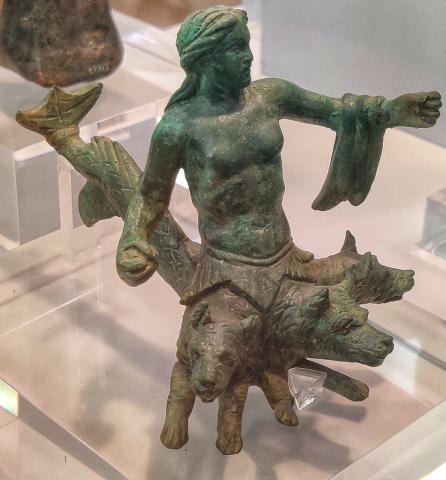
(1) λέγεται περὶ Σκύλλης ὡς ἦν ἐν Τυρρηνίᾳ θηρίον τι γυνὴ μὲν μέχρι τοῦ ὀμφαλοῦ, κυνῶν δὲ ἐντεῦθεν προσπεφύκεσαν κεφαλαί, τὸ δ’ ἄλλο σῶμα ὄφεως. (2) τοιαύτην δὲ φύσιν ἐννοεῖν πολλὴ εὐήθεια. (3) ἡ δὲ ἀλήθεια αὕτη. (4) Τυρρηνῶν νῆες ἦσαν, αἳ ἐληίζοντο τὰ περίχωρα τῆς Σικελίας καὶ τὸν Ἰόνιον κόλπον. (5) ἦν δὲ καὶ ναῦς τριήρης ταχεῖα τότε, ᾗ ὄνομα Σκύλλα, καὶ κατεπεγέγραπτο ἐπὶ τῆς πρῴρας. (6) αὕτη δ’ ἡ τριήρης τὰ λοιπὰ τῶν πλοίων συλλαμβάνουσα πολλάκις εἰργάζετο βρῶμα, καὶ λόγος ἦν περὶ αὐτῆς πολύς. (7) ταύτην τὴν ναῦν Ὀδυσσεὺς φορῷ καὶ λάβρῳ πνεύματι χρησάμενος διέφυγε· διηγήσατο δὲ ἐν Κερκύρᾳ τῷ Ἀλκινόῳ ὡς ἐδιώχθη καὶ ὡς ἐξέφυγε καὶ τὴν ἰδέαν τοῦ πλοιαρίου. (8) προσανεπλάσθη δὲ ὁ μῦθος.
notes
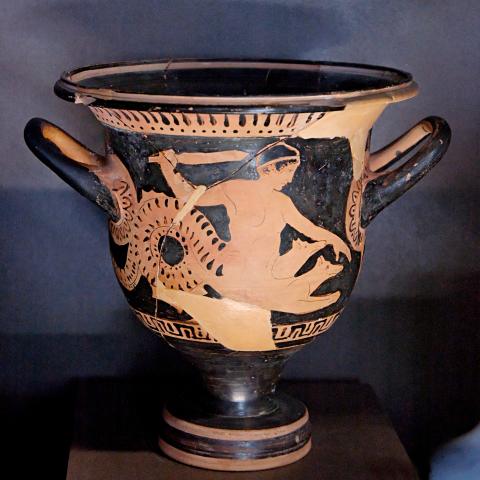
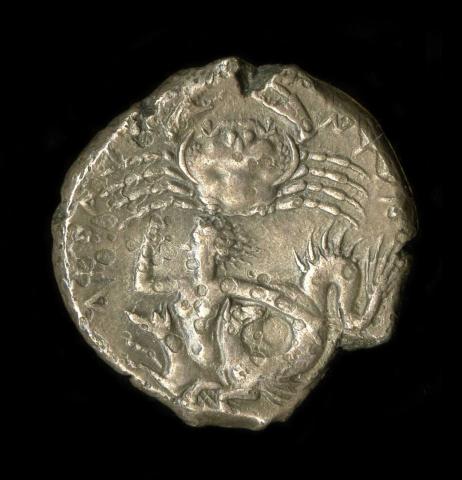
According to Homer, Scylla was a monster with twelve feet, six heads, and three rows of teeth in each head. She lived in a cave along a narrow strait opposite a massive whirlpool, known as Charybdis. Ships that avoid Charybdis must come close enough to Scylla’s cave for her to stretch her head out and devour sailors. Homer says that she barks like a dog. Later accounts, including P.’s own version of the myth, state that Scylla is actually part dog. Or more specifically, that she has dog heads protruding monstrously from her midsection.
For the basic elements of this myth, see Homer, Odyssey 12.73–126, 222–59, 426–46; Apollodorus Epitome 7.20–21; Ovid Metamorphoses 13.730–14.74.
For depictions of this myth, see Scylla ca. 450-425 BCE, Scylla figurine late 4th c. BCE, Scylla coin 414-413 BCE.
1
λέγεται: “it is said.”
ἦν: “there was,” object is θηρίον.
γυνὴ: in apposition to θηρίον.
μέχρι: “up to” + gen.
ἐντεῦθεν: “from there,” i.e., from the ὀμφαλός.
προσπεφύκεσαν: 3rd pl. plupf. indic. act. > προσφύω.
τὸ δ’ ἄλλο σῶμα: supply ἦν, “the rest of the body (was).”
ὄφεως: genitive of quality.
2
ἐννοεῖν: the infinitive can be used to limit the meaning of adjectives or nouns. It is sometimes called the epexegetic(al) infinitive. Here, it further specifies the meaning of the words πολλὴ εὐήθεια.
πολλὴ εὐήθεια: supply ἐστι, “it is exceedingly naïve.”
3
ἡ δὲ ἀλήθεια αὕτη: supply ἐστι.
4
ἦσαν: “there were.”
τὰ περίχωρα τῆς Σικελίας καὶ τὸν Ἰόνιον κόλπον: according to myth, Scylla was a monster who terrorized ships that passed through a narrow strait. In antiquity, this strait was believed to be Strait of Messina, which separates Italy from Sicily. The strait was infamous for pirates.
Ἰόνιον κόλπον: ionian Gulf.
5
καὶ: adverbial.
τριήρης ταχεῖα: the trireme has three (τρι–) rows of rowers (ἐρέται), one atop the other.
κατεπεγέγραπτο: 3rd sing. plupf. indic. mid.-pass. > κατεπιγράφω. In the Aeneid, one of the Trojans’ ships is in fact named Scylla (Vergil Aeneid 5.122).
6
τὰ λοιπὰ τῶν πλοίων: “the rest of the vessels,” i.e., all non-triremes.
εἰργάζετο βρῶμα: “made a meal out of them.” βρῶ-μα is a noun built from the verb βιβρώσκω “to gobble,” “chomp into” and the suffix –μα, which is used to create abstract nouns. The sense is that the ship, with “Scylla” written on the prow, bit holes into other ships, making a βρῶμα (“meal”) out of them. P. uses this expression to rationalize the mythical notion that a monster named Scylla devoured entire crews.
λόγος ἦν … πολύς: “there was much talk.”
περὶ αὐτῆς: refers to S.S. Scylla.
7
ταύτην τὴν ναῦν Ὀδυσσεὺς φορῷ καὶ λάβρῳ πνεύματι χρησάμενος διέφυγε: P. refers to the mythological account found in the Odyssey. The Greek hero, Odysseus, had washed up on the mythical island of Scheria, home of the Phaeacians, and recounted many wondrous stories about his wanderings. At one point, he had to pass through a strait guarded by the monster Scylla, who killed six of his crew. In P.’s account, Odysseus is a real person who did tell tales of his voyages; however, those voyages involve the narrow escape from a hostile trireme, not a monster.
χρησάμενος: takes a dative direct object.
διηγήσατο: the verb triggers two indirect statements (ὡς ἐδιώχθη καὶ ὡς ἐξέφυγε) and takes one direct object (τὴν ἰδέαν).
ἐν Κερκύρᾳ: in antiquity, people tried to locate where in the world Odysseus’s various wanderings took place. One candidate for the home of the Phaeacians, Scheria (Σχερία) was Corcyra (Κέρκυρα), modern-day Corfu, an island that is, ironically enough, only a short distance from Ithaca.
vocabulary
1
Σκύλλα –ης, ἡ Scylla
Τυρρηνία –ας, ἡ Tyrrhenia (Etruria, roughly Tuscany and Latium’s coastal north)
θηρίον –ου, τό wild animal, beast
ὀμφαλός –οῦ, ὁ navel, belly
κύων κυνός, ὁ/ἡ dog
ἐντεῦθεν, adv. from this, from here
προσφύω, προσφύσομαι, προσέφυσα, προσπέφυκα, —, προσεφύην to grow upon, be attached to
ὄφις –εως, ὁ serpent
2
ἐννοέω, contr. conceive of, consider
εὐήθεια –ας, ἡ good nature; (ironic) innocentness, simple-mindedness
4
Τυρρηνός –ή –όν Tyrrhenian; Etruscan
ληΐζομαι, ληΐσομαι, ἐληϊσάμην, —, λέλῃσμαι, ἐληίσθην to raid, plunder
περίχωρος –ον neighboring, surrounding
Σικελία –ης, ἡ Sicily
Ἰόνιος –α –ον Ionian, of Ionia
κόλπος –ου, ὁ gulf
5
τριήρης –ους, ἡ tri-rowed ship, trireme
κατεπιγράφω, κατεπιγράψω, κατεπέγραψα, κατεπιγέγραφα, κατεπιγέγραμμαι, κατεπεγράφην to paint on
πρῷρα –ας, ἡ prow
6
λοιπός –ή –όν the remaining; (neut. subst.) the rest (+ gen.)
πλοῖον –ου, τό boat
συλλαμβάνω, συλλήψομαι, συνέλαβον, συνείληφα, συνείλημμαι, συνελήφθην to seize, capture
βρῶμα –ατος, τό food, snack, bite (to eat)
7
Ὀδυσσεὺς –έως, ὁ Odysseus, the Greek hero
φορός –όν carrying forward; (of a wind) from the stern, favorable
λάβρος –ον violent, furious
διαφεύγω, διαφεύξομαι, διέφυγον, διαπέφευγα, —, διεφεύχθην to escape
διηγέομαι, διηγήσομαι, διηγησάμην, διήγημαι, —, — to narrate
Κέρκυρα –ας, ἡ Corcyra, Corfu
Ἀλκίνοος –όου, ὁ Alcinoös, a mythical king of the Phaeacians
ἐκφεύγω, ἐκφεύξω, ἐξέφυγον, ἐκπέφευγα, —, — to escape, flee
ἰδέα –ας, ἡ form
πλοιάριον –ου, τό boat (metonymic diminutive from the word, πλοῖον)
8
προσαναπλάττω, —, προσανέπλασα, —, —, προσανεπλάσθην to fabricate in addition
μῦθος –ου, ὁ tale