(1) λόγος τις ἀρχαῖος λέγει ὡς ὁ Κάδμος ὄφιν ἀποκτείνας καὶ ἐκλέξας τοὺς ὀδόντας ἔσπειρεν ἐν τῇ ἰδίᾳ γῇ· ἔπειτα ἐξέφυσαν ἄνδρες τε καὶ ὅπλα. (2) εἰ δὲ τοῦτο ἦν ἀληθές, οὐδεὶς ἀνθρώπων ἄλλο τι ἂν ἔσπειρεν ἢ ὀδόντας ὄφεων· καὶ εἰ μὴ ἐν ἄλλῃ γῇ ἐφύετο, ἀλλ’ οὖν τέως ἐν ἐκείνῃ τῇ γῇ ἐσπείρετο ἐν ᾗ καὶ πρώην ἐφύετο. (3) τὸ ἀληθὲς οὖν ἐστι τοῦτο. (4) Κάδμος ἀνὴρ τὸ γένος Φοῖνιξ ἀφίκετο εἰς Θήβας, πρὸς τὸν ἀδελφὸν Φοίνικα ἁμιλλησάμενος περὶ τῆς βασιλείας. (5) ἦν δὲ βασιλεὺς τότε Θηβῶν Δράκων Ἄρεως παῖς, ἔχων ἄλλα τε πολλὰ ὅσα βασιλεύς, καὶ δὴ καὶ ὀδόντας ἐλεφάντων. (6) τοῦτον ὁ Κάδμος ἀποκτείνας αὐτὸς ἐβασίλευσεν· οἱ δὲ φίλοι τοῦ Δράκοντος ἐπολέμουν αὐτῷ, καὶ οἱ παῖδες αὐτοῦ συνέστησαν τῷ Κάδμῳ. (7) οἱ οὖν φίλοι τοῦ Δράκοντος, ἐπεὶ ἥττονες ἐγένοντο τῇ μάχῃ, ἁρπάσαντες τὰ χρήματα τοῦ Κάδμου καὶ τοὺς ἐλεφαντίνους ὀδόντας κειμένους ἐν τῷ ἱερῷ, ᾤχοντο φεύγοντες εἰς τὴν οἰκείαν· ἄλλοι δὲ ἀλλαχῆ διεσπάρησαν, οἱ μὲν εἰς τὴν Ἀττικήν, οἱ δὲ εἰς τὴν Πελοπόννησον καὶ Φωκίδα καὶ Λοκρίδα. (8) ἐντεῦθεν ὁρμώμενοι ἐπολέμουν τοῖς Θηβαίοις, καὶ ἦσαν ἀργαλέοι πολεμισταί, ὁμόγλωσσοι ὄντες καὶ ἐπιστάμενοι τὰ χωρία. (9) ἐπεὶ οὖν τοὺς ὀδόντας διαρπάσαντες ἔφυγον, ταῦτα ἔλεγον οἱ πολῖται “τοιαῦτα κακὰ ἡμᾶς ὁ Κάδμος εἰργάσατο Δράκοντα ἀποκτείνας· ἐκ γὰρ τῶν ἐκείνου ὀδόντων πολλοὶ καὶ ἀγαθοὶ ἄνδρες γενόμενοι σπαρτοὶ καταγωνίζονται ἡμᾶς.” (10) τούτου τοῦ πράγματος ἀληθινοῦ γενομένου ὁ μῦθος προσανεπλάσθη.
notes
Cadmus, a Phoenician and legendary founder of Thebes, was told by the Delphic Oracle to follow a cow and found a city wherever it finally lays down. After doing so, Cadmus needed fresh water to sacrifice the cow to Athena. He found a spring guarded by a serpent, the offspring of Ares, which he killed. He sowed its teeth as seeds into the earth and out sprang the so-called Spartoi (“Sown Men”), who were fully grown and fully armed. Below, P. reinterprets what was really meant by the names for Snake, Teeth, and Spartoi.
For the basic elements of the myth, see Apollodorus, Bibliotheca 3.4.1–2; Ovid, Metamorphoses 3.1–137.
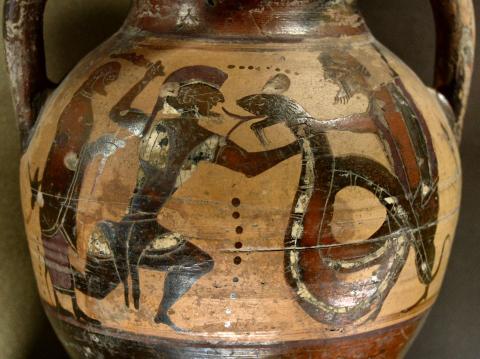
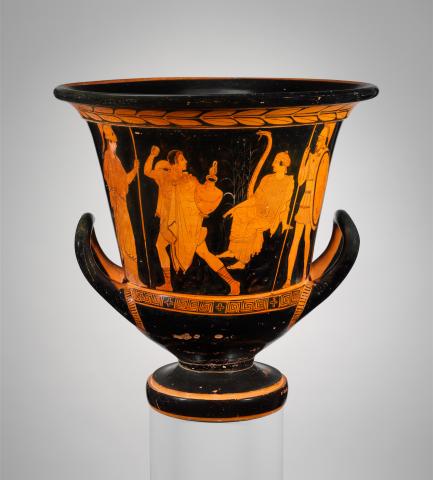
For ancient depictions of the myth, see Cadmus killing the snake ca 550-560 BCE, Cadmus gathering the water ca 450 BCE.
1
ἐν τῇ ἰδίᾳ γῇ: “in his homeland.” P. is referring to his adopted homeland, Thebes, not his native homeland, Phoenicia.
ἄνδρες τε καὶ ὅπλα: “both men and arms (i.e., armed men).”
2
εἰ … ἀληθές: present counterfactual protasis.
οὐδεὶς … ἔσπειρεν: present counterfactual apodosis. Best to take ἔσπειρεν as imperfect.
οὐδεὶς ἀνθρώπων: “no person.”
ἄλλο τι: “anything other (than).”
καὶ εἰ μὴ … ἐφύετο: present counterfactual protasis.
καὶ εἰ: conditional clauses introduced by καὶ εἰ or εἰ (...) καί can be concessive, “even if.”
μὴ … ἐφύετο: “it were not to grow naturally.”
ἀλλ’ οὖν … ἐσπείρετο: present counterfactual apodosis.
ἀλλ’ οὖν: emphasizes the counterfactual force of the condition, “nevertheless.”
τέως … ἐσπείρετο: “it would still be sown.” The word ἄν is sometimes omitted when the sense of unreality of the apodosis is otherwise sufficiently clear (S. 2320 see notes on 30.7 and 42.7 below).
3
οὖν: the particle marks a change of topic. Here, it is from a description of what people say to a description of what really happened, i.e., from myth to history.
4
Κάδμος: in apposition to ἀνὴρ and Φοῖνιξ.
τὸ γένος: accusative of respect, “Phoenician by birth.”
Φοίνικα: Phoenix, name of Cadmus’s brother. The same word is used to mean “Phoenician.”
5
ἔχων: Δράκων (Snake) is the subject. The objects are ἄλλα πολλὰ and ὀδόντας.
τε: correlates with καὶ δὴ καὶ: “both … and in particular.”
καὶ δὴ καὶ: a connective καί, an emphatic δή, and an adverbial καί, “and in particular.”
ὅσα βασιλεύς: supply ἔχει within this relative clause.
6
τοῦτον: refers to Δράκων.
ἐπολέμουν: takes a dative object.
αὐτῷ: refers to Κάδμος.
αὐτοῦ: refers to Δράκων.
συνέστησαν: 3rd pl. aor. indic. act. > συνίστημι.
7
οὖν: the particle marks a change of topic. Here, it is a shift from the regicide to the fallout from the regicide.
ἥττονες … τῇ μάχῃ: “weaker at fighting.”
ᾤχοντο φεύγοντες: “they fled.” The verb οἴχομαι means “go” and can combine with a participle that indicates the manner of the departure.
τὴν οἰκείαν: “their own homeland.”
ἄλλοι δὲ ἀλλαχῆ διεσπάρησαν: “different ones scattered to different locations.” P. uses this particular sense of the verb (σπείρω) to explain the name Σπαρτοί— “Scattered men.” The more basic meaning of σπείρω (“to sow”) gave rise to the false belief that these were literally “sown men.” For P., they are simply a contingent of Theban loyalists who skip town after the regicide of king Draco.
οἱ μὲν … οἱ δὲ: “some … others.” Articles combined with the particles μέν and δέ express a contrast between individuals or groups. The regions that P. lists surround Thebes.
Ἀττικήν: supply γῆν.
Λοκρίδα: Locris was made up of three distinct regions in central Greece: Ozolian Locris, Opuntian Locris, Epicnemidian Locris.
8
ἐντεῦθεν: “from there (i.e., those scattered places).”
ἐπολέμουν: takes dative object.
9
οὖν: the particle marks a change of topic. Here, it is from what happened to what was said about what happened, i.e., from deeds to words.
πολῖται: Thebans.
εἰργάσατο: 3rd sing. aor. indic. dep. > ἐργάζομαι. Verb takes two accusatives.
ἐκείνου: refers to Δράκων.
σπαρτοὶ: “scattered.”
10
τούτου … γενομένου: genitive absolute.
vocabulary
1
ἀρχαίος –α –ον old, ancient
Κάδμος –ου, ὁ Cadmus, mythical founder of Thebes
ὄφις –εως, ὁ serpent
ἐκλέγω, ἐκλέξω, ἐξέλεξα —, ἐξείλεγμαι/ ἐκλέλεγμαι, ἐξελέχθην/ ἐξελέγην pull out
ὀδούς –όντος, ὁ tooth, tusk
σπείρω, σπερῶ, ἔσπειρα, ἔσπαρκα, ἔσπαρμαι, ἐσπάρην to sow seed
ἐκφύω, –φύσω, –έφυσα/έφυν, –πέφυκα, —, –εφύην to sprout up
2
τέως, adv. up till now, still
πρώην, adv. previously
4
Φοῖνιξ –ίκος, ὁ of Phoenicia, Phoenician; Phoenix [brother of Cadmus]
Θῆβαι –ῶν, αἱ Thebes
ἁμιλλάομαι, ἁμιλλήσομαι, ἡμιλλησάμην, —, ἡμίλλημαι, ἡμιλλήθην to contend, compete
βασιλεία –ας, ἡ kingdom
5
δράκων –οντος, ὁ snake; Snake (male name)
Ἄρης –εως, ὁ Ares, god of war
ἐλέφας –αντος, ὁ elephant
6
βασιλεύω to be king, rule
συνίστημι, συστήσω, συνέστησα/ συνέστην, συνέστηκα/ συνέστακα, συνέσταμαι, συνεστάθην to unite, join forces against (+ dat.)
7
ἁρπάζω, ἁρπάσω, ἥρπασα, ἥρπακα, ἥρπασμαι, ἡρπάσθην/ ἡρπάγην to carry away
ἐλεφάντινος –η –ον of ivory
οἴχομαι, οἰχήσομαι, —, ᾤχηκα and ᾤχωκα, ᾤχημαι, — to go
ἀλλαχῆ, adv. elsewhere
διασπείρω, διασπερῶ, διέσπειρα, —, διέσπαρμαι, διεσπάρην scatter
Ἀττικός –ή –όν Attic, Athenian, of Attica
Πελοπόννησος –ου, ἡ Peloponnese
Φωκίς –ίδος, ἡ Phocis
Λοκρίς –ίδος, ἡ Locris
8
ἐντεῦθεν, adv. from there
Θηβαῖος –α –ον of Thebes, Theban
ἀργαλέος –α –ον troublesome
πολεμιστής –οῦ, ὁ warrior
ὁμόγλωσσος –ον speaking the same language
ἐπίσταμαι, ἐπιστήσομαι, —, —, —, ἠπιστήθην to know
9
διαρπάζω, διαρπάσω, διήρπασα, διήρπακα, διήρπασμαι, διηρπάσθην/διηρπάγην to (seize as) plunder
πολίτης –ου, ὁ citizen
σπαρτός –ή –όν scattered
καταγωνίζομαι, καταγωνιοῦμαι, κατηγωνισάμην, —, κατηγώνισμαι, κατηγωνίσθην to fight, overpower
10
ἀληθινός –η –ον true
μῦθος –ου, ὁ tale
προσαναπλάττω, —, προσανέπλασα, —, —, προσανεπλάσθην to fabricate in addition