(1) λέγεται ὡς γυναῖκές τινες ἦσαν αἱ Ἑσπερίδες, ταύταις δὲ ἦν μῆλα χρυσᾶ ἐπὶ μηλέας, ἣν ἐφύλασσε δράκων, ἐφ’ ἃ μῆλα καὶ Ἡρακλῆς ἐστρατεύσατο. (2) ἔχει δὲ ἡ ἀλήθεια ὧδε. (3) Ἕσπερος ἦν ἀνὴρ Μιλήσιος, ὃς ᾤκει ἐν τῇ Καρίᾳ καὶ εἶχε θυγατέρας δύο αἳ ἐκαλοῦντο Ἑσπερίδες. (4) τούτῳ δὲ ἦσαν ὄις καλαὶ καὶ εὔκαρποι, τοῦτο τὸ γένος ὃ νῦν ἐστιν ἐν Μιλήτῳ. (5) ἐπὶ τούτῳ δὴ ὠνομάζοντο χρυσαῖ· κάλλιστον γὰρ ὁ χρυσός, ἦσαν δὲ κἀκεῖναι κάλλισται. (6) μῆλα δὲ ἐκαλεῖτο τὰ πρόβατα. (7) ἅπερ ἰδὼν Ἡρακλῆς βοσκόμενα παρὰ τῇ θαλάσσῃ, περιελάσας ἐνέθετο εἰς τὴν ναῦν, καὶ τὸν ποιμένα αὐτῶν ὀνόματι Δράκοντα *** ἤγαγεν εἰς οἶκον, οὐκέτι ζῶντος τοῦ Ἑσπέρου, ἀλλὰ τῶν παίδων αὐτοῦ. (8) ἔλεγον δὴ οἱ ἄνθρωποι “ἐθεασάμεθα χρυσᾶ μῆλα, ἃ ἤγαγεν ἐξ Ἑσπερίδων Ἡρακλῆς τὸν φύλακα ἀποκτείνας Δράκοντα.” (9) ἔνθεν ὁ μῦθος.
notes
According to Hesiod, the Hesperides were the daughters of Night. They were also the protectors of a grove of trees at the end of the earth that bore golden apples. They were aided in this guard duty by a snake, the offspring of Phorkys and Ceto. As one of his Labors, Heracles was tasked with fetching these apples. For P. it is impossible that a tree should produce golden fruit.
For the basic elements of this myth, see Apollodorus, Bibliotheca. 2.5.11; Diodorus Siculus 4.26.2–4; Apollonius Rhodius, Argonautica 4.1383–1449.
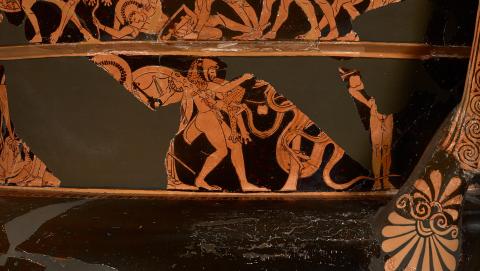
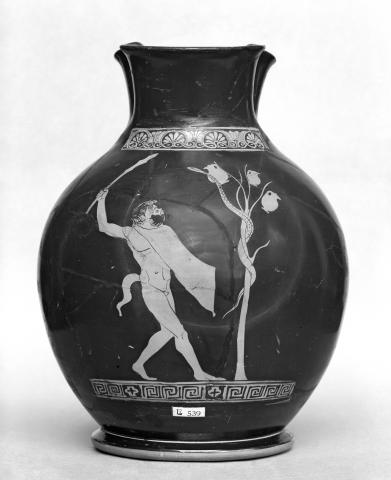
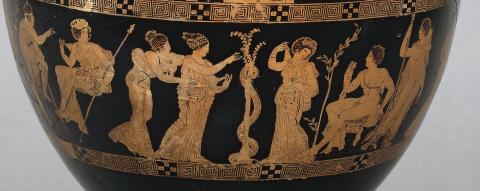
For depictions of this myth, see Heracles and the Hesperides ca. 500-480 BCE, Satyr-as-Heracles and the Magical Tree ca. 460 BCE, Heracles and the Hesperides ca. 420-400 BCE,
1
λέγεται: “it is said.”
ταύταις: dative of possessor.
ἣν: antecedent is μηλέας.
ἐφ’ ἃ μῆλα: = μῆλα ἐφ’ ἃ, “apples for which,” the antecedent is incorporated within the relative clause. We do this sometimes in English, He brought what tools he needed, where tools is technically the antecedent to what.
καὶ: adverbial.
2
ἔχει … ὧδε: “is as follows” (LSJ ἔχω B.II.2).
3
Ἑσπερίδες: the stem –ις (gen. –ιδος) can often be used to coin patronymics. So, just as Χρυσηΐς means “daughter of Χρύσης,” so too Ἑσπερίς may mean “daughter of Ἕσπερος.” P. ignores Hesiod’s version of the myth in which the Hesperides are actually the daughters of Night (Νύξ, Theogony 215).
4
τούτῳ: dative of possessor. Refers to Hesperus.
τοῦτο τὸ γένος ὃ: “the type which,” refers to the type of sheep. P. makes Hesperos a Carian from Miletus since, “Miletus was noted for its wool, the high lands of Caria formerly fed a great number of sheep” (Smith, Dictionary of Greek and Roman Geography, s.v. Caria).
5
ἐπὶ τούτῳ δὴ: “clearly for this reason.”
ὠνομάζοντο: passive. The subject is the sheep.
χρυσαῖ: predicative complement of ὠνομάζοντο.
κάλλιστον γὰρ ὁ χρυσός: supply ἐστι.
κἀκεῖναι: > καὶ ἐκεῖναι. Refers to the ὄις, which P. puts in the feminine.
καὶ: adverbial.
6
μῆλα δὲ ἐκαλεῖτο τὰ πρόβατα: here P. exploits the fact that τὸ μῆλον happens to mean both “apple” and “sheep.” The two roots are probably unrelated: the latter may be from Indo-European, while the former from more local Mediterranean languages.
τὰ πρόβατα: neut. pl. nom., subject of a verb in the singular, as usual.
7
ἅπερ: the implicit antecedent is πρόβατα. The suffix –περ gives the relative clause a sense of exclusivity, “which in particular.”
βοσκόμενα: agrees with ἅπερ.
περιελάσας ἐνέθετο: the implicit direct object of each is πρόβατα.
ἐνέθετο: 3rd sing. aor. indic. mid. > ἐντίθημι.
τὸν ποιμένα αὐτῶν ὀνόματι Δράκοντα *** ἤγαγεν εἰς οἶκον: the asterisks indicate that there is a chunk of text missing. The Greek text as we have it suggests that Heracles takes the sheep onto his ship and brings their shepherd (Mr. Snake) to a home (whether to Heracles’ home or the shepherd’s home, is unclear). Later in the text, P. writes that people spoke of Heracles “killing” the shepherd. It may be that people misunderstood the situation. Or, as the editor Festa suspects, a piece of the narrative in which Heracles kills the shepherd is missing from the manuscripts. It should be added, that Heracles and the Snake guardian of the Hesperides do ultimately share a similar “home” in the sky, both were made into neighboring constellations that continue to memorialize their encounter (see Pseudo-Eratosthenes, Catasterismi 3, 4).
αὐτῶν: refers to the sheep.
ὀνόματι: “by name.”
ἤγαγεν: the subject is presumably Heracles.
οὐκέτι ζῶντος τοῦ Ἑσπέρου, ἀλλὰ τῶν παίδων αὐτοῦ: two genitive absolutes specifying the time at which Heracles did these things.
αὐτοῦ: refers to Hesperos.
8
Δράκοντα: in apposition to τὸν φύλακα.
ἔνθεν ὁ μῦθος: supply a word for becoming or fabricating.
vocabulary
1
Ἑσπερίς –ίδος, ἡ a Hesperid; one of the Hesperides (daughters of Night, according to Hesiod)
μῆλον –ου, τό apple
χρύσ(ε)ος (–οῦς) –(ε)α (–ῆ) –(ε)ον (–οῦν) golden
μηλέα –ης, ἡ apple tree
Δράκων –οντος, ὁ Snake (male name)
Ἡρακλῆς –έους, ὁ Heracles, the Greek hero)
στρατεύω to undertake a military expedition
3
Ἕσπερος –ου, ὁ a name for the evening star; Hesperus (male name)
Μιλήσιος –α –ον of Miletus, Milesian
Κά(ει)ρ(ί)α –ας ἡ Caria
4
ὄϊς, ὄϊος, ὁ/ἡ sheep
εὔκαρπος –ον fertile, prolific
Μίλητος –ου, ἡ Miletus
5
πρόβατον –ου, τό sheep
βόσκω, βοσκήσω, ἐβόσκησα, βεβόσκηκα, —, ἐβοσκήθην to graze
περιελαύνω, περιελῶ, περιήλασα, περιελήλακα, —, — to round up
ἐντίθημι, ἐνθήσω, ἐνέθηκα, ἐντέθεικα, ἐντέθειμαι, ἐνετέθην to stow
ποιμήν –ένος, ὁ shepherd
θεάομαι, θεάσομαι, ἐθεασάμην, τεθέαμαι, —, ἐθεάθην to see, witness
φύλαξ –ακος, ὁ/ἡ guard, protector
ἔνθεν, adv. from here, from this
μῦθος –ου, ὁ tale