(1) λέγεται περὶ Δαιδάλου ὡς ἀγάλματα κατεσκεύαζε δι’ ἑαυτῶν πορευόμενα· ὅπερ ἔμοιγε ἀδύνατον εἶναι δοκεῖ, ἀνδριάντα δι’ ἑαυτοῦ βαδίζειν. (2) τὸ δὲ ἀληθὲς τοιοῦτον. (3) οἱ τότε ἀνδριαντοποιοὶ καὶ ἀγαλματοποιοὶ συμπεφυκότας ὁμοῦ τοὺς πόδας καὶ τὰς χεῖρας παρατεταμένας ἐποίουν. (4) Δαίδαλος δὲ πρῶτος ἐποίησε διαβεβηκότα τὸν ἕνα πόδα. (5) διὰ τοῦτο δὴ οἱ ἄνθρωποι ἔλεγον “ὁδοιποροῦν τὸ ἄγαλμα τοῦτο εἰργάσατο Δαίδαλος, ἀλλ’ οὐχὶ ἑστηκός,” ὡς καὶ νῦν λέγομεν “μαχόμενοί γε ἄνδρες γεγραμμένοι εἰσί” καὶ “τρέχοντες ἵπποι” καὶ “χειμαζομένη ναῦς.” (6) οὕτω κἀκεῖνον ἔλεγον ὁδοιποροῦντα ποιεῖν ἀγάλματα.
notes
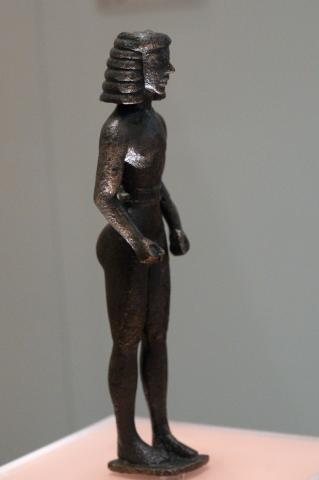
According to myth, Daedalus was such a good craftsman that he constructed statues that actually moved. P. thinks that it is impossible for a bronze or marble statue to move. The truth is that people were somewhat ambiguous in the way they came to describe Daedalus’ more naturalistic approach to sculpture and labeled his creations as “moving statues” (i.e., statues of people in motion). Even today, the Greek statue type with one foot striding forward common to the period of 650-600 BCE is sometimes called “Daedalic.”
For the references to the myth, see Plato, Euthyphro 11b–c; Menander 97d; Diodorus Siculus 4.76.1–2.
For depictions of this myth, see Archaic bronze kouros in “Daedalic” style [i.e., with a foot forward] ca. 620 BCE.
1
λέγεται: “it is said.”
κατεσκεύαζε: subject is Daedalus.
δι’ ἑαυτῶν: “on their own.”
ὅπερ ἔμοιγε … δοκεῖ: an appositional relative clause in which the neuter pronoun ὅ stands in apposition to the following clause, ἀνδριάντα δι’ ἑαυτοῦ βαδίζειν. The suffix –περ gives the relative clause a sense of exclusivity, “what in particular seems to me.”
ἔμοιγε “to me,” > ἐμοί + γε.
ἀνδριάντα δι’ ἑαυτοῦ βαδίζειν: complementary infinitive understood with ἀδύνατον from the previous clause, (what seems impossible:) “for statues to walk on their own.” Small automatic mechanisms and toys do begin to emerge from Hellenistic Egypt in the 3rd century BCE (see Oxford Classical Dictionary, s.v. Ctesibius). P.’s text predates this.
3
συμπεφυκότας: ptc. pl. pf. act. masc. acc. > συμφύω.
παρατεταμένας: ptc. pl. pf. mid.-pass. fem. acc. > παρατείνω.
4
διαβεβηκότα: ptc. sing. pf. act. masc. acc. > διαβαίνω.
5
δὴ: “clearly”
ἀλλ’ οὐχὶ ἑστηκός: here, the particle, ἀλλά, simply indicates that what precedes it needs to be clarified by what follows it, “in other words, not standing.”
οὐχὶ: an emphatic form of the negative. One could translate it in italics.
ἑστηκός: ptc. sing. pf. act. neut. acc. > ἵστημι. Perfect with a present meaning.
ὡς: conjunction, comparison “as.”
καὶ: adverbial, “even.”
“μαχόμενοί γε ἄνδρες γεγραμμένοι εἰσί” καὶ “τρέχοντες ἵπποι” καὶ “χειμαζομένη … ναῦς.”: here P. substantiates his claim regarding the misleading expression about Daedalus’s “walking statues” by citing similar idiomatic ways of talking about artwork that could putatively be misunderstood.
μαχόμενοί γε ἄνδρες γεγραμμένοι εἰσί: “fighting men have been painted.” γεγραμμένοι is a periphrastic participle.
τρέχοντες ἵπποι: “running horses,” “horses as running.” Supply γεγραμμένοι εἰσί from above.
χειμαζομένη ναῦς: “storm-tossed ship,” “ship as storm-tossed.” Supply γεγραμμένη ἐστίν.
6
κἀκεῖνον: > καὶ ἐκεῖνον.
καὶ: adverbial.
ἐκεῖνον: refers to Daedalus.
vocabulary
1
Δαίδαλος –ου, ὁ Daedalus, a mythical craftsman
ἄγαλμα –ατος, τό statue, sculpture
ἀνδριάς –άντος, ὁ statue
βαδίζω, βαδιοῦμαι, ἐβάδισα, βεβάδικα, —, — to walk, step
3
ἀνδριαντοποιός –οῦ, ὁ statue maker
ἀγαλματοποιός –οῦ, ὁ sculptor
συμφύω, συμφύσομαι, συνέφυσα, συμπέφυκα, —, συνεφύην to unite, grow as one
ὁμοῦ, adv. together
παρατείνω, παρατενῶ, παρέτεινα, παρατέτακα, παρατέταμαι, παρετάθην to extend beside
4
διαβαίνω, διαβήσομαι, διέβην, διαβέβηκα, —, — to advance, step
5
ὁδοιπορέω, contr. to march, walk
μάχομαι, μαχοῦμαι, ἐμαχεσάμην, —, μεμάχημαι, — to fight
τρέχω, δραμοῦμαι/θρέξομαι, ἔδραμον, δεδράμηκα, δεδράμημαι, — to run
χειμάζω, χειμάσω, ἐχείμασα, κεχείμακα, —, — to storm; (pass.) to be hit by a storm