(1) περὶ Κενταύρων φασὶν ὡς θηρία ἐγένοντο καὶ ἵππου μὲν εἶχον τὴν ὅλην ἰδέαν πλὴν τῆς κεφαλῆς, ταύτην δὲ ἀνδρός. (2) εἴ τις οὖν πείθεται τοιοῦτον γενέσθαι θηρίον, ἀδύνατον· οὔτε γὰρ ἄλλως αἱ φύσεις σύμφωνοι ἵππου καὶ ἀνδρός, οὔτε ἡ τροφὴ ὁμοία, οὔτε διὰ στόματος καὶ φάρυγγος ἀνθρωπείου δυνατὸν ἵππου τροφὴν διελθεῖν. (3) εἰ δὲ τοιαύτη ἰδέα τότε ἦν, καὶ νῦν ἂν ὑπῆρχε. (4) τὸ δὲ ἀληθὲς ἔχει ὧδε. (5) Ἰξίονος βασιλέως ὄντος Θεσσαλίας ἐν τῷ Πηλίῳ ὄρει ἀπηγριώθη ταύρων ἀγέλη, ἥτις καὶ τὰ λοιπὰ τῶν ὀρῶν ἄβατα ἐποίει· εἰς γὰρ τὰ οἰκούμενα κατιόντες οἱ ταῦροι ἐσίνοντο τὰ δένδρα καὶ τὸν καρπόν, καὶ ὑποζύγια συνέφθειραν. (6) ἐκήρυξεν οὖν ὁ Ἰξίων, εἴ τις ἀνέλοι τοὺς ταύρους, τούτῳ δώσειν χρήματα πολλά. (7) νεανίσκοι δέ τινες ἐκ τῆς ὑπωρείας, ἐκ κώμης τινὸς καλουμένης Νεφέλης, ἐπινοοῦσιν ἵππους κέλητας διδάξαι (πρότερον γὰρ οὐκ ἠπίσταντο ἐφ’ ἵππων ὀχεῖσθαι, ἀλλὰ μόνον ἅρμασιν ἐχρῶντο). (8) οὕτω δὲ ἀναβάντες τοὺς κέλητας ἤλαυνον ἐφ’ οὗ οἱ ταῦροι ἦσαν, καὶ ἐπεισβαλόντες τῇ ἀγέλῃ, ἠκόντιζον· καὶ ὅτε μὲν διώκοιντο ὑπὸ τῶν ταύρων, ὑπέφευγον οἱ νεανίαι (ποδωκέστεροι γὰρ ἦσαν οἱ ἵπποι), ὅτε δὲ σταίησαν οἱ ταῦροι, ὑποστρέφοντες ἠκόντιζον· καὶ τοῦτον τὸν τρόπον ἀνεῖλον αὐτούς. (9) καὶ τὸ μὲν ὄνομα ἐντεῦθεν ἔλαβον οἱ Κένταυροι, ὅτι τοὺς ταύρους κατεκεντάννυσαν (οὐ γὰρ ἀπὸ τῆς ἰδέας τῶν ταύρων, οὐδὲν γὰρ πρόσεστι ταύρου τοῖς Κενταύροις, ἀλλ’ ἵππου καὶ ἀνδρὸς ἰδέα ἐστίν· ἀπὸ τοῦ ἔργου οὖν τὸ ὄνομα ἔλαβον). (10) λαβόντες οὖν οἱ Κένταυροι παρὰ τοῦ Ἰξίονος τὰ χρήματα καὶ γαυριῶντες ἐπὶ τῇ πράξει καὶ τῷ πλούτῳ, ὑβρισταὶ ὑπῆρχον καὶ πολλὰ κακὰ εἰργάζοντο, καὶ δὴ καὶ κατ’ αὐτοῦ τοῦ Ἰξίονος, ὃς ᾤκει τὴν νῦν καλουμένην Λάρισσαν πόλιν (τότε δὲ ἐκαλοῦντο οἱ τοῦτο τὸ χωρίον οἰκοῦντες Λαπίθαι). (11) καλεσάντων οὖν αὐτοὺς ἐπὶ θοίνην μεθυσθέντες ἁρπάζουσιν αὐτῶν τὰς γυναῖκας, καὶ ἀναβιβάσαντες αὐτὰς ἐπὶ τοὺς ἵππους ᾤχοντο φεύγοντες εἰς τὴν οἰκείαν. (12) ἐντεῦθεν ὁρμώμενοι ἐπολέμουν αὐτοῖς, καὶ καταβαίνοντες μὲν διὰ τῆς νυκτὸς εἰς τὰ πεδία ἐνέδρας ἐποιοῦντο, ἡμέρας δὲ γενομένης ἁρπάσαντες καὶ ἐμπρήσαντες ἀπέτρεχον ἐπὶ τὰ ὄρη. (13) οὕτως ἀπιόντων αὐτῶν κατόπιν τὰ νῶτα τοῖς πόρρωθεν ὁρῶσι μόνον ἐφαίνοντο τοῦ ἵππου πλὴν τῆς κεφαλῆς, τῶν δὲ ἀνδρῶν τὰ λοιπὰ πλὴν τῶν σκελῶν. (14) ξένην οὖν ὄψιν ὁρῶντες ἔλεγον “οἱ Κένταυροι ἡμᾶς οἱ ἐκ Νεφέλης κατατρέχουσιν.” (15) ἀπὸ δὴ ταύτης τῆς ἰδέας καὶ τοῦ λόγου ὁ μῦθος ἀπίστως ἐπλάσθη, ὡς ἐκ τῆς νεφέλης ἵππος τε καὶ ἀνὴρ ἐν τῷ ὄρει ἐγεννήθη.
notes
Palaephatus takes on the myth of the Centaurs. As he does in each of his chapters, he begins by briefly introducing the myth. He then states flatly that it contains impossibilities, and goes on to explain what he thinks really happened in the distant past. In this latter part of the rebuttal, he discusses the words or expressions (oftentimes in the form of mistaken metaphors, puns, or homonyms) that led to confusion and gave rise to the myth.
In this chapter, he discusses the birth of the Centaurs and their battle with the Lapiths, a legendary Thessalian tribe. According to myth, Ixion, king of the Lapiths, sired the race of Centaurs by mating with a cloud. The Centaurs were infamous for their bad behavior at the wedding feast of Perithoos, son of Ixion, where the beasts became drunk and brawled with their hosts.
For the basic elements of this myth, see Apollodorus, Epitome 1.20–22; Diodorus Siculus 4.69–70; Ovid, Metamorphoses 12.210–535.
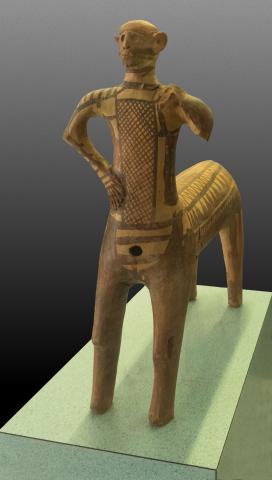
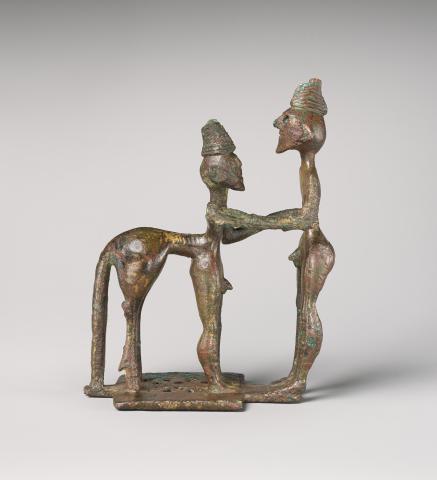
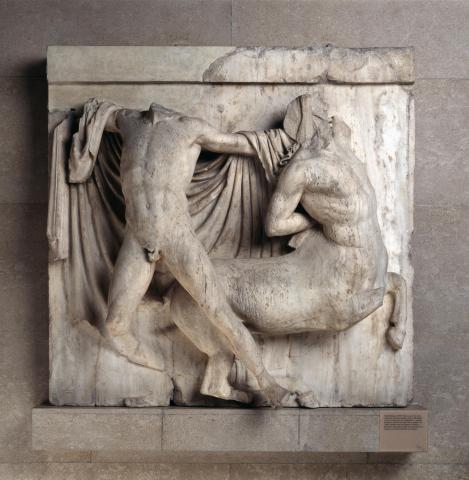
For ancient depictions of the myth, see Early centaur figurine ca. 1050-900 BCE, bronze centaur battling (?) a man ca 750 BCE, Parthenon metopes.
1
φασὶν: “people say.”
ταύτην: refers to κεφαλήν.
2
οὖν: the particle marks a change of topic. Here, it marks the turning point between the description of the myth and the rationalization.
ἀδύνατον: supply ἐστι, “this is impossible.”
οὔτε γὰρ ἄλλως: “for otherwise.”
αἱ φύσεις σύμφωνοι: supply εἰσί.
ἡ τροφὴ ὁμοία: supply ἐστι.
δυνατὸν ἵππου τροφὴν διελθεῖν: supply ἐστι, “it is not possible for horse food to pass.”
3
εἰ … ὑπῆρχε: counterfactual conditional “If such a form existed then, it would also exist now.” A reference to P.’s theory, expressed in the prologue, that if such a form existed then, it would exist now; hence, since it does not exist now, it did not exist then.
καὶ: the adverbial καὶ adds emphasis to the apodosis when it appears first, “still.”
4
ἔχει ὧδε: “is as follows” (LSJ ἔχω B.II.2).
5
Ἰξίονος βασιλέως ὄντος: genitive absolute.
ἀπηγριώθη: 3rd sing. aor. indic. dep. > ἀπαγριόομαι.
ἥτις: nom. fem. sing. form of ὅστις; its antecedent is ἀγέλη. P. suggests here that the herd lives on the largest mountain in the region and terrorizes the various valleys and passes below.
καὶ: adverbial.
τὰ λοιπὰ: “the rest of (+ gen.).”
τὰ οἰκούμενα: “inhabited areas.”
κατιόντες: ptc. pl. pres. act. masc. nom. > κάτειμι.
6
οὖν: the particle marks a change of topic. Here, it marks the turning point between the problem and the solution.
ἐκήρυξεν … δώσειν χρήματα πολλά: “He announced that he will.”
εἴ τις ἀνέλοι … τοὺς ταύρους: a future condition embedded in indirect discourse; the original subjunctive has shifted into the oblique optative, since it is in indirect speech, “if someone should kill the bulls.”
ἀνέλοι: 3rd sing. aor. opt. act. > ἀναιρέω.
7
Νεφέλης: the name of the town is also the word for “cloud.” P. uses this double meaning to rationalize the story that Ixion, once upon a time, fathered Centaurs by mating with a cloud. In reality (according to P.), Ixion merely made a deal with some young men from Cloudtown.
ἐπινοοῦσιν: historical present. Used in narratives to underscore turning points. Translate as past tense.
διδάξαι: takes double accusative, “to train horses (ἵππους) as steeds/riding horses (κέλητας).”
οὐκ ἠπίσταντο … ἐχρῶντο: implied subject, “people of that time.” Many of P.’s explanations involve first inventors of familiar technologies (like horseback riding). Myths come about when these technologies are misunderstood.
ἠπίσταντο: 3rd pl. impf. indic. dep. > ἐπίσταμαι.
8
ἐφ’ οὗ: “to the place where.”
ὅτε … διώκοιντο: the iterative optative (without ἄν) in a past-time temporal clause indicates a habitual/repeated action: “whenever they were chased.”
ὅτε … σταίησαν: “whenever they stopped,” 3rd pl. aor. opt. act. > ἵστημι.
τοῦτον τὸν τρόπον: adverbial accusative, “in this way.”
ἀνεῖλον: 3rd pl. aor. indic. act. > ἀναιρέω.
9
ὅτι: causal, “because.”
κατεκεντάννυσαν: “pierced,” “stabbed,” 3rd pl. aor. indic. act. > κατακεντάννυμι. The more normal verb would be κατακεντέω. P. etymologizes the name Κένταυροι as those who “stab bulls” (κέντ– + ταυροι). As P. will note in the following parenthetical, this etymology explains why Centaurs, who are not bulls, have the word for “bull” in their name.
οὐ γὰρ ἀπὸ τῆς ἰδέας τῶν ταύρων: supply τὸ ὄνομα ἔλαβον from below.
οὖν: the particle marks a change of topic. Here, it is a change from the historical deed to what was said about the deed.
10
οὖν: the particle marks a change of topic. Here, it is from Centaurs as heroes to Centaurs as villains.
καὶ δὴ καὶ: a connective καί, an emphatic δή, and an adverbial καί, “and in particular.”
κατ’ αὐτοῦ τοῦ Ἰξίονος: when αὐτός appears in the predicate position, it is intensifying, “against Ixion himself.”
τότε δὲ: adversative δέ, “but at that time.”
τὴν νῦν καλουμένην Λάρισσαν πόλιν: “the city now called Larissa.”
11
καλεσάντων οὖν … εἰς τὴν οἰκείαν: according to myth, the Centaurs were invited to the wedding of Hippodameia and Peirithous, the son of Ixion.
καλεσάντων: genitive absolute. Refers to the Lapiths.
οὖν: the particle marks a change of topic from the origin story of the Centaurs to their infamous battle with the Lapiths.
αὐτοὺς: refers to the Centaurs
μεθυσθέντες ἁρπάζουσιν: subject is the Centaurs. The conjugated verb is historical present. Used in narratives to underscore turning points. Translate as past tense.
τὰς γυναῖκας: direct object of ἁρπάζουσιν. Centaurs are proverbially lustful.
αὐτὰς: refers to γυναῖκας.
ᾤχοντο φεύγοντες: “they fled.” The verb οἴχομαι means “go” and can combine with a participle to indicate the manner of the departure.
τὴν οἰκείαν: “their homeland.”
12
ἐντεῦθεν ὁρμώμενοι: “setting out from here.”
ἐπολέμουν αὐτοῖς: “(the Centaurs) waged war upon them (the Lapiths).”
ἡμέρας … γενομένης:; genitive absolute; the participle is aorist: “after it became day.”
ἐμπρήσαντες: ptc. pl. aor. act. masc. nom. > ἐμπίμπρημι.
13
ἀπιόντων: ptc. pl. pres. act. masc. gen. > ἄπειμι. Genitive absolute with αὐτῶν.
τὰ νῶτα … ἐφαίνοντο τοῦ ἵππου … τὰ λοιπὰ: νῶτα and λοιπὰ are subjects of ἐφαίνοντο, “their backs seemed (to be the backs) of a horse … the rest (seemed to be of).”
τὰ λοιπὰ: “the rest.”
τοῖς πόρρωθεν ὁρῶσι: dative participle, “to (those) watching from a distance,” referring to the Lapiths.
μόνον: adverbial.
14
οὖν: the particle marks a change of topic. Here, it is from what happened to what was said about what happened, i.e., from deeds to words.
οἱ ἐκ Νεφέλης: “the ones from Cloud Town.” See note above on Ixion and the cloud in sentence 7.
15
ἵππος τε καὶ ἀνὴρ: in myth, the Centaur is a “horse-man”; for Palaephatus, merely a horseman.
vocabulary
1
Κένταυρος –ου, ὁ Centaur, a mythical beast, typically a hybrid of man and horse
θηρίον –ου, τό wild animal, beast
ἰδέα –ας, ἡ form
κεφαλή –ῆς, ἡ head
2
σύμφωνος –ον harmonious
τροφή –ῆς, ἡ food
στόμα –ατος, τό mouth
φάρυγξ, φάρυγγος, ἡ throat
ἀνθρώπειος –α –ον of humans, human
δυνατός –ή –όν possible
διέρχομαι, διελεύσομαι, διῆλθον, διελήλυθα, —, — to go through
3
ὑπάρχω, ὑπάρξω, ὑπῆρξα, —, ὑπῆργμαι, ὑπήρχθην to exist, be
5
Ἰξίων –ονος, ὁ Ixion, a mythical King of the Lapiths
Θεσσαλία –ας, ἡ Thessaly, a region in northern Greece
Πήλιον –ου, τό Mt. Pelion, a mountain in Thessaly
ὄρος –ους, τό mountain
ἀπαγριόομαι, —, ἀπηγρίωσα, —, ἀπηγρίωμαι, ἀπηγριώθην to become wild
ταῦρος –ου, ὁ bull
ἀγέλη –ης, ἡ herd, pack
ἄβατος –ον impassable
κάτειμι, —, —, —, —, — to go down
σίνομαι, —, ἐσινάμην, —, —, — to harm, hurt
δένδρον –ου, τό tree
καρπός –οῦ, ὁ fruit (always in the sing.)
ὑποζύγιον –ου, τό livestock
συμφθείρω / συνφθείρω, συνφθερῶ, συνέφθειρα, συνεφθαρκα, συνέφθαρμαι, συνεφθάρην to destroy altogether
6
κηρύττω, κηρύξω, ἐκήρυξα, κεκήρυχα, κεκήρυγμαι, ἐκηρύχθην to proclaim (+ inf.)
ἀναιρέω, ἀναιρήσω, ἀνεῖλον, ἀνῄρηκα, ἀνῄρημαι, ἀνῃρέθην to destroy, do away with
χρῆμα –ατος, τό thing; (pl.) money
7
νεάνισκος –ου, ὁ young man
ὑπώρεια –ας, ἡ foothills
κώμη –ης, ἡ village
νεφέλη –ης, ἡ cloud
ἐπινοέω, contr. to have an idea to (+ inf.)
κέλης –ητος, ὁ riding-horse, steed, courser (often in apposition with ἵππος with no change in meaning)
ἐπίσταμαι, ἐπιστήσομαι, —, —, —, ἠπιστήθην to know
ὀχέω, ὀχήσω, ὠχησάμην, —, —, ὠχήθην to convey, carry; (mid.) ride
ἅρμα –ατος, τό chariot
8
ἀναβαίνω, ἀναβήσομαι, ἀνέβην, ἀναβέβηκα, ἀναβέβαμαι, ἀνεβάθην to mount
ἐπεισβάλλω, —, ἐπεισέβαλον, —, —, — to attack
ἀκοντίζω, ἀκοντιῶ, ἠκόντισα, ἠκόντικα, ἠκόντισμαι, ἠκοντίσθην to hurl a spear (+ dat.)
διώκω, διώξω, ἐδίωξα, δεδίωχα, δεδίωγμαι, ἐδιώχθην to pursue
ὑποφεύγω, ὑποφεύξω, ὑπέφυγον, —, —, — to flee, retreat
ποδώκης –ες swift-footed
νεανίας –ου, ὁ young man
9
ἐντεῦθεν, adv. from this, from here
κατακεντάννυμι, —, —, —, —, — pierce through
πρόσειμι, προσέσομαι, —, —, —, — to belong to (+ dat.)
10
γαυριάω, γαυριάσω, ἐγαυρίασα, —, —, — to be prideful, boast
πλοῦτος –ου, ὁ wealth
ὑβριστής –οῦ, ὁ insolent man, violent man
Λάρισσα –ας Larissa, a place in Thessaly
Λαπίθαι –ῶν, οἱ Lapithai (Lapiths), a people of Thessaly
11
θοίνη –ης, ἡ feast
μεθύσκω, μεθύσω, ἐμέθυσα, —, μεμέθυσμαι, ἐμεθύσθην to become drunk
ἁρπάζω, ἁρπάσω, ἥρπασα, ἥρπακα, ἥρπασμαι, ἡρπάσθην/ ἡρπάγην to steal, kidnap
ἀναβιβάζω, ἀναβιβάσω, ἀνεβίβασα, ἀναβεβίβακα, ἀναβεβίβασμαι, ἀνεβιβάσθην to mount
οἴχομαι, οἰχήσομαι, —, ᾤχηκα and ᾤχωκα, ᾤχημαι, — to go
12
πεδίον –ου, τό plain, open country
ἐνέδρα –ας, ἡ ambush
ἐμπίμπρημι, ἐμπρήσω, ἐνέπρησα, —, —, ἐνεπρήσθην to light on fire
ἀποτρέχω, ἀποθρέξω/ἀποδραμοῦμαι, ἀπέδραμον, —, —, — to run away
13
ἄπειμι, —, —, —, —, — to go away
κατόπιν, adv. from behind
νῶτον –ου, τό back
πόρρωθεν (Attic for πρόσωθεν), adv. from afar
σκέλος –ους, τό leg
14
ξένος –η –ον strange
ὄψις –εως, ἡ sight
κατατρέχω, καταδραμοῦμαι, κατέδραμον, καταδεδράμηκα, καταδεδράμημαι, — to overrun, ravage
15
ἀπίστως, adv. unbelievably
πλάσσω, πλάσω, ἔπλασα, πέπλακα, πέπλασμαι, ἐπλάσθην to fabricate
γεννάω, contr. to produce