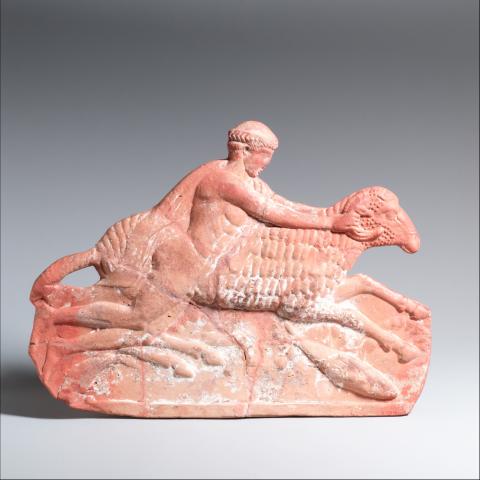
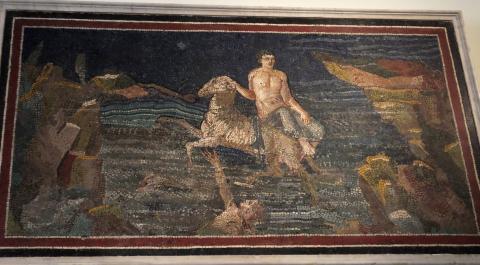
(1) περὶ Φρίξου ἱστοροῦσιν ὡς ὁ κριὸς αὐτῷ προὔλεγεν ὅτι ὁ πατὴρ αὐτοὺς μέλλοι θύειν· καὶ λαβὼν τὴν ἀδελφὴν αὐτοῦ ἀναβάς τε ἐπ’ αὐτὸν σὺν αὐτῇ, διὰ τῆς θαλάσσης ἀφίκοντο εἰς τὸν Εὔξεινον πόντον, διὰ τριῶν ἢ τεσσάρων ἡμερῶν τὸ πᾶν διανύσαντες. (2) ὅπερ ἐστὶ δύσπιστον, κριὸν θᾶττον νηὸς διανήχεσθαι, καὶ ταῦτα βαστάζοντα δύο ἀνθρώπους καί που σιτία καὶ ποτὰ καὶ ἑαυτῷ καὶ ἐκείνοις (οὐ γὰρ δήπου ἄσιτοι τοσοῦτον χρόνον διέμενον). (3) εἶτα Φρίξος τὸν τὴν σωτηρίαν αὐτῷ φράσαντα κριὸν καὶ διασώσαντα σφάξας καὶ τὸ δέρμα ἀποδείρας ἔδωκεν ἕδνον Αἰήτῃ τῆς θυγατρὸς αὐτοῦ (ὁ δὲ Αἰήτης τῶν τόπων ἐκείνων τότε ἐβασίλευεν). (4) ὅρα δὲ πῶς καὶ τὰ δέρματα τότε σπάνια ἦν, ὥστε βασιλέα ἕδνον τῆς ἰδίας θυγατρὸς τὸ κώδιον λαβεῖν. (5) ἢ οὕτω τοῦ μηδενὸς ἀξίαν τὴν ἑαυτοῦ θυγατέρα ἐνόμιζεν; (6) ἤδη δέ τινες, ἵνα τὸν γέλωτα τοῦτον ἐκφύγωσι, “χρυσοῦν” φασιν “ἦν τὸ δέρμα τοῦτο”. (7) καὶ εἰ χρυσοῦν τὸ δέρμα ἦν, οὐκ ἐχρῆν τὸν βασιλέα λαβεῖν παρ’ ἀνδρὸς ξένου. (8) λέλεκται δὲ ὅτι καὶ Ἰάσων ἐπὶ τὸ κώδιον τοῦτο τὴν Ἀργὼ ἔστειλε καὶ τοὺς ἀρίστους τῶν Ἑλλήνων. (9) ἀλλ’ οὐκ ἂν οὔθ’ ὁ Φρίξος οὕτως ἀχάριστος ἦν ὥστε τὸν εὐεργέτην ἀνελεῖν, οὔτ’, εἰ καὶ σμαράγδιον ἦν τὸ κώδιον, ἔπλευσεν ἂν ἡ Ἀργὼ ἐπ’ αὐτό. (10) τὸ δὲ ἀληθὲς ἔχει ὧδε. (11) Ἀθάμας ὁ Αἰόλου τοῦ Ἕλληνος ἐβασίλευσε τῆς Φθίας. (12) ἦν δὲ αὐτῷ ἀνὴρ ἐπίτροπος τῶν χρημάτων καὶ τῆς ἀρχῆς, ὃν μάλιστα πιστὸν ἡγεῖτο καὶ πλείστου ἄξιον, ὄνομα δὲ ἦν αὐτῷ Κριός. (13) ἐπεὶ δὲ ἀπέθανεν ἡ μήτηρ, Φρίξῳ, ὅτι πρεσβύτερος ἦν, τὴν ἀρχὴν ἔδωκεν. (14) αἰσθόμενος δὲ ταῦτα ὁ Κριὸς πρὸς μὲν τὸν Ἀθάμαντα οὐδὲν λέγει, πρὸς δὲ τὸν Φρίξον φησί, κελεύων ἀπαλλάττεσθαι αὐτὸν ἐκ τῆς γῆς, καὶ αὐτὸς ναῦν στείλας καὶ ἐνθέμενος ὅ τι ἦν πολλοῦ ἄξιον Ἀθάμαντι καὶ γεμίσας τὴν ναῦν ἁπάντων ἀγαθῶν καὶ χρημάτων, ἐν οἷς καὶ εἰκὼν ἦν, ἣν ἡ μήτηρ Μέροπος, θυγάτηρ Ἡλίου (ὄνομα δ’ ἦν αὐτῇ Κῶς), αὐτὴ ἐκ τῶν ἰδίων χρημάτων ἑαυτῆς [εἰκόνα] ἰσόμετρον χρυσῆν ἐποιήσατο (ἦν δὲ ὁ χρυσὸς πολὺς καὶ λόγος περὶ αὐτοῦ μέγας ἐγίνετο). (15) ἐνέθετο οὖν εἰς τὴν ναῦν ταῦτα καὶ Φρίξον καὶ Ἕλλην, καὶ ᾤχετο ἀπιών. (16) ἡ μὲν οὖν Ἕλλη κατὰ τὸν πλοῦν ἀσθενήσασα ἀπέθανεν (ἐξ ἧς καὶ Ἑλλήσποντος ἐκλήθη)· αὐτοὶ δ’ ἀφικόμενοι εἰς τὸν Φᾶσιν κατοικοῦσιν ἐκεῖ, καὶ γαμεῖ Φρίξος τὴν τοῦ Κόλχων βασιλέως θυγατέρα Αἰήτου, δοὺς ἕδνον τὴν χρυσῆν εἰκόνα τῆς Κῶ. (17) ὕστερον δὲ Ἀθάμαντος τελευτήσαντος Ἰάσων πλεῖ τῇ Ἀργοῖ ἐπὶ τοῦτον τὸν χρυσὸν τῆς Κῶ, ἀλλ’ οὐχὶ δέρμα κριοῦ. (18) οὕτως ἔχει ἡ ἀλήθεια.
notes
Phrixus and his sister Helle were the children of Athamas and Nephele. When their stepmother, Ino, plotted to have them killed as human sacrifices, a flying ram with a golden fleece rescued them and carried them away. As they were flying across the sea, Helle fell off the ram’s back and drowned, giving her name to the strait known as the Hellespont. Phrixus continued on the journey to Colchis, on the eastern shores of the Black Sea. There, the ram’s golden fleece was given to King Aeetes, who would possess it until the arrival of Jason and the Argonauts.
For the basic elements of the myth, of which there were many competing versions in antiquity, see Ovid, Fasti 3.851–76; Pausanius 9.34.5; Apollodorus, Bibliotheca 1.9.1; Hyginus, Fabulae 3.
For ancient depictions of this myth, see Terracotta Plaque ca. 450 BCE, Roman Mosaic ca. 50–79 CE.
1
ἱστοροῦσιν: “people report.”
προὔλεγεν: the prefixes περι– and προ– do not typically contract with initial vowels. When they do, the peculiarity is marked with the use of diacritics, as here.
μέλλοι: optative verb in an indirect statement introduced by a past tense verb (προὔλεγεν); translate as if it were indicative, “he warned that his father was going to.”
αὐτοὺς: refers to both Phrixus and his sister, Helle.
ἐπ’ αὐτὸν: refers to ὁ κριὸς.
τὸ πᾶν: “the whole [journey].”
2
ὅπερ ἐστὶ δύσπιστον … καὶ ἑαυτῷ καὶ ἐκείνοις: the structure of the sentence is as follows: “What in particular is really hard to believe (ὅπερ ἐστὶ δύσπιστον) is that a ram swims faster than a ship (κριὸν θᾶττον νηὸς διανήχεσθαι), even though (καὶ ταῦτα) it carries two people and somehow food and water both for itself and for those other two people … (βαστάζοντα δύο ἀνθρώπους καί που σιτία καὶ ποτὰ καὶ ἑαυτῷ καὶ ἐκείνοις).”
ὅπερ: the suffix –περ gives the relative clause a sense of exclusivity, “what in particular.”
θᾶττον: comparative adverb of ταχύς, “faster” or “more quickly.”
καὶ ταῦτα: roughly equivalent to καίπερ here; see 12.2.
καὶ ἐκείνοις: referring to the two human passengers; i.e., Phrixus and Helle.
3
ἔδωκεν ἕδνον Αἰήτῃ τῆς θυγατρὸς αὐτοῦ: “He gave [the fleece] to Aeetes as bride-price/wedding payment for his daughter.”
4
ὅρα δὲ πῶς: the verb is imperative; “And see how.”
καὶ: adverbial.
ὥστε: natural result clause, followed by an accusative subject and infinitive verb; “so that.”
5
τοῦ μηδενὸς: μηδέν can be used with the definite article to mean “nothing.”
ἐνόμιζεν: the subject is Αἰήτης.
6
ἵνα … ἐκφύγωσι: purpose clause.
7
καὶ εἰ: present counterfactual conditional. Conditional clauses introduced by καὶ εἰ or εἰ (...) καί can be concessive, “even if.” The word ἄν is sometimes omitted when the sense of unreality of the apodosis is otherwise sufficiently clear (S. 2320 see notes on 3.2 above and 42.7 below).
8
λέλεκται: 3rd sing. pf. indic. pass. > λέγω.
καὶ: adverbial.
ἐπὶ τὸ κώδιον τοῦτο: ἐπὶ + acc., indicating purpose. Jason gathered together the Argonauts “for this fleece,” i.e., to obtain the fleece.
9
ἀλλ’ οὐκ ἂν οὔθ’ ὁ Φρίξος οὕτως ἀχάριστος ἦν: a past-tense indicative verb can appear with ἄν to indicate a counterfactual statement. The unmet condition of that statement is implied.
οὐκ … οὔθ’: οὔθ’ > οὔ|τε. Double negatives intensify one another rather than cancel one another out when the second negative is a compound word.
οὕτως: “so,” correlates with ὥστε, which triggers a result clause.
ὥστε … ἀνελεῖν: natural result clause.
οὔτ’, εἰ καὶ σμαράγδιον ἦν … ἔπλευσεν ἂν: past counterfactual condition; “nor, even if the fleece were made of emerald, would the Argo have sailed in pursuit of it.”
10
ἔχει ὧδε: “is as follows” (LSJ ἔχω B.II.2).
12
αὐτῷ: refers to Ἀθάμας.
ἐπίτροπος: in apposition to ἀνήρ.
14
αἰσθόμενος δὲ ταῦτα: ταῦτα refers most naturally to the transfer of power to Phrixus just described.
αὐτὸν: refers to Phrixus.
αὐτὸς: refers to Krios (“Ram”), the steward.
ὅ τι ἦν πολλοῦ ἄξιον Ἀθάμαντι: dative of possessor, “whatever Athamas had that was of great value.” A space is placed between ὅ and τι to distinguish the neuter singular indefinite relative pronoun (ὅστις, ἥτις, ὅ τι) from the conjunction ὅτι “that,” “because.”
λόγος περὶ αὐτοῦ μέγας ἐγίνετο: a neat illustration of Palaephatus’s conviction (discussed in his preface) that all fanciful stories have their origins in some real event, which is later distorted or misunderstood.
15
Ἕλλην: refers to Phrixus’ sister Helle (Ἕλλη –ης, ἡ), as opposed to the male name Hellen (Ἕλλην –ηνος, ὁ) mentioned above in sentence 11.
ᾤχετο ἀπιών: “he went off.” The verb οἴχομαι means “go” and can combine with a participle to indicate the manner of the departure.
16
ἐξ ἧς: “from her,” i.e., Helle.
17
Ἀθάμαντος τελευτήσαντος: genitive absolute.
vocabulary
1
Φρίξος –ου, ὁ Phrixus (male name)
ἱστορέω, contr. to report
κριός –ου, ὁ ram
προλέγω (impf προὔλεγον), προλέξω, προέλεξα, —, προέλεγμαι, προελέχθην to foretell; warn
ἀδελφή –ης, ἡ sister
ἀναβαίνω, ἀναβήσομαι, ἀνέβην, ἀναβέβηκα, ἀναβέβαμαι, ἀνεβάθην to mount, climb onto
Εὔξεινος –ον Euxine or Hospitable Sea (a euphemism for the Black Sea)
πόντος –ου, ὁ sea
διανύω, διανύσω, διήνυσα, διήνυκα, διήνυσμαι, διηνύσθην to traverse
2
δύσπιστος –ον hard to believe
διανήχομαι to swim, swim across (something)
βαστάζω, βαστάσω, ἐβαστασα, βεβάστακα, βεβάσταγμαι, ἐβαστάχθην to carry, transport
σιτίον –ου, τό food
ποτόν –οῦ, τό drink
δήπου, adv. presumably
ἄσιτος –ον without food
διαμένω, διαμενῶ, διέμεινα, διαμεμένηκα, —, — to endure
3
διασῴζω, διασώσω, διεσωσα, διασέσωκα, διασέσωσμαι / διασέσωμαι, διεσώθην to save
σφάζω, σφάξω, ἔσφαξα, ἔσφακα, ἔσφαγμαι, ἐσφάγην to slaughter
δέρμα –ατος, τό skin, hide
ἀποδέρω, ἀποδερῶ, ἀπέδειρα, —, —, ἀπεδάρην to flay, remove the skin
ἕδνον –ου, τό bride-price; wedding gift
Αἰήτης –ου, ὁ Aeetes, mythical king of Colchis, on the eastern shores of the Black Sea
βασιλεύω to be king, rule (+ gen.)
4
σπάνιος –α –ον rare
κώδιον –ου, τό fleece (diminutive form of κῶας)
6
γέλως –ωτος, ὁ laughter, ridicule
ἐκφεύγω, ἐκφεύξω, ἐξέφυγον, ἐκπέφευγα, —, — to escape, avoid
χρύσεος (–οῦς) –εα (–ῆ) –εον (–οῦν) golden
8
Ἰάσων –ονος, ὁ Jason, a Greek hero; leader of the Argonauts
Ἀργώ –οῦς, ἡ Argo, a ship; according to some accounts the first ever to sail
στέλλω, στελῶ, ἔστειλα, ἔσταλκα, ἔσταλμαι, ἐστάλην to prepare, equip
9
ἀχάριστος –ον ungrateful
εὐεργέτης –ου, ὁ benefactor
σμαράγδιος –α –ον made of emerald; studded with emerald
11
Ἀθάμας –αντος, ὁ Athamas (male name)
Αἴολος –ου, ὁ Aeolus (male name) a human, not to be confused with the wind god Aeolus
Ἕλλην –ηνος, ὁ Hellen, father of Aeolus, grandfather of Athamas, eponymous ancestor of the Greeks
Φθία –ας, ἡ Phthia, in Thessaly
12
ἐπίτροπος –ον (usually subst.) supervisor, guardian
πιστός –ή –όν trustworthy, faithful
Κριός –οῦ, ὁ Ram (male name)
14
ἐντίθημι, ἐνθήσω, ἐνέθηκα, ἐντέθεικα, ἐντέθειμαι, ἐνετέθην to stow
γεμίζω, γεμίσω/γεμιῶ, ἐγέμισα, γεγέμικα, γεγέμισμαι, ἐγεμίσθην to fill something (acc.) with something (gen.)
εἰκών, εἰκόνος, ἡ image, statue
Μέροψ –οπος, ὁ Merops (male name)
Ἥλιος –ου, ὁ Helios, the sun god
Κῶς –ῶ, ἡ Cos/Ko (female name), also the name of a Greek island; Palaephatus connects it with κῶας, “fleece”
ἰσόμετρος –ον life-sized
χρυσός –οῦ, ὁ gold
15
Ἕλλη –ης, ἡ Helle (female name); Phrixus’ sister
οἴχομαι, οἰχήσομαι, —, ᾤχηκα/ᾤχωκα, ᾤχημαι, — to go
ἄπειμι, —, —, —, —, — to go away
16
πλοῦς –οῦ, ὁ voyage (by ship)
ἀσθενέω, contr. to weaken, fall ill
Ἑλλήσποντος –ου, ὁ Hellespont, the strait of water separating Asia from Europe near ancient Troy
Φᾶσις –ιος, ὁ Phasis, a river in Colchis
κατοικέω, κατοικήσω, κατῴκησα / κατοίκησα, κατῴκηκα, κατῴκημαι, κατῳκήθην to settle, dwell
γαμέω, γαμῶ, ἔγημα, γεγάμηκα, γεγάμημαι, ἐγαμήθην to marry
Κόλχος –ου, ὁ Colchian, a person from Colchis