(1) καὶ οὗτος ὁ μῦθος παγγέλοιος, ὡς δὴ τοῦ Γλαύκου ἐν πίθῳ μέλιτος ἀποθανόντος ὁ Μίνως ἐν τῷ τύμβῳ κατώρυξε τὸν Κοιράνου Πολύιδον (ὃς ἦν ἐκ τοῦ Ἄργους), ὃς ἰδὼν δράκοντα ἑτέρῳ δράκοντι τεθνεῶτι πόαν ἐπιθέντα καὶ ἀναστήσαντα αὐτόν, καὶ αὐτὸς ταὐτὸ ποιήσας τῷ Γλαύκῳ, ἀνέστησεν αὐτόν. (2) ὅπερ ἐστὶν ἀδύνατον, ἀποθανόντα ἄνδρα ἀναστῆσαι ἢ ὄφιν, ἀλλ’ οὐδὲ ἄλλο ζῷον. (3) ἐγένετο δέ τι τοιόνδε. (4) Γλαῦκος πιὼν μέλι ἐταράχθη τὴν κοιλίαν, χολῆς δὲ αὐτῷ πλείονος κινηθείσης καὶ λειποθυμήσαντος, ἀφίκοντο οἵ τε δὴ ἄλλοι ἰατροί, ἅτε χρήματα ληψόμενοι, καὶ δὴ καὶ Πολύιδος, ἤδη δὲ ἐκλείποντος αὐτοῦ, εἰδώς τινα πόαν ὠφελοῦσαν, ἣν ἔμαθε παρά τινος ἰατροῦ, ᾧ ὄνομα ἦν Δράκων, καὶ ταύτῃ τῇ βοτάνῃ χρησάμενος, ὑγιᾶ ἐποίησε τὸν Γλαῦκον. (5) ἔλεγον οὖν οἱ ἄνθρωποι “Πολύιδος Γλαῦκον ὑπὸ μέλιτος ἀποθανόντα βοτάνῃ ἀνέστησεν, ἣν παρὰ Δράκοντος ἔμαθεν.” (6) ἀφ’ οὗ οἱ μυθογράφοι τὸν μῦθον ἔπλασαν.
notes
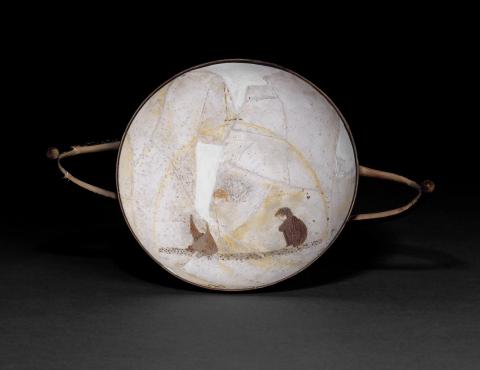
In Greek myth, Glaucus, son of King Minos, fell into a vat of honey and drowned. Unable to find his child, the king consulted the Delphic oracle, who advised finding a true likeness of a creature born to him. A Corinthian seer, Polyidus, arrived and solved this riddle by closely observing the animals on Minos’s estate. He then discovered that Glaucus had drowned in honey. When he revealed this to Minos, the king entombed Polyidus with Glaucus’s corpse, demanding the seer revive his son. Polyidus did so by imitating a snake that he witnessed reviving another snake. Aeschylus, Sophocles, and Euripides all wrote (now lost) tragedies about this mythic episode.
For the basic elements of this myth, see Apollodorus, Bibliotheca 3.3.1.
For ancient depictions of this myth, see Glaucus and Polyidus within the tomb ca. 460-450 BCE.
1
τοῦ Γλαύκου … ἀποθανόντος: genitive absolute. According to myth, Glaucus was the son of Minos. As a child, he fell into a jar of honey while playing. When Minos could not find his son, he sought divine help.
κατώρυξε: 3rd sing. aor. indic. act. > κατορύσσω.
Κοιράνου: Coeranus, father of Polyidus.
ὃς ἰδὼν: Polyidus is the subject. ἰδὼν, aor. act. ptc. > ὁράω.
ἀναστήσαντα: “having revived,” ptc. sing. aor. act. masc. acc. > ἀνίστημι. According to myth, while entombed, Polyidus continued observing animals. When a snake entered the tomb, he killed it. Another snake soon entered the tomb and brought the dead snake back to life. Polyidus repeated this life-restoring technique with Glaucus.
ταὐτὸ: “the same thing,” sing. neut. acc. > τὸ αὐτὸ.
2
ὅπερ ἐστὶν ἀδύνατον: “what is particularly impossible is this” + infin. The suffix –περ gives the relative clause a sense of exclusivity.
ἀλλ’ οὐδὲ ἄλλο ζῷον: “nor any other living thing.”
3
τι τοιόνδε: “something like this.” The pronoun τοιόνδε “points” ahead to what P. is about to describe.
4
μέλι: sing. neut. acc.
τὴν κοιλίαν: accusative of respect.
χολῆς δὲ αὐτῷ πλείονος κινηθείσης: genitive absolute, “and when more of his bile was stirred up,” i.e., Glaucus grew sicker.
καὶ λειποθυμήσαντος: another genitive absolute. The subject is Glaucus.
τε: best left untranslated. It technically correlates with καὶ δὴ καὶ later in the sentence: “both (τε) … and in particular (καὶ δὴ καὶ).”
ἅτε χρήματα ληψόμενοι: “in order to get their hands on money.” The word ἅτε indicates the objective reason for what has been stated, i.e., why doctors are arriving. The future participle indicates intention or purpose.
καὶ δὴ καὶ: a connective καί, an emphatic δή, and an adverbial καί, “and in particular.” P. uses the construction to single out Polyidus from among the doctors who arrived.
ἐκλείποντος αὐτοῦ: genitive absolute. The subject is Glaucus.
εἰδώς: ptc. sing. pf. act. masc. nom. > οἶδα, with present meaning. Refers to Polyidus.
ὠφελοῦσαν: “of use,” “useful.”
χρησάμενος: Polyidus.
ᾧ ὄνομα ἦν Δράκων: dative of possessor, “whose name was Snake.”
5
ὑπὸ μέλιτος ἀποθανόντα: “having died from honey.”
6
ἀφ’ οὗ: “from this (expression).”
οἱ μυθογράφοι: this is one of the earliest two recorded uses of this term (see also Hellanicus, Fragment 185, line 16 Jacoby). It was not until the 19th century that Anton Westermann first defined the genre of “mythography,” of which Palaephatus is the first surviving exemplar.
vocabulary
1
μῦθος –ου, ὁ tale
παγγέλοιος –α –ον utterly laughable
Γλαύκος –ου, ὁ Glaucus, the son of Minos
πίθος –ου, ὁ storage jar
μέλι, μέλιτος, τό honey
Μίνως –ωος, ὁ Minos, king of Knossos, Crete
τύμβος –ου, ὁ tomb
κατορύσσω, κατορύξω, κατώρυξα, κατορώρυχα, κατορώρυγμαι, κατωρύχθην/κατωρύγην to bury
Κοίρανος –ου, ὁ Coeranus, father of Polyidus
Πολύιδος –ου, ὁ Polyidus of Corinth, a famous seer
Ἄργος –ους, τό Argos
δράκων –οντος, ὁ snake, Snake (male name, see. Xenephon, Hellenica 3.2.11, etc.)
πόα –ας, ἡ herb
ἐπιτίθημι, ἐπιθήσω, ἐπέθηκα, ἐπιτέθεικα, ἐπιτέθειμαι, ἐπετέθην to place (acc.) onto (dat.)
ἀνίστημι, ἀναστήσω, ἀνέστησα, ἀνέστην, ἀνέστηκα, ἀνέσταμαι, ἀνεστάθην to revive
2
ὄφις –εως, ὁ serpent
ζῷον –ου, τό animal, living being
4
πίνω, πίομαι/πιοῦμαι, ἔπιον, πέπωκα, πέπομαι, ἐπόθην to drink
ταράσσω, ταράξω, ἐτάραξα, τετάραχα, τετάραγμαι, ἐταράχθην to disturb, upset
κοιλία –ας, ἡ belly, stomach
χολή –ῆς, ἡ bile
πλείων –ον more
λ(ε)ιποθυμέω, λειποθυμήσω, ἐλ(ε)ιποθύμησα, —, —, — to faint
ἰατρός –οῦ, ὁ doctor
ἅτε since, because
ἐκλείπω, ἐκλείψω, ἐξέλιπον, ἐκλέλοιπα, ἐκλέλειμμαι, ἐξελείφθην to expire, die
ὠφελέω, contr. to help, be of use
βοτάνη –ης, ἡ herb
ὑγιής –ές healthy, in good health
6
μυθογράφος –ου, ὁ writer of tales
πλάττω, πλάσω, ἔπλασα, πέπλακα, πέπλασμαι, ἐπλάσθην to fabricate