(1) καινέα φασὶν ὅτι ἄτρωτος ἦν. (2) ὅστις δὲ ὑπολαμβάνει ἄτρωτον εἶναί τινα ἀπὸ σιδήρου ἄνθρωπον ὄντα, ματαιάζει. (3) ἡ δὲ ἀλήθεια ἔχει ὧδε. (4) Καινεὺς ἦν ἀνὴρ Θετταλὸς τὸ γένος, ἀγαθὸς τὰ πολεμικὰ καὶ ἐπιστήμων τοῦ μάχεσθαι· γενόμενος δὲ ἐν πολλαῖς μάχαις οὐδέποτε ἐτρώθη, οὐδὲ ὅτε Λαπίθαις συμμαχῶν πρὸς Κενταύρους ἀπέθανεν· ἀλλὰ συλλαβόντες αὐτόν, μόνον κατέχωσαν, καὶ οὕτως ἐτελεύτησεν. (5) ἔλεγον οὖν οἱ Λαπίθαι, ἀνελόμενοι τὸν νεκρὸν αὐτοῦ καὶ εὑρόντες μὴ τετρωμένον τὸ σῶμα, “Καινεὺς τόν τε ἄλλον βίον ἄτρωτος ἦν καὶ ἀπέθανεν ἄτρωτος.”
notes
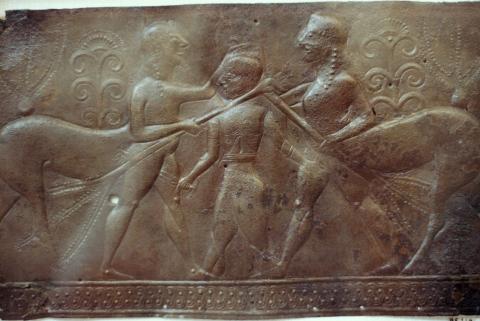
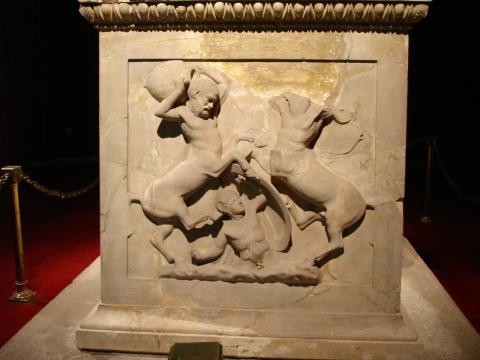
According to myth, Caeneus, a Lapith, was originally born a woman named Caenis. After being sexually assaulted by Poseidon, she wished to become a man to avoid such an outrage again. Poseidon granted her wish, transforming Caenis into Caeneus and making him impervious to swords. As a formidable warrior, Caeneus participated in the famous battle between the Centaurs and Lapiths. Eventually, the Centaurs killed Caeneus by using blunt weapons to hammer him into the earth. P. focuses on rationalizing the idea that a human being can be impervious to swords.
For the basic elements of this myth, see Apollodorus, Epitome 1.22; Ovid, Metamorphoses 12.169–535.
For depictions of this myth, see bronze relief of Caeneus and Centaurs ca. 630 BCE; sarcophagus with Caeneus and Centaurs ca. 430-420 BCE.
1
Καινέα φασὶν ὅτι: this construction is called prolepsis (πρόληψις “taking before,” see S. 2182). The accusative (Καινέα) is the subject of the indirect statement despite standing outside of it, “people say of Caeneus, that he.” A famous example of prolepsis in English is, “consider the lilies of the field, how they grow.” The effect is to place extra emphasis on Caeneus’s name.
φασὶν: “people say.”
ἄτρωτος: the rationalization hinges on the dual meaning of this word, both “uncut” and “impervious.”
2
ὅστις: “whoever.”
ἄτρωτον: P. takes care to account for both meanings of the word: a human qua human is not “invincible” nor, by a weapon, “unwounded.”
3
ἔχει ὧδε: “is as follows” (LSJ ἔχω B.II.2).
4
τὸ γένος: accusative of respect, “Thessalian by birth.”
τὰ πολεμικὰ: accusative of respect.
τοῦ μάχεσθαι: articular infinitive.
ἐτρώθη: 3rd sing. aor. indic. pass. > τιτρώσκω.
οὐδὲ ὅτε: “not even when.”
πρὸς Κενταύρους: “against the Centaurs.”
ἀλλὰ: “instead.”
συλλαβόντες: refers to Centaurs.
αὐτόν: refers to Caeneus.
μόνον: adverbial.
κατέχωσαν: 3rd pl. aor. indic. act. > καταχώννυμι.
ἐτελεύτησεν: subject is Caeneus.
5
ἀνελόμενοι: “taking up for burial,” ptc. pl. aor. mid. masc. nom. > ἀναιρέω (LSJ ἀναιρέω B.I.2).
αὐτοῦ: refers to Caeneus.
τόν τε ἄλλον βίον: accusative of duration of time.
vocabulary
1
Καινεύς –έως, ὁ Caeneus (male name of a Greek hero)
ἄτρωτος –ον uncut, unwounded; invulnerable
2
σίδηρος –ου, ὁ iron; (by metonymy) an iron tool/weapon
ματαιάζω, —, ἐματαίασα, —, —, — to speak foolishly
4
Θετταλός –ή –όν of Thessaly, Thessalian
πολεμικός –ή –όν of war, martial; subst. matters of war
ἐπιστήμων –ον skilled in (+ gen.)
οὐδέποτε, adv. not ever, never
τιτρώσκω, τρώσω, ἔτρωσα, τέτρωκα, τέτρωμαι, ἐτρώθην to cut, wound, injure
Λαπίθαι –ῶν, οἱ Lapiths, a mythical tribe from Thessaly
συμμαχέω, contr. to fight alongside; ally with (+ dat.)
Κένταυρος –ου, ὁ Centaur, a mythical beast, typically a hybrid of man and horse
συλλαμβάνω, συλλήψομαι, συνέλαβον, συνείληφα, συνείλημμαι, συνελήφθην to take, seize
καταχώννυμι, καταχώσω, κατέχωσα, —, κατακέχωσμαι, κατεχώσθην to bury
5
νεκρός –οῦ, ὁ corpse