(1) λέγεται ὡς Λυγκεὺς καὶ τὰ ὑπὸ γῆν ἑώρα. (2) τοῦτο δὲ ψευδές. (3) τὸ δὲ ἀληθὲς ἔχει ὧδε. (4) Λυγκεὺς πρῶτος ἤρξατο μεταλλεύειν χαλκὸν καὶ ἄργυρον καὶ τὰ λοιπά· ἐν δὲ τῇ μεταλλείᾳ λύχνους καταφέρων ὑπὸ τὴν γῆν, τοὺς μὲν κατελίμπανεν ἐπὶ τοῦ τόπου, αὐτὸς δὲ θυλάκους ἀνέφερε τοῦ χαλκοῦ καὶ τοῦ σιδήρου. (5) ἔλεγον οὖν οἱ ἄνθρωποι “Λυγκεὺς καὶ τὰ ὑπὸ γῆν ὁρᾷ καὶ καταδύνων ἀργύριον ἀναφέρει.”
notes
Lynceus was the son of Aphareus, famous for his power of sight, which became proverbial. Various accounts indicate that he was able to see not only at great distances, but even in the dark, through solid objects, and deep into the bowels of the earth. He took part in the Calydonian boar hunt and was a member of the Argonauts.
For the proverbial eyesight of Lynceus, see Apollonius Rhodius, Argonautica 1.151–55; Pindar, Nemean Odes 10.61–72; Apollodorus, Bibliotheca 3.11.2.
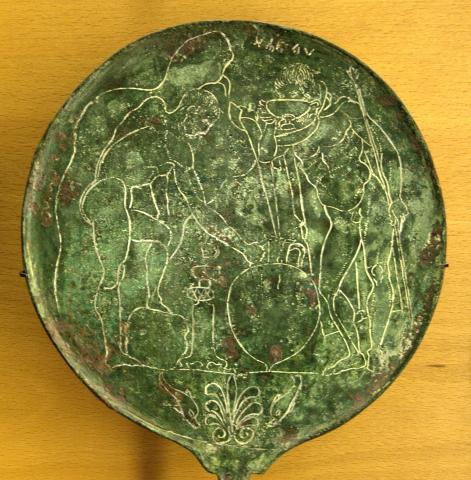
For depictions of this myth, see mirror with Lynceus (?) 4th-3rd cent BCE.
1
λέγεται: “it is said.”
καὶ: adverbial.
ἑώρα: 3rd sing. impf. indic. act. > ὁράω.
τὰ: the article substantivizes the preposition, “things under the earth.”
3
ἔχει ὧδε: “is as follows” (LSJ ἔχω B.II.2).
4
ἤρξατο: ”began,” 3rd sing. aor. indic. mid. > ἄρχω.
τὰ λοιπά: “the rest.”
τοὺς μὲν … αὐτὸς δὲ: supply λύχνους. Since Lynceus kept the lamps in the mine and emerged without any lamps but with sacks of precious metals, people assumed that he could see in the dark.
ἐπὶ τοῦ τόπου: “in that place,” i.e., the mine.
5
οὖν: the particle marks a change of topic. Here, it is from what happened to what was said about what happened, i.e., from deeds to words.
καὶ: adverbial.
vocabulary
1
Λυγκεὺς –έως, ὁ Lynceus, a sharp-sighted Argonaut
2
ψευδής –ες false
4
μεταλλεύω, μεταλλεύσω, ἐμετάλλευσα, —, —, — to go mining, mine, excavate
χαλκός –οῦ, ὁ copper
ἄργυρος –ου, ὁ silver
μεταλλεία –ας, ἡ the search for ore
λύχνος –ου, ὁ oil lamp
καταφέρω, κατοίσω, κατήνεγκα, κατενήνοχα, κατενήνεγμαι, κατηνέχθην to bring down
καταλιμπάνω, —, —, —, —, — to leave behind
θύλακος –ου, ὁ sack
ἀναφέρω, ἀνοίσω, ἀνήνεγκα/ἀνήνεγκον, ἀνενήνοχα, ἀνενήνεγμαι, ἀνηνέχθην to carry up
σίδηρος –ου, ὁ iron
5
καταδύνω, καταδύσω, κατέδυσα/κατέδυν, καταδέδυκα, —, — to descend, spelunk