(1) φασὶν Εὐρώπην τὴν Φοίνικος ἐπὶ ταύρου ὀχουμένην διὰ τῆς θαλάσσης ἐκ Τύρου εἰς Κρήτην ἀφικέσθαι. (2) ἐμοὶ δὲ οὔτ’ ἂν ταῦρος οὔθ’ ἵππος δοκεῖ τοσοῦτον πέλαγος διανύσαι [δύνασθαι], οὔτε κόρη ἐπὶ ταῦρον ἄγριον ἀναβῆναι· ὅ τε Ζεύς, εἰ ἐβούλετο Εὐρώπην εἰς Κρήτην ἐλθεῖν, εὑρεῖν ἂν αὐτῇ ἑτέραν πορείαν καλλίονα. (3) τὸ δὲ ἀληθὲς ἔχει ὧδε. (4) ἀνὴρ Κνώσιος ὀνόματι Ταῦρος ἐπολέμει τὴν Τυρίαν χώραν. (5) τελευτῶν οὖν ἐκ Τύρου ἥρπασεν ἄλλας τε πολλὰς κόρας καὶ δὴ καὶ τὴν τοῦ βασιλέως θυγατέρα Εὐρώπην. (6) ἔλεγον οὖν οἱ ἄνθρωποι “Εὐρώπην τὴν τοῦ βασιλέως Ταῦρος ἔχων ᾤχετο.” (7) τούτων γενομένων προσανεπλάσθη ὁ μῦθος.
notes
According to myth, Europa was a Tyrian princess who was kidnapped by Zeus. According to some accounts, Zeus transformed into a bull, enticed the young girl to mount him, and rode across the sea from Tyre to Crete. Other accounts say that Zeus merely sent a bull (possibly Minos’s famous bull) to fetch her in the fashion described. P. would seem to have the latter version in mind. For him, the idea that a bull can swim long distances and that a young girl would mount a bull is preposterous.
For the basic elements of this myth, see Apollodorus, Bibliotheca 3.1.1–2; Moschus, Europa 1–166; Ovid, Metamorphoses 2.836–875.
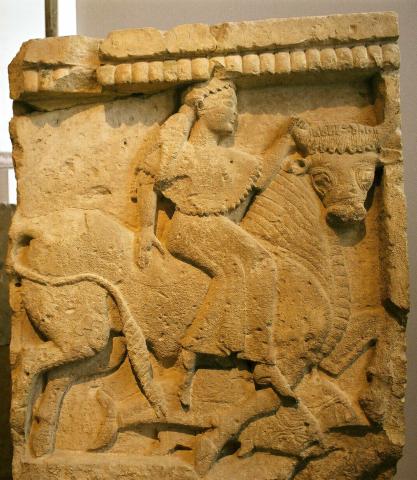
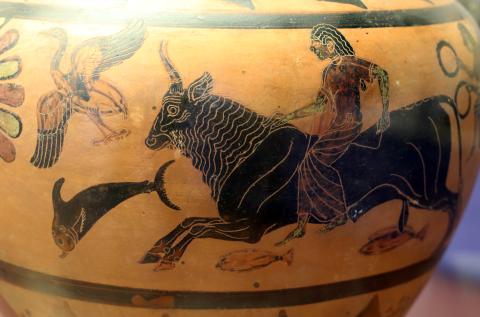
For depictions of this myth, see Europa on bull 6th-7th c. BCE; Europa on bull ca. 530-520 BCE.
1
φασὶν: “people say.”
Εὐρώπην: accusative subject of an indirect statement.
τὴν Φοίνικος: “the daughter of Phoenix.”
ἀφικέσθαι: infinitive within indirect statement.
2
ἐμοὶ δὲ οὔτ’ ἂν ταῦρος οὔθ’ ἵππος δοκεῖ τοσοῦτον πέλαγος διανύσαι [δύνασθαι]: “I don’t think a bull or even a horse would be able to swim through so much sea.” Square brackets indicate a word or phrase that the editor suspects to be an explanatory note that was added by a reader and became part of the text.
οὔτ’… ταῦρος οὔθ’ ἵππος: both are the subject of δοκεῖ.
ἂν … διανύσαι [δύνασθαι]: the particle ἂν marks the counterfactual nature of the clause.
οὔτε κόρη ἐπὶ ταῦρον ἄγριον ἀναβῆναι: supply δοκεῖ ἐμοὶ which takes κόρη as its subject, “nor do I think a girl.”
ὅ τε: the article takes an accent because it is followed by an enclitic.
εἰ ἐβούλετο … ἐλθεῖν: present counterfactual protasis.
εὑρεῖν ἂν: supply ἐδόκει from the previous clause and you have a present counterfactual apodosis, “(he) would have found.” P. largely avoids rationalizing the “unbelievable” actions of the gods in the way Euhemerus will do later in the Hellenistic period. Compare his remarks on Artemis in Ch. 6.
αὐτῇ: refers to Europa. Indirect object with εὑρεῖν.
3
ἔχει ὧδε: “is as follows” (LSJ ἔχω B.II.2).
4
ὀνόματι: “by name.”
Ταῦρος: in apposition to ἀνὴρ.
5
τελευτῶν οὖν: “ultimately” (LSJ τελευτάω II.4). The particle, οὖν, marks a change of topic. Here, it is a quick change from the start of the war to its aftermath.
τε: best left untranslated. It technically correlates with καὶ δὴ καὶ later in the sentence: “both (τε) … and in particular (καὶ δὴ καὶ).”
καὶ δὴ καὶ: a connective καί, an emphatic δή, and an adverbial καί, “and in particular.” P. uses the construction to single out Europa from among those women whom Bull took.
Εὐρώπην: in apposition to θυγατέρα.
6
οὖν: the particle marks a change of topic. Here, it is from what happened to what was said about what happened, i.e., from deeds to words.
τὴν τοῦ βασιλέως: “the daughter of the king.”
ἔχων ᾤχετο: “took off with.” The verb οἴχομαι means “go” and can combine with a participle that indicates the manner of the departure.
7
τούτων γενομένων: genitive absolute.
vocabulary
1
Εὐρώπη –ης, ἡ Europa, a mythical female
Φοῖνιξ –ίκος, ὁ Phoenix, father of Europa and brother of Cadmus
ταῦρος –ου, ὁ bull
ὀχέω, ὀχήσω, ὠχησάμην, —, —, ὠχήθην, contr. to convey, carry
Τύρος –ου, ἡ Tyre, a Phoenician city
Κρήτη –ης, ἡ Crete
2
πέλαγος –ους, τό sea, high sea
διανύω, διανύσω, διήνυσα, διήνυκα, διήνυσμαι, διηνύσθην to traverse
κόρη –ης, ἡ girl
ἄγριος –α –ον wild
ἀναβαίνω, ἀναβήσομαι, ἀνέβην, ἀναβέβηκα, ἀναβέβαμαι, ἀνεβάθην to mount
Ζεύς Διός, ὁ Zeus
πορεία –ας, ἡ way of proceeding, mode of conveyance
4
Κνώσ(σ)ιος –α –ον of Knossos
Τύριος –α –ον of Tyre, Tyrian
5
ἁρπάζω, ἁρπάσω, ἥρπασα, ἥρπακα, ἥρπασμαι, ἡρπάσθην/ ἡρπάγην to carry away, snatch
οἴχομαι, οἰχήσομαι, —, ᾤχηκα and ᾤχωκα, ᾤχημαι, — to go
προσαναπλάττω, —, προσανέπλασα, —, —, προσανεπλάσθην to fabricate in addition
μῦθος –ου, ὁ tale