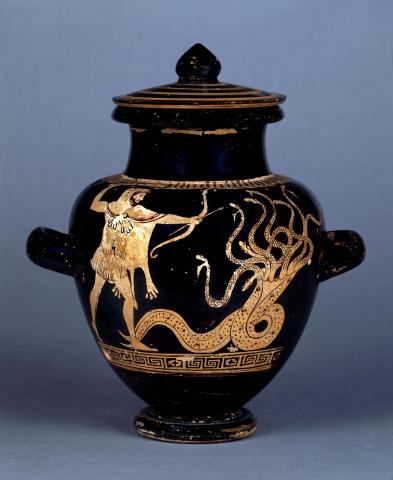
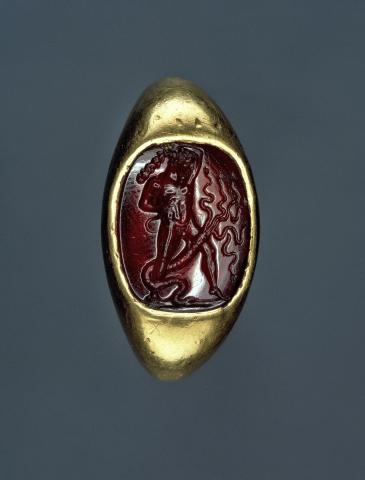
(1) λέγεται καὶ περὶ τῆς Ὕδρας τῆς Λερναίας ὅτι ὄφις ἦν ἔχων πεντήκοντα κεφαλάς, σῶμα δὲ ἕν, καὶ ἐπειδὴ αὐτῆς ἀφέλοιτο μίαν Ἡρακλῆς κεφαλήν, δύο ἀνεφύοντο. (2) καὶ ὁ Καρκίνος δὲ ἦλθε βοηθῶν τῇ Ὕδρᾳ· καὶ τότε δὴ ὁ Ἰόλαος ἀμύνει τῷ Ἡρακλεῖ, ἐπειδὴ καὶ τῇ Ὕδρᾳ ἤμυνεν ὁ Καρκίνος. (3) τούτων δὲ εἴ τις πείθεταί τι γενέσθαι, μάταιός ἐστιν· γελοία γὰρ καὶ ἡ ὄψις· καὶ πῶς, ὁπότε ἀφέλοιτο μίαν κεφαλήν, ὑπὸ τῶν λοιπῶν οὐ κατησθίετο καὶ ἤλγει; (4) ἦν οὖν τοιοῦτον. (5) Λέρνος ἦν βασιλεύς του χωρίου, ἔσχε δὲ ἀπ’ ἐκείνου τὸ ὄνομα καὶ τὸ χωρίον (ᾤκουν δὲ πάντες οἱ ἄνθρωποι τότε κατὰ κώμας, καὶ τοῦτο τὸ χωρίον Ἀργεῖοι νῦν ἔχουσιν). (6) ἦσαν δὲ πόλεις τότε Ἄργος, Μυκήνη, Τίρυνς, Λέρνη, καὶ βασιλεὺς ἐφ’ ἐκάστῳ ἐτέτακτο τῶν χωρίων τούτων. (7) οἱ μὲν οὖν ἄλλοι βασιλεῖς Εὐρυσθεῖ τοῦ Σθενέλου τοῦ Περσέως ὑπετάττοντο· εἶχε γὰρ τὸ μέγιστον καὶ πολυανδρότατον, τὰς Μυκήνας· ὁ δὲ Λέρνος οὐκ ἤθελεν αὐτῷ ὑποτετάχθαι. (8) ἐπολέμουν οὖν αὐτῷ διὰ τοῦτο. (9) ἦν δὲ τῷ Λέρνῳ ἐν τῇ εἰσβολῇ τῆς χώρας πολίχνιόν τι καρτερόν, καὶ ἐφρούρουν αὐτὸ πεντήκοντα τοξόται ἀνδρεῖοι, οἳ ἐπῄεσαν ἐπὶ τῷ πύργῳ ἀδιαλείπτως νύκτα καὶ ἡμέραν. (10) ὄνομα δὲ ἦν τῷ πολιχνίῳ Ὕδρα. (11) πέμπει οὖν Εὐρυσθεὺς Ἡρακλέα ἐκπορθήσοντα τὸ πολίχνιον. (12) οἱ δὲ περὶ Ἡρακλέα ἐπυρπόλουν τοὺς ἐπὶ τῷ πύργῳ τοξότας· ὁπότε δέ τις πληγεὶς πέσοι, δύο ἀνέβαινον τοξόται ἀνθ’ ἑνός, ἐπεὶ ἀνδρεῖος ἦν ὁ προανῃρημένος. (13) ἐπεὶ δὲ συνείχετο ὁ Λέρνος ὑπὸ τοῦ Ἡρακλέους τῷ πολέμῳ, μισθοῦται ἐπικούρους Κᾶρας. (14) ἦλθε δὲ αὐτῷ ἄγων τὴν στρατιὰν Καρκίνος ὀνόματι ἀνὴρ μέγας καὶ πολεμικός. (15) καὶ σὺν τούτῳ ἀντεῖχον πρὸς τὸν Ἡρακλέα. (16) εἶτα βοηθεῖ Ἰόλαος ὁ Ἰφικλέους ἀδελφιδοῦς ὢν τῷ Ἡρακλεῖ ἔχων στρατιὰν ἀπὸ Θηβῶν καὶ τὸν πεφυκότα πύργον πρὸς τῇ Ὕδρᾳ προσελθὼν ἐνέπρησε, καὶ σὺν ταύτῃ τῇ δυνάμει <ἐκ>πορθεῖ αὐτοὺς ὁ Ἡρακλῆς, καὶ τὴν Ὕδραν ἀναιρεῖ καὶ τὴν στρατιὰν ἀπόλλυσιν. (17) οὗ γενομένου γράφουσι τὴν Ὕδραν ὄφιν καὶ τὸν μῦθον προσαναπλάττουσιν.
notes
The killing of the Hydra was the second of Heracles’ legendary twelve labors. According to various myths, the Hydra was a beast with multiple heads (the exact number varies according to different sources) that terrorized the countryside around Lerna. When one of its heads was cut off, two more would grow up out of the severed neck. Heracles ultimately defeated the monster by using flames to cauterize each severed neck before it could sprout replacements.
For the basic elements of the myth, see Hesiod, Theogony 313–18; Diodorus Siculus 4.11.5–6; Ovid, Metamorphoses 9.64–76; and Apollodorus, Bibliotheca 2.5.2.
For ancient depictions of this myth, see Heracles and the Hydra red-figure stamnos ca. 460–450 BCE, Heracles and the Hydra intaglio ring.
1
λέγεται καὶ: “it is also said,” adverbial καί.
ἐπειδὴ … ἀφέλοιτο: the iterative optative (without ἄν) in a past time temporal clause refers to a habitual or repeated action, “whenever he cut (one) off.”
αὐτῆς: refers to the Hydra.
2
καὶ τότε δὴ … ἐπειδὴ καὶ: “at that time too … after … also.”
3
τούτων: partitive genitive with τι, “any of these things.”
γελοία γὰρ καὶ ἡ ὄψις: adverbial καί. Supply ἐστι.
ὁπότε ἀφέλοιτο: the iterative optative (without ἄν) in a past time temporal clause refers to a habitual or repeated action.
ὑπὸ τῶν λοιπῶν: refers to the other heads.
4
οὖν: the particle marks a change of topic. Here, it is from a description of what people say to a description of what really happened, i.e., from myth to history.
5
του: = τινος.
ἔσχε … καὶ τὸ χωρίον: the καὶ is adverbial, “the land also had.”
κατὰ κώμας: “in various hamlets.”
6
ἐτέτακτο: 3rd sing. plupf. indic. mid.-pass. > τάσσω.
7
οἱ μὲν οὖν ἄλλοι: “the rest of.” The particle, οὖν, marks transitions. Here it is a transition from the setting to the background for the narrative.
Εὐρυσθεῖ τοῦ Σθενέλου τοῦ Περσέως: both genitives are patronymics, “Eurystheus, son of Sthenelus, [who himself was] son of Perseus”; in other words, Perseus was Eurystheus’s grandfather.
τὸ μέγιστον καὶ πολυανδρότατον: supply χωρίον.
τὰς Μυκήνας: Mycenae; the name of this city sometimes appears in the singular Μυκήνη (as it did in the previous sentence), and sometimes in the plural (like ancient Athens, Ἀθῆναι), as it does here.
ὑποτετάχθαι: pf. infin. mid.-pass. > ὑποτάττω.
8
ἐπολέμουν: “they waged war against” + dat. The plural subject is presumably Eurystheus and his allies.
οὖν: the particle marks the transition from background to the narrative action itself.
αὐτῷ: refers to Lernos.
διὰ τοῦτο: “because of this,” i.e., the disloyalty of Lernos.
9
ἦν δὲ τῷ Λέρνῳ … πολίχνιόν τι καρτερόν: dative of possessor, “and Lernus had a certain strong fort.”
ἐπῄεσαν ἐπὶ τῷ πύργῳ: “they went onto the tower.”
ἐπῄεσαν: 3rd pl. impf. indic. act. > ἔπειμι.
νύκτα καὶ ἡμέραν: accusatives of duration of time.
10
τῷ πολιχνίῳ: dative of possessor.
11
πέμπει οὖν: the particle, οὖν, marks a turning point in the narrative. The verb is a historical present, which is used in narratives to underscore key moments. Translate as past tense.
ἐκπορθήσοντα: future participle implying purpose, “to destroy.”
12
ὁπότε δέ τις πληγεὶς πέσοι: the iterative optative (without ἄν) in a past time temporal clause refers to a habitual/repeated action.
πληγεὶς: ptc. sing. aor. pass. masc. nom. > πλήττω.
ἀνέβαινον: supply ἐπὶ τῷ πύργῳ, “they went up onto the tower.”
ἐπεὶ ἀνδρεῖος ἦν ὁ προανῃρημένος: “since the one previously killed was brave.”
προανῃρημένος: ptc. sing. pf. pass. masc. nom. > προαναιρέω.
13
τῷ πολέμῳ: “in the war.”
Κᾶρας: Carian mercenaries were highly prized in antiquity, often hired by Egyptian pharaohs.
14
αὐτῷ: refers to Lernos.
15
τούτῳ: refers to Crab.
16
Ἰόλαος ὁ Ἰφικλέους ἀδελφιδοῦς ὢν τῷ Ἡρακλεῖ: “Iolaus, the son of Iphicles, being a nephew to Heracles,” i.e., Iolaus was the son of Iphicles and the nephew of Heracles.
τὸν πεφυκότα πύργον: “the regenerating tower”
πεφυκότα: ptc. sing. pf. act. masc. acc. > φύω.
17
οὗ γενομένου: genitive absolute; “when this happened” or “because this happened.”
γράφουσι τὴν ὕδραν ὄφιν: “They depict the Hydra as a snake.”
vocabulary
1
ὕδρα –ας, ἡ hydra, water serpent
Λερναῖος –α –ον Lernaean, from Lerna
ὄφις –εως, ὁ serpent
πεντήκοντα fifty
Ἡρακλῆς –έους, ὁ Heracles, the Greek hero
ἀναφύω, ἀναφύσω, ἀνέφυσα/ἀνέφυν, ἀναπέφυκα, —, ἀνεφύην to regrow
2
καρκίνος –ου, ὁ crab
Ἰόλαος –ου, ὁ Iolaus, the Greek hero
ἀμύνω, ἀμυνῶ, ἤμυνα, —, —, — to help, defend (+ dat.)
3
μάταιος –α –ον foolish, stupid
γελοῖος –α –ον ridiculous, absurd
ὄψις –εως, ἡ sight, image
ὁπότε, conj whenever
κατεσθίω, κατέδομαι, κατέφαγον, κατεδήδοκα, κατεδήδεσμαι, κατηδέσθην to devour
ἀλγέω, contr. to feel pain
5
Λέρνος –ου, ὁ Lernos (male name)
κώμη –ης, ἡ village
Ἀργεῖος –α –ον of Argos, Argive
6
Ἄργος –ους, τό Argos
Μυκήνη –ης, ἡ Mycene
Τίρυνς –υνθος, ἡ Tiryns
Λέρνη –ης, ἡ Lerna
7
Εὐρυσθεύς –έως, ὁ Eurystheus, the king for whom Heracles performed his legendary twelve labors
Σθένελος –ου, ὁ Sthenelus, the Greek hero
Περσεύς –έως, ὁ Perseus, the Greek hero
ὑποτάττω, ὑποτάξω, ὑπέταξα, ὑποτέταχα, ὑποτέταγμαι, ὑπετάχθην to subject, subordinate
πολύανδρος –ον populous, full of people
9
εἰσβολή –ῆς, ἡ entrance, mountain pass
πολίχνιον –ου, τό little town, village
καρτερός –ά –όν strong, well-defended
φρουρέω, contr. to guard, garrison
τοξότης –ου, ὁ archer
ἀνδρεῖος –α –ον brave
ἔπειμι, impf. ἐπῄειν to go to, go onto
πύργος –ου, ὁ tower
ἀδιαλείπτως, adv. without interruption
11
ἐκπορθέω, contr. to lay waste, destroy
12
πυρπολέω, contr. to attack with fiery projectiles
πλήττω, πλήξω, ἔπληξα, πέπληγα, πέπληγμαι, ἐπλήγην to strike
ἀναβαίνω, ἀναβήσομαι, ἀνέβην, ἀναβέβηκα, ἀναβέβαμαι, ἀνεβάθην to ascend, go up
προαναιρέω, προαναιρήσω, προανεῖλον, προανῄρηκα, προανῄρημαι, προανηρέθην to kill before
13
συνέχω, συνέξομαι, συνεσχόμην, συνέσχηκα, συνέσχημαι, συνεσχέθην to constrain, trap
μισθόω, contr. to hire someone for pay
ἐπίκουρος –ου, ὁ mercenary
Κάρ Καρός, ὁ Carian, from Caria
14
στρατιά –ᾶς, ἡ army
Καρκίνος –ου, ὁ Crab (male name)
πολεμικός –ή –όν skilled in war, warlike
15
ἀντέχω, ἀνθέξω/ἀντισχήσω, ἀντέσχον, —, —,— to hold out (against)
16
Ἰφικλῆς –έους, ὁ Iphicles (male name)
ἀδελφιδοῦς –οῦ, ὁ nephew
Θῆβαι –ῶν, αἱ Thebes
προσέρχομαι, πρόσειμι, προσῆλθον, προσελήλυθα, —, — to approach
ἐμπίμπρημι, ἐμπρήσω, ἐνέπρησα, —, —, ἐνεπρήσθην to set on fire
17
μῦθος –ου, ὁ tale
προσαναπλάττω, —, προσανέπλασα, —, —, προσανεπλάσθην to fabricate in addition