(1) Γηρυόνην δέ φασιν ὅτι τρικάρηνος ἐγένετο. (2) ἀδύνατον δὲ σῶμα <ἓν> τρεῖς ἔχειν κεφαλάς. (3) ἦν δὲ τοιοῦτον. (4) πόλις ἐστὶν ἐν τῷ Εὐξείνῳ πόντῳ Τρικαρηνία καλουμένη. (5) ἦν δὲ ὁ Γηρυόνης ἐν τοῖς τότε ἀνθρώποις ὀνομαστός, πλούτῳ τε καὶ τοῖς ἄλλοις διαφέρων· εἶχε δὲ καὶ βοῶν ἀγέλην θαυμαστήν, ἐφ’ ἣν ἐλθὼν Ἡρακλῆς ἀντιποιούμενον Γηρυόνην ἀπέκτεινεν. (6) οἱ δὲ θεώμενοι περιελαυνομένας τὰς βοῦς ἐθαύμαζον· ἦσαν γὰρ τὸ μὲν μέγεθος μικραί, ἀπὸ δὲ κεφαλῆς ἐπὶ τὴν ὀσφὺν μακραὶ καὶ σιμαί, κέρατα οὐκ ἔχουσαι, ὀστέα δὲ μεγάλα καὶ πλατέα. (7) πρὸς τοὺς πυνθανομένους οὖν ἔλεγόν τινες “Ἡρακλῆς ταύτας περιήλασεν οὔσας Γηρυόνου τοῦ Τρικαρήνου.” (8) τινὲς δὲ ἐκ τοῦ λεγομένου ὑπέλαβον αὐτὸν τρεῖς ἔχειν κεφαλάς.
notes
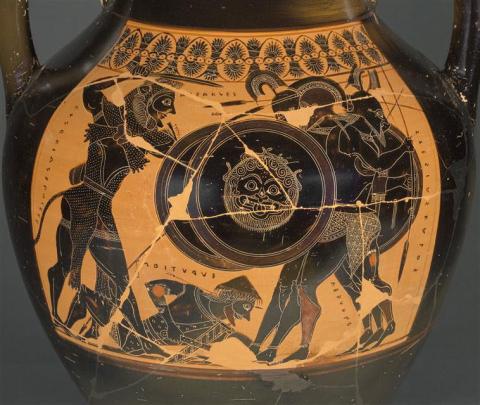
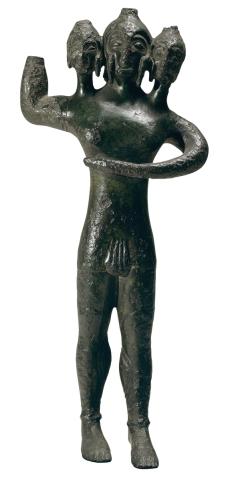
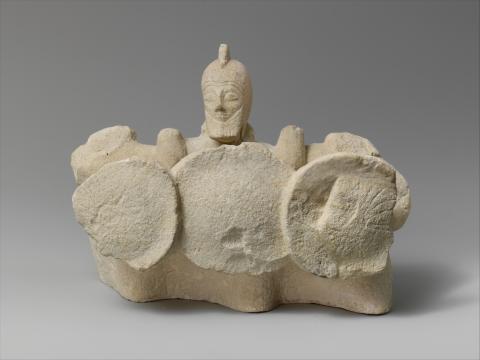
Most poets and painters make Geryon triple-bodied: three torsos fused at the waist, six arms, six legs; sometimes the duplication starts only above the belt. He lived far west on Erytheia, “the Red Land,” beyond Ocean’s stream, where his splendid cattle grazed under the watch of the herdsman Eurytion and the two-headed hound Orthus. Landing on Erytheia, he killed Orthus and Eurytion and met Geryon in battle by the river Anthemus. Heracles struck one head with his club, stripped the helmet from another, and finished the monster off with an arrow. He then shepherded the glorious flock overland through southern Europe, back to Greece, all the while fending off many various cattle rustlers.
For a fuller version of the story that Palaephatus is responding to, see Apollodorus, Bibliotheca 2.5.10; Hesiod, Theogony 287–94, 979–83.
For depictions of this myth, see Heracles fighting Geryon ca. 550/545 BCE, Geryon statuette ca. 525–500 BCE, Geryon statuette ca. early 5th century BCE.
1
Γηρυόνην: serves as the subject of the indirect statement despite standing outside of it. This construction is called prolepsis (πρόληψις “taking before”), in which the nominative subject of a subordinate clause is pulled forwards in the sentence to become the direct object of the main verb (S. 2182): “people say of Geryon, that he.” A famous example of prolepsis in English is, “consider the lilies of the field, how they grow.” The effect is to place extra emphasis on Geryon’s name.
2
ἀδύνατον: supply ἐστι, “it is impossible that” + indirect statement.
<ἓν>: angled brackets within the Greek text indicate that the word has been added by the editor.
5
ἐφ’ ἣν ἐλθὼν: the antecedent is ἀγέλην. The preposition ἐπί indicates the goal toward which Heracles comes and kills, “for which Heracles, having come.”
6
τὸ … μέγεθος: accusative of respect.
ὀστέα δὲ μεγάλα καὶ πλατέα: “but (having) large and broad bones,” instead of horns. This is perhaps meant to account for the Homerism, εὐρυμέτωπος, used often to describe attractive cattle.
7
πρὸς τοὺς πυνθανομένους: “to those who asked [about the cattle].”
οὖν: the particle marks a change of topic. Here, it is a change from the historical deed to what was said about the deed.
8
ἐκ τοῦ λεγομένου: “from this response.”
αὐτὸν: refers to Geryon.
vocabulary
1
Γηρυόνης –ου, ὁ Geryon
Τρικάρηνος –ον three-headed
4
Εὔξεινος –ον Euxine or Hospitable Sea (a euphemism for the Black Sea)
πόντος –ου, ὁ sea
Τρικαρηνία –ας, ἡ Tri-Peaks (city name)
5
ὀνομαστός –ή –όν renowned, notable
πλοῦτος –ου, ὁ wealth
ἀγέλη –ης, ἡ herd, pack
διαφέρω, διοίσω, διήνεγκα/διήνεγκον, διενήνοχα, διενήνεγμαι, διηνέχθην to excel in (+ dat.)
θαυμαστός –ή –όν marvelous
Ἡρακλέης –έους, ὁ Heracles
ἀντιποιέω, contr. to offer resistance
6
θεάομαι, θεάσομαι, ἐθεάσάμην, τεθέαμαι, —, ἐθεάθην to see, witness
περιελαύνω, περιελῶ, περιήλασα, περιελήλακα, —, — to herd around
ὀσφύς –ύος, ἡ lower back
σιμός –ή –όν snub-nosed
κέρας –ατος, τό horn
ὀστοῦν –οῦ, τό bone
πλατύς –εῖα –ύ broad