(1) φασὶν ὅτι Βελλεροφόντην ὑπόπτερος ἵππος Πήγασος ἔφερεν. (2) ἐμοὶ δὲ τοῦτο ἵππος οὐδέποτε δοκεῖ δύνασθαι, οὐδ’ εἰ πάντα τὰ τῶν πτηνῶν πτερὰ λάβοι· εἰ γὰρ ἦν ποτε τοιοῦτον ζῷον, καὶ νῦν ἂν ἦν. (3) τοῦτον δέ φασι καὶ τὴν Ἀμισωδάρου Χίμαιραν ἀνελεῖν· ἦν δὲ ἡ Χίμαιρα “πρόσθε λέων, ὄπιθεν δὲ δράκων, μέσση δὲ χίμαιρα.” (4) ἔνιοι δὲ δοκοῦσι τοιοῦτον γενέσθαι θηρίον τρεῖς ἔχον κεφαλάς, σῶμα δὲ ἕν. (5) ἀδύνατον δὲ ὄφιν καὶ λέοντα καὶ αἶγα ὁμοίᾳ τροφῇ χρῆσθαι· καὶ τὸ θνητὴν ἔχον φύσιν πῦρ ἀποπνεῖν, εὔηθες. (6) ποίᾳ δὲ τῶν κεφαλῶν τὸ σῶμα ἐπηκολούθει; (7) τὸ δὲ ἀληθὲς ἔχει ὧδε. (8) Βελλεροφόντης ἦν φυγὰς ἀνήρ, τὸ γένος Κορίνθιος, καλὸς κἀγαθός. (9) κατασκευάσας δὲ πλοῖον μακρὸν ἐληίζετο τὰ παραθαλάσσια χωρία πλέων καὶ ἐπόρθει. (10) ὄνομα δὲ ἦν τῷ πλοίῳ Πήγασος ὡς καὶ νῦν ἕκαστον τῶν πλοίων ὄνομα ἔχει· ἐμοὶ δὲ δοκεῖ πλοίῳ μᾶλλον ἢ ἵππῳ ὄνομα κεῖσθαι Πήγασος. (11) βασιλεὺς δὲ Ἀμισώδαρος ᾤκει ἐπὶ τῷ Ξάνθῳ ποταμῷ ὄρος τι ὑψηλόν, ἐξ οὗ ἡ Τελμισσὶς ὕλη προσκέχωσται, πρὸς ὃ δὴ ὄρος προσβάσεις εἰσὶ δύο, ἡ μὲν ἔμπροσθεν ἐκ πόλεως τῆς Ξανθίων, ἡ δὲ ὄπισθεν ἐκ τῆς Καρίας· τὰ δὲ ἄλλα κρημνοὶ ὑψηλοί, ἐν δὲ μέσῳ αὐτῶν χάσμα ἐστὶ τῆς γῆς μέγα, ἐξ οὗ δὴ καὶ πῦρ ἀναφέρεται. (12) τούτῳ τῷ ὄρει ὄνομά ἐστι Χίμαιρα. (13) τότε δὲ ἦν, ὡς λέγουσιν οἱ προσχώριοι, κατὰ μὲν τὴν πρόσθεν πρόσβασιν λέων οἰκῶν, κατὰ δὲ τὴν ὄπισθεν δράκων, οἳ δὴ καὶ ἐσίνοντο τοὺς ὑλοτόμους καὶ νομέας. (14) τότε δὲ δὴ Βελλεροφόντης ἐλθὼν τὸ ὄρος ἐνέπρησε, καὶ ἡ Τελμισσὶς κατεκάη καὶ τὰ θηρία ἀπώλετο. (15) ἔλεγον οὖν οἱ προσχώριοι “Βελλεροφόντης ἀφικόμενος μετὰ τοῦ Πηγάσου τὴν Ἀμισωδάρου Χίμαιραν ἀπώλεσε.” (16) τούτου γενομένου προσανεπλάσθη ὁ μῦθος.
notes
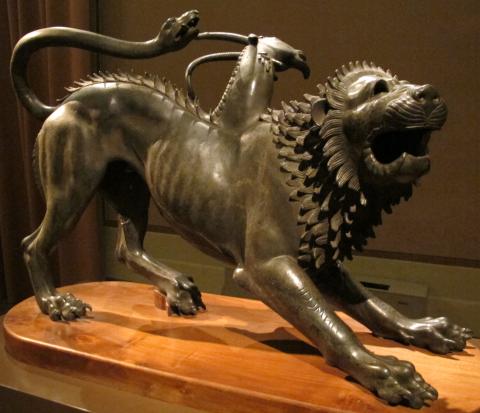
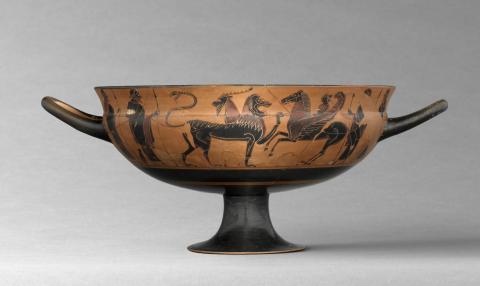
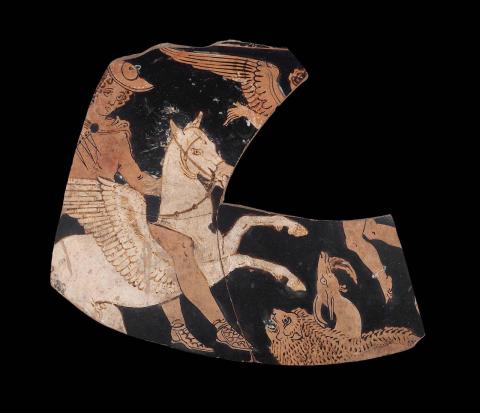
According to myth, Bellerophon was the son of Glaucus and the grandson of Sisyphus. When the wife of Proetus, king of Tiryns (her name is either Anteia or Stheneboea in different versions) attempted to seduce Bellerophon, he rebuffed her advances, and in retaliation the queen falsely accused Bellerophon of rape. As a punishment, Proetus sent Bellerophon away to the Lycian king Iobates with secret instructions to have him killed. To accomplish this, Iobates tasked Bellerophon with a number of dangerous quests. One of these tasks was to kill the Chimaera, a hybrid monster consisting of a lion with a goat’s head on its back and a snake’s head on its tail. However, with the aid of the flying horse Pegasus, Bellerophon successfully slayed the Chimaera.
The earliest references to Bellerophon and the Chimaera are found in Homer, Iliad 6.150–83, and Hesiod, Theogony 319–25 (who gives the genealogy of the Chimera); see also Apollodorus, Bibliotheca 2.3.1–2.
For ancient depictions of this myth, see the bronze chimaera from Arezzo, 4th c. BCE, Bellerophon facing the Chimera ca. 575/550 BCE, Bellerophon fighting the Chimera ca. 350–340 BCE.
1
φασὶν: “people say.”
2
τοῦτο … δύνασθαι: “to be capable of this.” Here τοῦτο serves as the direct object of δύνασθαι.
οὐδ’ εἰ … λάβοι: protasis of a future less vivid condition, “not even if it were to possess.”
οὐδ’ εἰ: marks a negative concessive clause.
εἰ γὰρ ἦν ποτε τοιοῦτον ζῷον: protasis of present counterfactual condition.
καὶ νῦν ἂν ἦν: apodosis of present counterfactual condition. Supply τοιοῦτον ζῷον as the subject again.
καὶ: adverbial.
3
τοῦτον: i.e., Bellerophon.
τὴν Ἀμισωδάρου Χίμαιραν: although the Chimaera’s parents were the monsters Typhon and Echidna (Apollodorus, Bibliotheca 2.3.1), according to Homer, she was raised by Amisodarus (Iliad 16.328–9).
“πρόσθε λέων, ὄπιθεν δὲ δράκων, μέσση δὲ χίμαιρα”: a quotation from Homer’s Iliad (6.181).
μέσση: = μέση.
4
ἔνιοι … δοκοῦσι: “Some people think that” + indirect statement.
ἔχον: ptc. sing. pres. act. neut. acc.; agrees with θηρίον.
5
ἀδύνατον: supply ἐστι, “it is impossible that” + indirect statement.
χρῆσθαι: takes a dative direct object.
καὶ τὸ θνητὴν ἔχον φύσιν πῦρ ἀποπνεῖν, εὔηθες: the articular infinitive phrase is the subject and εὔηθες is the predicate adjective, “for a thing with a mortal nature to breathe fire is naïve.”
8
τὸ γένος: accusative of respect, “Corinthian by birth.”
καλὸς κἀγαθός: crasis for καλὸς καὶ ἀγαθός, “beautiful and noble.” In classical Athens, this expression served as a shorthand for describing members of the aristocracy.
10
ὄνομα δὲ ἦν τῷ πλοίῳ Πήγασος: dative of possessor, “and the name of the ship was Pegasus.”
ὡς καὶ νῦν: “just as nowadays.”
ἐμοὶ δὲ δοκεῖ πλοίῳ μᾶλλον ἢ ἵππῳ ὄνομα κεῖσθαι Πήγασος: as Stern points out in a note on this passage, P. is slyly punning on the name Pegasus. The name is more fitting for a ship than a horse because πηγή means “running water” or “spring.” According to Hesiod (Theogony 282), Pegasus received his name because he was born near the springs of Oceanus.
ὄνομα κεῖσθαι Πήγασος: “the name Pegasus is given” (LSJ κεῖμαι IV.5).
11
ἐπὶ τῷ Ξάνθῳ ποταμῷ: “near the Xanthus River.”
ἐξ οὗ ἡ Τελμισσὶς ὕλη προσκέχωσται: “from which place the Telmessian forest has extended/piled up.” P. is having fun with place names here, as Telmessos was located at the head of the so-called “Glaucus Bay” (Glaucus Sinus), on the coast of Lycia. The name itself recalls the Greek word for bog, suggesting an impassable marshland.
προσκέχωσται: 3rd sing. pf. indic. pass. > προσχώννυμι.
ὄρος: technically the antecedent to πρὸς ὃ. It is repeated for the sake of clarity.
ἡ μὲν … ἡ δὲ: “one … the other,” refers to the δύο προσβάσεις, “two routes.” These two routes are meant to give Mount Chimaera two of its three “heads”: Ξάνθος = “blonde,” Καρία ≈ κάρα = “head.” The volcanic chasm spitting fire would seem to give it its third.
πόλεως τῆς Ξανθίων: “Xanthus,” a city on the southwestern coast of Asia Minor.
τῆς Καρίας: “Caria,” a region just to the west of Lycia in Asia Minor.
τὰ δὲ ἄλλα: “everywhere else.”
13
τότε δὲ ἦν … λέων … δράκων: P. now explains of the tripartite nature by indicating the presence of a lion and snake at different routes. The name Chimaera itself accounts for the third part, “she-goat” (χίμαιρα).
τὴν πρόσθεν πρόσβασιν: “the approach at the front.”
οἰκῶν: ptc. sing. pres. act. masc. nom. > οἰκέω.
τὴν ὄπισθεν: supply πρόσβασιν: “the approach from the rear.”
14
τὰ θηρία ἀπώλετο: singular verb with neuter plural subject.
ἀπώλετο: 3rd sing. aor. indic. mid. > ἀπόλλυμι.
15
οὖν: the particle marks a change of topic. Here, it is a change from the historical deed to what was said about the deed.
16
τούτου γενομένου: genitive absolute.
vocabulary
1
Βελλεροφόντης –ου, ὁ Bellerophon
ὑπόπτερος –α –ον winged
Πήγασος –ου, ὁ Pegasus
2
οὐδέποτε, adv. not ever, never
πτηνός –ή –όν winged; (as noun) birds
πτερόν –ου τό wing
ζῷον –ου, τό animal, living being
3
Ἀμισώδαρος –ου, ὁ Amisodarus, a Lycian King
Χίμαιρα –ας, ἡ Chimaera
πρόσθε, adv. in front
λέων, λέοντος, ὁ lion
ὄπιθεν, adv. in back
δράκων –οντος, ὁ snake
χίμαιρα –ας, ἡ she-goat
4
ἔνιος –α –ον some (often found in the plural with the same meaning)
θηρίον –ου, τό wild animal, beast
5
ὄφις –εως, ὁ serpent
αἴξ, αἰγός, ὁ/ἡ goat
τροφή –ῆς, ἡ nourishment, food
θνητός –ή –όν mortal
ἀποπνέω, ἀποπνεύσω, ἀπέπνευσα, —, —, — to breathe forth
εὐήθης –ες naïve
6
ἐπακολουθέω, contr. to follow, obey (+ dat.)
8
φυγάς –άδος, ὁ/ἡ fugitive, exile
Κορίνθιος –α –ον of Corinth, Corinthian
9
κατασκευάζω, κατασκευάσω, κατεσκεύασα, κατεσκεύακα, κατεσκεύασμαι, κατεσκευάσθην to equip, prepare
πλοῖον –ου, τό boat, vessel
ληΐζομαι, ληΐσομαι, ἐληϊσάμην, —, λέλῃσμαι, ἐληΐσθην to raid, plunder
παραθαλάσσιος –α –ον beside the sea
πορθέω, contr. destroy, plunder
11
Ξάνθος –ου, ὁ Xanthus River
ὑψηλός –ή –όν lofty, tall
Τελμισσίς –ίδος, ἡ Telmissos
ὕλη –ης, ἡ forest
προσχώννυμι, προσχώσω, —, —, προσκέχωσμαι, — extend, heap up
πρόσβασις –εως, ἡ means of approach
ἔμπροσθεν, adv. in front
Καρία –ας, ἡ Caria (a region of SW Asia Minor)
κρημνός –οῦ, ὁ cliff, crag
χάσμα –ατος, τό chasm, opening
ἀναφέρω, ἀνοίσω, ἀνήνεγκα/ἤνεγκα, ἀνήνοχα, ἀνήνεγμαι, ἀνηνέχθην bring up, raise up
13
πρόσχωρος –ον neighboring; (subst.) neighbor
σίνομαι, —, ἐσινάμην, —, —, — to harm, hurt
ὑλοτόμος –ου, ὁ woodcutter
νομεύς –έως, ὁ shepherd
14
ἐμπίμπρημι, ἐμπρήσω, ἐνέπρησα, —, —, ἐνεπρήσθην to light on fire
κατακάω, κατακαύσω, κατέκαυσα, κατακέκαυκα, κατακέκαυμαι, κατεκαύθην/κατεκάην to burn
16
προσαναπλάττω, —, προσανέπλασα, —, —, προσανεπλάσθην to fabricate in addition
μῦθος –ου, ὁ tale