(1) περὶ τοῦ Κήτους τάδε λέγεται, ὡς τοῖς Τρωσὶν ἐκ τῆς θαλάσσης ἐπεφοίτα καί, εἰ μὲν αὐτῷ δοῖεν κόρας εἰς βοράν, ἀπῄει, εἰ δὲ μή, ἐλυμαίνετο τὴν χώραν αὐτῶν. (2) ὡς δὲ μάταιόν ἐστιν ἄνδρας ἰχθύσι συνθήκας τίθεσθαι, τίς οὐκ οἶδεν; (3) ἀλλ’ ἦν τοῦτο. (4) ἀνὴρ βασιλεὺς μέγας καὶ πολλὴν ἔχων δύναμιν εἶχε ναυτικὸν πολύ, ὃς κατεστρέψατο ἅπαν τῆς Ἀσίας τὸ παραθαλάσσιον, οἵτινες καὶ φόρον, ὃν καὶ δασμὸν καλοῦσιν, ἐτέλουν. (5) ἀργυρίῳ μὲν οὖν οἱ τότε ἄνθρωποι οὐκ ἐχρῶντο, ἀλλὰ σκεύεσι· προσετέτακτο δὲ τῶν πόλεων αἷς μὲν ἵππους διδόναι, αἷς δὲ βόας, αἷς δὲ κόρας. (6) τούτῳ τῷ βασιλεῖ ὄνομα ἦν Κήτων, οἱ δὲ βάρβαροι αὐτὸν ἐκάλουν Κῆτος. (7) περιέπλει οὖν κατὰ τὸν δέοντα χρόνον ἀπαιτῶν τὸν δασμόν· ὅσοι δὲ μὴ ἀπεδίδοσαν ἐκακοῦντο τὰς χώρας. (8) ἔρχεται δὲ εἰς Τροίαν καθ’ ὃν χρόνον ἧκε καὶ Ἡρακλῆς ἔχων στρατιὰν Ἑλλήνων. (9) μισθοῦται δὲ αὐτὸν Λαομέδων ὁ βασιλεὺς ἀρῆξαι τοῖς Τρωσίν. (10) ἀποβιβάσας δὲ τὴν στρατιὰν ὁ Κήτων ὡδοιπόρει· ὑπαντήσαντες δὲ αὐτῷ Ἡρακλῆς τε καὶ Λαομέδων ἑκάτεροι ἔχοντες τὴν ἑαυτῶν στρατιάν, ἀναιροῦσιν αὐτόν. (11) οὗ γενομένου προσανεπλάσθη ὁ μῦθος.
notes
According to myth, Poseidon and Apollo helped the Trojan King Laomedon build the walls of his city, only to be stiffed by the ungrateful king when they asked for payment. As a punishment, Poseidon sent a sea monster to torment Troy. In order to appease the monster, Laomedon offered his daughter Hesione to be devoured, chaining her to a rock near the sea. Heracles then killed the monster and rescued her. However, when Heracles asked for payment, Laomedon refused again. In revenge, Heracles raised an army and sacked Troy.
For a fuller version of the story that Palaephatus is responding to, see Apollodorus, Bibliotheca. 2.5.9 and 2.6.4; Ovid, Metamorphoses 11.194–220; Diodorus Siculus 4.42.1–7. In some versions of the story, multiple Trojan girls were offered to the sea monster; see Hyginus Fabulae 89; Valerius Flaccus 2.451–578.
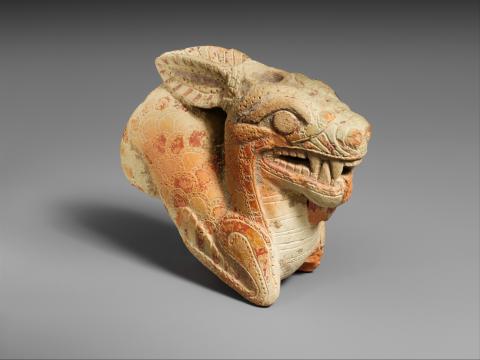
For an ancient depiction of this myth, see Archaic Terracotta Vase in the Shape of Ketos.
1
εἰ μὲν: past general protasis of a conditional.
αὐτῷ: refers to Ketos.
δοῖεν: 3rd pl. aor. opt. act. > δίδωμι.
εἰς βοράν: “for food” (LSJ εἰς V.2).
ἀπῄει: past general apodosis of a conditional.
εἰ δὲ μή … αὐτῶν: past general conditional, parallel to the previous conditional.
2
ὡς δὲ: indirect statement introduced by τίς οὐκ οἶδεν below.
μάταιόν ἐστιν: “it is silly for (acc.) ... to (infin.)”
4
ἅπαν … τὸ παραθαλάσσιον: “the whole coast.” The word πᾶς means “(as a) whole,” “in its entirety’ when in the singular with the article (usually in predicative position), as it does here. It means “each,” “every” without the article.
οἵτινες: antecedent is the understood plurality of people inhabiting the coastlines being raided by the king and his navy.
5
οὖν: the particle signals a change of topic. Here, it is a shift out of the narrative and into a discussion of ancient life prior to the advent of currency.
προσετέτακτο: 3rd sing. plupf. indic. mid.-pass. > προστάττω. The verb is taken impersonally, “it had been ordered to (dat.) ... to (infin.).”
τῶν πόλεων: partitive genitive, “of among the cities.”
αἷς μὲν … αἷς δὲ … αἷς δὲ: “to some … others … others.”
6
Κήτων … Κῆτος: the neuter form, Κῆτος, is the standard term for “sea monster,” which here is conflated with the proper name “Kētōn.”
- read more
-
The masculine form Κήτων is rare, but is attested as the name of an athlete from Locris in a papyrus document containing lists of 5th century BCE Olympic victors: Κήτων Λοκρ[ὸς πένταθλον] (P.Oxy. II 222, col. 2, ln 27). Hesiod also mentions a sea goddess named Κητώ at Theogony 238.
7
οὖν: the particle signals a change of topic. Here, it is a shift back into the narrative.
κατὰ τὸν δέοντα χρόνον: “at the appointed time” (LSJ δέω B.I.3), i.e., tax season.
ὅσοι δὲ μὴ: generalizing relative clauses, especially with conditional force, use the negative μή.
ἐκακοῦντο: passive.
τὰς χώρας: accusative of respect.
8
καθ’ ὃν χρόνον: “at the time when.”
καὶ: adverbial.
9
αὐτὸν: refers to Heracles.
10
αὐτῷ: refers to Keton.
ἑκάτεροι ἔχοντες τὴν ἑαυτῶν στρατιάν: the plural ἑκάτεροι refers both to Heracles and to Laomedon, “each having his own army.”
ἀναιροῦσιν αὐτόν: historical present, “they (Heracles and Laomedon) killed him (Keton).”
11
οὗ γενομένου: genitive absolute. The antecedent is the event just narrated (i.e., the encounter and killing of Keton), “after this happened” or “because this happened.”
vocabulary
1
Κῆτος –ους, τό Ketos, a mythical sea monster
Τρῶες –ων, οἱ (pl.) Trojans
ἐπιφοιτάω, contr. to invade, attack (+ dat.)
κόρη –ης, ἡ girl
βορά –ᾶς, ἡ food
ἄπειμι, —, —, —, —, — to go away, leave
λυμαίνω, λυμανοῦμαι, ἐλύμηνα, —, λελύμασμαι, ἐλυμάνθην to ravage
2
μάταιος –α –ον foolish, stupid
ἰχθύς –ύος, ὁ fish
συνθήκη –ης, ἡ treaty, agreement
4
ναυτικόν –οῦ, τό navy, fleet
καταστρέφω, καταστρέψω, κατέστρεψα, κατέστροφα, κατέστραμμαι, κατεστράφην to subdue, subjugate
Ἀσία –ας, ἡ Asia
παραθαλάσσιος –α –ον coastal
φόρος –ου, ὁ tax, payment
δασμός –οῦ, ὁ tribute, division of spoils
τελέω, τελῶ (Att. fut.), ἐτέλεσα, τετέλεκα, τετέλεσμαι, ἐτελέσθην to pay
5
σκεῦος –ους, τό goods, objects
προστάττω, προστάξω, προσέταξα, προστέταχα, προστέταγμαι, προσετάχθην to order, command
6
Κήτων –ονος, ὁ Keton (male name)
7
περιπλέω, contr. to sail around, voyage by sea
ἀπαιτέω, contr. to demand
κακόω, contr. to ruin, damage
8
Τροία –ας, ἡ Troy, a city in Asia Minor
Ἡρακλῆς –έους, ὁ Heracles, the Greek hero
στρατιά –ᾶς, ἡ army
Ἕλλην –ηνος of Hellas, Hellene, Greek
9
μισθόω, contr. to hire someone for pay
Λαομέδων –οντος, ὁ Laomedon, a mythical king of Troy
ἀρήγω, ἀρήξω, ἤρηξα, —, —, — to help (+ dat.)
10
ἀποβιβάζω, ἀποβιβῶ, ἀπεβίβασα, —, —, ἀπεβιβάσθην to disembark, unload
ὁδοιπορέω, contr. to march, walk
ὑπαντάω, contr. to encounter (+ dat.)
11
προσαναπλάττω, —, προσανέπλασα, —, —, προσανεπλάσθην to fabricate in addition
μῦθος –ου, ὁ tale