(1) ἱστορεῖται περὶ Φινέως ὡς διεφόρουν Ἅρπυιαι τὸν βίον αὐτοῦ, δοκοῦσι δὲ ἔνιοι θηρία πετεινὰ εἶναι ταῦτα ἁρπάζοντα ἀπὸ τῆς τραπέζης τοῦ Φινέως τὸ δεῖπνον. (2) ἡ δὲ ἀλήθεια αὕτη. (3) Φινεὺς ἦν Παιονίας βασιλεύς. (4) γέροντα δὲ αὐτὸν ὄντα ἡ ὄψις ἐπέλιπεν οἵ τε ἄρρενες παῖδες ἀπέθανον. (5) θυγατέρες δὲ ἦσαν αὐτῷ Ἐράσεια καὶ Ἁρπύρεια ***, αἵτινες τὸν βίον αὐτοῦ διέφθειρον. (6) ἔλεγον οὖν οἱ πολῖται “δύστηνος ὁ Φινεύς· αἱ Ἅρπυιαι αὐτοῦ διαφθείρουσι τὸν βίον.” (7) οἰκτείραντες δὲ αὐτὸν Ζήτης καὶ Κάλαϊς, ἀστυγείτονες αὐτῷ ὄντες, Βορέου δὲ παῖδες (ἀνδρός, οὐκ ἀνέμου), βοηθήσαντες αὐτῷ, τάς τε θυγατέρας ἐξεδίωξαν ἐκ τῆς πόλεως καὶ τὰ χρήματα συναθροίσαντες, ἐπίτροπον αὐτῶν κατέστησαν τῶν Θρᾳκῶν τινα.
notes
Phineus, the blind king of Paeonia, had a complicated history. Hesiod tells us that he chose blindness in exchange for a long life. Some Sophoclean fragments hint at a tragic story involving Phineus' two children. P. shows awareness, at the very least, that Phineus had two children. But the most famous story about Phineus involves the monstrous Harpies who plagued him by swooping down and stealing his food. Phineus' torment ended only when the Argonauts arrived. The two sons of the North Wind (Boreas) drove the Harpies away.
For the basic elements of this myth, see Apollonius Rhodius Argonautica 2.178–530; Apollodorus Bibliotheca 1.9.21; Hyginus Fabulae 19.
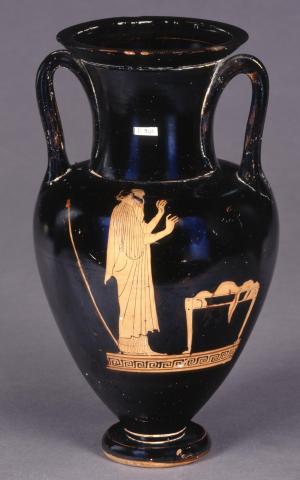
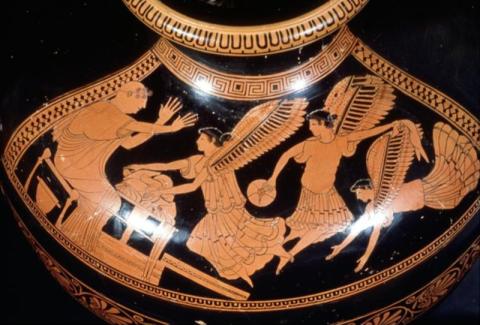
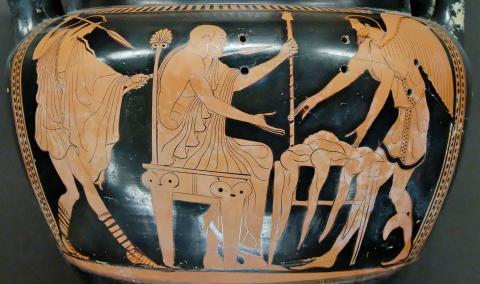
For depictions of this myth, see Phineus prays before a loaded table ca. 470-450 BCE, Phineus and the Harpies ca. 480 BCE, Phineus saved by the sons of Boreas ca. 460 BCE.
1
ἱστορεῖται: “it is reported.”
τὸν βίον αὐτοῦ: “his way of life” The word βίος can mean “life” as well as “way of life,” “sustenance.”
δοκοῦσι δὲ ἔνιοι: “some suppose that,” triggers indirect statement (accusative + infinitive construction).
3
Παιονίας: = Παιονίας γαίης.
4
αὐτὸν: direct object of ἐπέλιπεν.
5
οἵ τε: the article οἱ takes an accent because it is followed by an enclitic.
θυγατέρες δὲ ἦσαν αὐτῷ Ἐράσεια καὶ Ἁρπύρεια ***: Eraseia means “Ms. Love” (Ἐράσεια derives from Ἔρως, “Love”) and Harpyreia means “Ms. Rapacity” (Ἁρπύρεια derives from ἁρπάζειν, “to snatch”). The word Harpy is also probably etymologically associated with ἁρπάζειν. It was notionally connected with Love since the word Harpy is sometimes used as an alternative name for Ἔρως (LSJ Ἅρπυς). These names also thematically fit P.’s rationalized version of the events: Phineus’s daughters take advantage of their father’s love in order to satisfy their greed. The editor suspects that a piece of the text is missing. He indicates this with three asterisks.
αὐτῷ: dative of possessor. Refers to Phineus.
αὐτοῦ: refers to Phineus.
6
οὖν: the particle marks a change of topic. Here, the change is from what happened to what was said about what happened, i.e., from deeds to words.
αἱ Ἅρπυιαι: apparently, this is the nickname Phineus’s contemporaries gave to Eraseia and Harpyreia. The nickname plays on the sound of the name Harpyreia and the sense of the name Eraseia (Eros is sometimes called a Harpy, see LSJ Ἅρπυς) and, furthermore, underscores their act of plundering their father’s wealth (> ἁρπάζω).
7
αὐτὸν: refers to Phineus.
Ζήτης καὶ Κάλαϊς: according to myth, these were the Argonauts responsible for saving Phineus from the mythical Harpys.
αὐτῷ: refers to Phineus.
ἀνδρός, οὐκ ἀνέμου: both genitives are in apposition to Βορέου.
αὐτῷ: refers to Phineus.
αὐτῶν: refers to τὰ χρήματα.
vocabulary
1
ἱστορέω, contr. to report
Φινεύς –έως, ὁ Phineus (male name)
διαφορέω, contr. to carry off, devastate
Ἅρπυια –ας, ἡ Harpy, a mythical monster
ἔνιος –α –ον some (often found in the plural with the same meaning)
θηρίον –ου, τό wild animal, beast
πετεινός –ή –όν winged, capable of flying
ἁρπάζω, ἁρπάσω, ἥρπασα, ἥρπακα, ἥρπασμαι, ἡρπάσθην/ ἡρπάγην to carry away, snatch
τράπεζα –ης, ἡ table
δεῖπνον –ου, τό meal
3
Παιονία –ας, ἡ Paionia
4
γέρων –οντος, ὁ old man
ὄψις –εως, ἡ sight
ἐπιλείπω, ἐπιλείψω, ἐπέλειψα/ἐπέλιπον, ἐπιλέλοιπα, ἐπιλέλειμμαι, — to leave behind
ἄρσην –εν masculine, male
5
Ἐράσεια –ας, ἡ Eraseia (female name)
Ἁρπύρεια –ας, ἡ Harpyreia (female name)
6
πολίτης –ου, ὁ citizen
δύστηνος –ον unfortunate, wretched
7
οἰκτ(ε)ίρω, οἰκτερῶ/οἰκτιρῶ, ᾤκτ(ε)ιρα, —, —, κτ(ε)ιρήθην to pity
Ζήτης –ου, ὁ Zetes, one of the two sons of Boreas
Κάλαϊς –ιδος, ὁ Calais, one of the two sons of Boreas
ἀστυγείτων –ον neighboring
Βορέας –ου, ὁ Boreas, North Wind
ἄνεμος –ου, ὁ wind
ἐκδιώκω, —, —, —, —, — to drive out
συναθροίζω, συναθροίσω, συνήθροισα, συνήθροικα, συνήθροισμαι, συνηθροίσθην to gather
ἐπίτροπος –ον [usually subst.] supervisor, guardian
Θρᾴκ(ι)ος –α –ον of Thrace, Thracian