(1) φασὶν ὡς Ἀχαιοὶ οἱ ἐν ξυλίνῳ κοίλῳ ἵππῳ ἀριστεῖς κατέβαλον τὴν Ἴλιον. (2) ἔστι δὲ μυθώδης ἄγαν ὁ λόγος. (3) ἡ δὲ ἀλήθεια αὕτη. (4) ἵππον κατεσκεύασαν ξύλινον πρὸς μέτρον τῶν πυλῶν, ὅπως μὴ ἑλκόμενος εἰσέλθῃ, ἀλλ’ ὑπερέχῃ τῷ μεγέθει. (5) οἱ δὲ λοχαγοὶ ἐκάθηντο ἐν κοίλῳ χωρίῳ παρὰ τὴν πόλιν, ὃς Ἀργείων λόχος ἐκαλεῖτο μέχρι τοῦ νῦν. (6) αὐτόμολος δὲ ἐλθὼν παρὰ τῶν Ἀργείων Σίνων φράζει αὐτοῖς κατὰ μαντείαν ὡς, εἰ μὴ εἰσαγάγοιεν τὸν ἵππον εἰς τὴν πόλιν, ὑποστρεψόντων Ἀχαιῶν, ἂν δὲ εἰσαγάγωσι, μηκέθ’ ἡξόντων. (7) οὗ ἐπακούσαντες οἱ Τρῶες καὶ καθελόντες τὸ τεῖχος, εἰσάγουσι τὸν ἵππον. (8) εὐωχουμένοις δὲ αὐτοῖς ἐπιπίπτουσιν οἱ Ἕλληνες δι’ ἧς καθῄρητο τὸ τεῖχος, καὶ οὕτως ἑάλω ἡ Ἴλιος.
notes
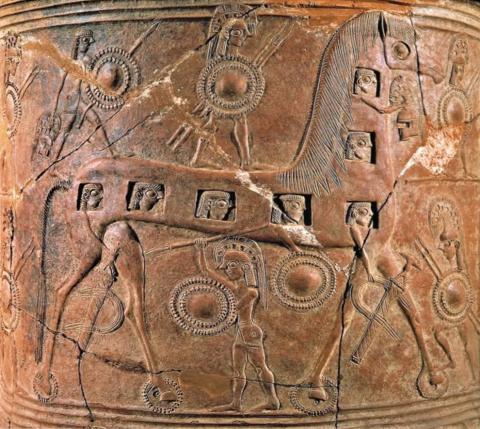
According to myth, the Greeks at Troy built a large wooden horse. They left it behind as they pretended to desert their military camp for home. Sinon, a Greek spy, convinced the Trojans that it was a gift to Athena and that, if they accepted it into their city, it would offer protection. According to the Sack of Troy, from the Epic Cycle, fifty Greek warriors were said to be hiding in the belly of the horse. When it was brought into Troy, they descended from the horse and opened the gates for the Greek army. According to the Little Iliad, the horse was built too large to be taken through the gates, and a piece of the wall was taken down by the Trojans to afford entry. The latter story calls into question why there needed to be a contingent of soldiers in the belly of the horse at all. P. seems to be aware of the second variant and takes issue with the myth on this very point. For him, it seems “excessively fantastical” (μυθώδης ἄγαν) to imagine that soldiers would hide in the belly of a wooden horse.
For the basic elements of this myth, see Apollodorus, Epitome 5.14–21; Vergil, Aeneid 2.13–267; Quintus Smyrnaeus, Posthomerica 12.23–13.60.
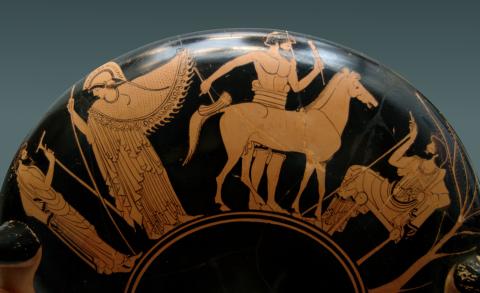
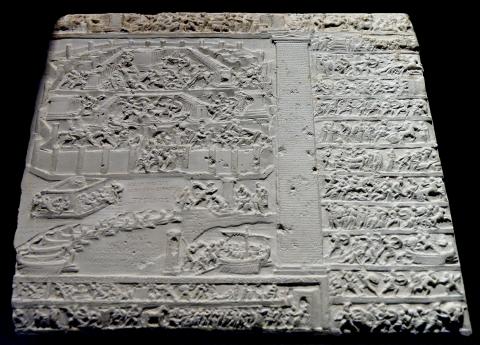
For depictions of this myth, see Trojan Horse ca. 7th c. BCE, Trojan Horse replica (?) ca. 480 BCE, Tabula Iliaca Capitolina 15 BCE.
1
φασὶν: “people say.”
ἀριστεῖς: agrees with Ἀχαιοὶ.
2
ἔστι: takes a recessive accent when appearing at the beginning of the sentence.
3
ἡ δὲ ἀλήθεια αὕτη: supply ἐστι.
4
κατεσκεύασαν: “they (i.e., the Greeks) prepared,” 3rd pl. aor. indic. act. > κατασκευάζω.
πρὸς μέτρον τῶν πυλῶν: “in relation to the measure of the city-gates.”
ὅπως μὴ … εἰσέλθῃ … ὑπερέχῃ: negative purpose clause. The subject for both verbs is the wooden horse.
5
ἐν κοίλῳ χωρίῳ παρὰ τὴν πόλιν: “in a hollow stretch of land beside the city” Here, P. exploits the ambiguity of the term κοῖλος, which can mean “valley” or “belly.”
ὃς Ἀργείων λόχος ἐκαλεῖτο: “which was called ‘Argive Ambuscade’” The second most famous work that P. wrote was his Trojan History. The fragments that survive indicate that he focused quite a bit on questions of geography and place names (Brills New Jacoby 44 F2–5).
μέχρι τοῦ νῦν: “up to the current day.”
6
αὐτόμολος: agrees with Σίνων.
αὐτοῖς: refers to the Trojans.
κατὰ μαντείαν: “in accordance with an oracle.”
εἰ μὴ εἰσαγάγοιεν … μηκέθ’ ἡξόντων: this sentence consists of two parallel conditional statements, in which both of the apodoses have been replaced with genitive absolutes: “If the Trojans don’t bring the horse inside, the Achaeans will return; but if they do bring it in, the Achaeans will never come back.”
εἰ μὴ εἰσαγάγοιεν τὸν ἵππον εἰς τὴν πόλιν: a future condition embedded in Sinon’s indirect report; the original subjunctive has shifted into the oblique optative. The subject of εἰσαγάγοιεν is the Trojans.
ὑποστρεψόντων Ἀχαιῶν: genitive absolute functioning as the apodosis.
ἂν δὲ εἰσαγάγωσι: future more vivid protasis of a condition. ἂν here = ἐάν, “if.”
μηκέθ’ ἡξόντων: genitive absolute functioning as the apodosis.
μηκέθ’: > μηκέτι.
7
οὗ ἐπακούσαντες: “listening to him.”
οὗ: refers to Sinon.
8
δι’ ἧς: “through which (place),” supply χώρας or μερίδος as an antecedent.
καθῄρητο: 3rd sing. plupf. indic. mid.-pass. > καθαιρέω. The subject is τὸ τεῖχος.
ἑάλω: 3rd sing. aor. indic. pass. > ἁλίσκομαι.
vocabulary
1
Ἀχαιός –ή –όν of Achaea, Achaean; Greek
ξύλινος –η –ον wooden
κοῖλος –η –ον hollow; (subst.) belly; (subst.) valley, vale, gully
ἀριστεύς –έως, ὁ one who excels, leader, noble
καταβάλλω, καταβαλῶ, κατέβαλον, καταβέβληκα, καταβέβλημαι, κατεβλήθην to overthrow, destroy
Ἴλιος –ου, ἡ Ilion, Troy
2
μυθώδης –ες fabulous, legendary
ἄγαν, adv. excessively
4
μέτρον –ου, τό measure
πύλη –ης, ἡ (usually plural) gate, gates
ἕλκω, ἕλξω/ἑλκύσω, εἷλξα/εἵλκυσα, εἵλκυκα, εἵλχθην/εἱλκύσθην to pull, drag
εἰσέρχομαι, εἰσελεύσομαι, εἰσῆλθον, εἰσελήλυθα, —, — to go in, enter
ὑπερέχω, ὑπερέξω/ὑπερσχήσω, ὑπερέσχον, —, —, — To exceed in (+ dat.)
5
λοχαγός οῦ, ὁ leader of an assault or platoon
κάθημαι, καθήσομαι, —, —, —, — to sit, be seated
Ἀργεῖος –α –ον of Argos, Argive; Greek
λόχος –ου, ὁ ambush
6
αὐτόμολος –ον one who comes or goes spontaneously; (subst.) deserter
Σίνων –ωνος, ὁ Sinon [male name]
μαντεία –ης, ἡ prophecy
εἰσάγω, εἰσάξω, εἰσήγαγον, εἰσήχα, εἰσῆγμαι, εἰσήχθην to lead in
ὑποστρέφω, ὑποστρέψω, ὑπέστρεψα, ὑπέστροφα, —, ὑπεστράφην to return
7
ἐπακούω, ἐπακούσομαι, ἐπήκουσα, ἐπακήκοα, —, ἐπηκούσθην to listen to
Τρῶες –ων, οἱ (pl.) Trojans
καθαιρέω, καθαιρήσω/καθελῶ, καθεῖλον, καθῄρηκα, καθῄρημαι, καθῃρήμην, καθῃρέθην to take down
8
εὐωχέω, contr. to entertain; (mid./pass.) to banquet, feast
ἐπιπίπτω, ἐπιπεσοῦμαι, ἐπέπεσον, ἐπιπέπτωκα, —,— to fall upon, attack (+ dat.)
Ἕλλην –ηνος of Hellas, Hellene, Greek