(1) καὶ ὁ περὶ Καλλιστοῦς λόγος τοιοῦτος, ὡς κυνηγετοῦσα ἄρκτος ἐγένετο. (2) ἐγὼ δέ φημι καὶ ταύτην εἰς ξύλοχόν που καταντήσασαν, ὅπου ἐτύγχανεν ἄρκτος, θηρεύουσαν καταβρωθῆναι· τοὺς δὲ <συγ>κυνηγετοῦντας, ἰδόντας εἰσελθοῦσαν μέν, μηκέτι δὲ ἐξερχομένην, εἰπεῖν ὡς ἡ κόρη ἄρκτος ἐγένετο.
notes
After rationalizing the fantastical transformation of Atalanta and Melanion into lions, P. moves to rationalize a similarly fantastical transformation of Callisto into a bear. According to myth, Callisto was a huntress. At some point, Zeus slept with her and made her pregnant. While pregnant she was transformed into a bear by Artemis, Hera, or Zeus. After she gave birth to her child, Arkas, she was shot to death with an arrow from Artemis. And at this point, Zeus took pity on Callisto and rescued her by turning her into a constellation known today as Ursa Major (Latin for “Big Bear”). The reasons for the transformation vary widely. For P.’s purposes, they are immaterial. In this chapter, he cares only that a myth exists about a girl turning into a bear.
For the basic elements of this myth, see Apollodorus, Bibliotheca 3.8.2; Ovid, Metamorphoses 2.409–531; Pseudo-Eratosthenes, Catasterismi 1.
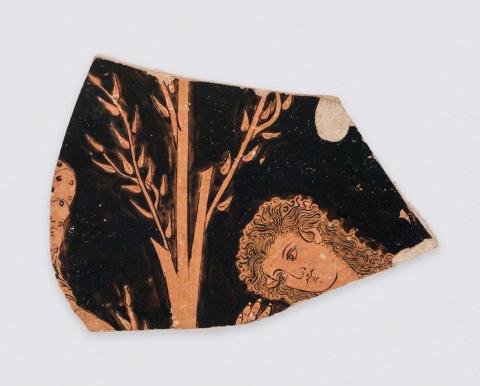
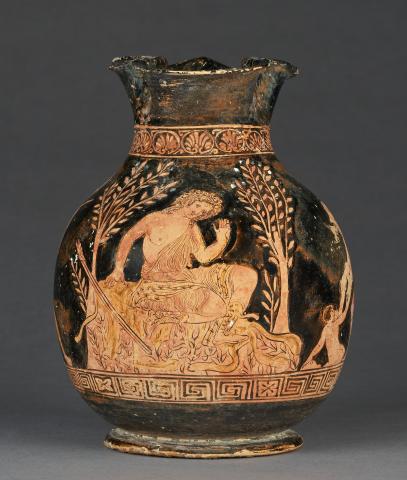
For depictions of this myth, see Callisto and bear paw ca. 390-380 BCE, Callisto turning into a bear ca. 360 BCE.
1
καὶ: adverbial, “also.” P. is about to rationalize a similar myth about hunting and transformation.
λόγος τοιοῦτος, ὡς: “the story is such that.”
2
δέ: adversative, “but.”
φημι: “I say that,” triggers an indirect statement.
καὶ: adverbial.
ἐτύγχανεν: “happened to be” (LSJ τυγχάνω A).
που … ὅπου: correlatives, “someplace … where.”
θηρεύουσαν: agrees with ταύτην earlier in the sentence.
<συγ>κυνηγετοῦντας: accusative subject of an indirect statement triggered by φημι above. Angled brackets within the Greek text indicate that the letters have been added by the editor.
εἰσελθοῦσαν … ἐξερχομένην: the subject of both is Callisto.
εἰπεῖν: infinitive of an indirect statement triggered by φημι above.
vocabulary
1
Καλλιστώ –οῦς, ἡ Callisto, a Greek heroine, Arcadian nymph of Artemis
κυνηγετέω, contr. to go hunting
ἄρκτος –ου, ὁ/ἡ bear
2
ξύλοχος –ου, ἡ thicket; lair, den
καταντάω, contr. to come to
θηρεύω, θηρεύσω, ἐθήρευσα, τεθήρευκα, τεθήρευμαι, ἐθηρεύθην to go hunting, hunt
καταβιβρώσκω, καταβρώσομαι, κατέβρωξα/ κατέβρων, καταβέβρωκα, καταβέβρωμαι, κατεβρώθην to devour
συγκυνηγετέω, contr. to hunt with (+ dat.)
εἰσέρχομαι, εἰσελεύσομαι, εἰσῆλθον, εἰσελήλυθα, —, — to go in
μηκέτι, adv. no longer, not anymore
ἐξέρχομαι, ἐξελεύσομαι, ἐξῆλθα/ἐξῆλθον, ἐξελήλυθα, —, — to go out
κόρη –ης, ἡ girl