(1) φασὶν ὅτι Μίνως Δαίδαλον καὶ Ἴκαρον τὸν υἱὸν αὐτοῦ καθεῖρξε διά τινα αἰτίαν, Δαίδαλος δὲ ποιήσας πτέρυγας ἀμφοτέροις προσθετάς, ἐξέπτη μετὰ τοῦ Ἰκάρου. (2) νοῆσαι δὲ ἄνθρωπον πετόμενον, ἀμήχανον, καὶ ταῦτα πτέρυγας ἔχοντα προσθετάς. (3) τὸ οὖν γενόμενον ἦν τοιοῦτον. (4) Δαίδαλος ὢν ἐν τῇ εἱρκτῇ, καθεὶς ἑαυτὸν διὰ θυρίδος καὶ τὸν υἱὸν κατασπάσας, σκαφίδι ἐμβάς, ἀπῄει. (5) αἰσθόμενος δὲ ὁ Μίνως πέμπει πλοῖα διώξοντα. (6) οἱ δὲ ὡς ᾔσθοντο διωκόμενοι, ἀνέμου λάβρου καὶ φοροῦ ὄντος, πετόμενοι ἐφαίνοντο. (7) εἶτα πλέοντες οὐρίῳ Κρητικῷ νότῳ ἐν τῷ πελάγει περιτρέπονται· καὶ ὁ μὲν Δαίδαλος περισῴζεται εἰς τὴν γῆν, ὁ δὲ Ἴκαρος διαφθείρεται (ὅθεν ἀπ’ ἐκείνου Ἰκάριον πέλαγος ἐκλήθη), ἐκβληθέντα δὲ ὑπὸ τῶν κυμάτων ὁ πατὴρ ἔθαψεν.
notes
P. is the first author to give the account of Daedalus and his son, Icarus. The story goes that the two had angered King Minos, who imprisoned them. Daedalus was a legendary craftsman and was able to fashion prosthetic wings for himself and his son. The two escape from the prison, flying forth from a window. On their journey northward from Crete, an accident happened, and Icarus fell to his death. According to later accounts, this was because the wings were made of wax and the impetuous young boy flew too close to the sun. Whatever the case, Daedalus recovered his son and buried him. The sea into which the boy plunged was henceforth called the Icarian sea.
For the basic elements of this myth, see Diodorus Siculus 4.77.5–9; Apollodorus, Epitome 1.12–13; Ovid, Metamorphoses 8.183–235.
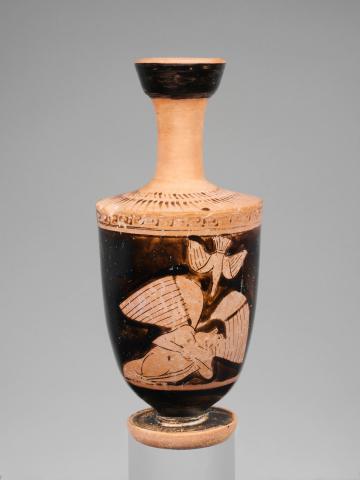
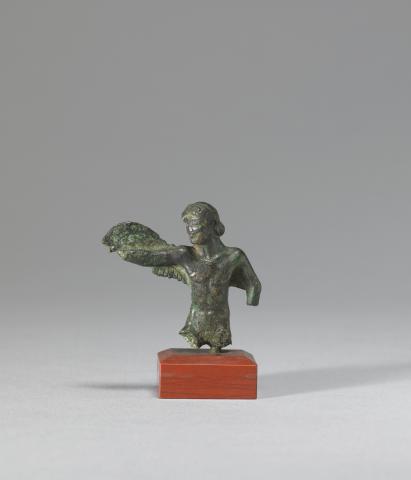
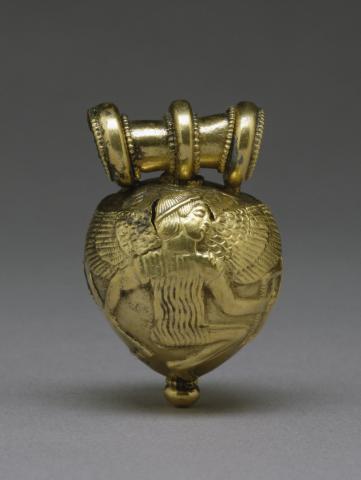
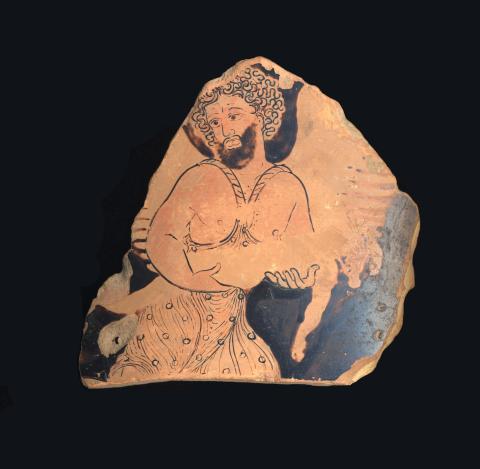
For depictions of this myth, see winged Icarus (?) mid-5th c. BCE; bronze statuette of Icarus (?) ca. 5th c. BCE; Etruscan pendant Icarus and Daedalus ca. 5th c. BCE; Daedalus with dead Icarus ca. 390-380 BCE.
1
φασὶν: “people say.”
αὐτοῦ: refers to Daedalus.
καθεῖρξε: 3rd sing. aor. indic. act. > καθείργω.
ἀμφοτέροις: refers to both Daedalus and Icarus.
ἐξέπτη: 3rd sing. aor. indic. act. > ἐκπέτομαι.
2
νοῆσαι: exclamatory infinitive, “To even think!”
ἀμήχανον: “impossible” refers to ἄνθρωπον πετόμενον.
καὶ ταῦτα … ἔχοντα: “despite having.” The words καὶ ταῦτα are roughly equivalent to καίπερ here.
3
τὸ … γενόμενον: “what happened.” Here, we follow Vitelli’s conjecture by replacing λεγόμενον with γενόμενον.
οὖν: the particle marks a change of topic. Here it is a change from what is merely said to what really happened.
4
καθεὶς: ptc. sing. aor. act. masc. nom. > καθίημι.
ἐμβάς: ptc. sing. aor. act. masc. nom. > ἐμβαίνω.
ἀπῄει: 3rd sing. impf. indic. act. > ἄπειμι.
5
πέμπει: historical present. Used in narratives to underscore turning points. Translate as past tense.
διώξοντα: the future participle indicates intention/purpose.
6
οἱ δὲ: refers to Daedalus and Icarus.
ὡς: conjunction with a temporal force, “when.”
ᾔσθοντο: subject is Daedalus and Icarus.
ἀνέμου λάβρου καὶ φοροῦ ὄντος: genitive absolute.
ἐφαίνοντο: “seemed to be” + supplementary participle.
7
οὐρίῳ Κρητικῷ νότῳ: dative of instrument. P. is careful to indicate the cardinal direction of their flight from Crete. The word οὐρίῳ indicates that the wind blows from behind and Κρητικῷ νότῳ tells us that the wind blows north from Crete located in the south. This places them on what will be called the Icarian Sea, north of Crete.
περιτρέπονται … περισῴζεται … διαφθείρεται: all are historical presents, sed in narratives to underscore turning points. Translate as past tense.
ὅθεν: “because of which.”
ἀπ’ ἐκείνου: refers to Icarus.
ἐκλήθη: 3rd sing. aor. indic. pass. > καλέω.
ἐκβληθέντα: ptc. sing. aor. pass. masc. acc. > ἐκβάλλω. Refers to Icarus.
vocabulary
1
Μίνως –ωος, ὁ Minos, mythical king of Knossos, Crete
Δαίδαλος –ου, ὁ Daedalus, a mythical craftsman
Ἴκαρος –ου, ὁ Icarus, son of Daedalus
καθείργω, καθείρξω, καθεῖρξα, καθεῖργμαι, —, καθείρχθην to imprison
πτέρυξ –υγος, ἡ wing
πρόσθετος –ον artificial, added on
ἐκπέτομαι, ἐκπτήσομαι, ἐξέπτην, —, —, — to fly out
2
νοέω, contr. to think that, suppose that (+ ptc.)
πέτομαι, πετήσομαι/πτήσομαι, ἐπτόμην/ἔπτην, —, —, — to fly
ἀμήχανος –ον unworkable, impossible
4
εἱρκτή –ῆς, ἡ prison
καθίημι, καθήσω, καθῆκα, κάθεῖκα, καθείμαι, — to lower down; rappel down (+ ἑαυτὸν)
θυρίς –ίδος, ἡ window
κατασπάω, κατασπάσω, κατέσπασα, κατέσπακα, κατέσπα(σ)μαι, κατεσπάσθην to draw down; belay
σκαφίς –ίδος, ἡ small boat, skiff; (lit.) small bowl, cup
ἐμβαίνω, ἐμβήσομαι, ἐνέβησα/ ἐνέβην, ἐμβέβηκα, —, — to step on, embark (+ dat.)
ἄπειμι, —, —, —, —, — to go away, leave
5
πλοῖον –ου, τό boat, vessel
6
ἄνεμος –ου, ὁ wind
λάβρος –ον violent, furious
φορός –όν (of a wind) from the stern, favorable; carrying forward
7
οὔριος –α –ον (lit.) favorable
Κρητικός –ή –όν Cretan, from Crete
νότος –ου, ὁ the south wind (i.e., blowing from south to north)
πέλαγος –ους, τό sea, high sea
περιτρέπω, —, —, —, —, — turn over; capsize
περισῴζω, περισώσω, περιέσωσα, περισέσωκα, περισέσωσμαι/περισέσωμαι, περιεσώθην to escape safely, make it safely
Ἰκάριος –α –ον Icarian (Sea)
ἐκβάλλω, ἐκβαλώ, ἐξέβαλον, ἐκβέβληκα, ἐκβέβλημαι, ἐξεβλήθην to throw out, cast out
κῦμα –ατος, τό swell, wave
θάπτω, θάψω, ἔθαψα, —, τέθαμμαι, ἐτάφην/ἐθάφθην to bury