(1) περὶ τῶν Διομήδους ἵππων φασὶν ὅτι ἀνδροφάγοι ἦσαν, γελοίως· τὸ γὰρ ζῷον τοῦτο μᾶλλον χόρτῳ καὶ κριθῇ ἥδεται ἢ κρέασιν ἀνθρωπίνοις. (2) τὸ δ’ ἀληθὲς ὧδε ἔχει. (3) τῶν παλαιῶν ἀνθρώπων ὄντων αὐτουργῶν, καὶ τὴν τροφὴν καὶ τὴν περιουσίαν οὕτως κτωμένων, ἅτε τὴν γῆν ἐργαζομένων, ἱπποτροφεῖν τις ἐπελάβετο, καὶ μέχρι τούτου ἵπποις ἥδετο, ἕως οὗ τὰ αὑτοῦ ἀπώλεσε καὶ πάντα πωλῶν κατανάλωσεν εἰς τὴν τῶν ἵππων τροφήν. (4) οἱ οὖν φίλοι ἀνδροφάγους τοὺς ἵππους ὠνόμασαν. (5) ὧν γενομένων προήχθη ὁ μῦθος.
notes
After refuting the myth of Actaeon, P. turns to another tale where domesticated animals again devour their human masters. According to this myth, a Thracian named Diomedes owned several man-eating horses. Some versions of the myth suggest that he was responsible for giving the horses a taste for human flesh by making it part of their regular diet. When the Greek hero, Heracles, was tasked with retrieving these fearsome steeds as one of his Labors, Diomedes was killed. Just how he was killed varies. In the variant familiar to P., he was devoured by his horses.
For the basic elements of this myth, see Diodorus Siculus 4.15.3–4; Apollodorus, Bibliotheca 2.5.8; Hyginus, Fabulae 30.
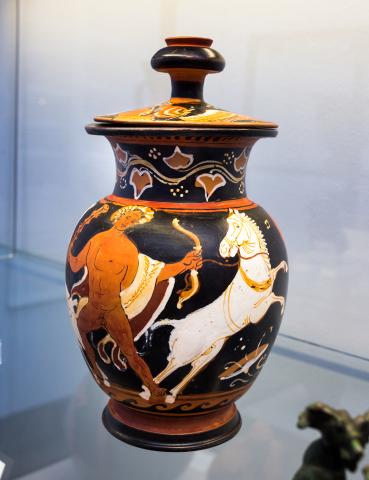
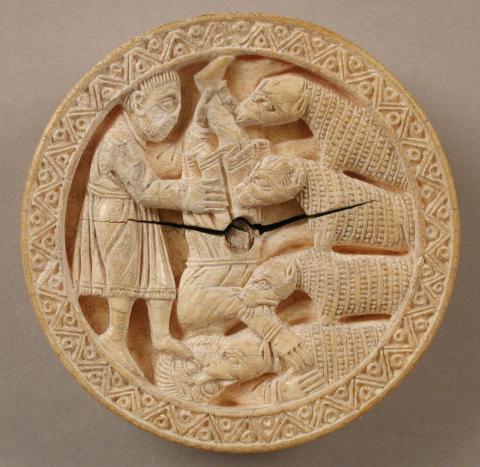
For depictions of this myth, see Heracles and two Horses of Diomedes ca. 320-310 BCE; Heracles feeding Diomedes to his horses ca. 1150 CE.
1
φασὶν: “people say.”
γελοίως: “ridiculously,” “absurdly.” P. places the word at the tail end of the sentence for emphasis.
τὸ γὰρ ζῷον τοῦτο: “for this animal,” i.e., the horse.
μᾶλλον … ἢ: “more … than.”
2
ὧδε ἔχει: “is as follows” (LSJ ἔχω B.II.2).
3
ὄντων … κτωμένων … ἐργαζομένων: each participle is a genitive absolute with the same subject, τῶν παλαιῶν ἀνθρώπων. Here P. tells us what it took to make a living in very early times.
ἅτε τὴν γῆν ἐργαζομένων: “inasmuch as they work the land.” The word ἅτε indicates the objective reason for what has been stated, i.e., in what capacity the ancients are making a living working with their own hands.
ἱπποτροφεῖν τις ἐπελάβετο: “someone undertook to breed horses.”
μέχρι τούτου … ἕως οὗ: “up to a point … until.”
τὰ αὑτοῦ: “his own lot.”
ἀπώλεσε: 3rd sing. aor. indic. act. > ἀπόλλυμι. The subject is τις from earlier.
πωλῶν: take πάντα as a direct object.
κατανάλωσεν εἰς: “he lavished resources on.”
4
οὖν: the particle marks a change of topic. Here, it is from what happened to what was said about what happened, i.e., from deeds to words.
ἀνδροφάγους τοὺς ἵππους ὠνόμασαν: “nicknamed the horses ‘man-eaters’” (LSJ ὀνομάζω II).
5
ὧν γενομένων: genitive absolute, “after all of this had happened.” The antecedent to ὧν is the whole, rationalized description of Diomedes and his horses.
προήχθη: 3rd sing. aor. indic. pass. > προάγω.
vocabulary
1
Διομήδης –ους, ὁ Diomedes, a mythological figure from Thrace
ἀνδροφάγος –ον man-eating
γελοῖος –α –ον ridiculous, absurd
χόρτος –ου, ὁ fodder, hay
κριθή –ής, ἡ barley
ἥδομαι, ἡσθήσομαι, —, —, —, ἥσθην to enjoy (+ dat.)
κρέας κρέως/κρέατος, τό meat
ἀνθρώπινος –η –ον human, of humans
3
αὐτουργός –όν one who works the land for oneself; a farmer
τροφή –ῆς, ἡ nourishment, food
περιουσία –ης, ἡ means, resources, property
ἱπποτροφέω, contr. to nurture or breed horses
ἐπιλαμβάνω, ἐπιλήψομαι, ἐπέλαβον, ἐπείληφα, ἐπείλημμαι, ἐπελήφθην (mid.) to undertake
πωλέω, contr. to sell
καταναλίσκω, καταναλώσω, κατανάλωσα/κατανήλωσα, κατανήλωκα/κατανάλωκα, κατανήλωμαι/κατανάλωμαι, κατηναλώθην to lavish money on (εἰς + acc.)
5
προάγω, προάξω, προήγαγον, προῆχα, προῆγμαι, προήχθην to extend, bring out, propagate
μῦθος –ου, ὁ tale