(1) φασὶ περὶ τῆς Τευμησίας Ἀλώπεκος ὡς ἁρπάζουσα τοὺς Καδμείους κατήσθιεν. (2) ἔστι δὲ εὔηθες. (3) οὐδὲ γὰρ ἄλλο τί ἐστι χερσαῖον θηρίον ὃ δύναται ἁρπάσαν ἄνθρωπον φέρειν, ἀλώπηξ δὲ μικρόν ἐστι καὶ ἀσθενές. (4) ἐγένετο δέ τι τοιοῦτον. (5) ἀνὴρ Θηβαῖος καλὸς κἀγαθὸς ἐκαλεῖτο Ἀλώπηξ, ὃ ἦν πανοῦργος· οὗτος γὰρ συνέσει πάντων τῶν ἀνθρώπων ὑπερέφερε. (6) δεδιὼς δὲ ὁ βασιλεὺς μὴ ἐπιβουλεύσῃ αὐτῷ, ἐξελαύνει αὐτὸν ἐκ τῆς πόλεως. (7) συναγαγὼν δὲ ἐκεῖνος πολὺν στρατὸν καὶ ἄλλους μισθοφόρους, κατέλαβε τὸν καλούμενον λόφον Τευμήσιον. (8) ἐντεῦθεν ὁρμώμενος ἦγε καὶ ἔφερε τοὺς Θηβαίους. (9) ἔλεγον δὲ οἱ ἄνθρωποι “Ἀλώπηξ ἡμᾶς κατατρέχων ὑποχωρεῖ.” (10) ἀφικνεῖται δὲ ἀνὴρ Κέφαλος ὀνόματι, γένος Ἀθηναῖος, στρατὸν πολὺν ἔχων, ἐπίκουρος τοῖς Θηβαίοις. (11) οὗτος τόν τε Ἀλώπεκα ἀπέκτεινε καὶ τὸν στρατὸν αὐτοῦ ἐξήλασεν ἐκ τοῦ Τευμησίου. (12) ὧν γενομένων ἐμυθολογήθη ἐκεῖνα.
notes
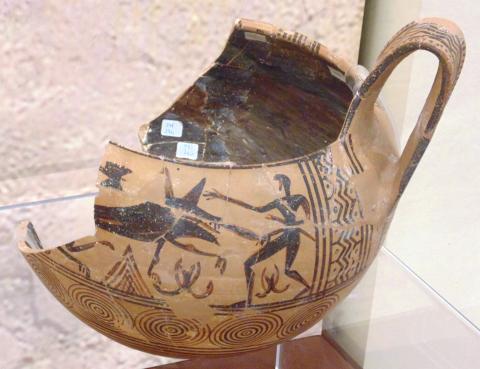
According to myth, the Teumessian Fox was yet another beast sent by the gods to torment the people of Thebes. Its name comes from Teumessus, a hill in Boeotia, which served as its den. Each month, it would demand the blood price of one Theban citizen. The Theban hero Amphitryon set out to defeat the fox. The problem he faced was that the superlative Fox was impossible to catch. At this point, Cephalus arrived from Athens in order to purify himself for accidentally murdering his wife, Procris. He had with him a magical hunting dog, Laelaps, who never missed its quarry. Amphitryon secured Cephalus’s aid, and when the inescapable hound was loosed on the uncatchable fox, a never-ending chase began – until, Zeus, fed up, transformed the two beasts into stone (or, another variant, into constellations).
For the basic elements of this myth, see Apollodorus, Bibliotheca 2.4.6–7; Ovid, Metamorphoses 7.759–795; Hyginus, Astronomica 2.35.
For depictions of this myth, see Teumessian (?) fox, askos of dog chasing a fox ca. 430 BCE
1
φασὶ: “people say.”
τῆς Τευμησίας: “Teumessian,” named after Teumessus (Τευμη[σ]σός), a mountain in Boeotia that served as the fox’s den.
κατήσθιεν: 3rd sing. impf. indic. act. > κατεσθίω.
2
ἔστι: takes a recessive accent when appearing at the beginning of the sentence.
3
οὐδὲ γὰρ ἄλλο τί ἐστι: “for there is not any.” The word τί > τι (indefinite) receives an accent when followed by another enclitic (here ἐστι).
ἁρπάσαν: neut. sing. ptc., modifying ὃ.
μικρόν … ἀσθενές: neuter predicate adjectives because ἀλώπηξ is being viewed as a species generally.
5
καλὸς κἀγαθὸς: “fine and noble,” crasis of κἀγαθὸς > καὶ ἀγαθὸς. The phrase is an idiom of the classical period used to describe people of the aristocracy. Not primarily a moral judgment (NB: πανοῦργος later in the sentence).
Ἀλώπηξ: “Fox” is not typically used as a personal name by Greeks. It is, however, often used metaphorically to describe a wily individual, as it is today. Here, it seems to be a nickname.
ὃ ἦν πανοῦργος: “because he was crafty.” S. 2502d, “The relative may stand in the neuter, in agreement with the notion implied in the antecedent rather than with the antecedent itself.” Alternatively, one might follow the MSS that reads ὅς.
6
δεδιὼς: ptc. sing. pf. act. masc. nom. > δείδω. Triggers a fear clause.
μὴ ἐπιβουλεύσῃ: the subject is Fox.
αὐτῷ: refers to the king.
ἐξελαύνει: historical present. Used in narratives to underscore turning points. Translate as past tense.
αὐτὸν: refers to Ἀλώπηξ.
7
ἐκεῖνος: refers to Ἀλώπηξ.
τὸν καλούμενον: “so-called.”
8
ὁρμώμενος: “setting out.”
ἦγε καὶ ἔφερε τοὺς Θηβαίους: “he marched on and ravaged the Thebans,” is a loose expression (see Arrian, Anabasis 1.5.3). P. likely chooses it since it accommodates the misinterpretation of “seizing the Cadmeians” (see ἁρπάζουσα τοὺς Καδμείους above).
10
ἀφικνεῖται: historical present. Used in narratives to underscore turning points. Translate as past tense.
Κέφαλος: in apposition to ἀνὴρ.
ὀνόματι: “by name.”
γένος: accusative of respect.
ἐπίκουρος: in apposition to ἀνὴρ and Κέφαλος.
11
ἐξήλασεν: 3rd sing. aor. indic. act. > ἐξελαύνω.
αὐτοῦ: refers to Fox.
12
ὧν γενομένων: genitive absolute, “after all of this had happened.” The antecedent to ὧν is the whole rationalized description of the Teumessian Fox.
ἐμυθολογήθη: 3rd sing. aor. indic. pass. > μυθολογέω.
ἐκεῖνα: neut. pl. nom., subject of a verb in the singular, as usual.
vocabulary
ἀλώπηξ –εκος, ἡ fox, Fox (male name, only in Palaephatus)
Τευμήσ(σ)ιος, –α, –ον of mount Teumessus (a mountain near Thebes)
ἁρπάζω, ἁρπάσω, ἥρπασα, ἥρπακα, ἥρπασμαι, ἡρπάσθην/ ἡρπάγην to carry away, snatch
Καδμεῖος –α –ον Cadmeian, of Cadmus (founder of Thebes)
κατεσθίω, κατέδομαι, καταφαγεῖν, κατεδήδοκα, κατεδήδεσμαι, κατηδέσθην to devour
2
εὐήθης –ες naïve
3
χερσαῖος –α –ον land-based; [with θηρίον] game (animal)
θηρίον –ου, τό wild animal, beast
ἀσθενής –ές weak
5
Θηβαῖος –α –ον Theban, of Thebes
πανοῦργος –ον crafty
σύνεσις –εως, ἡ quick-wittedness, savvy
ὑπερφέρω, ὑπεροίσω, ὑπερήνεγκα/ὑπερήνεγκον, ὑπερενήνοχα, ὑπερηνέχθην to be superior, surpass (+ gen.)
6
δείδω, δείσω, δείδω, ἔδεισα, δέδοικα/δέδια, —, — to fear, be afraid
ἐπιβουλεύω to plot against (+ dat.)
ἐξελαύνω, ἐξελάσω, ἐξήλασα, ἐξελήλακα, ἐξελήλαμαι, ἐξηλάθην to drive out, lead
7
συνάγω, συνάξω, συνήγαγον, συνήχα, συνῆγμαι, συνήχθην to gather, assemble
μισθόφορος –ον one who receives pay; (subst.) mercenary
καταλαμβάνω, καταλήψομαι, κατέλαβον, κατείληφα, κατείλημμαι, κατελήφθην to occupy, seize
λόφος –ου, ὁ crest, hillock
8
ἐντεῦθεν, adv. from there
9
κατατρέχω, καταδραμοῦμαι, κατέδραμον, καταδεδράμηκα, καταδεδράμημαι, — overrun, attack
ὑποχωρέω, contr. to retreat
10
Κέφαλος –ου, ὁ Cephalus, a Greek hero, husband of Procris
Ἀθηναῖος –α –ον Athenian, of Athens
ἐπίκουρος –ον helper to (+ dat.)
11
μυθολογέω, contr. to tell a story