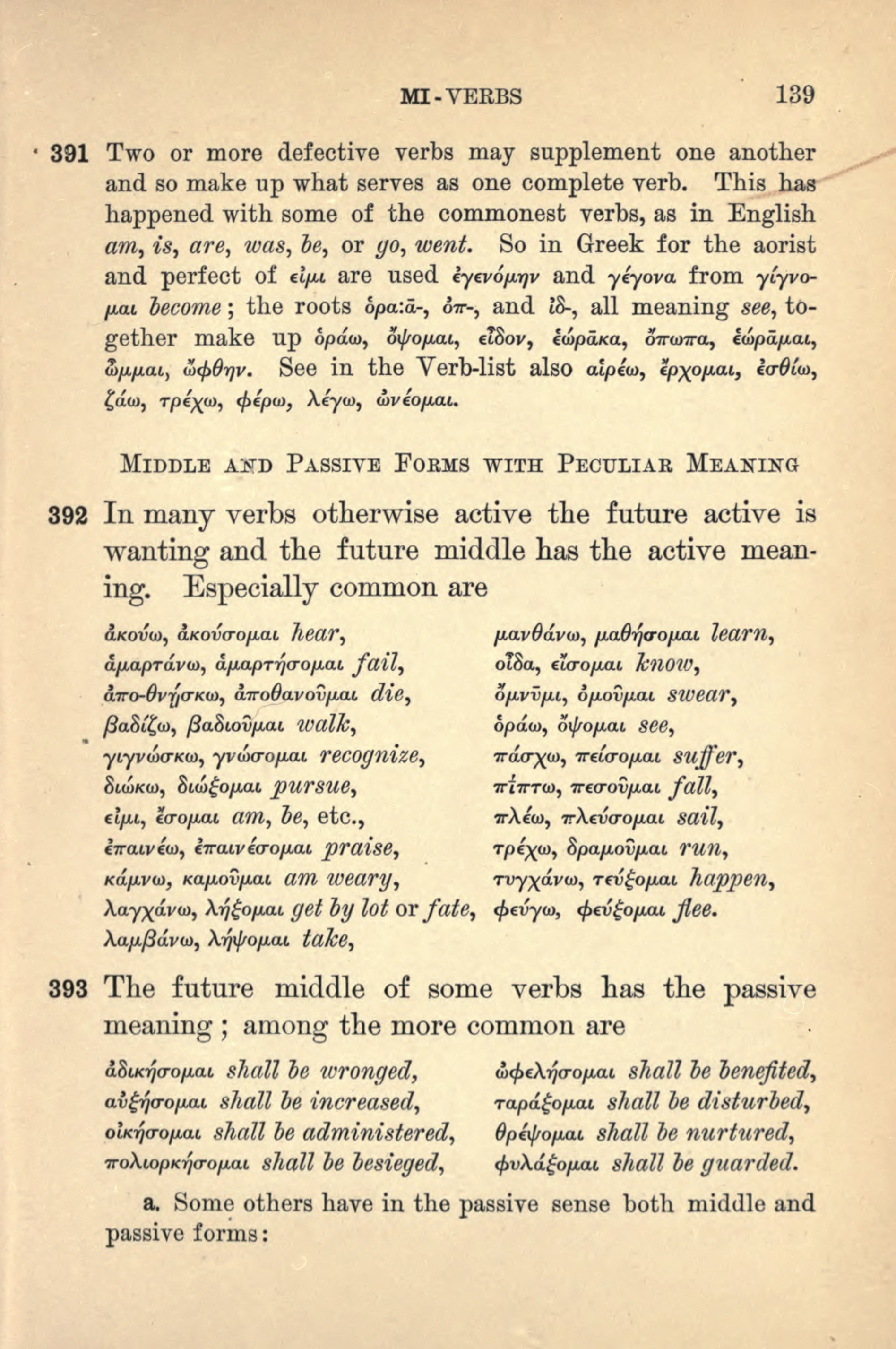
392. In many verbs otherwise active the future active is wanting and the future middle has the active meaning. Especially common are
|
ἀκούω, ἀκούσομαι hear |
μανθάνω, μαθήσομαι learn |
|
ἁμαρτάνω, ἁμαρτήσομαι fail |
οἶδα, εἴσομαι know |
|
ἀπο-θνῄσκω, ἀποθανοῦμαι die |
ὄμνῡμι, ὀμοῦμαι swear |
|
βαδίζω, βαδιοῦμαι walk |
ὁράω, ὄψομαι see |
|
γιγνώσκω, γνώσομαι recognize |
πάσχω, πείσομαι suffer |
|
διώκω, διώξομαι pursue |
πῑ́πτω, πεσοῦμαι fall |
|
εἶμι, ἔσομαι am, be, etc. |
πλέω, πλεύσομαι sail |
|
ἐπαινέω, ἐπαινέσομαι praise |
τρέχω, δραμοῦμαι run |
|
κάμνω, καμοῦμαι am weary |
τυγχάνω, τεύξομαι happen |
|
λαγχάνω, λήξομαι get by lot or fate |
φεύγω, φεύξομαι flee |
|
λαμβάνω, λήψομαι take |
393. The future middle of some verbs has the passive meaning; among the more common are
|
ἀδικήσομαι shall be wronged |
ὠφελήσομαι shall be benefited |
|
αὐξήσομαι shall be increased |
ταράξομαι shall be disturbed |
|
οἰκήσομαι shall be administered |
θρέψομαι shall be nurtured |
|
πολιορκήσομαι shall be besieged |
φυλάξομαι shall be guarded |
a. Some others have in the passive sense both middle and passive forms:
|
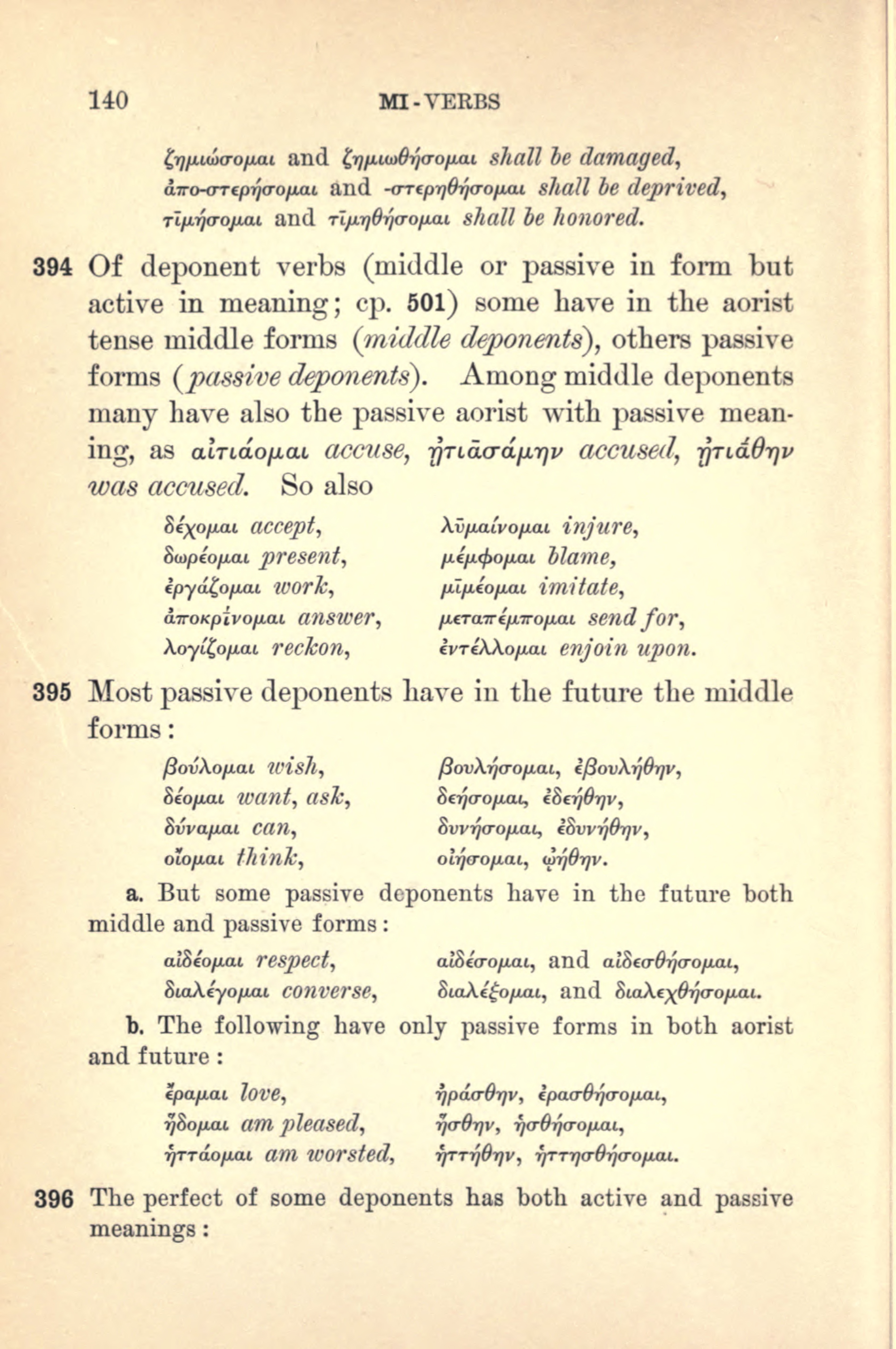
ζημιώσομαι and ζημιωθήσομαι shall be damaged |
|
ἀπο-στερήσομαι and -στερηθήσομαι shall be deprived |
|
τῖμήσομαι and τῖμηθήσομαι shall be honored |
394. Of deponent verbs (middle or passive in form but active in meaning; cp. § 501) some have in the aorist tense middle forms (middle deponents), others passive forms (passive deponents). Among middle deponents many have also the passive aorist with passive meaning, as αἰτιάομαι (accuse), ᾐτιᾱσάμην (accused), ᾐτιᾱ́θην (was accused). So also
|
δέχομαι accept |
λῡμαίνομαι injure |
|
δωρέομαι present |
μέμφομαι blame |
|
ἐργάζομαι work |
μῑμέομαι imitate |
|
ἀποκρῑ́νομαι answer |
μεταπέμπομαι send for |
|
λογίζομαι reckon |
ἐντέλλομαι enjoin upon |
395. Most passive deponents have in the future the middle forms.
|
βούλομαι wish |
βουλήσομαι, ἐβουλήθην |
|
δέομαι want, ask |
δεήσομαι, ἐδεήθην |
|
δύναμαι can |
δυνήσομαι, ἐδυνήθην |
|
οἴομαι think |
οἰήσομαι, ᾠήθην |
a. But some passive deponents have in the future both middle and passive forms.
|
αἰδέομαι respect |
αἰδέσομαι and αἰδεσθήσομαι |
|
διαλέγομαι converse |
διαλέξομαι and διαλεχθήσομαι |
b. The following have only passive forms in both aorist and future.
|
ἔραμαι love |
ἠράσθην, ἐρασθήσομαι |
|
ἥδομαι am pleased |
ἥσθην, ἡσθήσομαι |
|
ἡττάομαι am worsted |
ἡττήθην, ἡττηθήσομαι |
396. The perfect of some deponents has both active and passive meanings.
εἴργασται he has worked or it has been worked
ἐώνημαι I have bought or have been bought