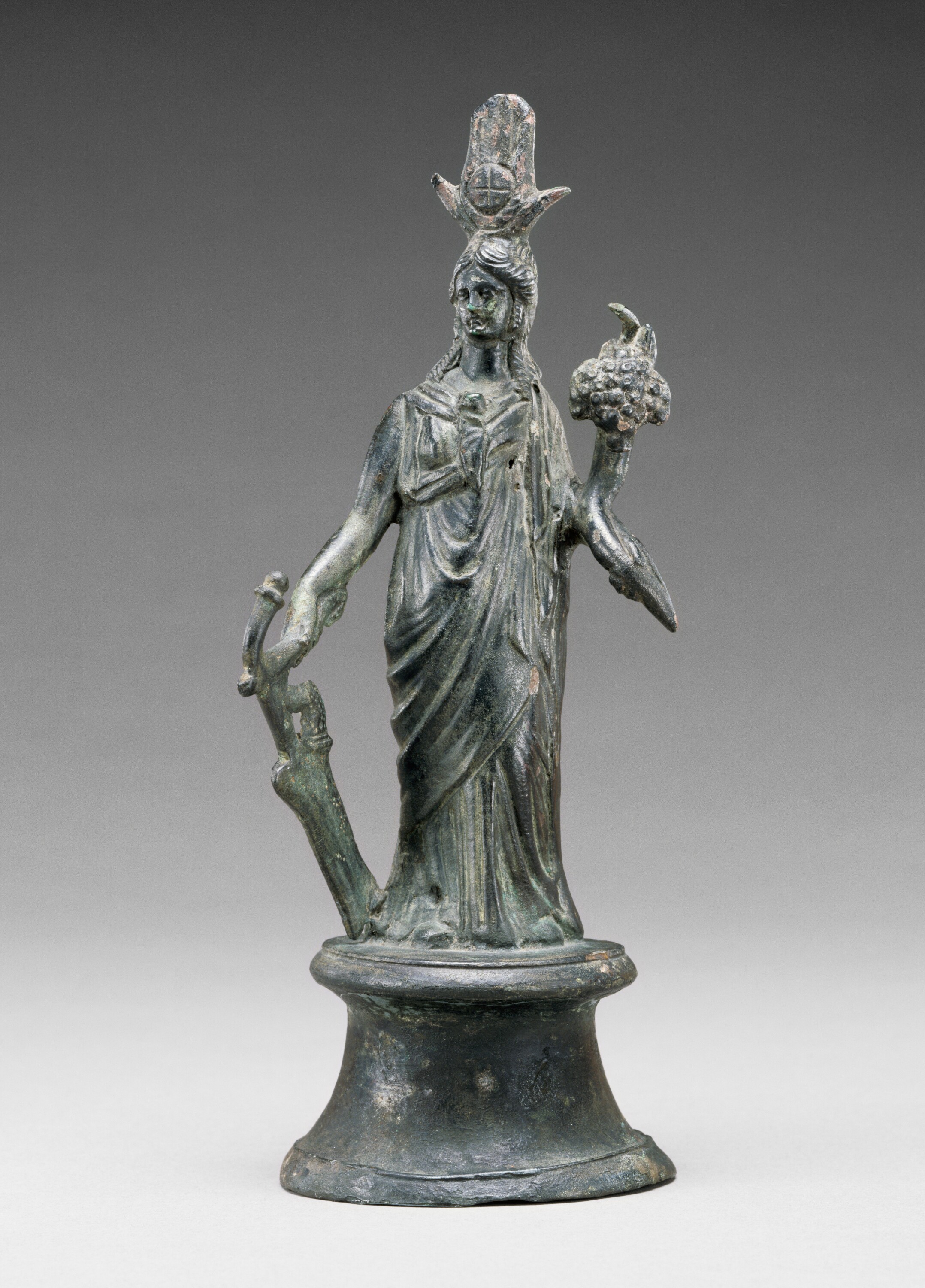
Statuette of Isis-Fortuna

    The Egyptian goddess Isis was adopted into Roman religion in the first century B.C. She possessed a wide range of powers, including the ability to offer her followers a better afterlife. In Roman religion, she was often merged with other Roman goddesses, creating new composite deities. This statuette portrays Isis combined with Fortuna, a fertility goddess who controlled the fate of both individuals and cities. This statuette has attributes of both goddesses: she wears the elaborate headdress of Isis, a lunar disk between horns or feathers, and the front of her long dress is tied in a knot on her chest, the so-called Isis knot. She also holds the usual attributes of Fortuna: the rudder in her right hand refers to her control over the course of human lives, and the cornucopia in her left arm is a symbol of abundance and prosperity (Getty Museum).
    Associated Passages
    Subjects
    Type
    Image
    License
    Creative Commons Attribution-ShareAlike
    Date
    2nd century A.D.
    Culture
    Medium
    Dimensions
    19 cm (7 1/2 in.)
    Location
    J. Paul Getty Museum
    Image Credit

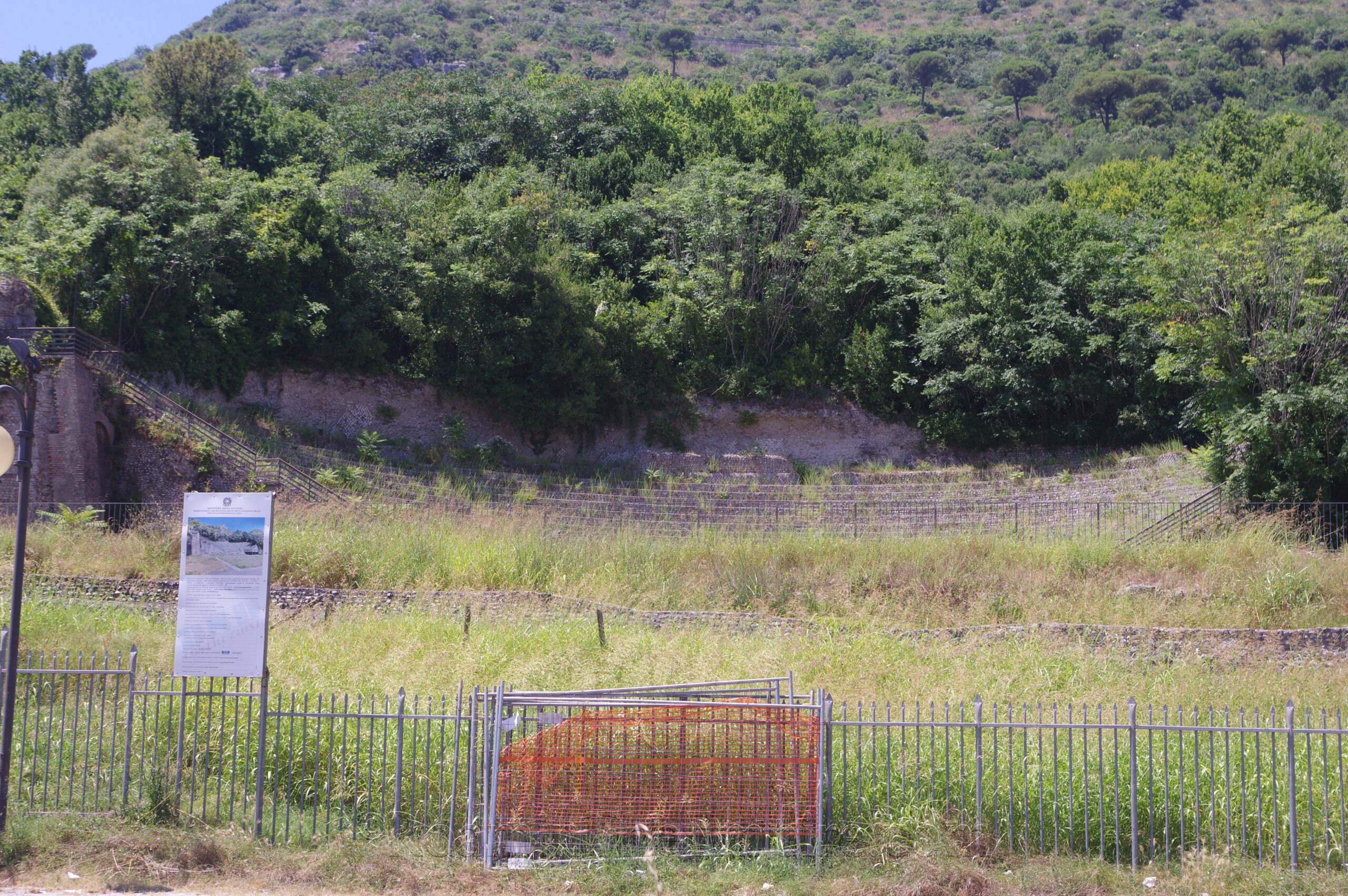
    Casinum Theater

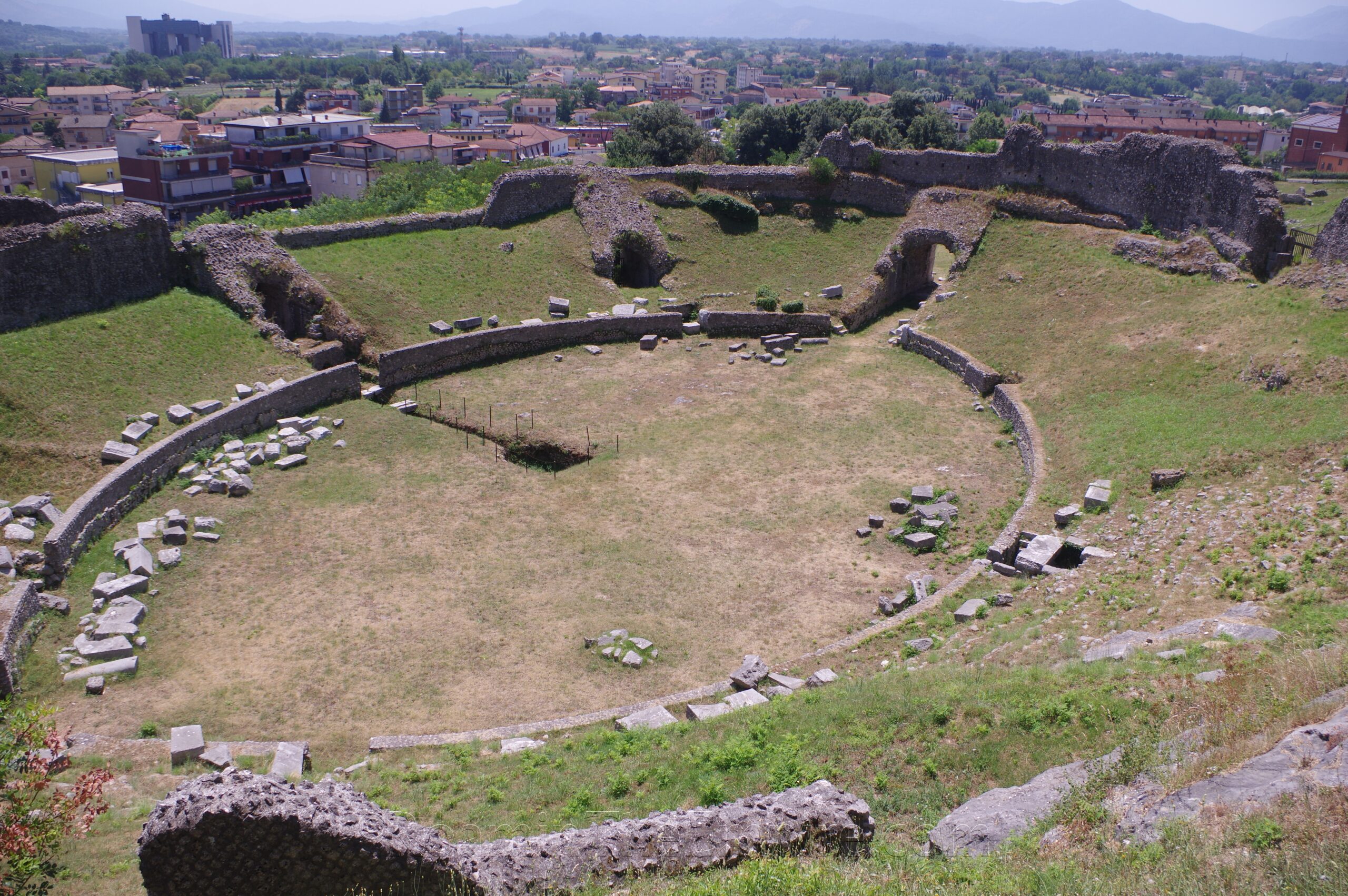
      Most of the remains of ancient Casinum are contained within the archaeological park attached to the Museo Archeologico Nazionale G. Carettoni, with a couple exceptions. The first is the ancient theater, which is adjacent to the museum and archaeological area, but is separate and not currently accessible. The theater was likely built early in the reign of Augustus. An inscription attributes a renovation of the theater in the second half of the 1st century CE to Ummidia Quadratilla, whose father was responsible for the original construction of the theater. The theater is somewhat visible from the parking lot, it’s not a great view. Performances are supposedly conducted here in the summers, but it was quite overgrown and didn’t look like it had been used for those purposes in a while. Some remains of a Roman road are visible at points running south of the museum. (Rob@roamintheempire.com)

      Associated Passages
      Subjects
      Type
      Image
      License
      Creative Commons Attribution-ShareAlike
      Date
      1st century AD
      Culture
      Location
      Casinum

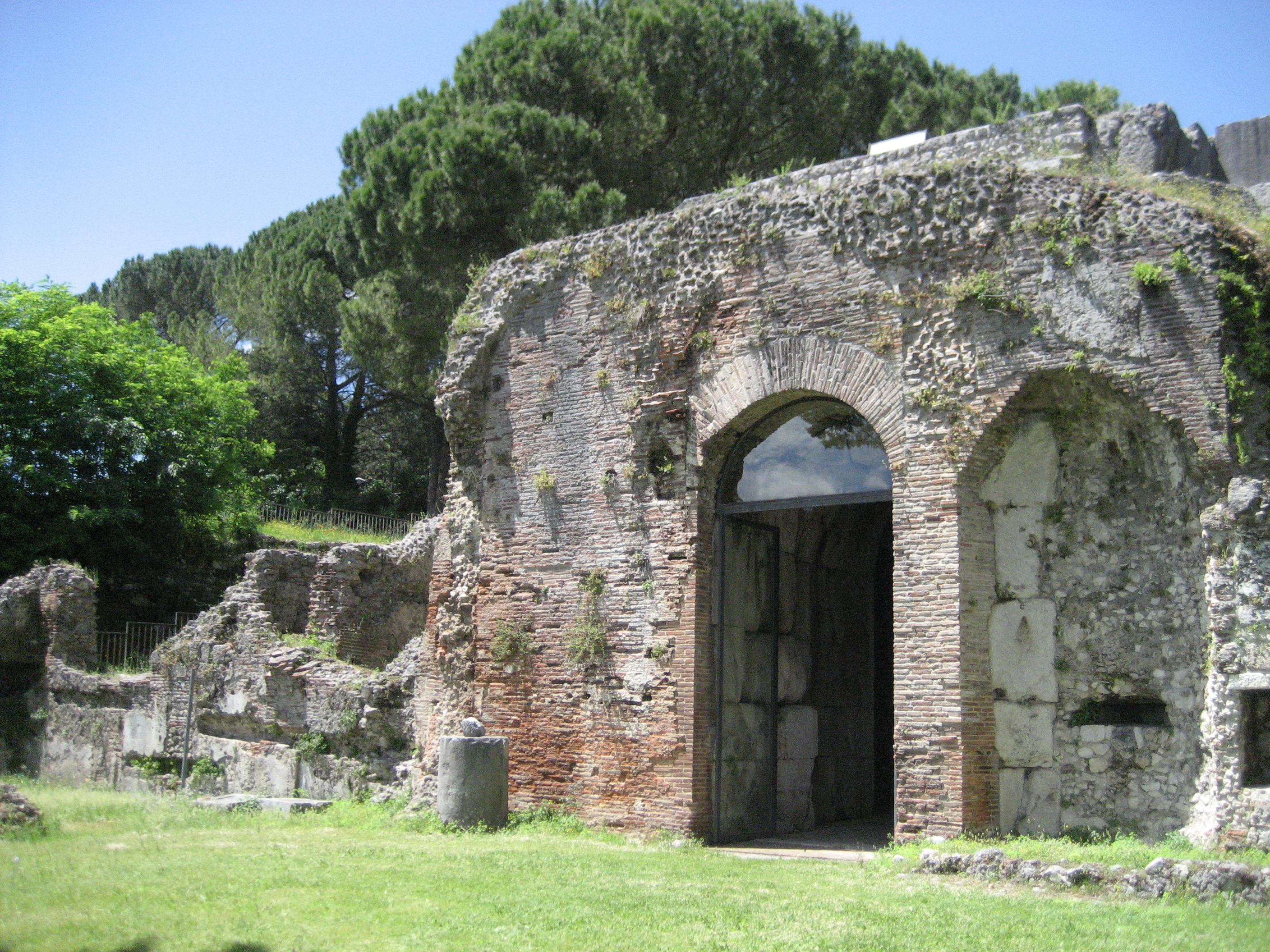
      Mausoleum of Ummidia Quadratilla

        The mausoleum of Ummidia is unique, with a cella in opus quadratum, on a central plan with a cupola, a pronaos facing - with Italic Corinthian columns covered in stucco. (Princeton Encyclopedia of Classical Sites, Casinum)

        Associated Passages
        Subjects
        Type
        Image
        License
        Creative Commons Attribution-ShareAlike
        Date
        1st century AD
        Culture
        Location
        Casinum, Italy

        Casinum Amphitheater

          The amphitheater was constructed in the latter half of the 1st century CE. An inscription records that it was constructed, along with a temple, by Ummidia Quadratilla (the very same patron of the theater) with her own money for the citizens of Casinum. The temple which is referred to in the inscription has not yet been found. The amphitheater was located outside the walls of the city, built abutting the slopes of Monte Cassino. The amphitheater is estimated to have had a capacity of about 4,500 spectators. (Rob@roamintheempire.com)

          Associated Passages
          Subjects
          Type
          Image
          License
          Creative Commons Attribution-NonCommercial-ShareAlike
          Date
          second half of the 1st c. A.D.
          Culture
          Location
          Casinum

          Fragmentary Mosaic Floor with Bear Hunt

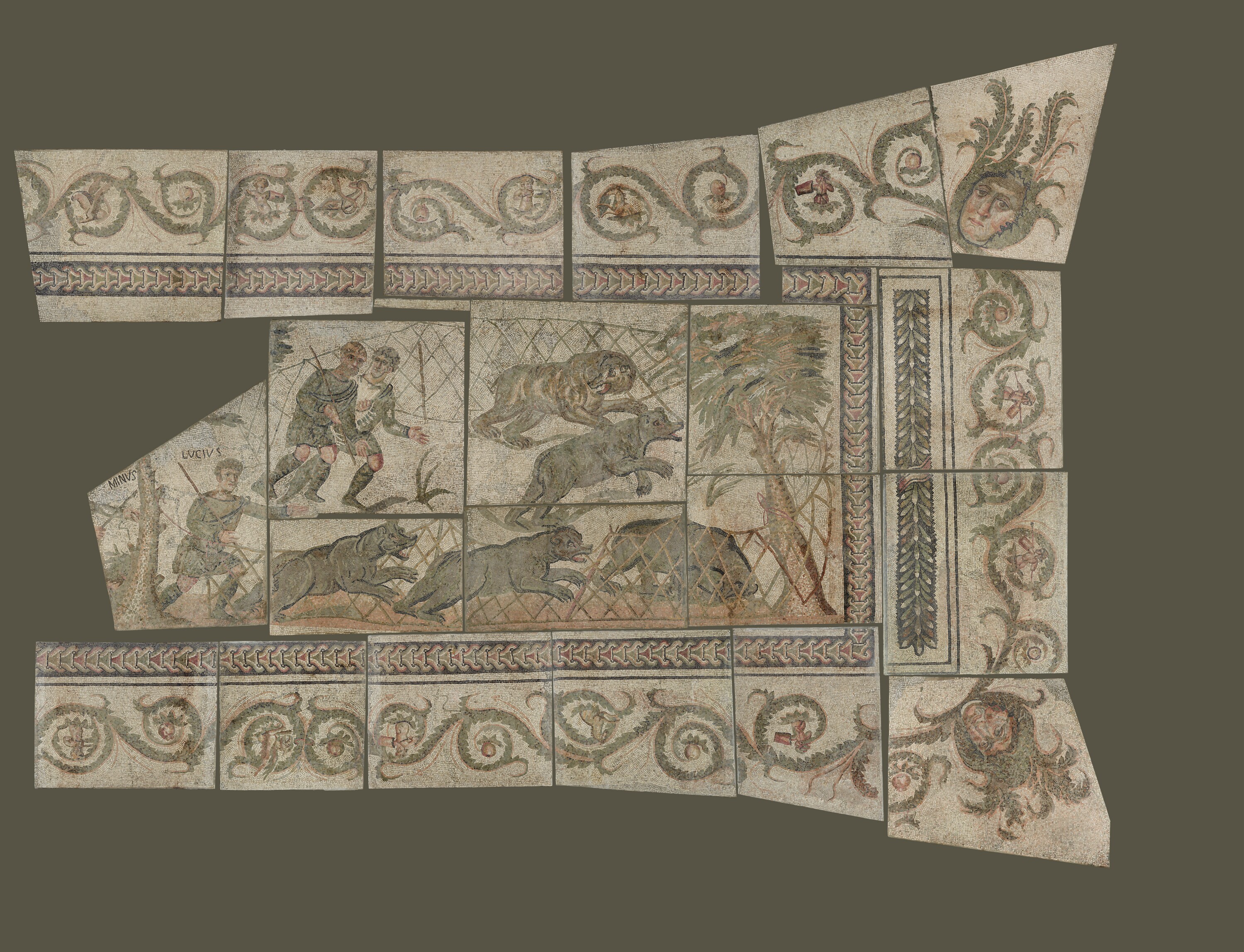
            Enough of the fragmentary floor survives to identify the subject as a bear hunt. The figures of three hunters are preserved, and one of them has his name, Lucius, inscribed above his head. The arm of another hunter is preserved along the left edge, along with his name, Minus. The hunters are driving four bears into a net; a fifth has already been captured. The net is set in a semi-circle and tied to trees at the right and left edges of the scene. The hunting scene is surrounded on three sides by a border of loop guilloche, and another vertical border of a foliate garland with a central ribbon frames the right end. The outermost border is a luxurious acanthus scroll. Heads emerge from elaborate leaf complexes in the corners, and smaller figures of erotes with armor, fruits and animals (both real and imaginary) are tucked into the scrolling acanthus along the edges (Getty website).

            Getty Museum 72.AH.76

            Subjects
            Type
            Image
            License
            Creative Commons Attribution-ShareAlike
            Date
            4th century AD
            Culture
            Dimensions
            661 × 869 cm (260 1/4 × 342 1/8 in.)
            Inscription
            Inscribed near the head of the beardless figure in the lower left, "LUCIUS", and on the other side of the tree behind this figure, inscribed "MINUS".
            Location
            "Stufe di Nerone", near Lago Lucrino, near Pozzuoli, Italy (Place Found)
            Image Credit

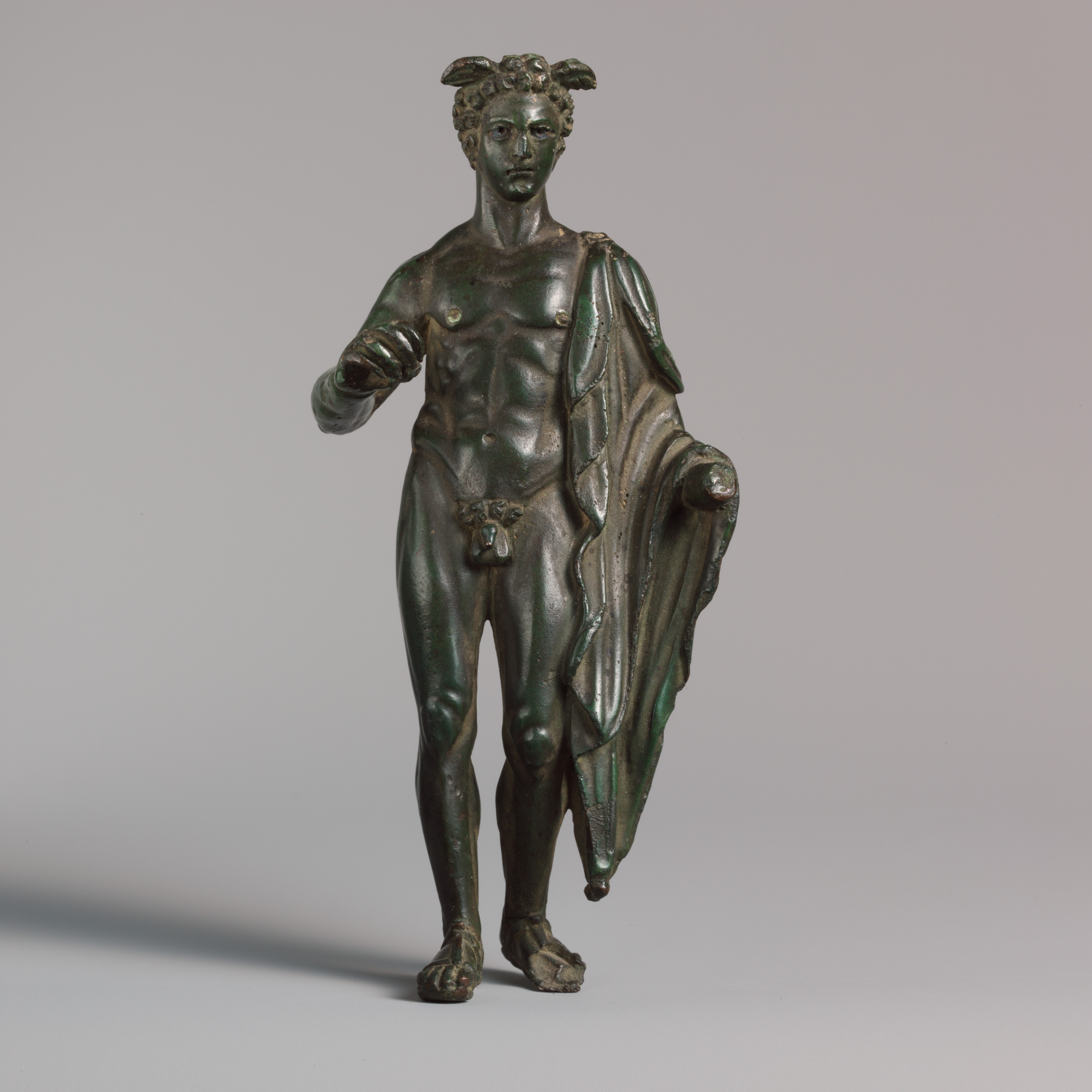
            Bronze statuette of Mercury

              He stands with his weight resting on the right leg, with the left foot drawn back.

              Metadata from the Met website:

              Title: Bronze statuette of Mercury

              Period: Early Imperial

              Date: 1st century CE

              Culture: Roman

              Medium: Bronze

              Dimensions: Overall: 6 3/16 x 2 3/4 x 1 7/8 in. (15.7 x 6.9 x 4.8 cm)

              Classification: Bronzes

              Credit Line: Rogers Fund, 1906

              Object Number: 06.1057

              Associated Passages
              Type
              Image
              License
              Creative Commons Attribution-ShareAlike
              Date
              1st century AD
              Culture
              Medium
              Dimensions
              6 3/16 x 2 3/4 x 1 7/8 in. (15.7 x 6.9 x 4.8 cm)
              Location
              Metropolitan Museum of Art

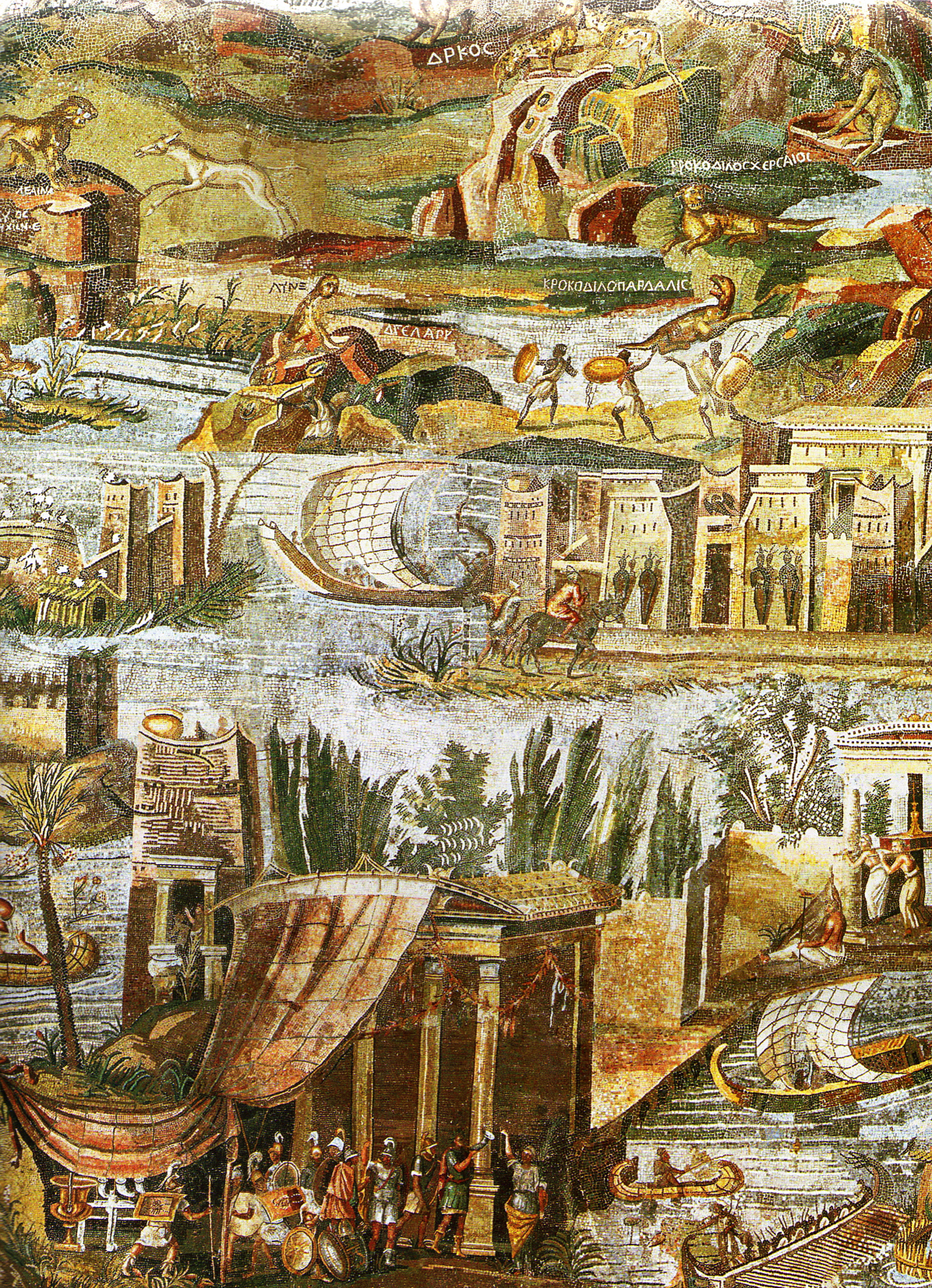
              Nile Mosaic of Palestrina

                The Palestrina Mosaic or Nile mosaic of Palestrina is a late Hellenistic floor mosaic depicting the Nile in its passage from the Blue Nile to the Mediterranean. The mosaic was part of a Classical sanctuary-grotto in Palestrina, a town east of Ancient Rome, in central Italy. It has a width of 5.85 metres and a height of 4.31 metres and provides a glimpse into the Roman fascination with ancient Egyptian exoticism in the 1st century BC, both as an early manifestation of the role of Egypt in the Roman imagination and an example of the genre of "Nilotic landscape", with a long iconographic history in Egypt and the Aegean.

                The mosaic, with an arch-headed framing that identifies its original location as flooring an apse in a grotto, features detailed depictions of Ptolemaic Greeks, Aethiopians in hunting scenes, and various animals of the Nile river. It is the earliest Roman depiction of Nilotic scenes, of which several more were uncovered at Pompeii. A consensus on the dating of the work is slowly emerging. Paul G. P. Meyboom suggests a date shortly before the reign of Sulla (ca. 100 BC) and treats the mosaic as an early evidence for the spread of Egyptian cults in Italy, where Isis was syncretised with Fortuna. He believes Nilotic scenes were introduced in Rome by Demetrius the Topographer, a Greek artist from Ptolemaic Egypt active ca. 165 BC. Claire Préaux emphasises the "escapist" nature of the fantastic scenery. (Wikipedia)

                Associated Passages
                Type
                Image
                License
                Creative Commons Attribution
                Date
                ca. 100 BC
                Culture
                Medium
                Location
                Museo Nazionale Prenestino

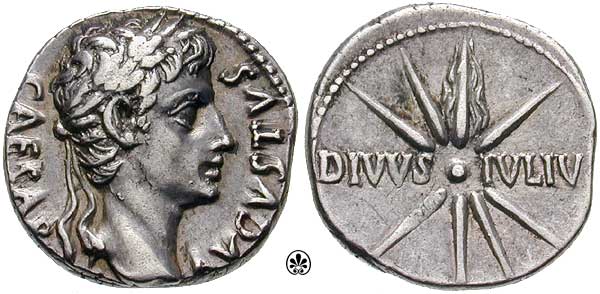
                Augustan Denarius showing Caesar's comet

                  Augustus. 27 BC-14 AD. AR Denarius (3.88 gm). Struck circa 19-18 BC. Caesaraugusta mint. CAESAR AVGVSTVS, laureate head right / DIVVS IVLIV[S], comet of eight rays with tail upward. RIC I 37a; BMCRE 323; RSC 98.

                  Associated Passages
                  Type
                  Image
                  License
                  Creative Commons Attribution
                  Date
                  19-18 BC
                  Culture
                  Inscription
                  CAESAR AVGVSTVS, laureate head right / DIVVS IVLIV[S], comet of eight rays with tail upward
                  Image Credit