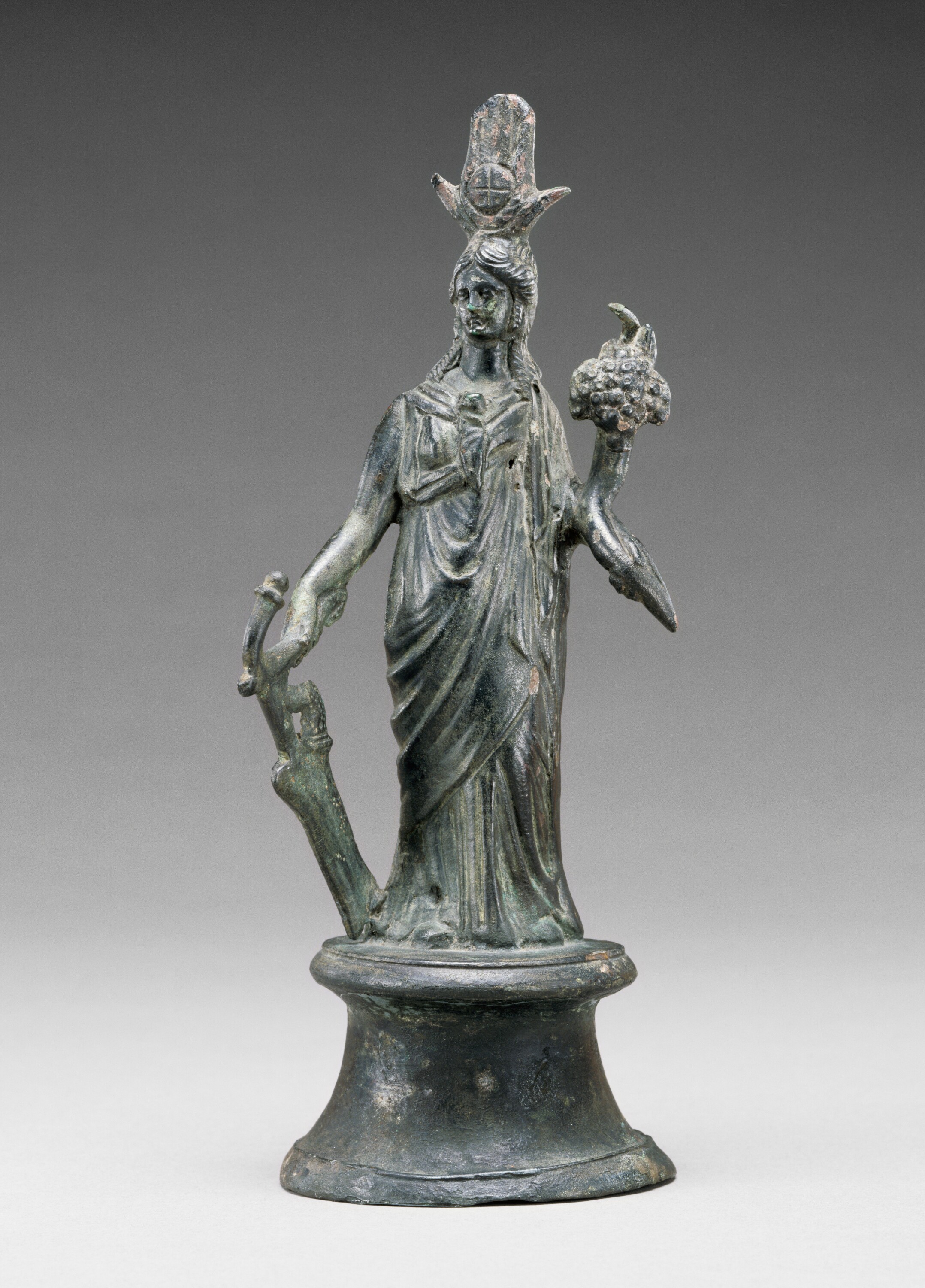
Statuette of Isis-Fortuna

    The Egyptian goddess Isis was adopted into Roman religion in the first century B.C. She possessed a wide range of powers, including the ability to offer her followers a better afterlife. In Roman religion, she was often merged with other Roman goddesses, creating new composite deities. This statuette portrays Isis combined with Fortuna, a fertility goddess who controlled the fate of both individuals and cities. This statuette has attributes of both goddesses: she wears the elaborate headdress of Isis, a lunar disk between horns or feathers, and the front of her long dress is tied in a knot on her chest, the so-called Isis knot. She also holds the usual attributes of Fortuna: the rudder in her right hand refers to her control over the course of human lives, and the cornucopia in her left arm is a symbol of abundance and prosperity (Getty Museum).

    Associated Passages
    Subjects
    Type
    Image
    License
    Creative Commons Attribution-ShareAlike
    Date
    2nd century A.D.
    Culture
    Medium
    Dimensions
    19 cm (7 1/2 in.)
    Location
    J. Paul Getty Museum
    Image Credit

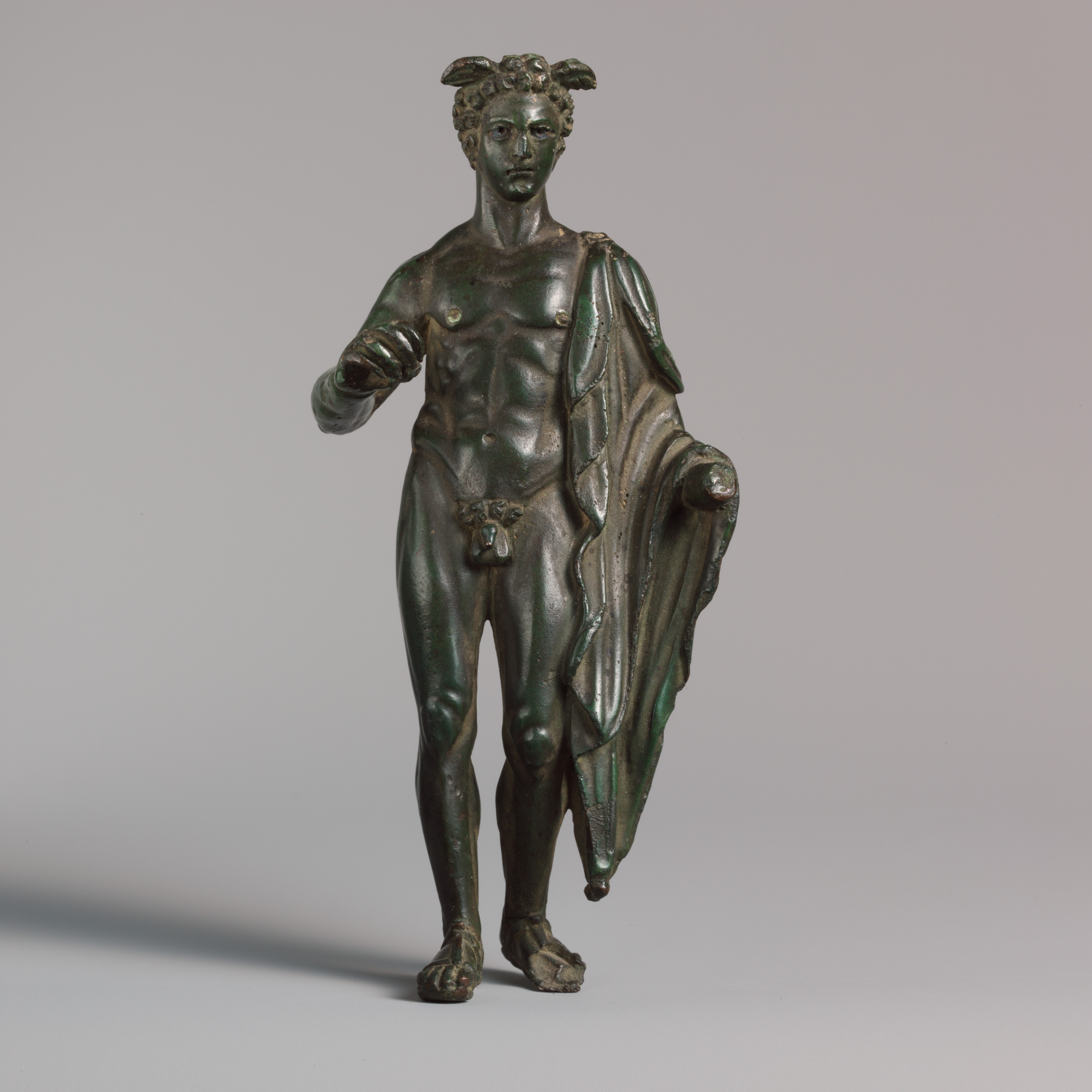
    Bronze statuette of Mercury

      He stands with his weight resting on the right leg, with the left foot drawn back.

      Metadata from the Met website:

      Title: Bronze statuette of Mercury

      Period: Early Imperial

      Date: 1st century CE

      Culture: Roman

      Medium: Bronze

      Dimensions: Overall: 6 3/16 x 2 3/4 x 1 7/8 in. (15.7 x 6.9 x 4.8 cm)

      Classification: Bronzes

      Credit Line: Rogers Fund, 1906

      Object Number: 06.1057

      Associated Passages
      Type
      Image
      License
      Creative Commons Attribution-ShareAlike
      Date
      1st century AD
      Culture
      Medium
      Dimensions
      6 3/16 x 2 3/4 x 1 7/8 in. (15.7 x 6.9 x 4.8 cm)
      Location
      Metropolitan Museum of Art

      Official Bronze Stater from the Athenian Agora Excavations

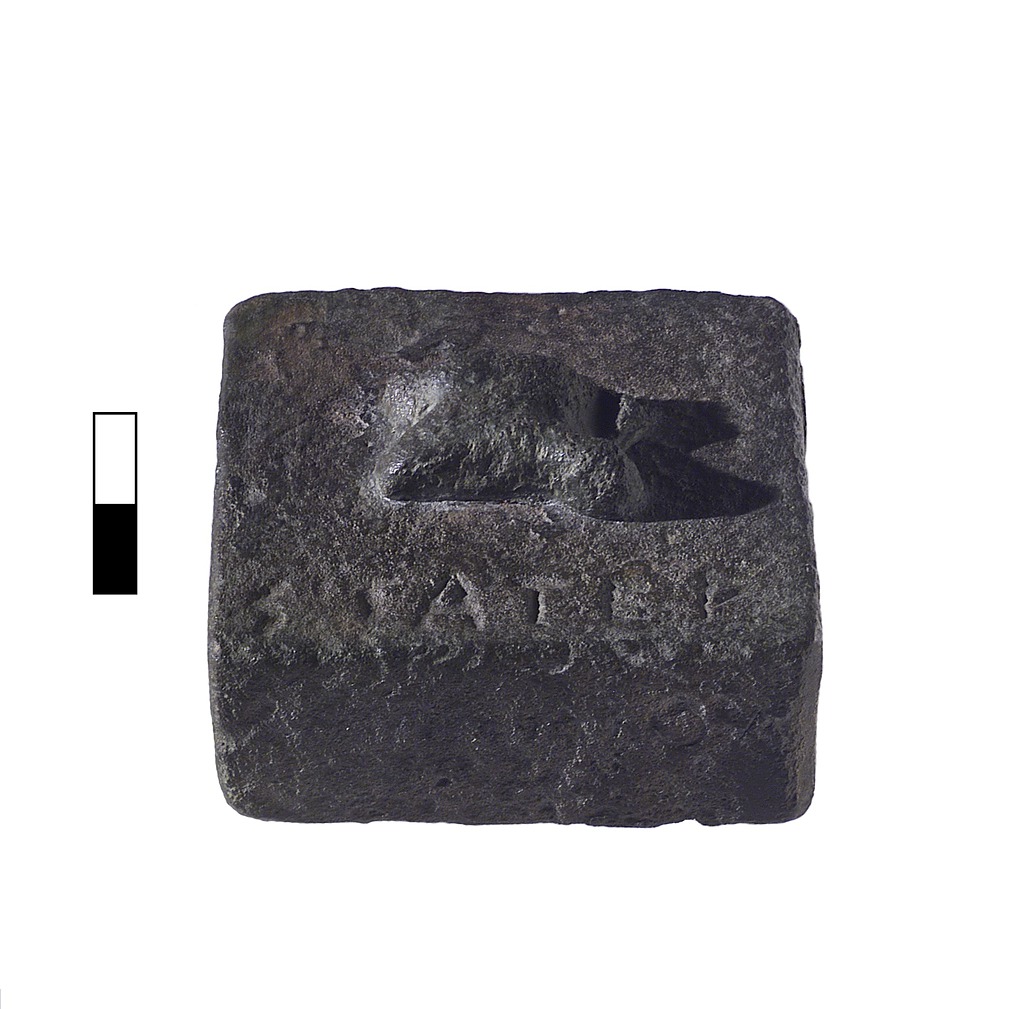
        An official standard bronze weight indicating a stater, or nearly two pounds.

        Comments

        Bibliography

        Camp and Mauzy (2009), p. 23, fig. 16.

        AgoraPicBk 4 (2004), p. 30, fig. 34.

        Camp (1986), p. 127.

        AgoraPicBk 20 (1982), fig. 6.

        Guide (1976), p. 251, fig. 131.

        Travlos (1971), fig. 701.

        AgoraPicBk 4 (1960), fig. 14.

        Hesperia 7 (1938), p. 362, fig. 51-52.

        Agora X, p. 25, pl. 1, no. BW1.

        Agora XIV, p. 44, pl. 33.

        IG I3, 1411.

        Type
        Image
        Date
        ca. 500 BC.
        Culture
        Medium
        Inscription
        ΣΤΑΤΗΡ
        Location
        Athens, Greece
        article Nav

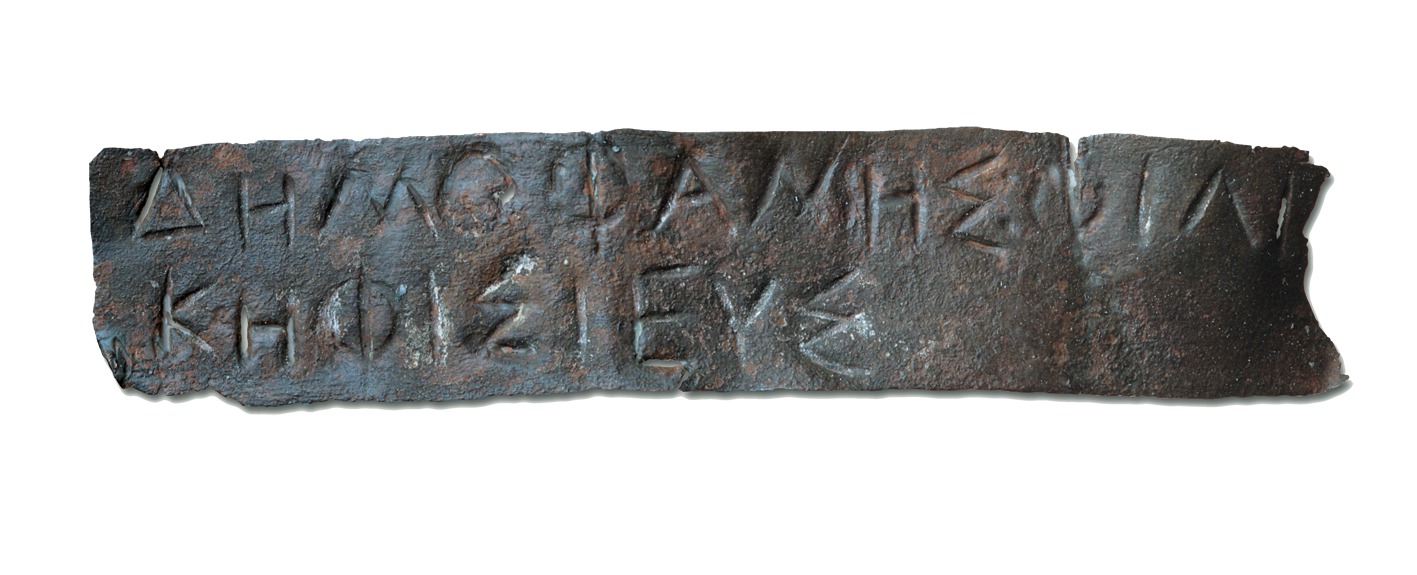
        Bronze Dikast Ticket with the Name of a Potential Juror

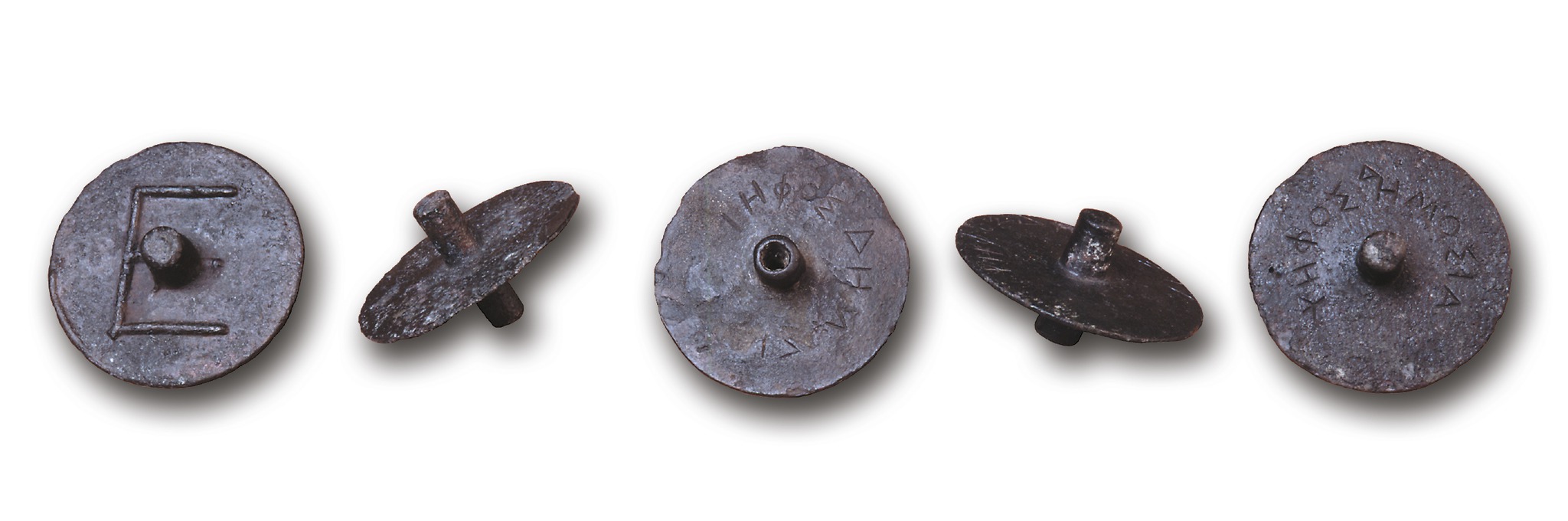
          A small, thin, bronze strip used as an identification ticket (πινάκιον, πινακίου, τό) used in the random selection of jurors, or dikasts (δικαστής, δικαστοῦ, ὁ). This ticket is inscribed with a potential juror’s name (Δημοφάνης), patronymic (Φιλ…), and deme (Κηφισιεύς). 

          Comments

          Bibliography:

          Museum Guide (2014), p. 140, fig. 77.

          Mauzy (2006), p. 73, fig. 157.

          AgoraPicBk 4 (2004), p. 23, fig. 26.

          AgoraPicBk 23 (1994), p. 24, fig. 28.

          Guide (1990), p. 247, fig. 151.

          Guide (1976), p. 110.

          Kroll (1972a), pp. 224-225, fig. 240, no. 130.

          AgoraPicBk 4 (1960), fig. 22.

          Archaeology 6 (1953), p. 143.

          Hesperia 20 (1951), p. 216, pl. 71b.

          Agora XIV, p. 53, pl. 39 e.

          Agora XXVII, p. 61, pl. 7, no. P 2.

          Date
          4th century BC
          Culture
          Medium
          Inscription
          ΔΗΜΟΦΑΝΗΣΦΙΛ.../ΚΗΦΙΣΙΕΥΣ
          Location
          Athens, Greece
          article Nav

          Thermae boxer (Boxer at Rest)

            So-called “Thermae boxer”; athlete resting after a boxing match. Bronze sculpture, Museo Nazionale Romano, Palazzo Massimo alle Terme Inv. 1055. Image by Marie-Lan Nguyen via Wikimedia Commons, CC BY 2.5.

            Associated Passages
            Type
            Image
            License
            Creative Commons Attribution
            Date
            3rd-2nd centuries BCE
            Medium
            Location
            Museo Nazionale Romano, Palazzo Massimo alle Terme
            Image Credit