
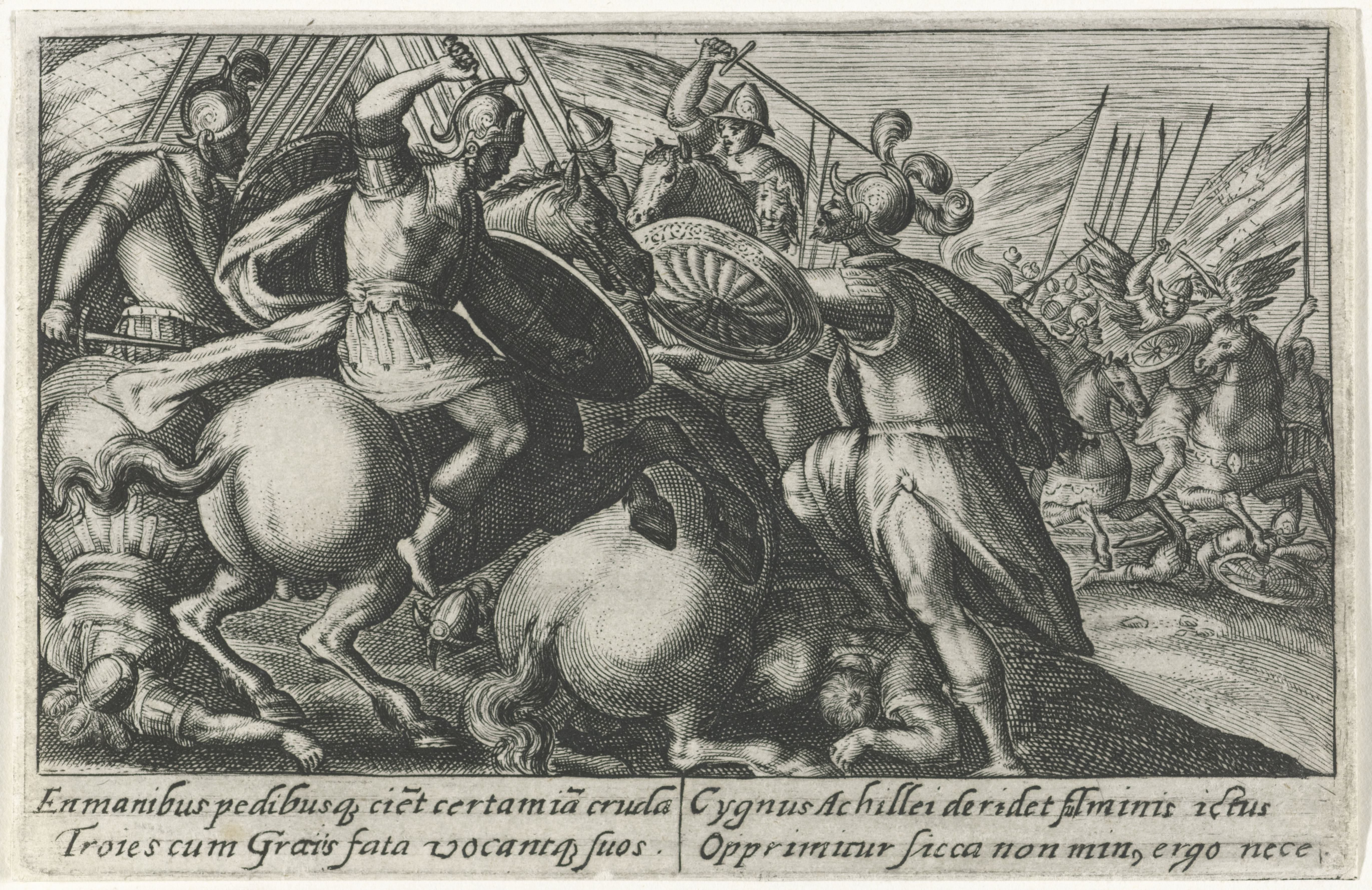
Cygnus fights with the Trojans against the Greeks
Annotations
Engraving from an edition of Ovid's Metamorphoses, published in Cologne. Rijks Museum RP-P-OB-15,966
Online Resources
Properties
Agent
Date
1602–1607 CE
Culture
Medium
Dimensions
h. 85 mm, w. 132 mm
Inscription
Enmanibus pedibusq ciēt certamiā cruda Cygnus Achillei deridet fulminis ictus Troies cum Grais fata vocantq suos. Opprimitur sicca non min, ergo nece.
Location
Rijksmuseum, Amsterdam
Image Credit

Aeneid 2.21-22
Est in cōnspectū Tenedos, nōtissima fāmā
īnsula, dīves opum Priamī dum rēgna manēbant,
Aeneid 2.203-205
Ecce autem geminī ā Tenedō tranquilla per alta
(horrēscō referēns) immēnsīs orbibus anguēs
incumbunt pelagō pariterque ad lītora tendunt;
Aeneid 2.254-256
Et iam Argīva phalānx īnstrūctīs nāvibus ībat
ā Tenedō tacitae per amīca silentia lūnae
lītora nōta petēns, flammās cum rēgia puppis