Bronze Daedalic Figurine
Annotations
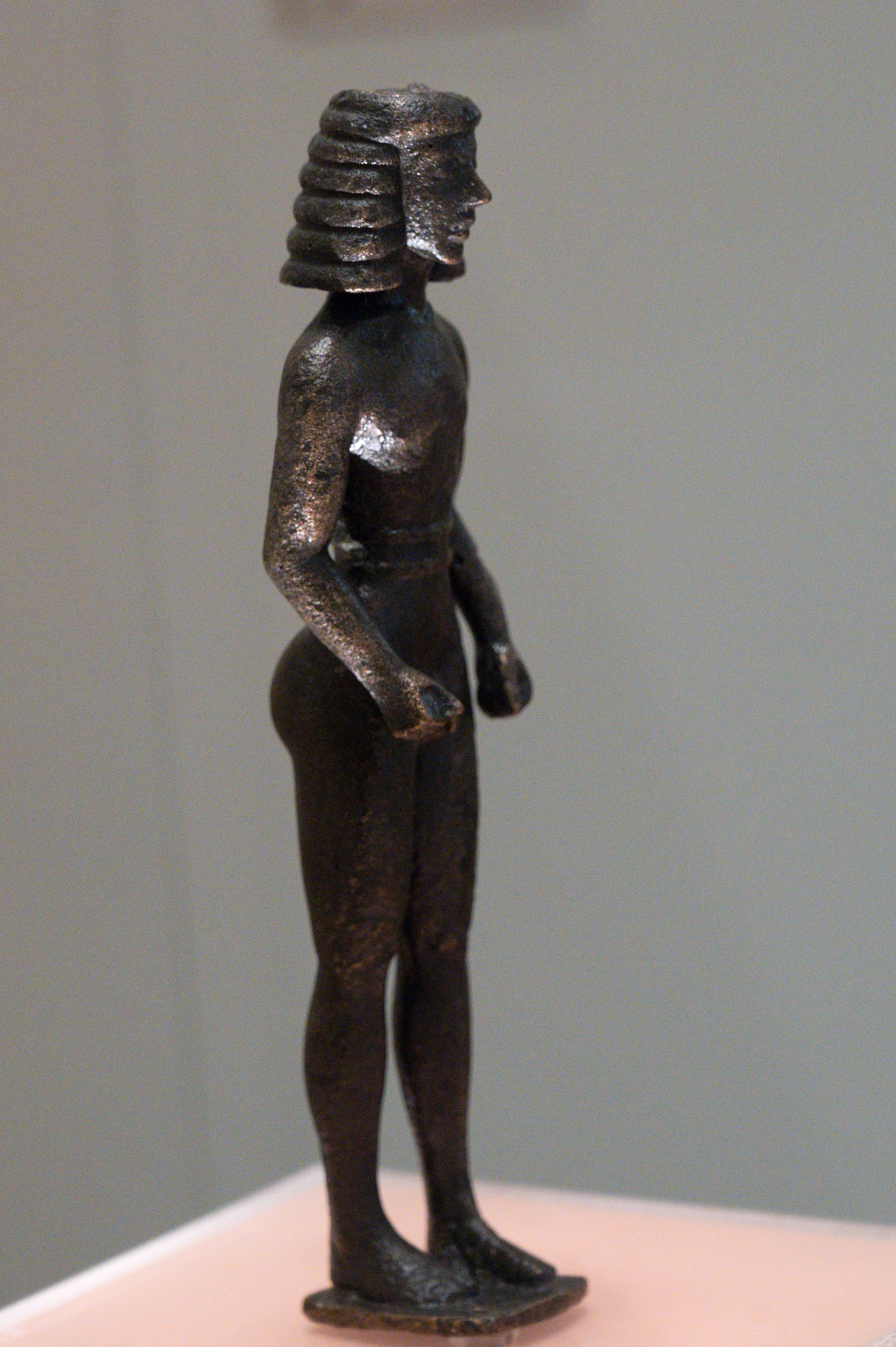
Bronze figurine of a kouros, or possibly Apollo, in the Daedalic style. Archaeological Museum of Delphi.
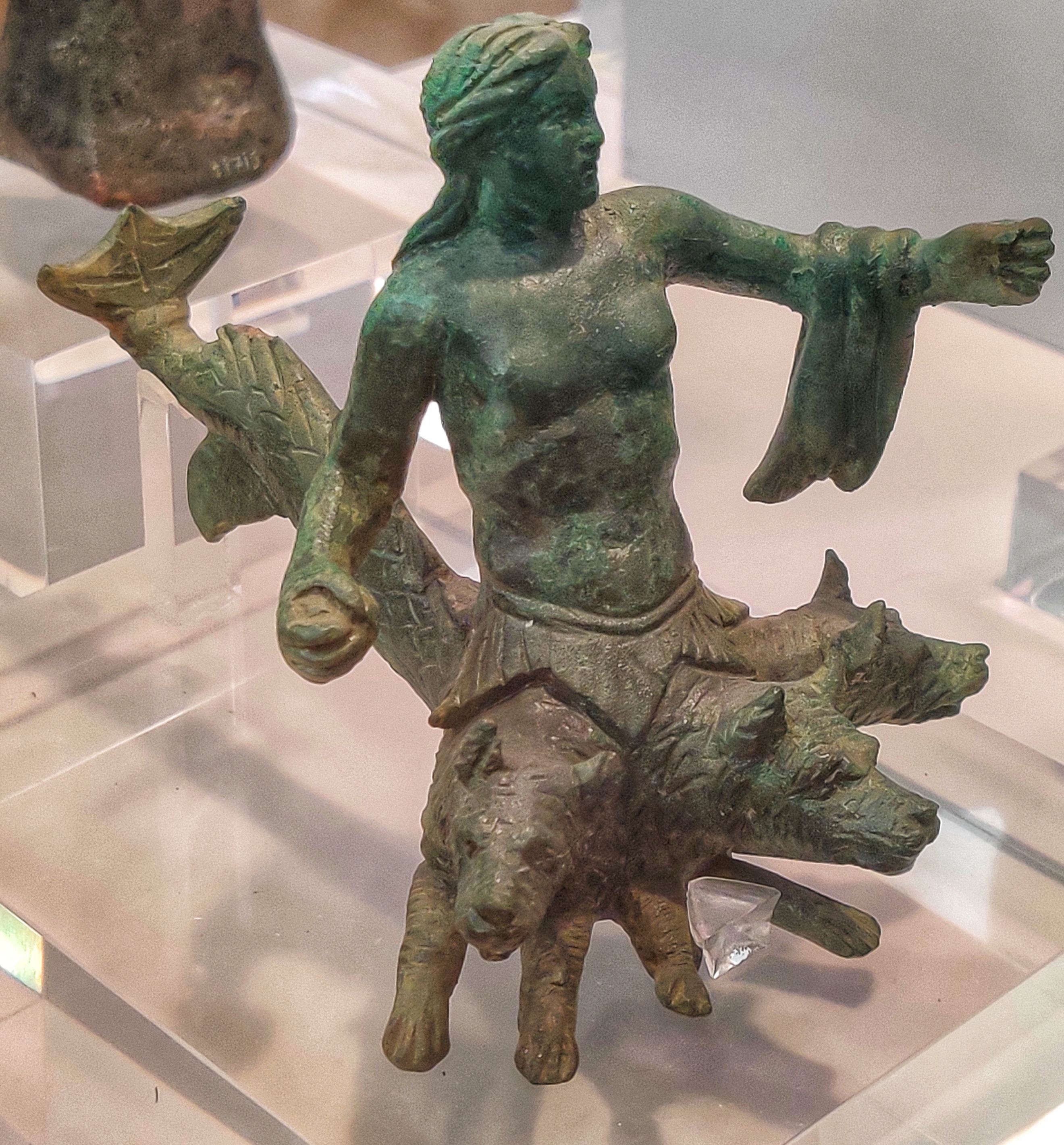
Bronze figurine of Scylla found in Katafylli, Karditsa, Greece. National Archaeological Museum Athens X21084.
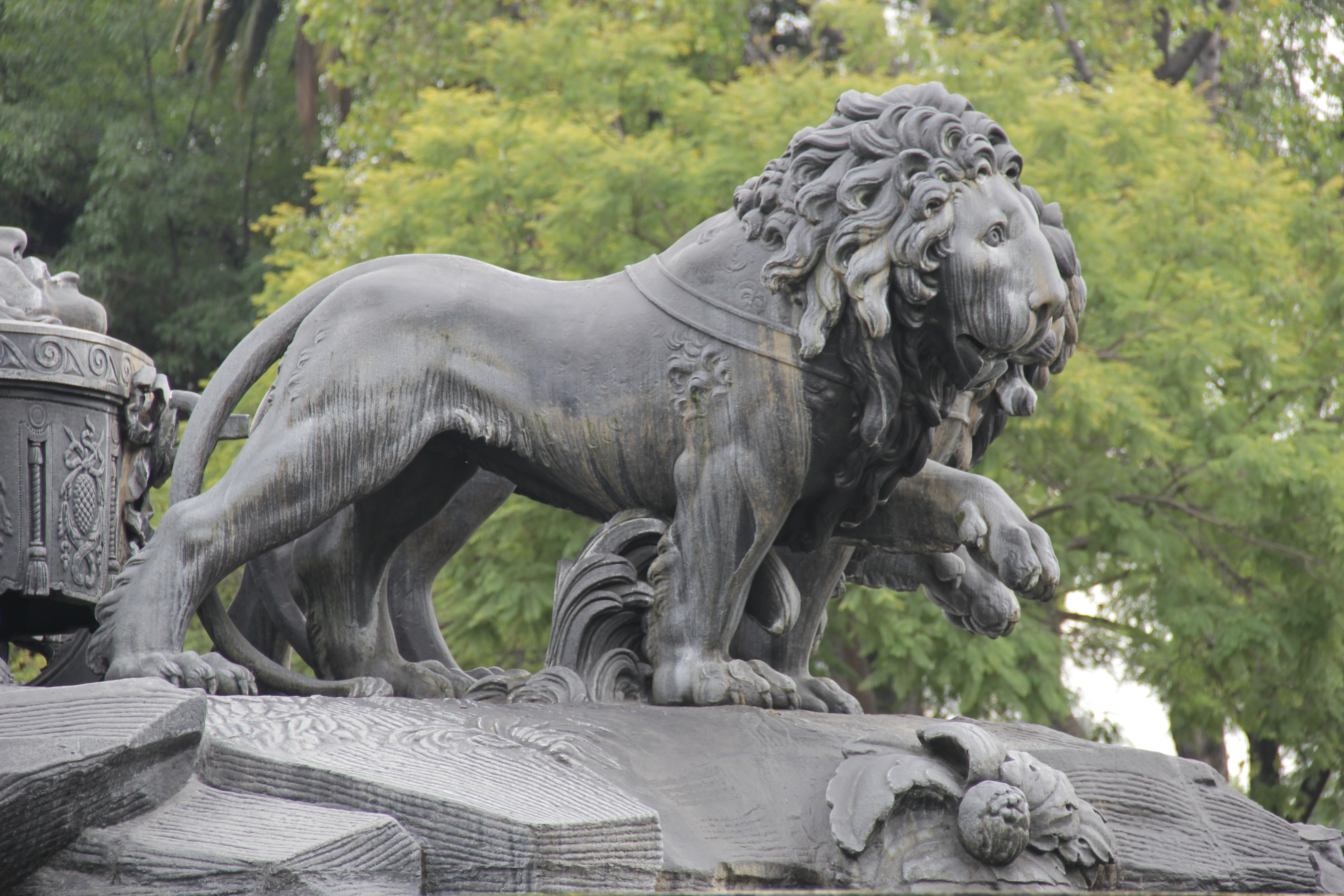
Detail of Lions from the Fuente de Cibeles in Mexico City, replica of an 18th century fountain by architect Ventura Rodríguez located in the Plaza de Cibeles in Madrid. The lions are Atalanta and her husband Hippomenes, who were transformed after defiling a sanctuary.
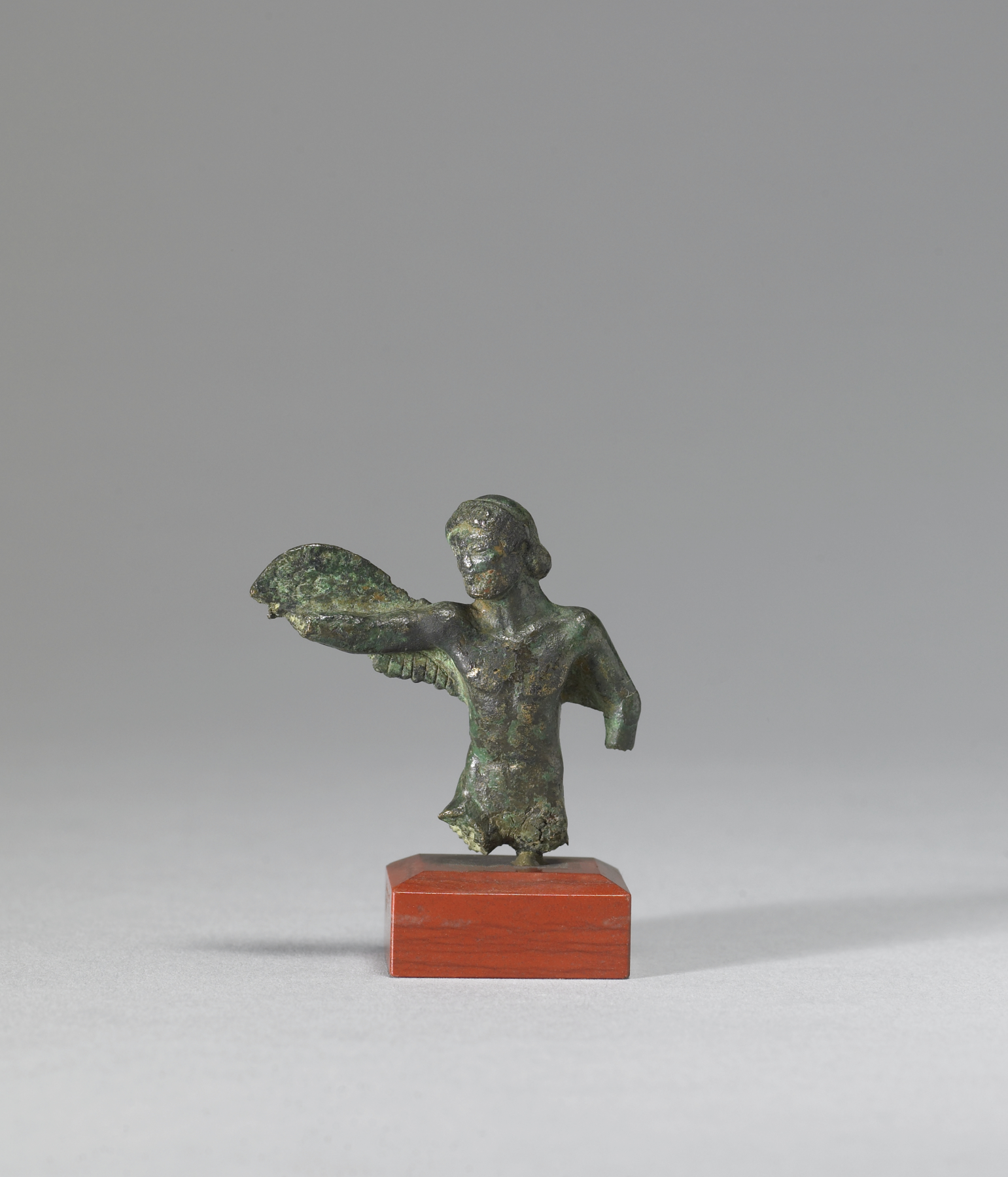
Bronze statuette of a man, possibly Icarus or Daedalus.
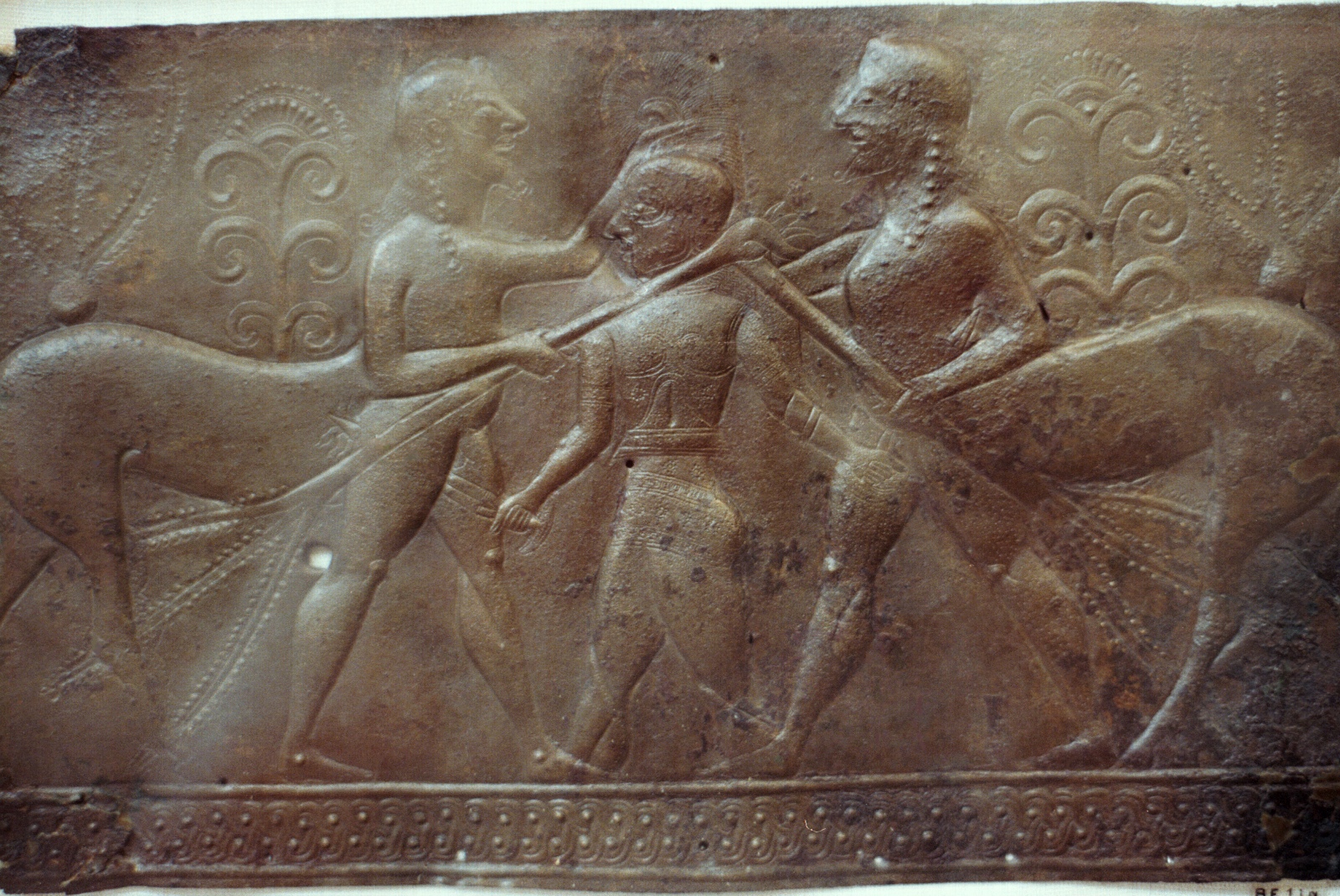
Detail of a bronze relief showing Caeneus being pounded into the ground by two centaurs. Repoussé. Archaeological Museum of Olympia BE1E.
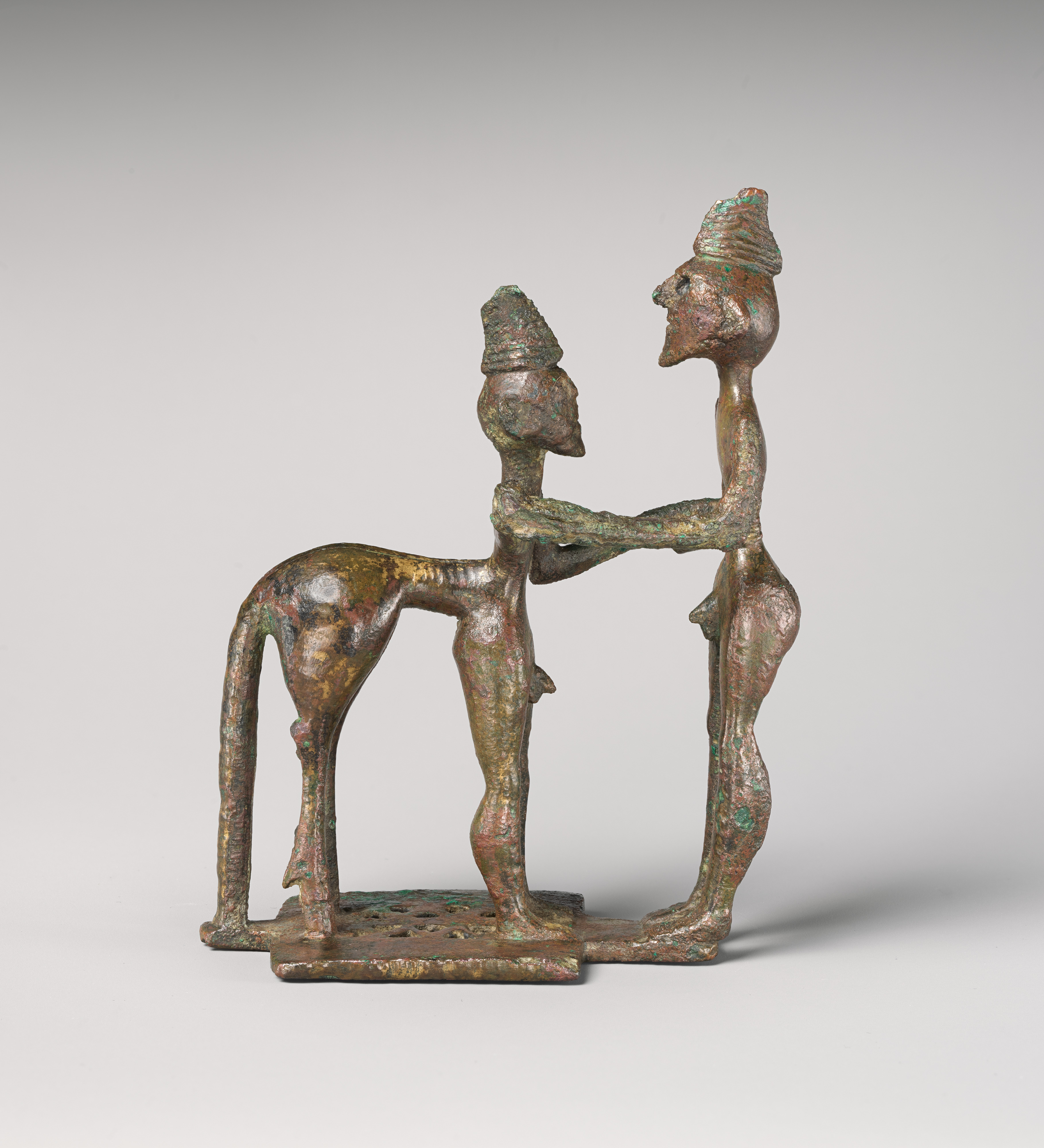
Bronze figurine of a man and centaur fighting; the centuar is wounded on the left side (not pictured).
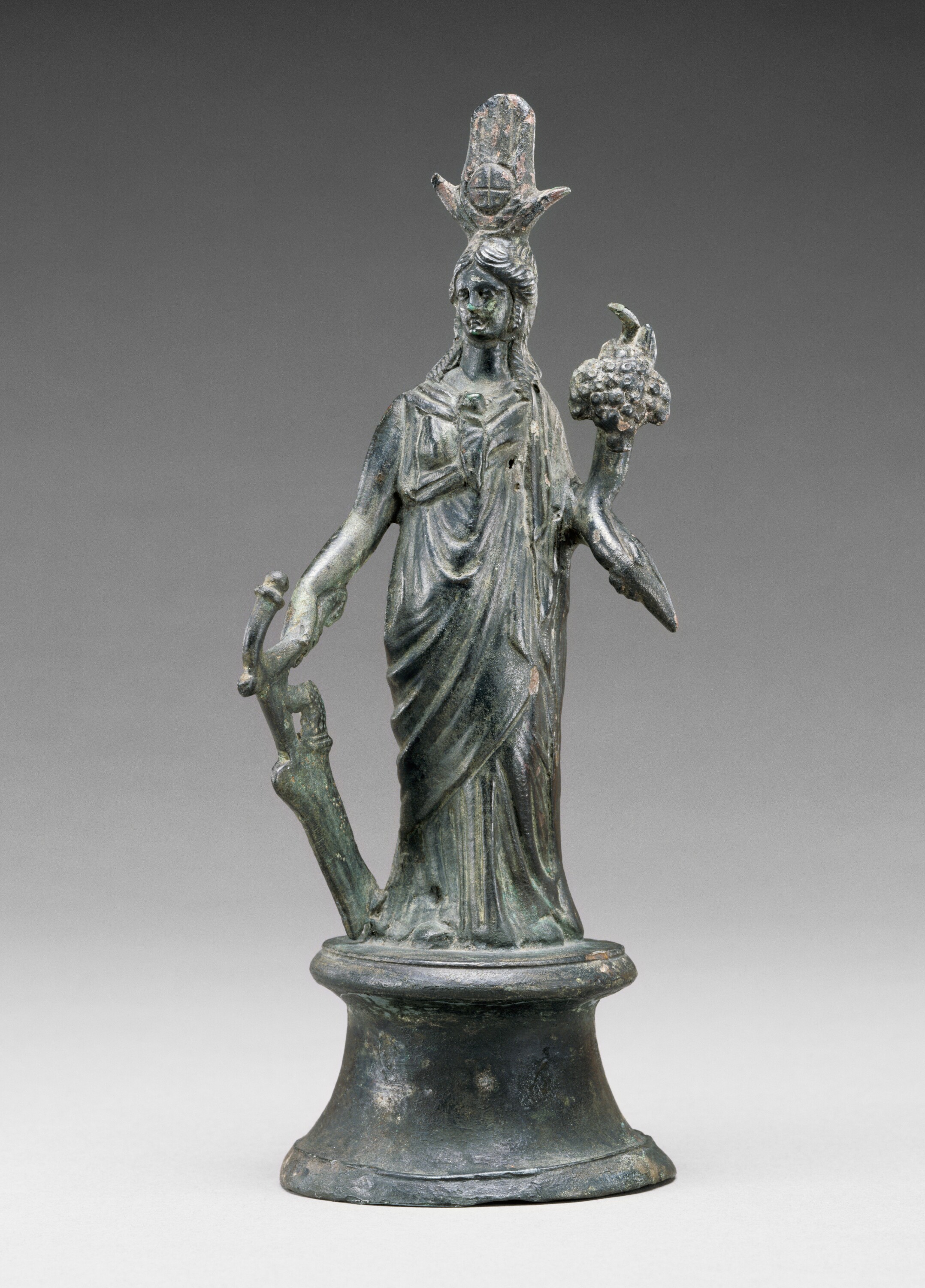
The Egyptian goddess Isis was adopted into Roman religion in the first century B.C. She possessed a wide range of powers, including the ability to offer her followers a better afterlife. In Roman religion, she was often merged with other Roman goddesses, creating new composite deities. This statuette portrays Isis combined with Fortuna, a fertility goddess who controlled the fate of both individuals and cities. This statuette has attributes of both goddesses: she wears the elaborate headdress of Isis, a lunar disk between horns or feathers, and the front of her long dress is tied in a knot on her chest, the so-called Isis knot. She also holds the usual attributes of Fortuna: the rudder in her right hand refers to her control over the course of human lives, and the cornucopia in her left arm is a symbol of abundance and prosperity (Getty Museum).
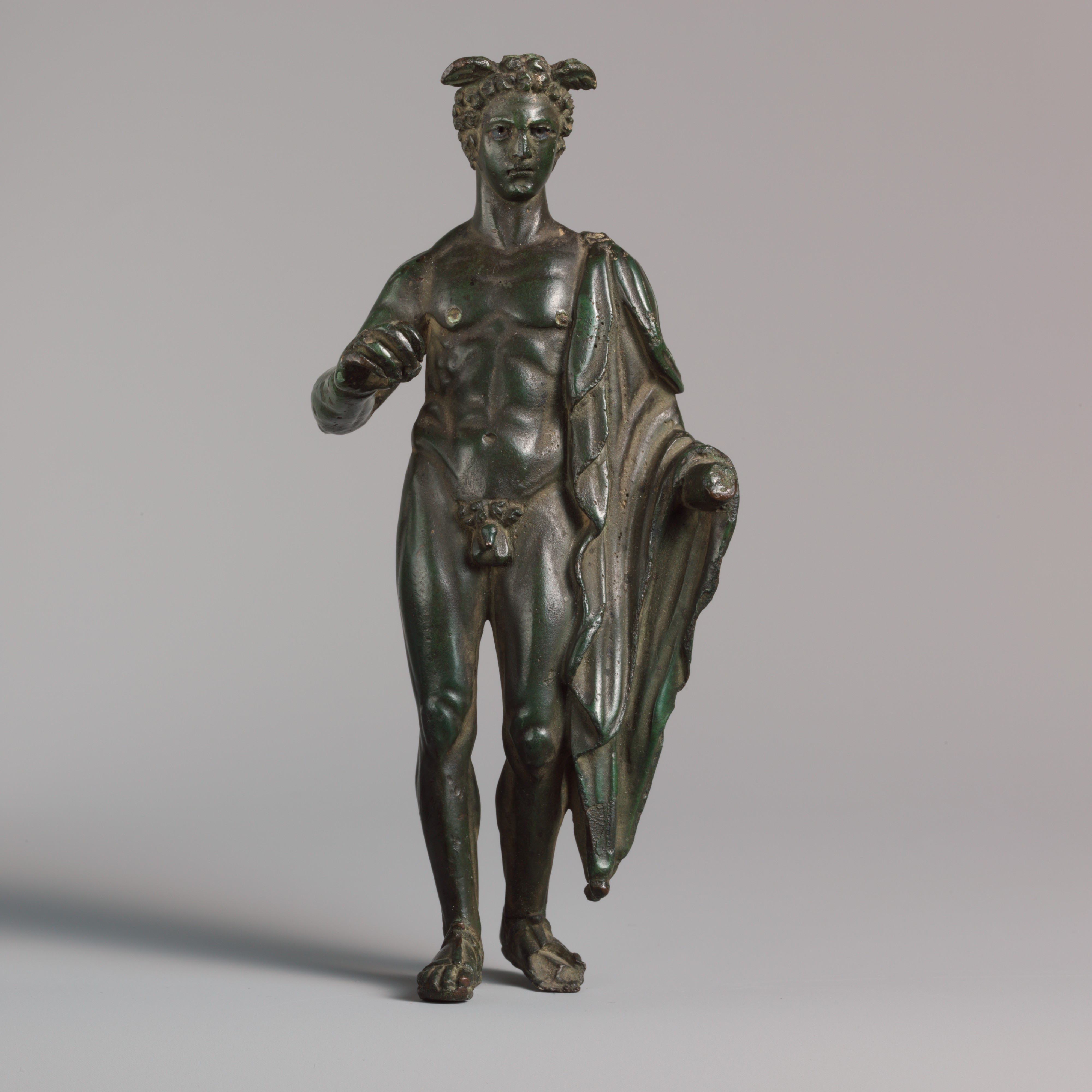
He stands with his weight resting on the right leg, with the left foot drawn back.
Metadata from the Met website:
Title: Bronze statuette of Mercury
Period: Early Imperial
Date: 1st century CE
Culture: Roman
Medium: Bronze
Dimensions: Overall: 6 3/16 x 2 3/4 x 1 7/8 in. (15.7 x 6.9 x 4.8 cm)
Classification: Bronzes
Credit Line: Rogers Fund, 1906
Object Number: 06.1057
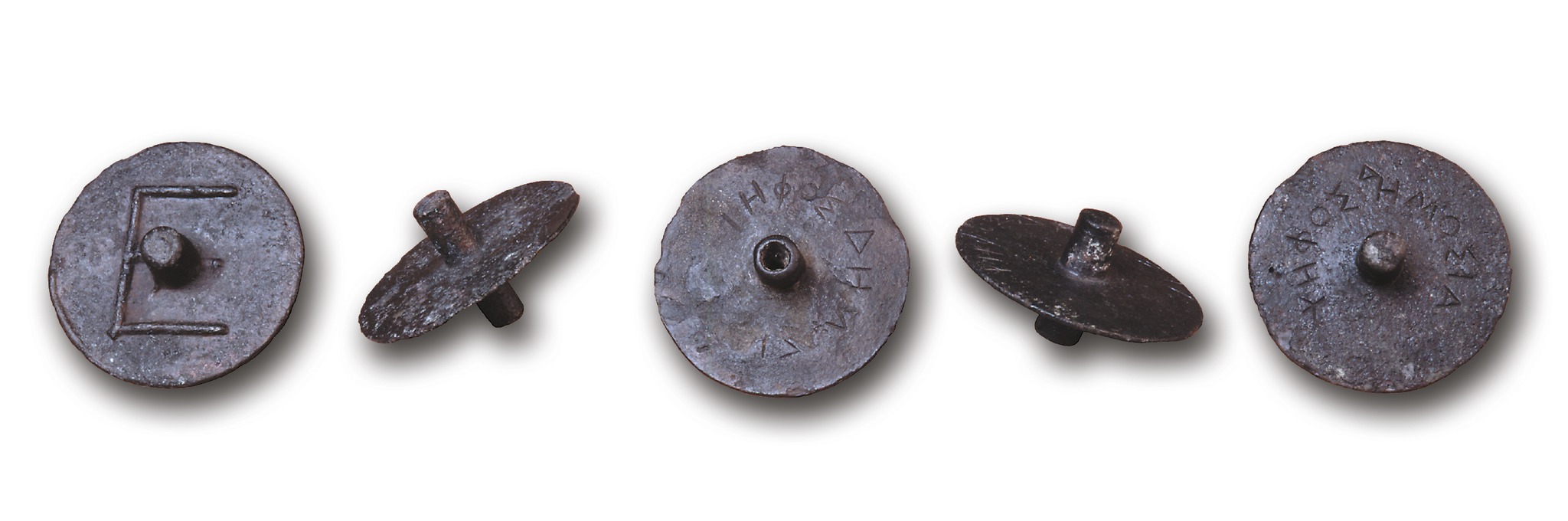
Bronze ballots (inscribed ψῆφος δημόσια, public ballots). 4th c. B.C. Athenian Agora Excavations.
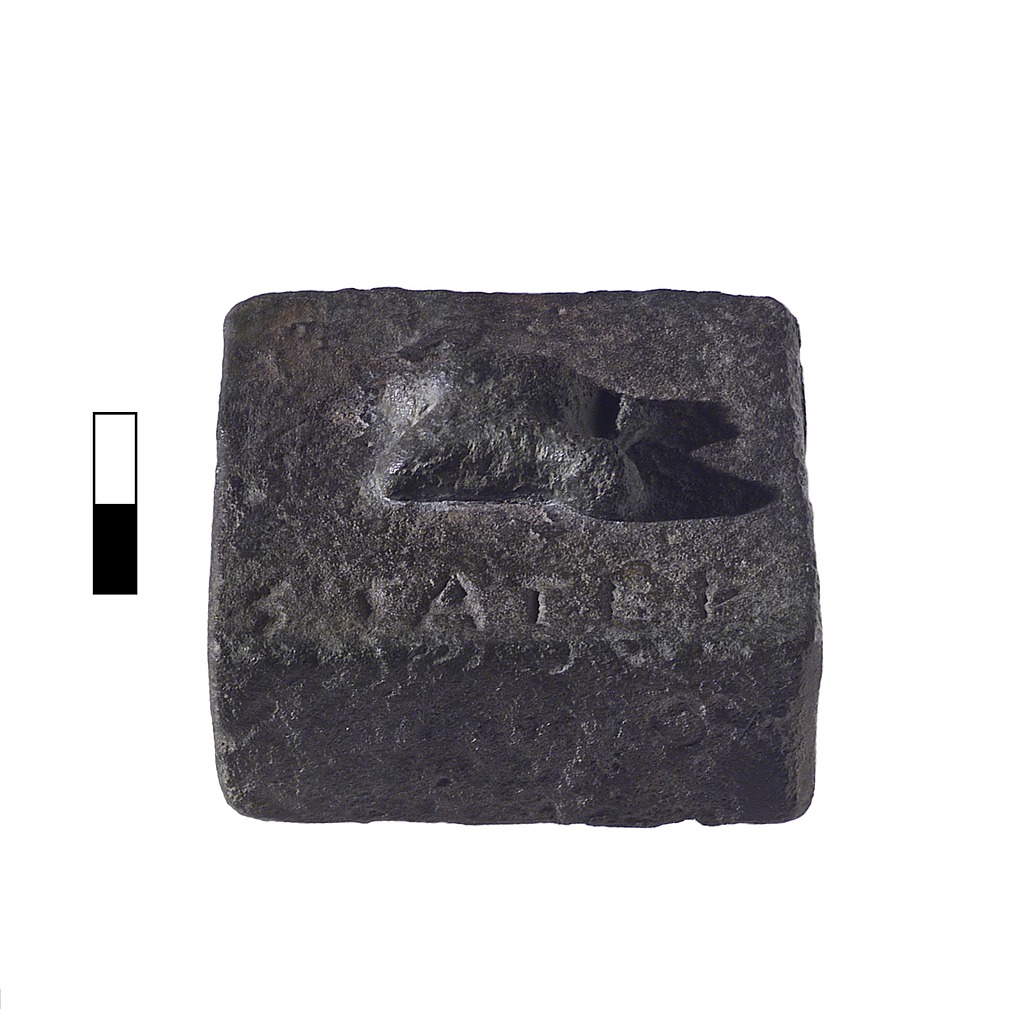
An official standard bronze weight indicating a stater, or nearly two pounds.
Bibliography
Camp and Mauzy (2009), p. 23, fig. 16.
AgoraPicBk 4 (2004), p. 30, fig. 34.
Camp (1986), p. 127.
AgoraPicBk 20 (1982), fig. 6.
Guide (1976), p. 251, fig. 131.
Travlos (1971), fig. 701.
AgoraPicBk 4 (1960), fig. 14.
Hesperia 7 (1938), p. 362, fig. 51-52.
Agora X, p. 25, pl. 1, no. BW1.
Agora XIV, p. 44, pl. 33.
IG I3, 1411.