Glaucus and Polyidos, white-ground kylix
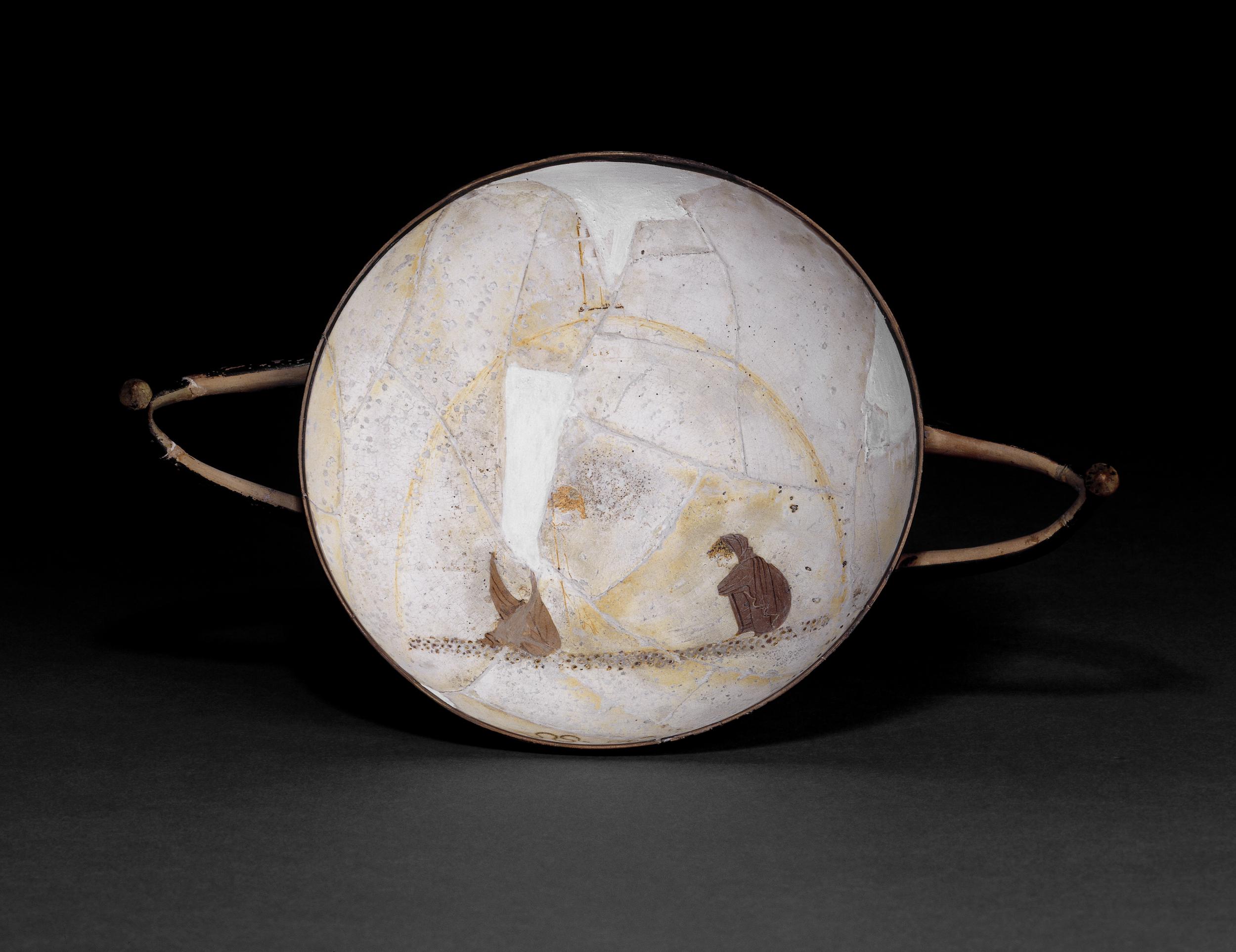
    Glaucos and Polyidos inside a tumulus. Polyidos' name is inscribed to the left of him and Glaucus' above him. The conical dome of the tumulus is depicted by a yellow line. The tripod on top is only partially preserved. Reconstructed Attic white-ground kylix (drinking vessel).

    Type
    Image
    License
    Creative Commons Attribution-NonCommercial-ShareAlike
    Date
    ca. 460–450 BCE
    Culture
    Medium
    Dimensions
    h. 7.60, diameter 13.30
    Location
    British Museum

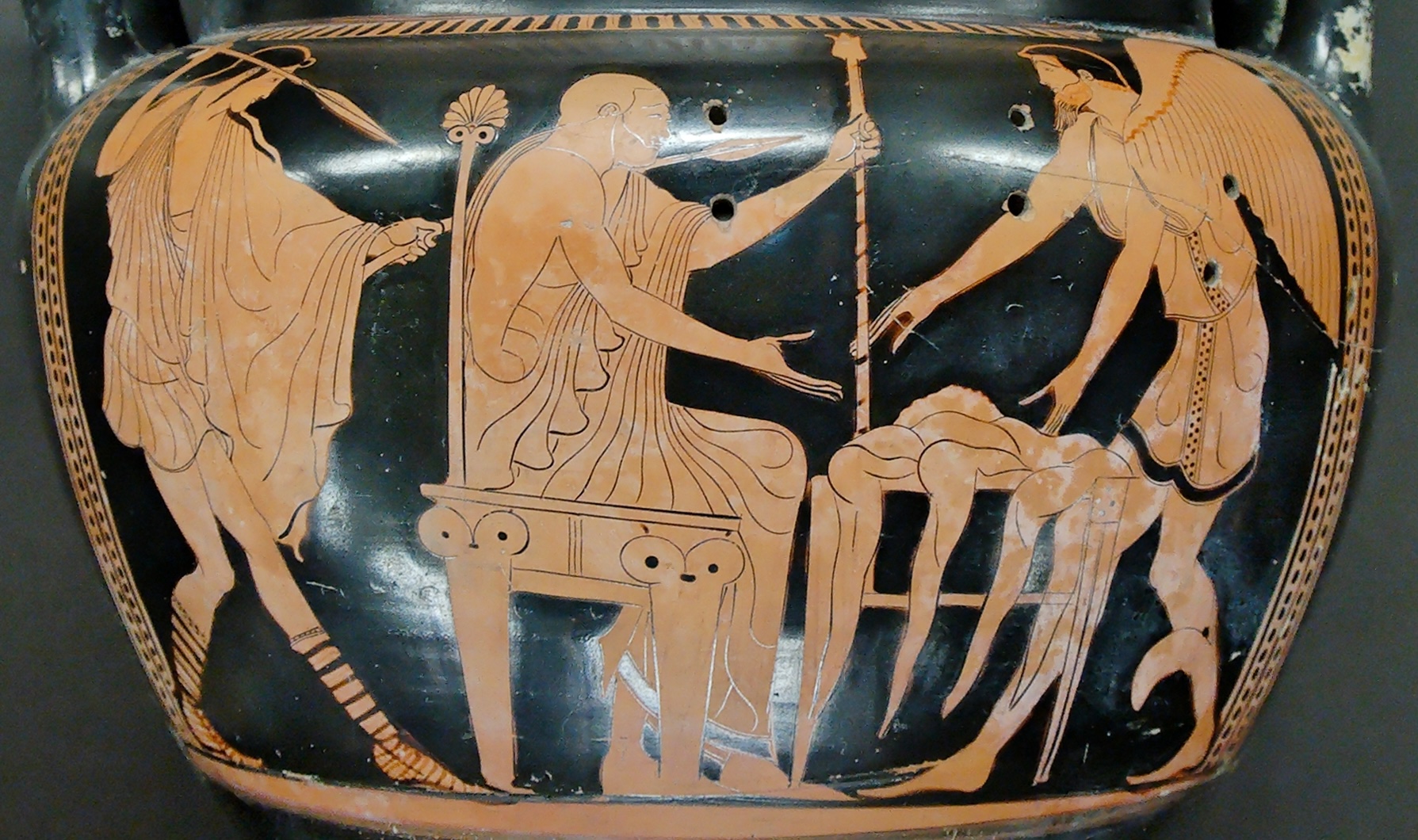
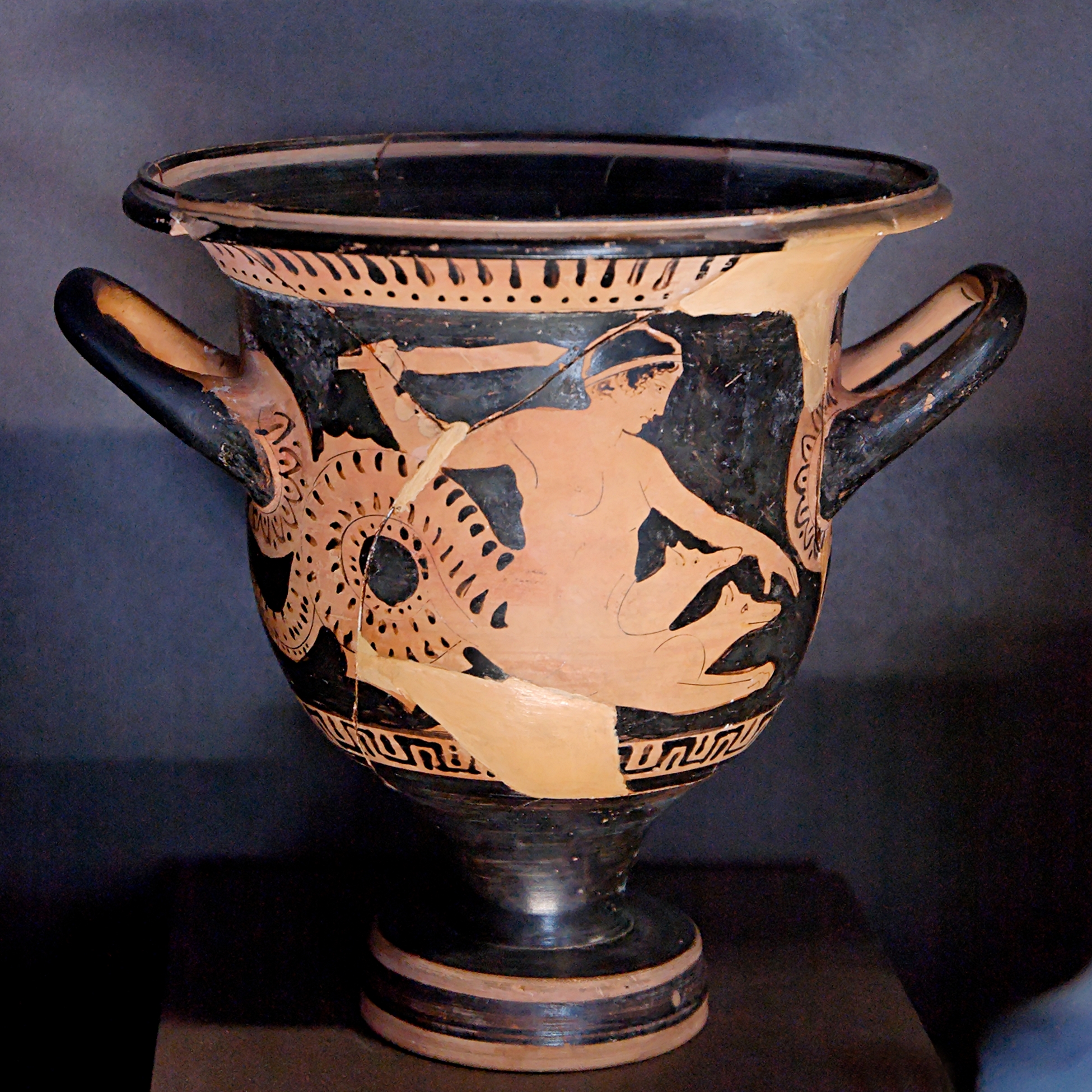
    Phineus and the Harpy, red-figure krater

      A Boread rescuing Phineus from a Harpy, here shown as a bearded man. Detail of an Attic red-figure krater found in Altamura, Italy. Attributed to the Leningrad Painter. Musée du Louvre MNC 478.

      Type
      Image
      License
      Creative Commons Attribution
      Date
      ca. 460 BCE
      Culture
      Medium
      Dimensions
      h. 41 cm; w. 38 cm; diameter 33.2 cm
      Location
      Musėe du Louvre
      Image Credit

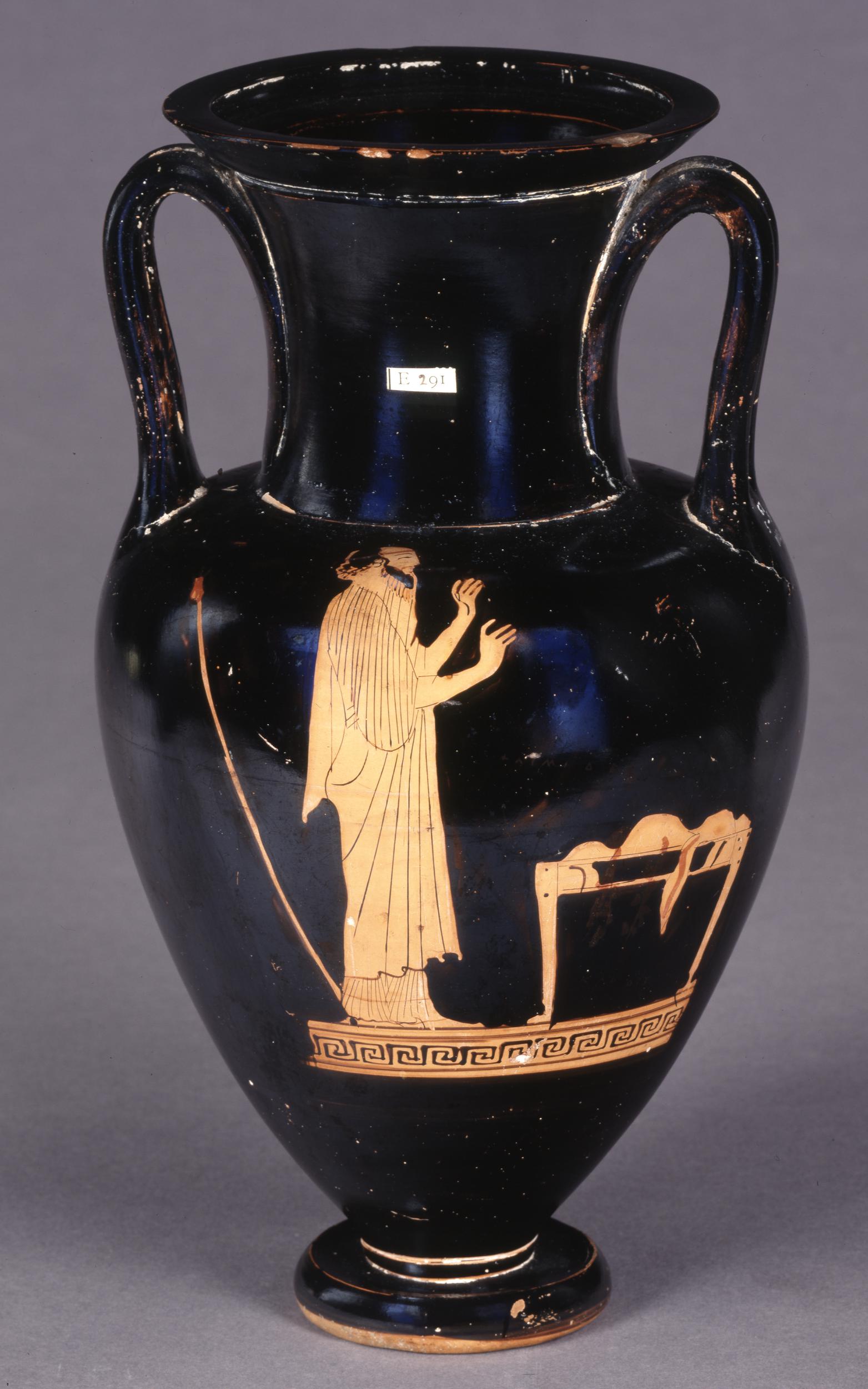
      Phineus red-figure amphora

        Phineus offering to the gods. The word "Theoi" is inscribed in front of his mouth. Attic red-figure neck amphora, found in Nola, Italy. Attributed to the Painter of the Yale Lekythos. British Museum 1867,0508.1113.

        Subjects
        Type
        Image
        License
        Creative Commons Attribution-NonCommercial-ShareAlike
        Date
        ca. 470–450 BCE
        Culture
        Medium
        Dimensions
        h. 34.29 cm
        Inscription
        ΘΕΟΙ (or perhaps Θεώ)
        Location
        British Museum

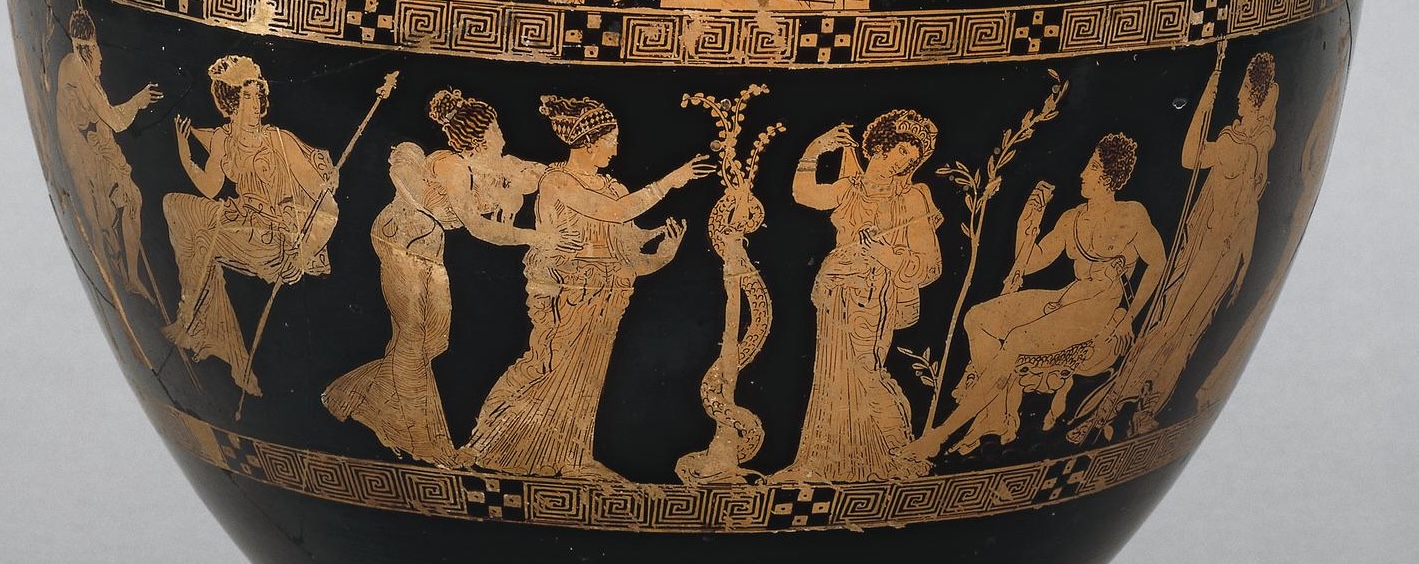
        The Meidias Hydria

          Detail of the lower register of an Attic red-figure hydria. At far left Hygieia sits on a small hill or rock. At center, is the apple tree, a snake wrapped around it. Chrysothemis and Asterope stand to the left of the tree, Lipara to the right. Heracles sits on his lion skin to the right of Lipara; Iolaos stands behind him at far right. All the figures are identified by  Attributed to the Meidias Painter.

          Type
          Image
          License
          Creative Commons Attribution-NonCommercial-ShareAlike
          Date
          ca. 420–400 BCE
          Culture
          Medium
          Dimensions
          h. 52 cm, w. 47.30 cm
          Inscription
          Mεδιας έποίησεν (Medias made it)
          Location
          British Museum

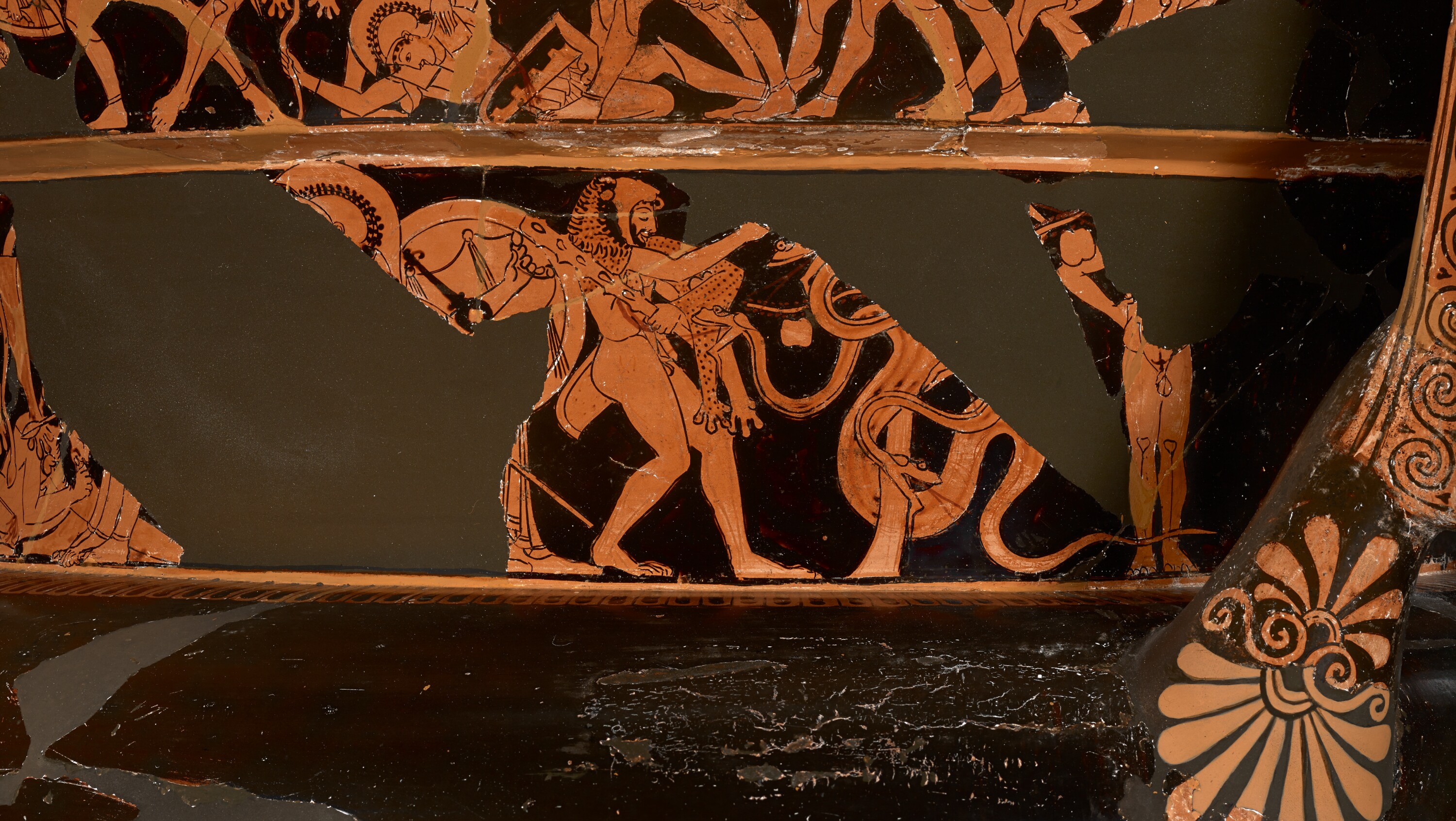
          Heracles and Ladon, volute krater

            Detail of an attic red-figure volute krater (mixing vessel) depicting Heracles fighting the dragon Ladon to retrieve the apples of the Hesperides. The partial figure to the right of the tree has been identified as Atlas. The krater is reconstructed and restored from multiple fragments. Attributed to the Kleophrades Painter.

            Subjects
            Type
            Image
            License
            Creative Commons Attribution
            Date
            ca. 500–480 BCE
            Culture
            Medium
            Dimensions
            h. 56.9 w. 46.9 cm (22 3/8 × 18 7/16 in.)
            Location
            J. Paul Getty Museum
            Image Credit

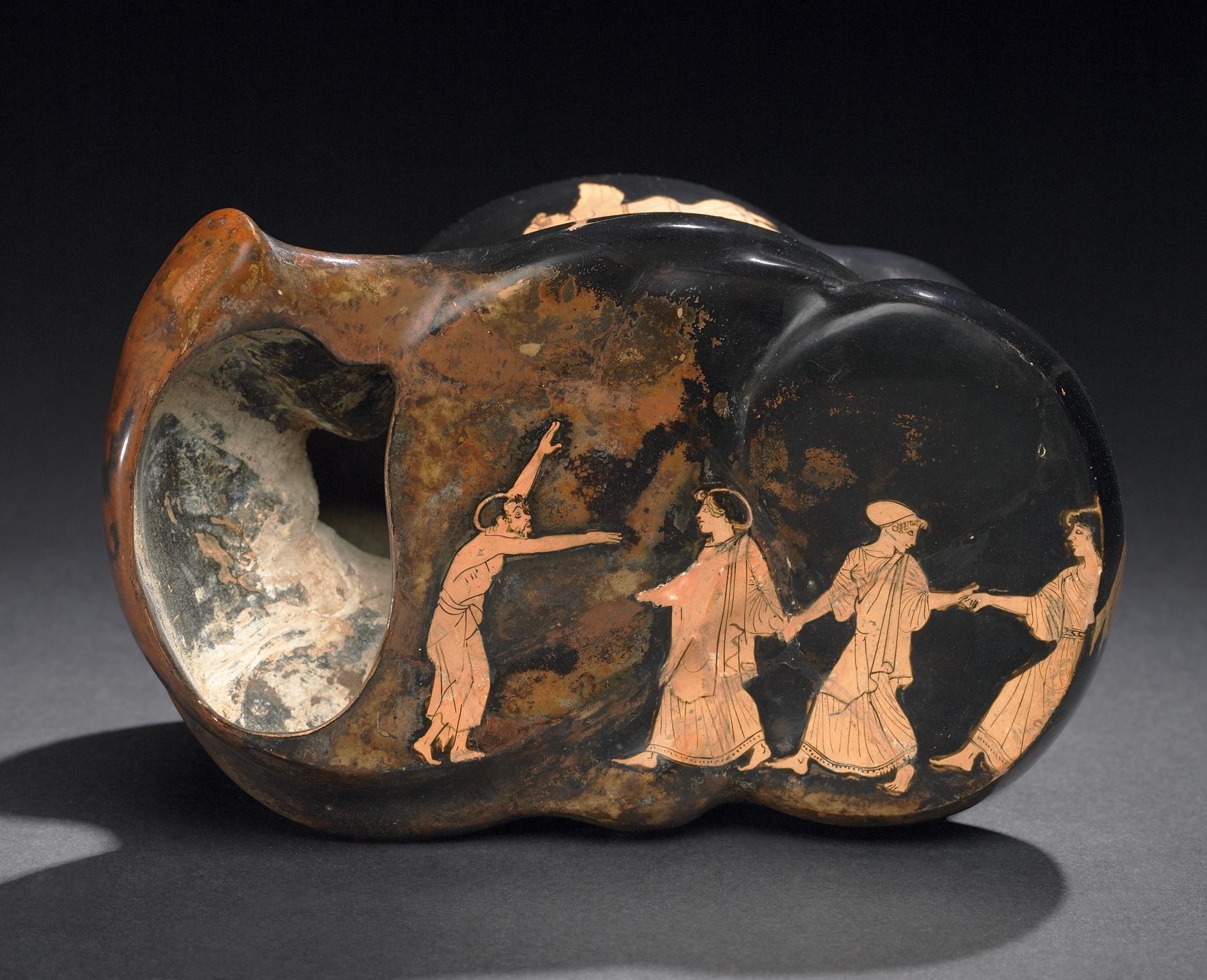
            Terracotta Vessel in the Shape of a Knucklebone

              Side A of an Attic red-figure vessel in the shape of a knucklebone (astragalos), perhaps depicting Aeolus directing the dance of the clouds. The opening of the vessel may double as a representation of Aeolus' cave. Found on Aegina; attributed to the Sotades Painter.

              Subjects
              Type
              Image
              License
              Creative Commons Attribution-NonCommercial-ShareAlike
              Date
              ca. 470–450 BCE
              Culture
              Medium
              Dimensions
              h. 12.70 cm, l. 16.51 cm
              Location
              British Museum