Home

  • About
  • Home
  • Search
  • Greek Texts
  • Latin Texts
  • Reference Works
  • Core Vocabulary
  • Images
  • Image Sets
  • Video
  • Audio
  • What's New
  • Blog

Scylla


Silver Coin featuring Scylla
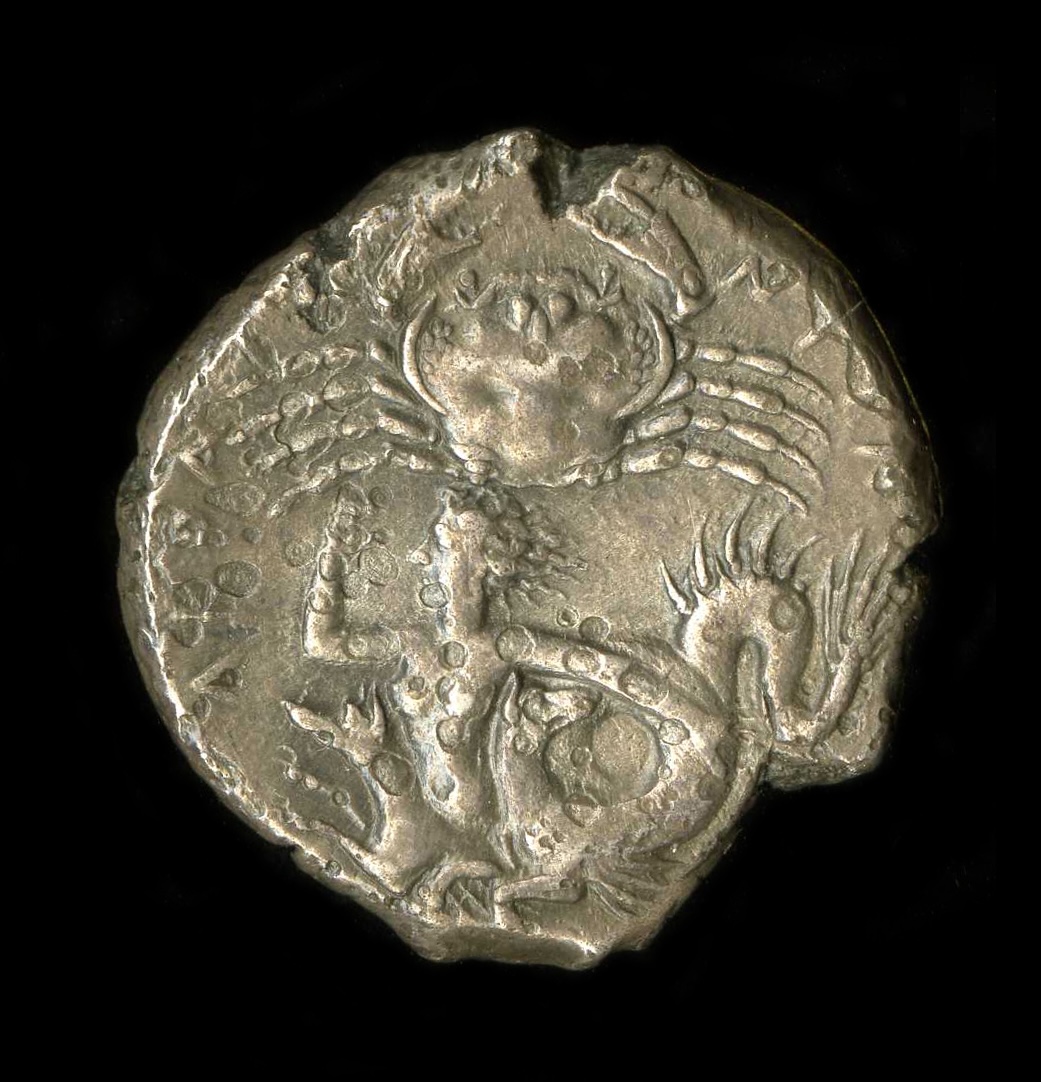
A somewhat damaged site coin with worn and notched edges and a slightly pitted surface. Scylla (bottom) is shown facing left. Her human torso sits upright between her two dog torsos, while her sea serpent tail stretches toward the right edge. A fin can be seen where one of the dog bodies merges into the serpent tail. The tail has spines down the back and on the end. A large crab sits above her with pincers open. There are faint letters visible along the left edge the coin.
    Annotations

    One side of a silver coin minted in Agrigento depicting Scylla on the bottom half and a crab on the top.

    Online Resources
    British Museum 1946,0101.821
    Subjects
    Scylla
    Type
    Image
    License
    Creative Commons Attribution-NonCommercial-ShareAlike
    Properties
    Agent
    Unknown
    Date
    420–410 BCE
    Culture
    Greek
    Medium
    Silver
    Dimensions
    diameter 25 mm
    Location
    British Museum
    Image Credit
    © Trustees of the British Museum.

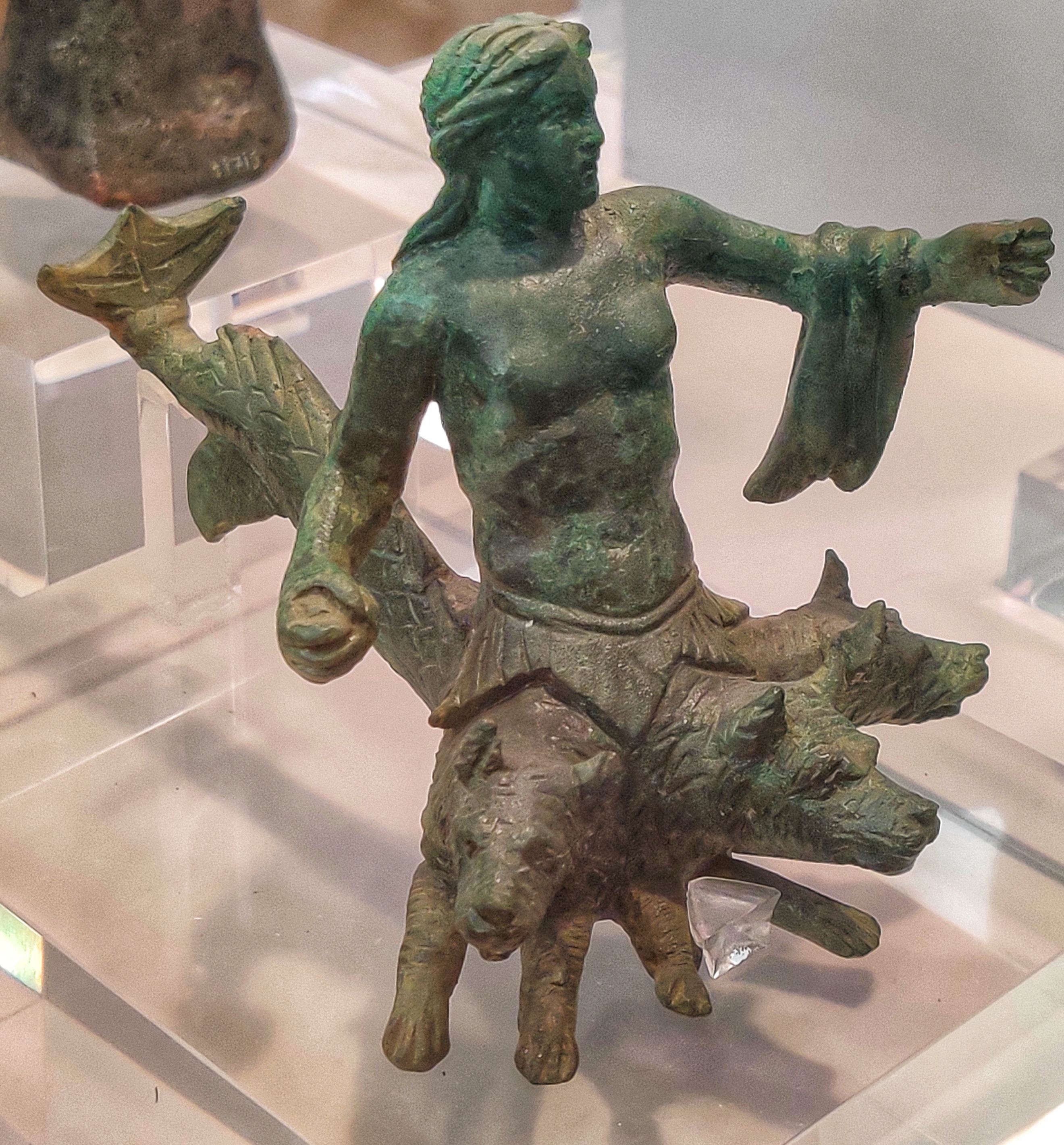
    Scylla bronze figurine

    Scylla is shown nude from the waist up with a sea serpent tail and 3 dogs' heads growing from her abdomen. She has a cloak draped over her outstretched left arm. Her fist is closed, probably because she once held an oar, now missing. In her right arm is lowered held slightly out from her side. In her right hand she holds a rock.
      Annotations

      Bronze figurine of Scylla found in Katafylli, Karditsa, Greece. National Archaeological Museum Athens X21084.

      Online Resources
      Image Source
      National Archaeological Museum Athens X21084
      Subjects
      Scylla
      Type
      Image
      License
      Creative Commons Attribution-ShareAlike
      Properties
      Agent
      Unknown
      Date
      late 4th century BCE
      Culture
      Greek
      Medium
      Bronze
      Dimensions
      h. 9 cm, l. 11.4 cm
      Location
      National Archaeological Museum Athens
      Image Credit
      Wikimedia: Gre regiment

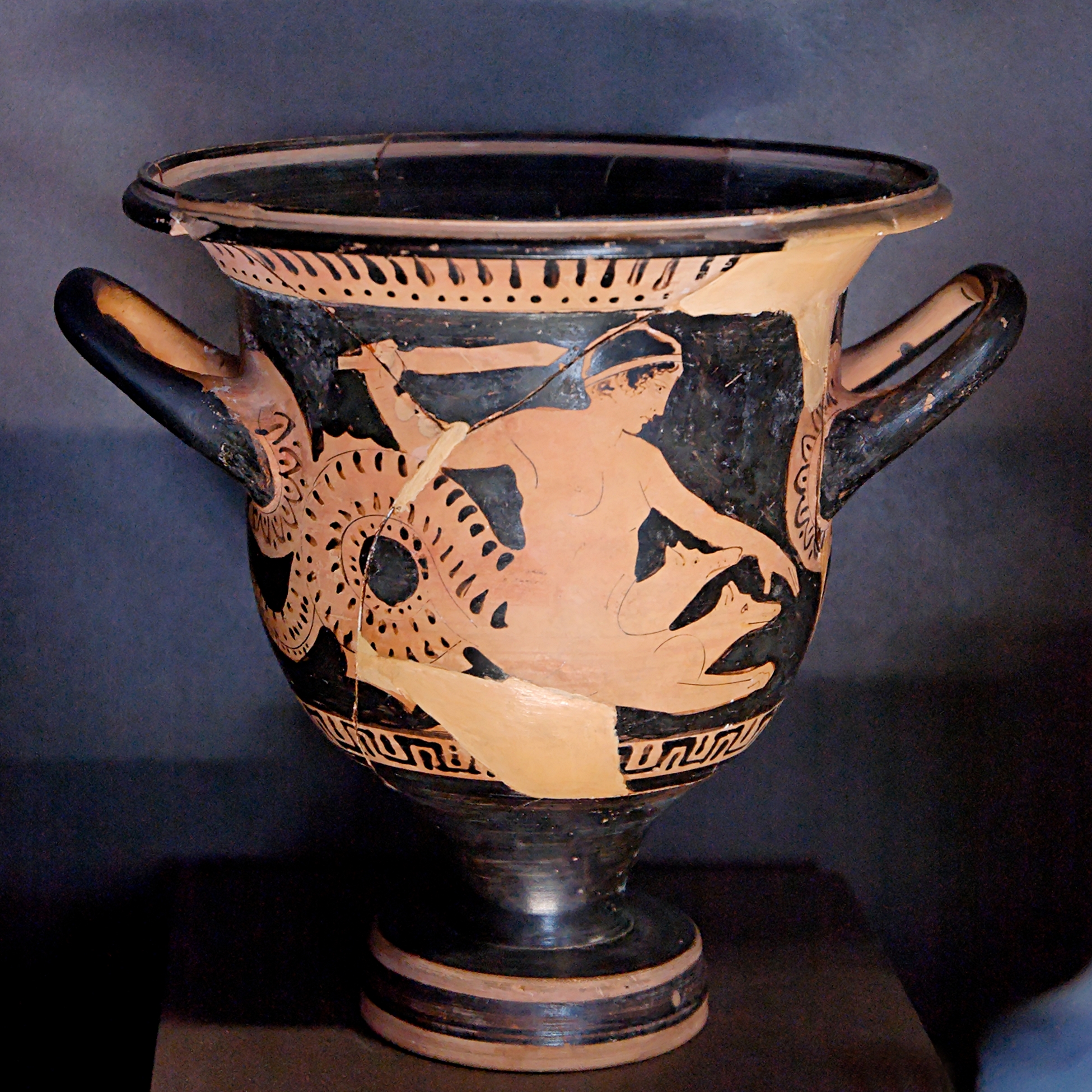
      Scylla, Boeotian bell krater

      Scylla, in profile facing right, raises a sword in her right hand. She is shown with the nude torso of a human woman merged with a sea serpent tail. She also has the front half of two dogs emerging from her abdomen.
        Annotations

        Reconstructed Boetian red-figure bell krater. Musée du Louvre CA 1341.

        Online Resources
        Image Source
        Musée du Louvre CA 1341
        Subjects
        Scylla
        Type
        Image
        License
        Creative Commons Attribution
        Properties
        Agent
        Unknown
        Date
        ca. 480/460 BCE
        Culture
        Greek
        Medium
        terracotta
        Dimensions
        h. 22.5 cm; w. 24 cm; diameter 20.6 cm
        Location
        Musée du Louvre
        Image Credit
        Wikimedia: Marie-Lan Nguyen
        Subscribe to Scylla

        dcc logo

        Dickinson
        College
        Commentaries

        Terms of use
        Login

        Mission


        To provide readers of Greek and Latin with high interest texts equipped with media, vocabulary, and grammatical, historical, and stylistic notes.

        Contact Us


        Dickinson College Commentaries
        Department of Classical Studies
        Dickinson College
        Carlisle, PA  17013 USA
        dickinsoncommentaries@gmail.com
        (717) 245-1493 


        Dickinson College Seal

        sfy39587stp18