Black Kylix Base, Hobnails, and Eyelets from the House of Simon the Cobbler
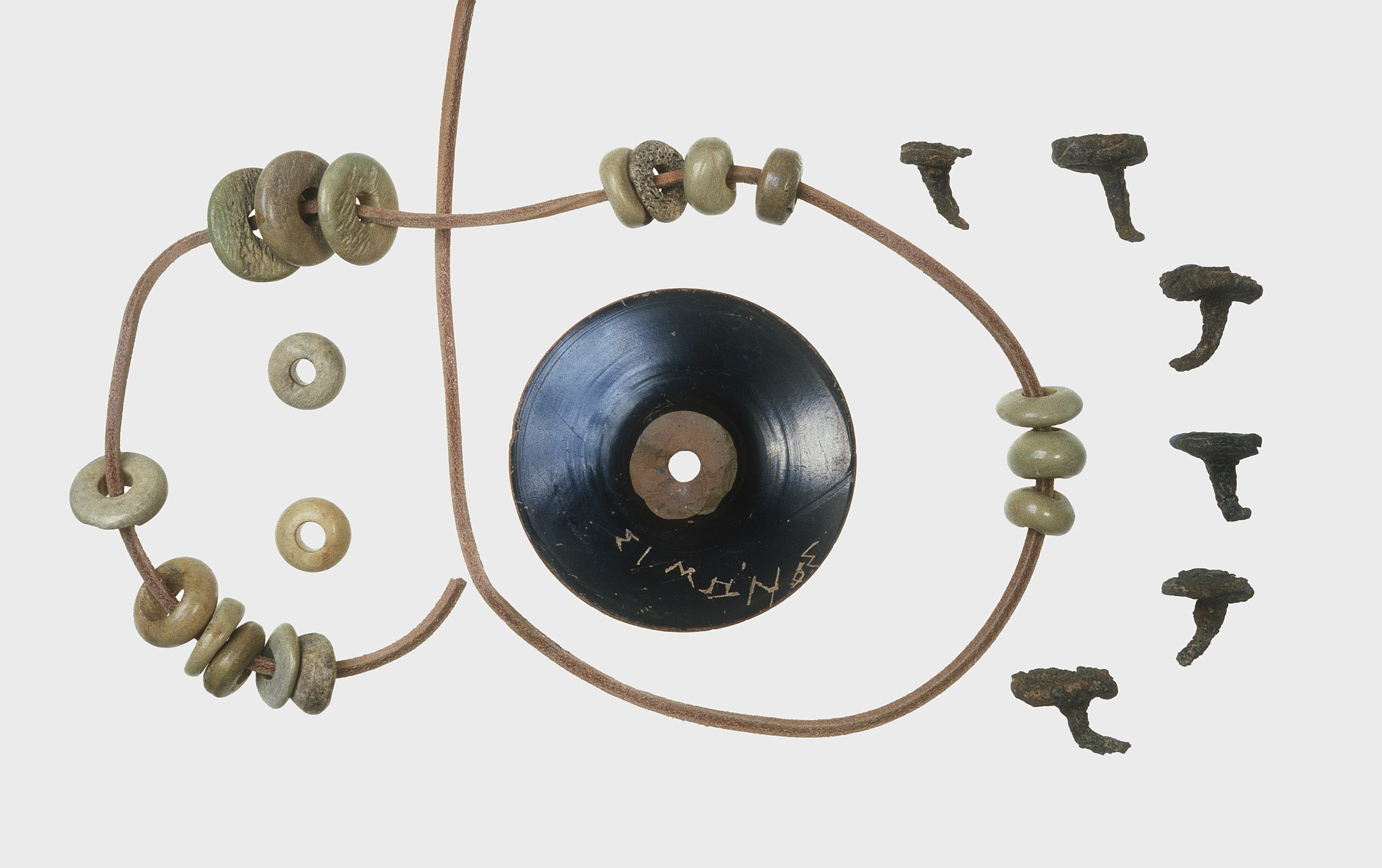
    A collection of objects found at the house of Simon the Cobbler during the Ancient Agora excavations. A series of buttons/eyelets are carved from bone and ivory (BI 738), as well as a number of hobnails (IL 1361), iron pieces nailed into the soles of shoes to increase durability and grip. Finally, a base (P 22998) from a kylix (a drinking cup with a wide drinking bowl and a short, stout stem) bears the inscription of it's owner in the genitive, "ΣΙΜΟΝΟΣ," "Simon's."

    Comments

    Bibliography

    Museum Guide (2014), pp. 142-143, fig. 81.

    Guide (2010), p. 54. fig. 23.

    AgoraPicBk 16 (2003), p. 18. fig. 26.

    Guide (1990), p. 57, fig. 25.

    Camp (1986), p. 146.

    AgoraPicBk 17 (1978), fig. 13.

    Guide (1976), p. 257.

    Guide (1962), p. 170.

    Archaeology 13 (1960), p. 238.

    Hesperia 23 (1954), p. 54, noted.

    Agora XIV, p. 174, pl. 88d.

    Agora XXI, no. F 86, p. 36, pl. 14.

    Date
    5th C BC
    Culture
    Inscription
    ΣΙΜΟΝΟΣ
    Location
    Athens, Greece
    article Nav

    Fragmentary list of Late 6th Century Athenian Archons

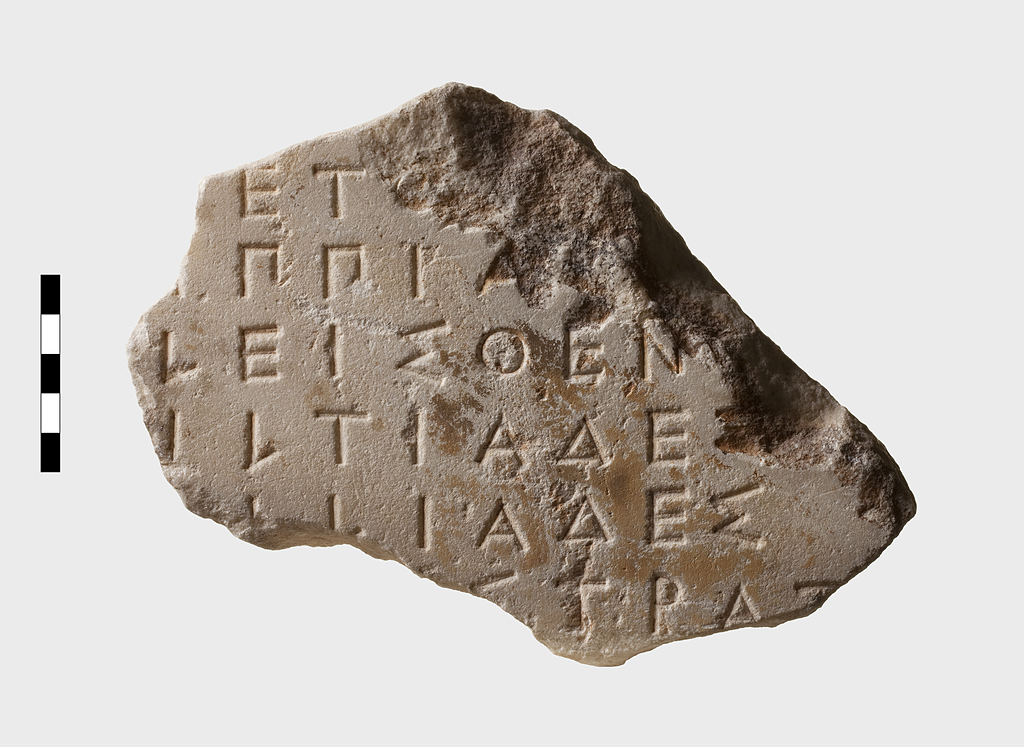
      A fragment of Pantelic marble with fragments of a list of names, likely from a list of Archons who would have served Athens from the years 527/6 to 522/1 BC. The Archon was the chief magistrate of Athens, and during this period, each Archon served a term of one year. These officeholders are often called "Eponymous Archons" because the year of their archonship would often be named after them.

      Comments

      Bibliography

      Museum Guide (2014), p. 133.

      Camp (1986), p. 42.

      Guide (1976), p. 247, fig. 129.

      AgoraPicBk 10 (1966), fig. 5.

      Hesperia 32 (1963), pp. 187-205.

      Guide (1962), pp. 162-163.

      Phoenix 14 (1960), p. 27.

      Hesperia Suppl. 8 (1949), p. 100.

      Hesperia 8 (1939), p. 60, no. 21.

      Agora III, no. 368, p. 120.

      Date
      6th c. BC
      Culture
      Medium
      Location
      Athens, Greece
      article Nav

      Inscribed Ancient Agora Boundary Stone

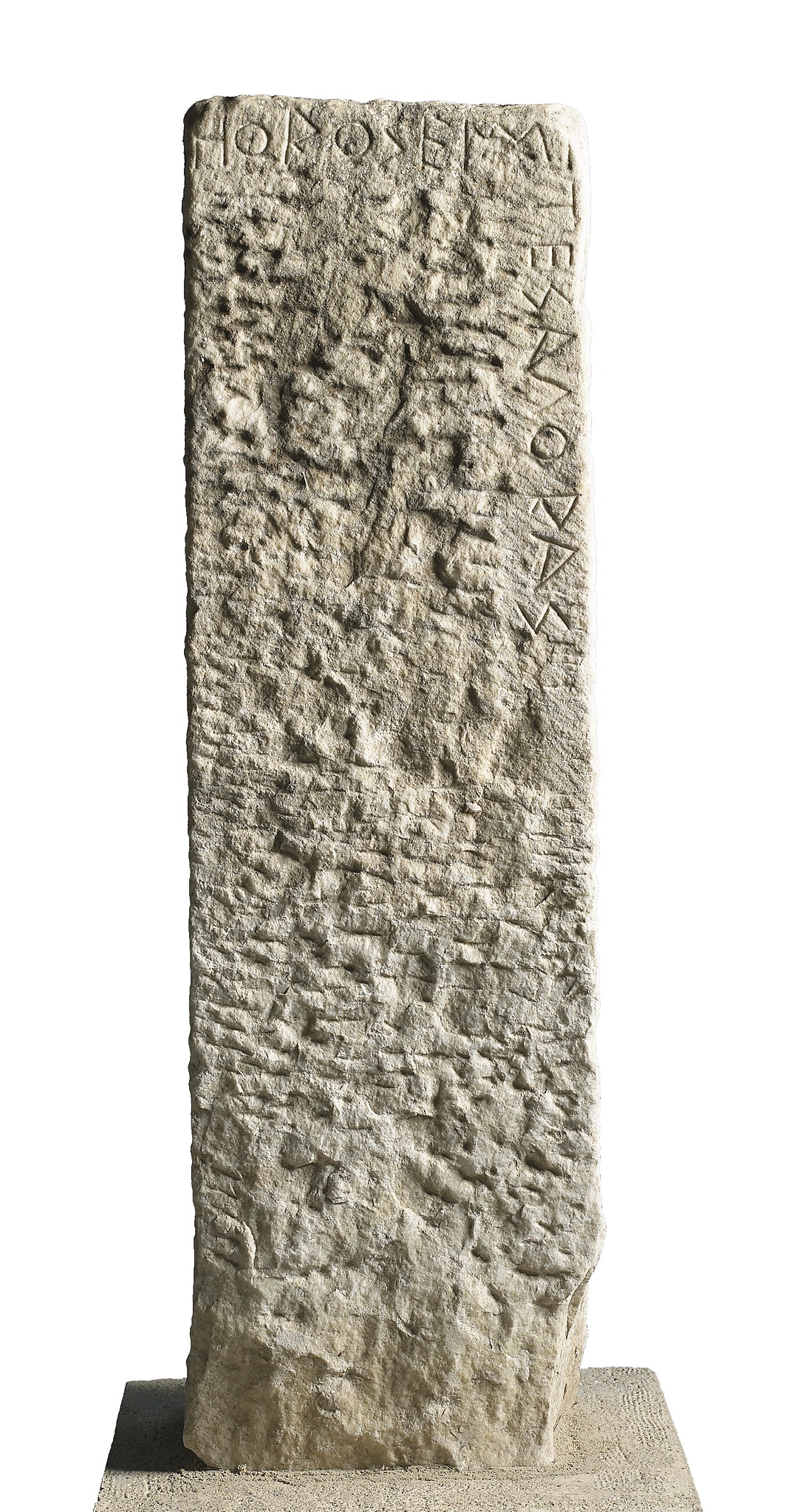
        A boundary stele (ὄρος, ὄρους, τό) of rough-hewn marble marking the edge of the Athenian Agora. This boundary stone was originally laid east of the Tholos. As it is today, only a single line of the inscription remains; the rest has eroded away.

        Comments

        Bibliography:

        Museum Guide (2014), pp. 66-67, fig. 39.

        Guide (2010), front cover, pp. 8, 55, fig. 26.

        Hesperia 75 (2006), pp. 86-87, n. 9, p. 100, n. 69, p. 103, n. 79, p. 105.

        Mauzy (2006), back cover.

        Hesperia Suppl. 31 (2003), pp. 289-290, figs. 5.7, 5.8.

        AgoraPicBk 23 (1994), p. 5, fig. 4.

        Shear (1994), p. 245, no. 82.

        Guide (1990), p. 58, pl. 26.

        Camp (1986), pp. 48, 51.

        Guide (1976), fig. 22.

        Travlos (1971), fig. 21.

        Hesperia 37 (1968), p. 63, fig. 9.

        Guide (1962), pp. 57-58, pl. IVa.

        AgoraPicBk 4 (1960), fig. 35.

        Hesperia Suppl. 4 (1940), p. 107, no. 91.

        Hesperia 8 (1939), p. 205, fig. 4.

        ILN (9 July 1938), p. 58, fig. 11.

        Agora III, no. 713, p. 218.

        Agora XIV, p. 117, pl. 64a.

        Agora XIX, no. H 25, p. 27, pl. 2.


        Date
        ca 500 BC
        Culture
        Medium
        Location
        Athens, Greece
        article Nav

        Bronze Dikast Ticket with the Name of a Potential Juror

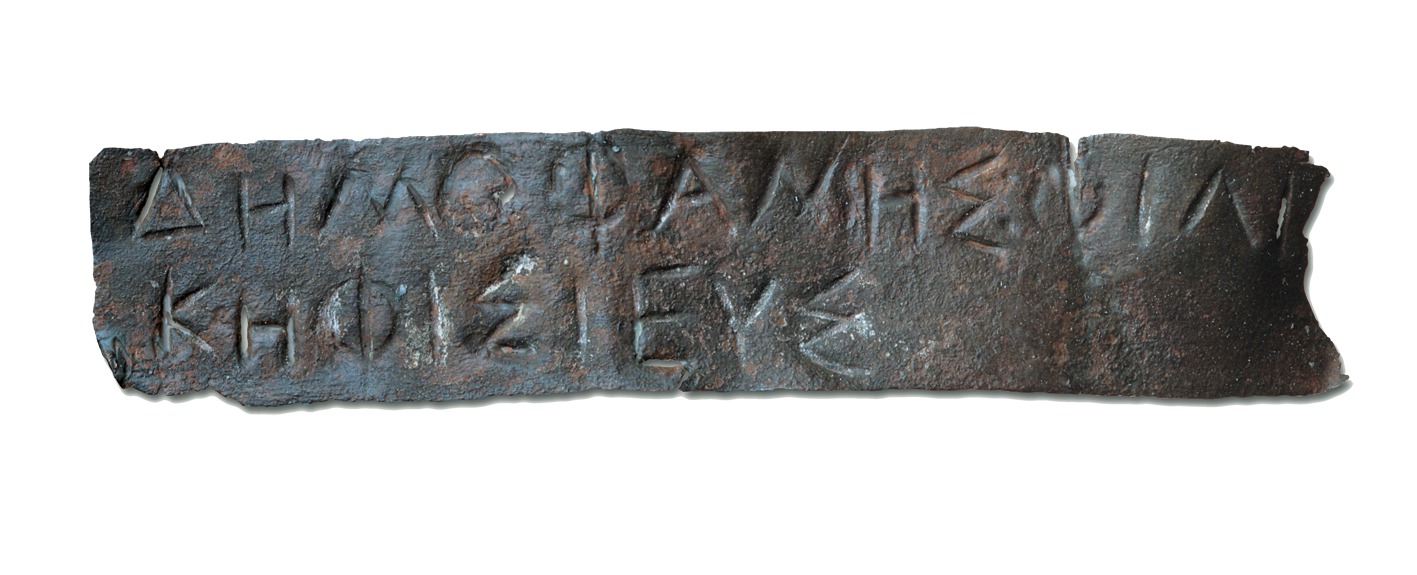
          A small, thin, bronze strip used as an identification ticket (πινάκιον, πινακίου, τό) used in the random selection of jurors, or dikasts (δικαστής, δικαστοῦ, ὁ). This ticket is inscribed with a potential juror’s name (Δημοφάνης), patronymic (Φιλ…), and deme (Κηφισιεύς). 

          Comments

          Bibliography:

          Museum Guide (2014), p. 140, fig. 77.

          Mauzy (2006), p. 73, fig. 157.

          AgoraPicBk 4 (2004), p. 23, fig. 26.

          AgoraPicBk 23 (1994), p. 24, fig. 28.

          Guide (1990), p. 247, fig. 151.

          Guide (1976), p. 110.

          Kroll (1972a), pp. 224-225, fig. 240, no. 130.

          AgoraPicBk 4 (1960), fig. 22.

          Archaeology 6 (1953), p. 143.

          Hesperia 20 (1951), p. 216, pl. 71b.

          Agora XIV, p. 53, pl. 39 e.

          Agora XXVII, p. 61, pl. 7, no. P 2.

          Date
          4th century BC
          Culture
          Medium
          Inscription
          ΔΗΜΟΦΑΝΗΣΦΙΛ.../ΚΗΦΙΣΙΕΥΣ
          Location
          Athens, Greece
          article Nav

          5th Century BC Silver Tetradrachm Depicting Athena

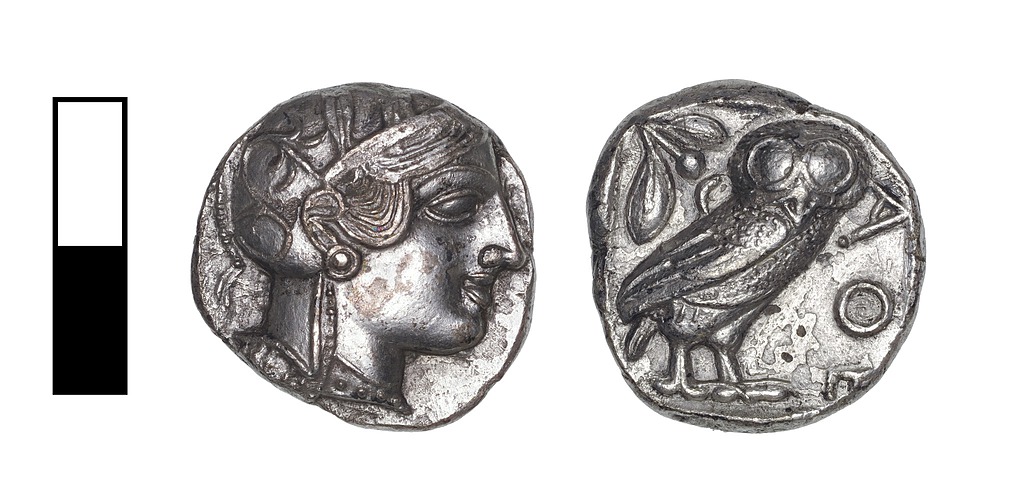
            A Silver tetradrachm found in the Ancient Agora excavations at Athens. The obverse (front) side depicts the head of Athena wearing an Athenian helmet ornamented with a palmette and olive leaves. The reverse side depicts her owl and an olive twig, and bears the legend "ΑΘΕ."

            Comments

            Bibliography:

            Museum Guide (2014), p. 169, fig. 104.

            Pedley (2012), p.208, fig. 7.2.

            Camp and Mauzy (2009), p. 25, fig. 20.

            AgoraPicBk 16 (2003), p. 3, fig. 2.

            Birth of Democracy (1993), fig. 18.7-15.

            AgoraPicBk 15 (1975), fig. 9.

            AgoraPicBk 4 (1960), fig. 12.

            Agora XXVI, no. 8c, photo.

            Associated Passages
            Date
            ca 450-404 BC
            Culture
            Inscription
            ΑΘΕ
            Location
            Athens, Greece
            article Nav

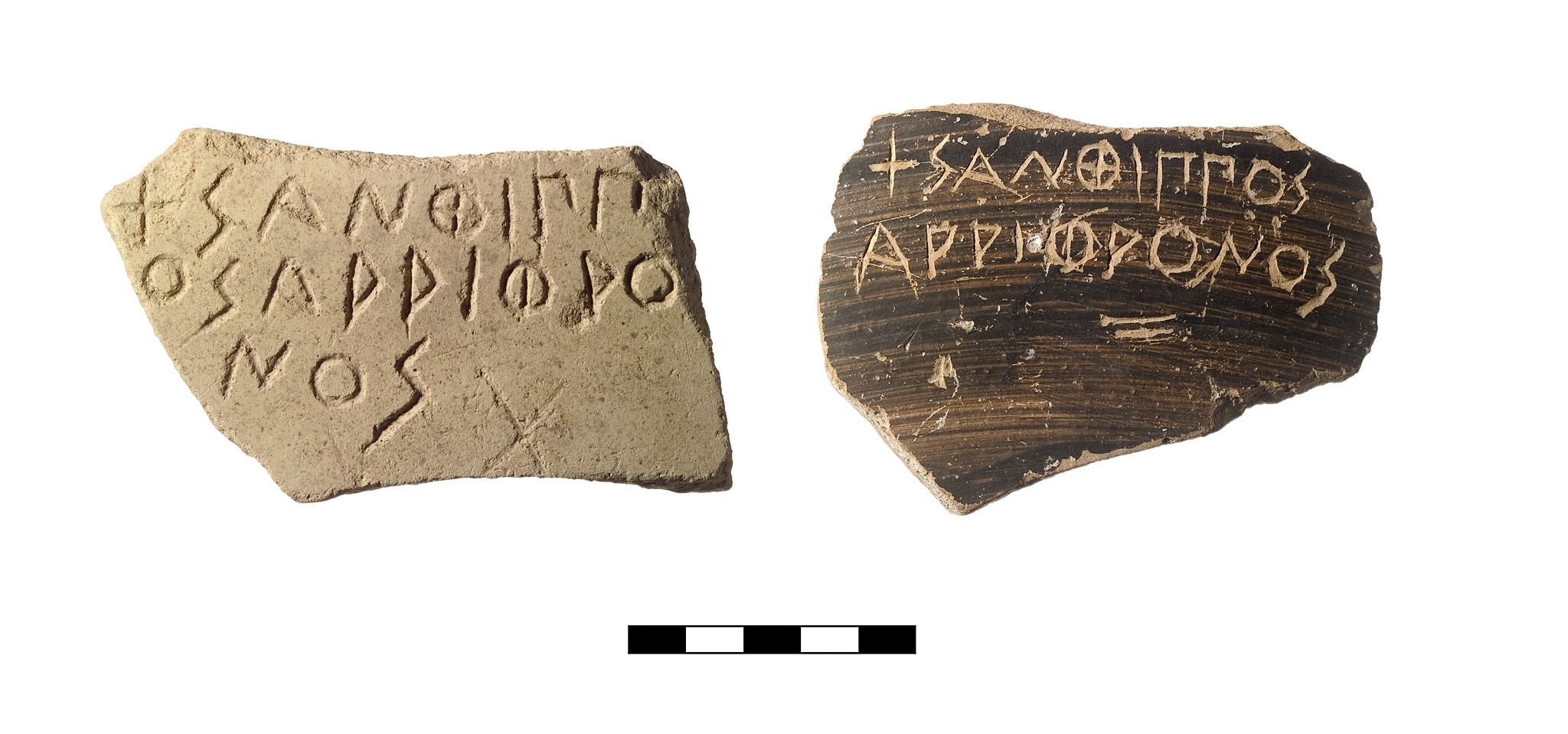
            Two Ostraka for Xanthippos Arriphronos

              Two Ostraka of Xanthippos Arriphronos, the father of the Peloponnesian War-era general and highly influential statesman Pericles. Both ostraka are wall fragments broken all around. The ostrakon on the left (object P 32559) is of coarse-grained clay and unglazed. The ostrakon on the right (object P 32560) has a thin, dark brown glaze on its exterior.

              Comments

              Bibliography:

              Camp and Mauzy (2009), p. 83, fig. 79.

              Hesperia 68 (1999), p. 269, no. 21, figs. 18, 19.

              Agora XXV, pp. 133-135.

              Date
              ca. 484 BC
              Culture
              Inscription
              +ΣΑΝΘΙΠΠ/ΟΣΑΡΡΙΦΡΟ/ΝΟΣ, +ΣΑΝΘΙΠΠΟΣ/ΑΡΡΙΦΡΟΝΟΣ
              Location
              Athens, Greece
              article Nav

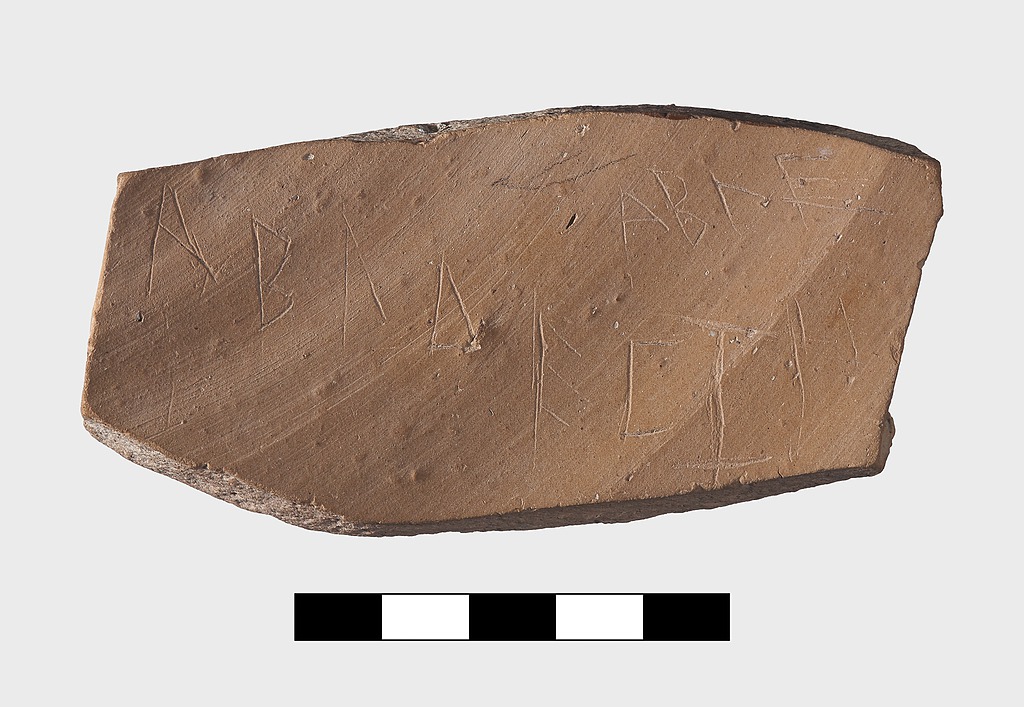
              Vessel Fragment with Graffito of the Partial Greek Alphabet

                An Athenian vessel shoulder fragment from a large enclosed vase. There is reddish glaze on the exterior of the fragment. After the vessel was shattered, the unglazed interior of the fragment was lightly incised with part of the Greek alphabet, as it appeared in the sixth century B.C.

                Comments

                Bibliography:

                Papadopoulos et al (2007), p. 166, fig. 148A

                AgoraPicBk 14 (1974), fig. 1.

                Agora XXI, no. A 2, p. 7, pl. 1.

                Date
                6th c. BC
                Culture
                Location
                Athens, Greece
                article Nav

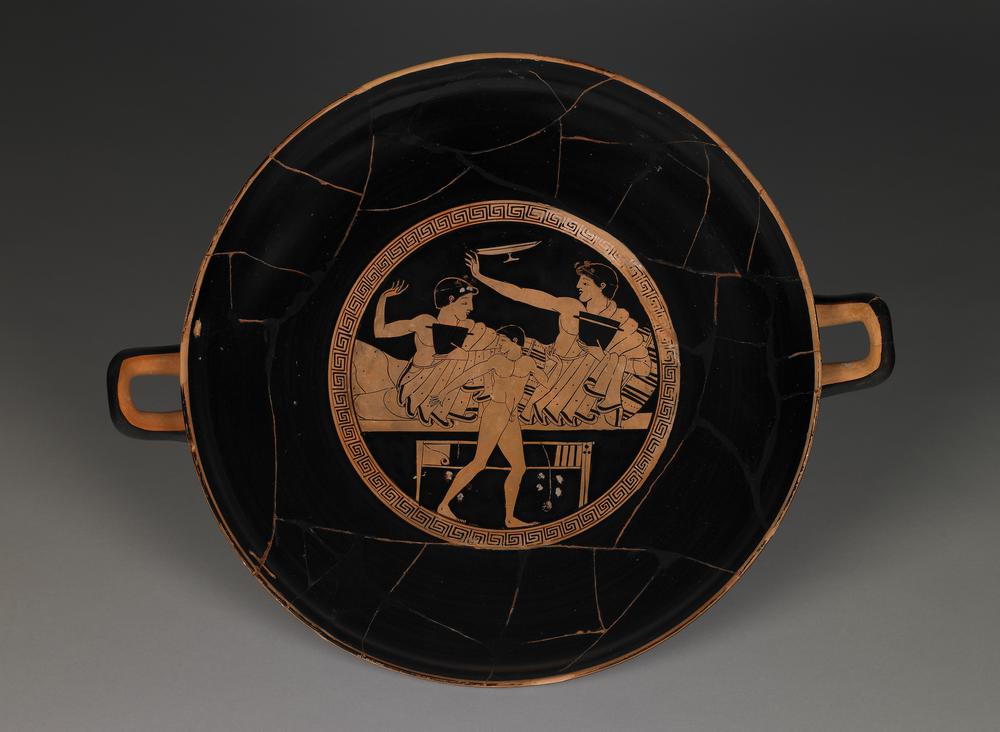
                Athenian Drinking Cup Depicting a Symposium

                  Symposium - two youths share a couch, a boy. The youths recline to the left. The one on the left of the couch turns his head to the right. He holds a black skyphos in his left hand and holds up his empty right hand as if playing kottabos. The youth on the right holds a black skyphos with a reserved band at handle level in his left hand and holds out a cup by one handle in his right, ready to flick it in the game of kottabos. His mouth is open. Both youths wear a dotted himation with a black border and have a red band with five large leaves at the front in their hair; they recline against cushions decorated with groups of three stripes separated by rows of dots. The couch's legs are cut off by the border, as are the first youth's legs. Below the couch is a three-legged table with two spare red fillets with leaves trailing from it. In front of the table a naked boy moves to the right, but turns his head back to the left.

                  Type
                  Image
                  License
                  Creative Commons Attribution-ShareAlike
                  Date
                  ca. 485 BC
                  Culture
                  Dimensions
                  height 13 cm. x width 40.8 cm x depth 33 cm.
                  Location
                  London, England
                  Image Credit