Fragment of a Dedicatory Inscription with Later Corrections
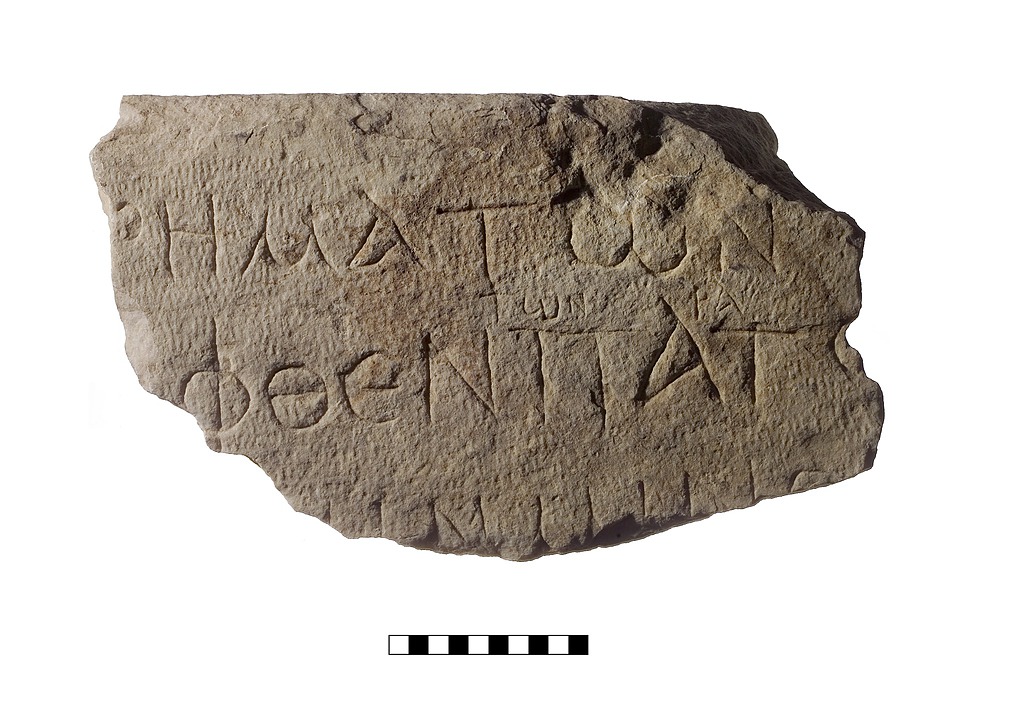
    A fragment of a dedicatory inscription of the late 4th or 5th c. A.D. Two sets of smaller letters (ΤΩΝ and ΡΑ) can be found between lines 1 and 2. These are corrections to the original inscription.


    Comments

    Bibliography

    Agora XVIII, no. X760, pl. 77.

    Type
    Image
    Date
    Late 4th to 5th C. AD
    Culture
    Medium
    Location
    Athens, Greece
    article Nav

    Base of a Statue Created by Praxiteles

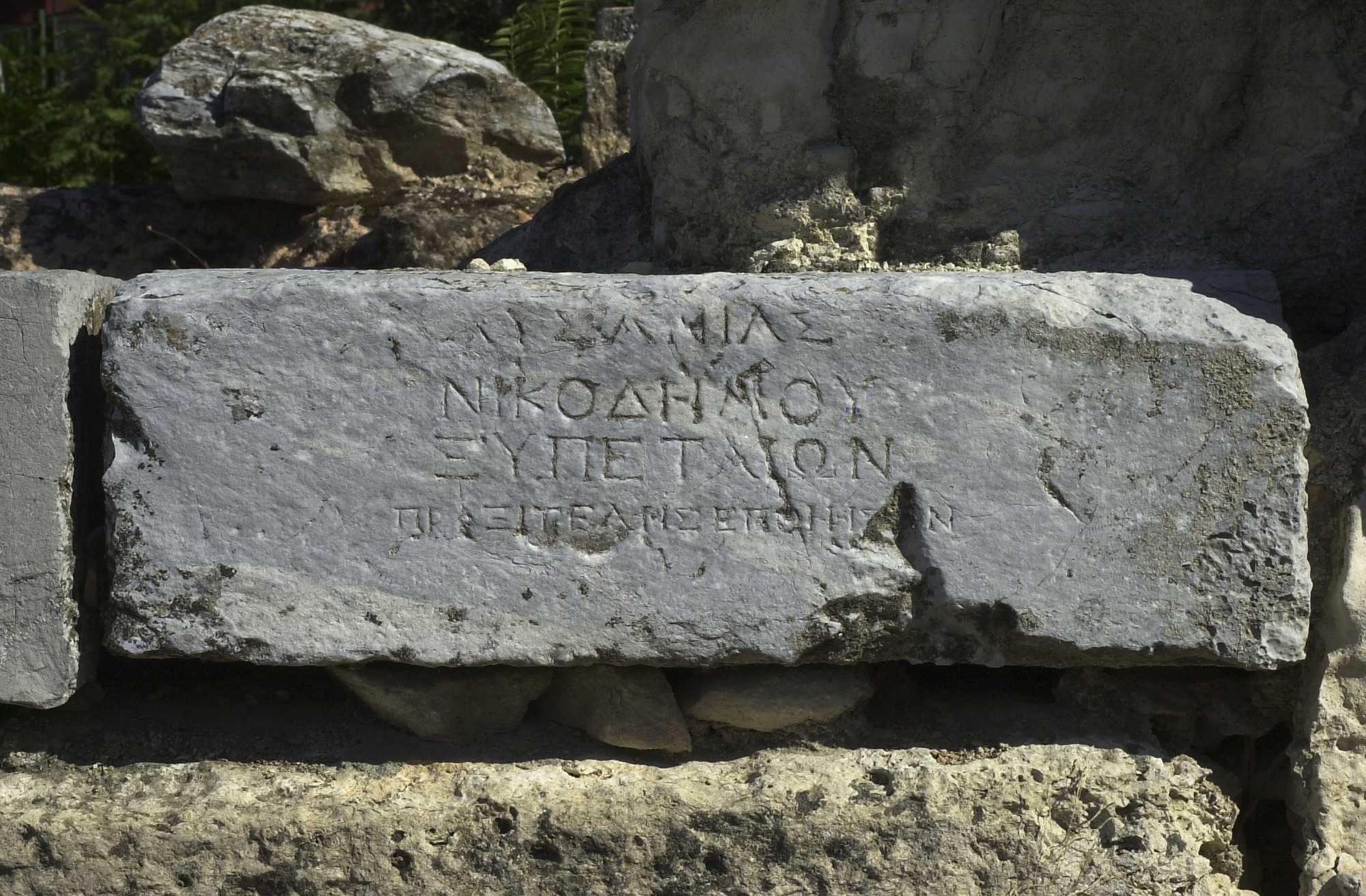
      A base for a statue made by the renowned 4th c. B.C. sculptor Praxiteles (note the bottom line of inscription, "ΠΡΑΞΙΤΕΛΗΣ ΕΠΟΙΗ[ΣΕ]Ν῾. The inscription dates to ca. 50 B.C.-50 A.D. The base was later incorporated into the Post-Herulian Wall, a late Roman wall that was hastily built to fend off invaders. The base remains in this wall today.


      Comments

      Bibliography

      Hesperia 12 (1943), p. 55, no. 13.

      Agora XVIII, no. H352, pl. 33.

      Agora XXIV, p. 130.

      IG2, no. 3886.


      Type
      Image
      Date
      4th C BC
      Culture
      Medium
      Location
      Athens, Greece
      article Nav

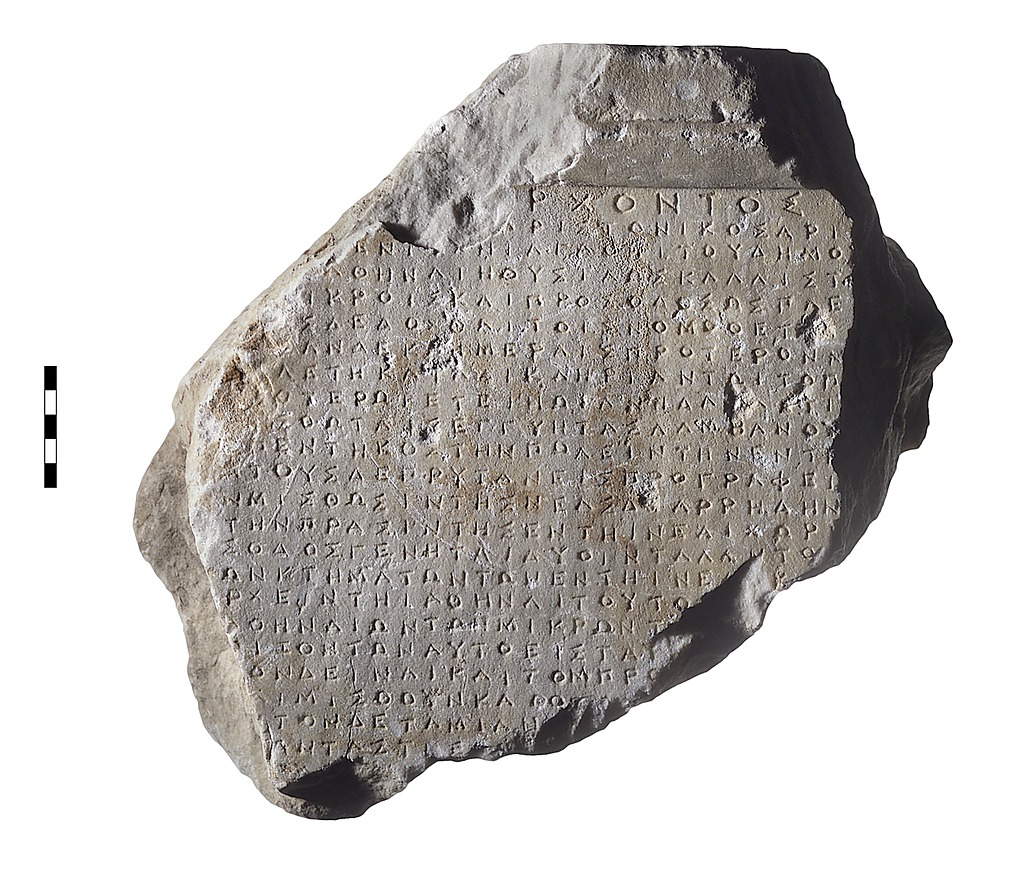
      Fragment of a 426/5 Athenian Decree concerning Aphytis

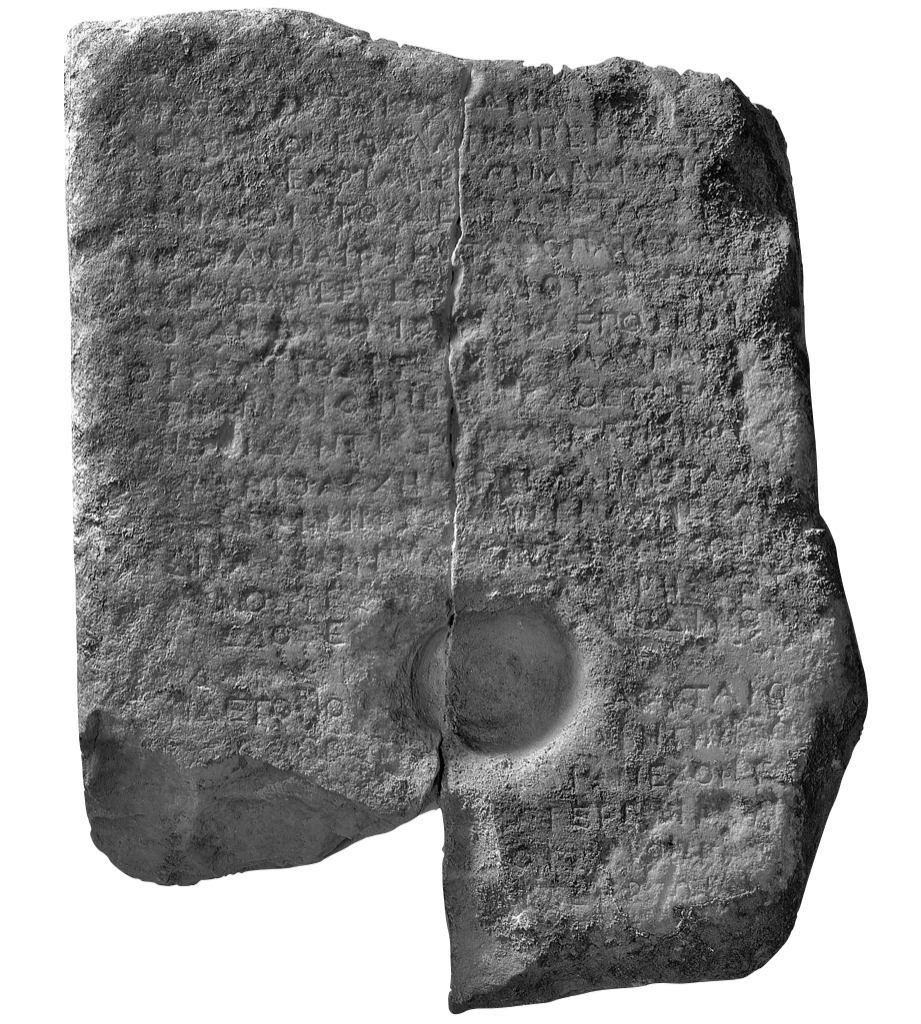
        A fragment of a Peloponnesian War-era decree of the Athenians concerning Aphytis, a city in the Chalcidice, a peninsula in northeastern Greece, toward the edge of Athens' imperial reach The decree concerned the importation of corn, and was modeled after a similar decree concerning Methone, another northern Greek city towards the outskirts of the Athenian empire. 

        Later, the fragment was used as a Byzantine-era door threshold; the large round hole bored into the stone is for a doorpost.

        Comments

        Bibliography:

        Hesperia 63 (1994), p. 172.

        Hesperia 13 (1944), p. 211, no. 2.

        Agora XVI, no. 15, p. 18.

        IG I3, no. 62.

        Date
        426/5 BC
        Culture
        Medium
        Location
        Athens, Greece
        article Nav

        Grave Monument for Athenokles

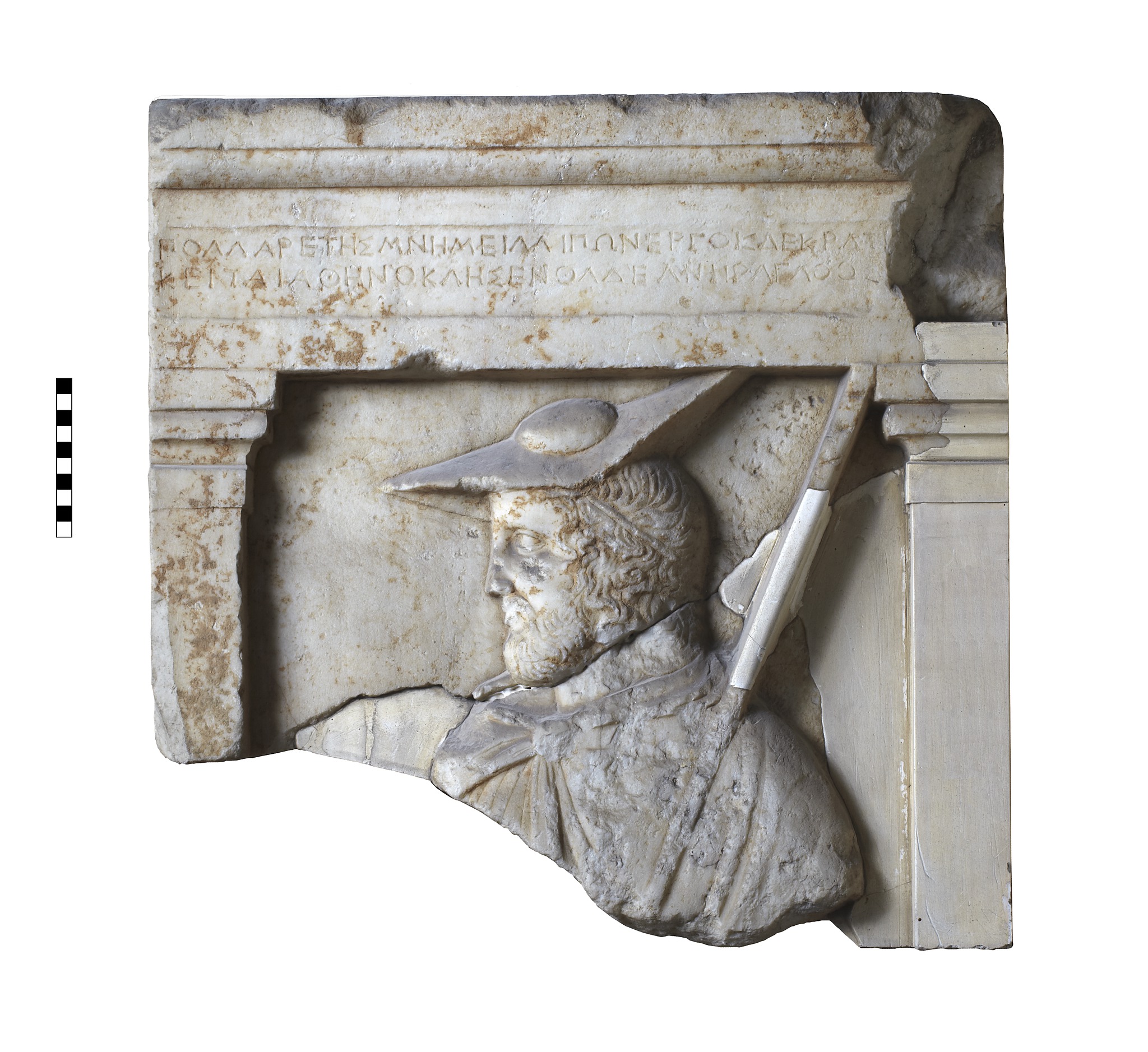
          A monument fragment in two pieces, dedicated to Athenokles. The man is depicted wearing a petasos and chlamys, a hat and cloak most often associated with farmers, hunters, and other rural people.

          Comments

          Bibliography

          Clairmont (1993), no. 1.193.

          Guide (1976), p. 300.

          AgoraPicBk 10 (1966), fig. 34.

          Guide (1962), p. 192.

          Peek (1955), no. 344.

          ILN (18 July 1936).

          Agora XVII, no. 697, p. 133.

          Agora XXXV, no. 78, pl. 23.

          IG II2, no. 10593.

          Type
          Image
          Date
          4th C BC
          Culture
          Medium
          Location
          Athens, Greece
          article Nav

          Plinth for a Bust Dedicated by Kittos

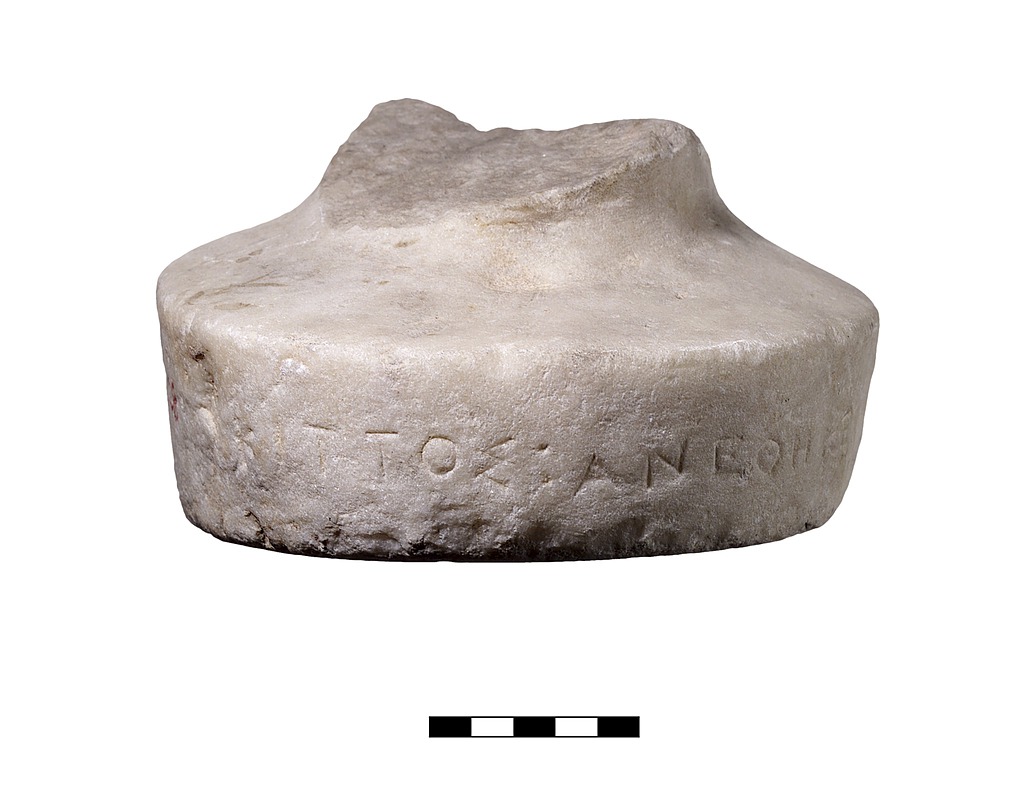
            A plinth made of Pentelic marble for a bust, now missing, found at the late Roman level of the Ancient Agora excavations. Inscribed with the name of its dedicator, its inscription reads "ΚΙΤΤΟΣ ΑΝΕΘΗΚΕ," "Kittos dedicated (this)."

            Comments

            Bibliography

            Hesperia 74 (2005), p. 420, fig. 11.

            Hesperia 3 (1934), p. 66, no. 59

            Agora XVIII, no. V637.

            Type
            Image
            Date
            4th C BC
            Culture
            Medium
            Inscription
            ΚΙΤΤΟΣ : ΑΝΕΘΗΚΕ
            Location
            Athens, Greece
            article Nav

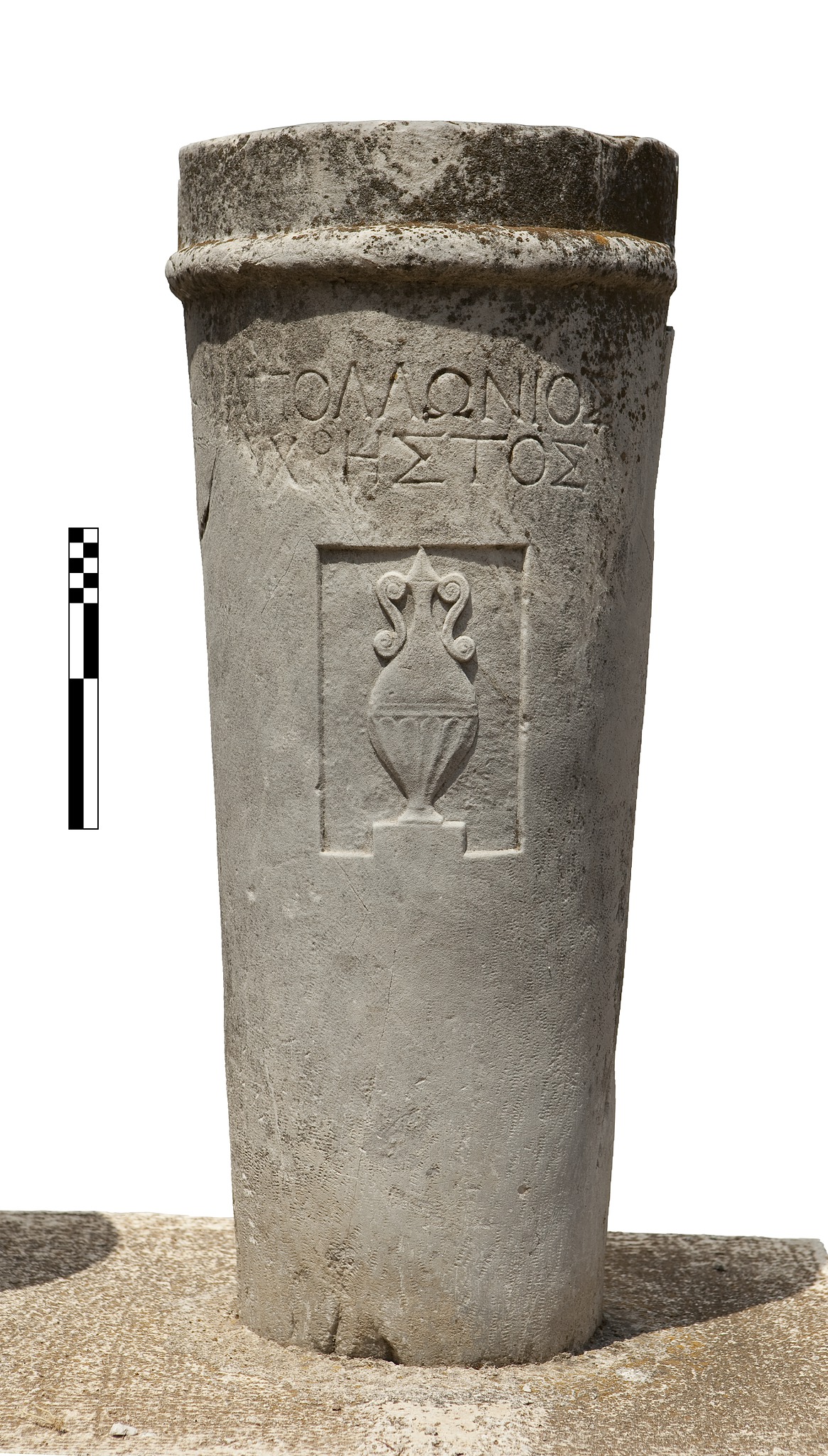
            Columnar Grave Monument for Apollonios the Slave

              A columnar funeral monument to the enslaved Apollonios, found west of the Hephaistion among the sepulchral marbles in the Kerameikos neighborhood, where many funeral monuments were erected, often to members of rich families. There is a relief of a Loutrophoros, a distinctive type of Greek pottery with ritual significance in funerals, among other rites. These are commonly depicted in relief on funeral monuments such as these.

              Date
              Late 4th C. BC. to Early 4th C. AD.
              Culture
              Medium
              Location
              Athens, Greece
              article Nav

              Fragment of the ca. 335 Law Concerning the Lesser Panathenaia

                A fragment of a stele presenting a law given down from the Nomothetai, "Law Establishers," concerning the Lesser Panathenaia. The law is similar to a modern appropriations bill, relating how funding for the festival would be provided.

                Comments

                Bibliography

                Hesperia 80 (2011), p. 283, n. 67.

                Hesperia Suppl. 29 (1998), p. 31, no. 54.

                Hesperia 65 (1996), p. 451, no. 14.

                Tracy (1995), pp. 84, 86.

                Hesperia 28 (1959), pp. 239-247, pl. 43.

                Agora XIX, no. L 7, p. 184.

                Agora XVI, no. 75, p. 114, pl. 7.

                IG II-III3,1,2, 447a.

                Type
                Image
                Date
                ca 335
                Culture
                Medium
                Location
                Athens, Greece
                article Nav

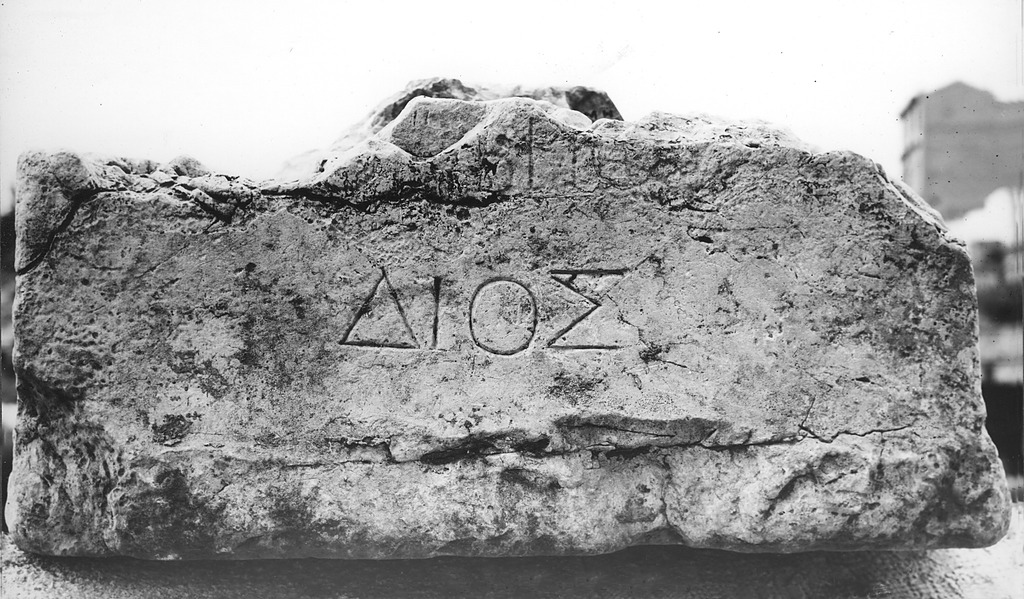
                Base of an Altar of Zeus Ombrios

                  A badly worn base for an altar of Zeus Ombrios (Zeus the Rain-Giver), found west of the Odeion. 

                  Comments

                  Bibliography

                  Hesperia 37 (1968), p. 291, no. 32, pl. 86

                  Hesperia 12 (1943), p. 72, no. 19.

                  Agora III, no. 386, p. 125.


                  Type
                  Image
                  Date
                  ca 100 AD
                  Culture
                  Medium
                  Inscription
                  ΔΙΟΣ
                  Location
                  Athens, Greece
                  article Nav

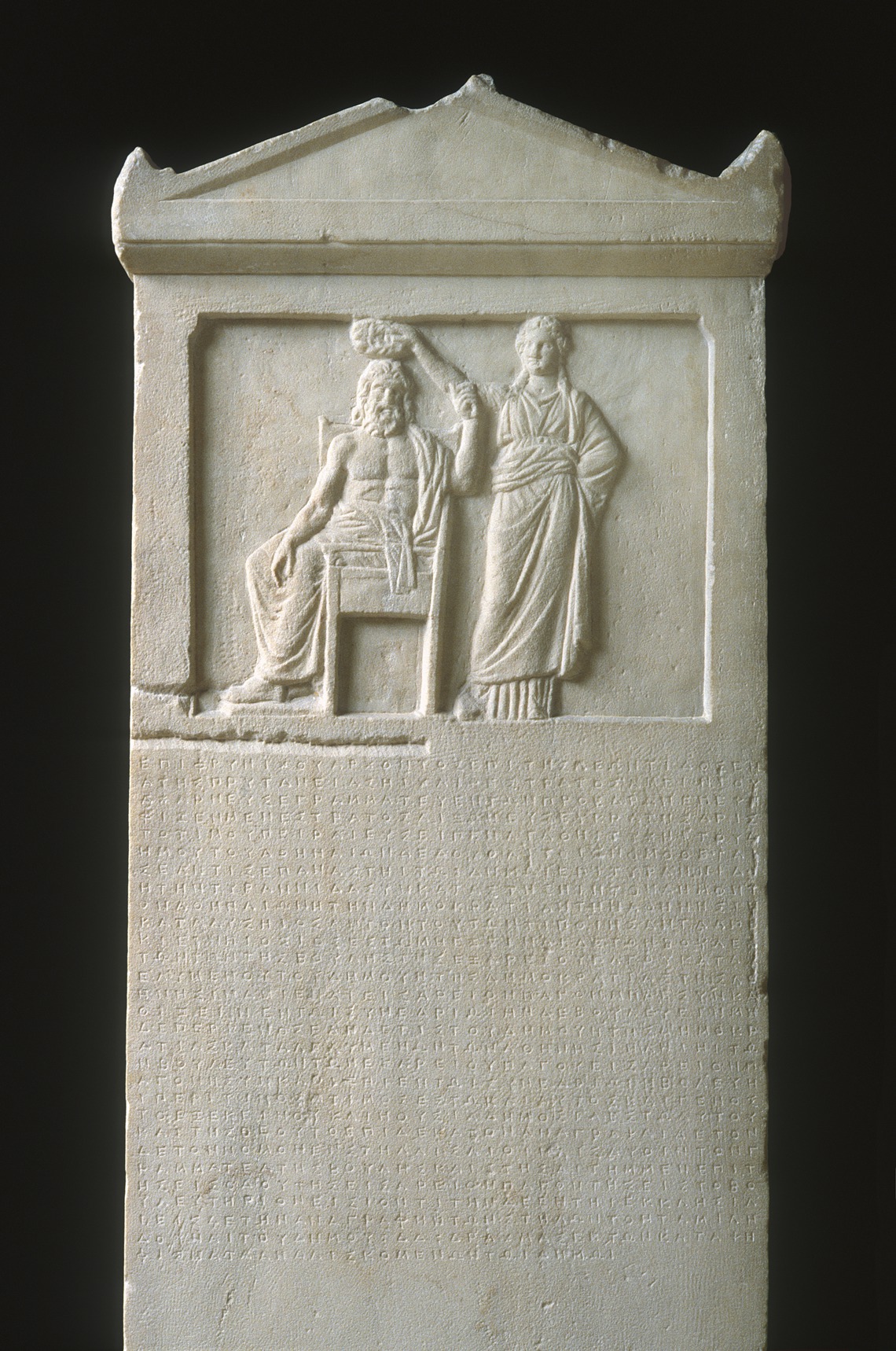
                  Law Stele with a Copy of an Anti-Tyranny Law of 337 BC

                    A large marble stele with a law against Tyranny, with a relief of Democracy crowning Demos. The law, also known as the Decree of Eucrates, forbids cooperation with those plotting a coup against the democracy, and calls for the acquittal of anyone accused of murdering the tyrant. 337 B.C.

                    Comments

                    Bibliography

                    Museum Guide (2014), pp. 32, 151, fig. 91.

                    Hesperia 82 (2013), pp. 440, 448, 449, n. 35.

                    Camp and Mauzy (2009), p. 107, fig. 113.

                    AgoraPicBk 27 (2006), p. 48, fig. 52.

                    AgoraPicBk 4 (2004), p. 18, fig. 20, frontpage.

                    Hesperia 72 (2003), p. 454, fig. 7, n. 18, p. 463, table 1.

                    Baumer (1997), p. 78, no. 569.

                    Hesperia 64 (1995), p. 121, n. 1.

                    Lawton (1995), pl. 38.

                    Tracy (1995), p. 8, no. 7.

                    Guide (1990), p. 249, fig. 153

                    AM-BH 13 (1989), no. A 97, pl. 30.

                    AM 103 (1988), p. 140, no. 108.

                    Camp (1986), p. 154.

                    LIMC III (1986), p. 373, n. 7.

                    AgoraPicBk 19 (1980), p. 21, fig. 42.

                    Palagia (1980), pl. 43.

                    Guide (1976), p. 188, fig. 98.

                    AJA 71 (1967), no. 1, pl. 15, fig. 7.

                    Guide (1962), pp. 123-124, pl. VIII.

                    Mossè (1962), p. 282, no. 3.

                    AgoraPicBk 4 (1960), fig. 29.

                    Pouilloux (1960), pp. 121-124.

                    AJP 79 (1958), pp. 71-73.

                    Πολεμων ΣΤ'(1957), p. ΚΗ f’.

                    Webster (1956b), p. 49, pl. 8.

                    TAPA 86 (1955), pp. 103-128.

                    Hesperia 22 (1953), pp. 51-53, pl. 20a.

                    JHS 73 (1953), p. 111, pl. 1.

                    Hesperia 21 (1952), p. 355, no. 5, pl. 90.

                    Νεα Εστια (11 July 1952), τευχος 6.

                    Προοδευτικη Αλλαγη (εφημεριδα, 5 April 1953).

                    Agora III, no. 386, pp. 126-127.

                    Agora XIV, no. 173, pp. 61, 102, pl. 53.

                    Agora XXVIII, no. 28, p. 134.

                    IG II-III3,1,2, 320.

                    Type
                    Image
                    Date
                    337 BC
                    Culture
                    Medium
                    Location
                    Athens, Greece
                    article Nav

                    Fragment of a Grave Monument from the Ancient Athenian Agora

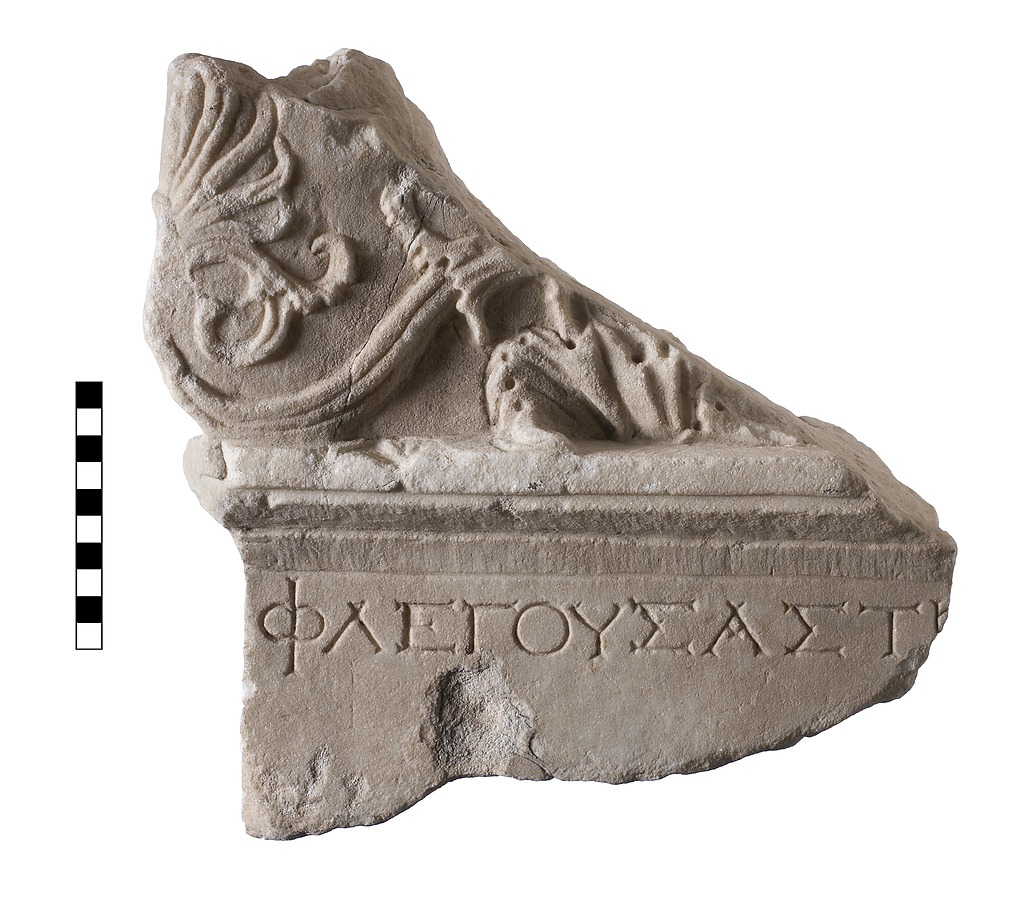
                      A fragment from the top left of a grave stele excavated from the area of the Stoa of Attalos. The ornamental Acanthus leaf motif is among the most common decorative motifs in ancient Greek design.

                      Comments

                      Bibliography:

                      Agora XVII, no. 1012, p. 176, pl. 80.

                      Agora XXXV, no. 369, pl. 120.

                      Associated Passages
                      Type
                      Image
                      Date
                      ca 1st c BC-1st c AD
                      Culture
                      Medium
                      Inscription
                      ΦΛΕΓΟΥΣΑΣΤ...
                      Location
                      Athens, Greece
                      article Nav