Bronze Daedalic Figurine
Annotations
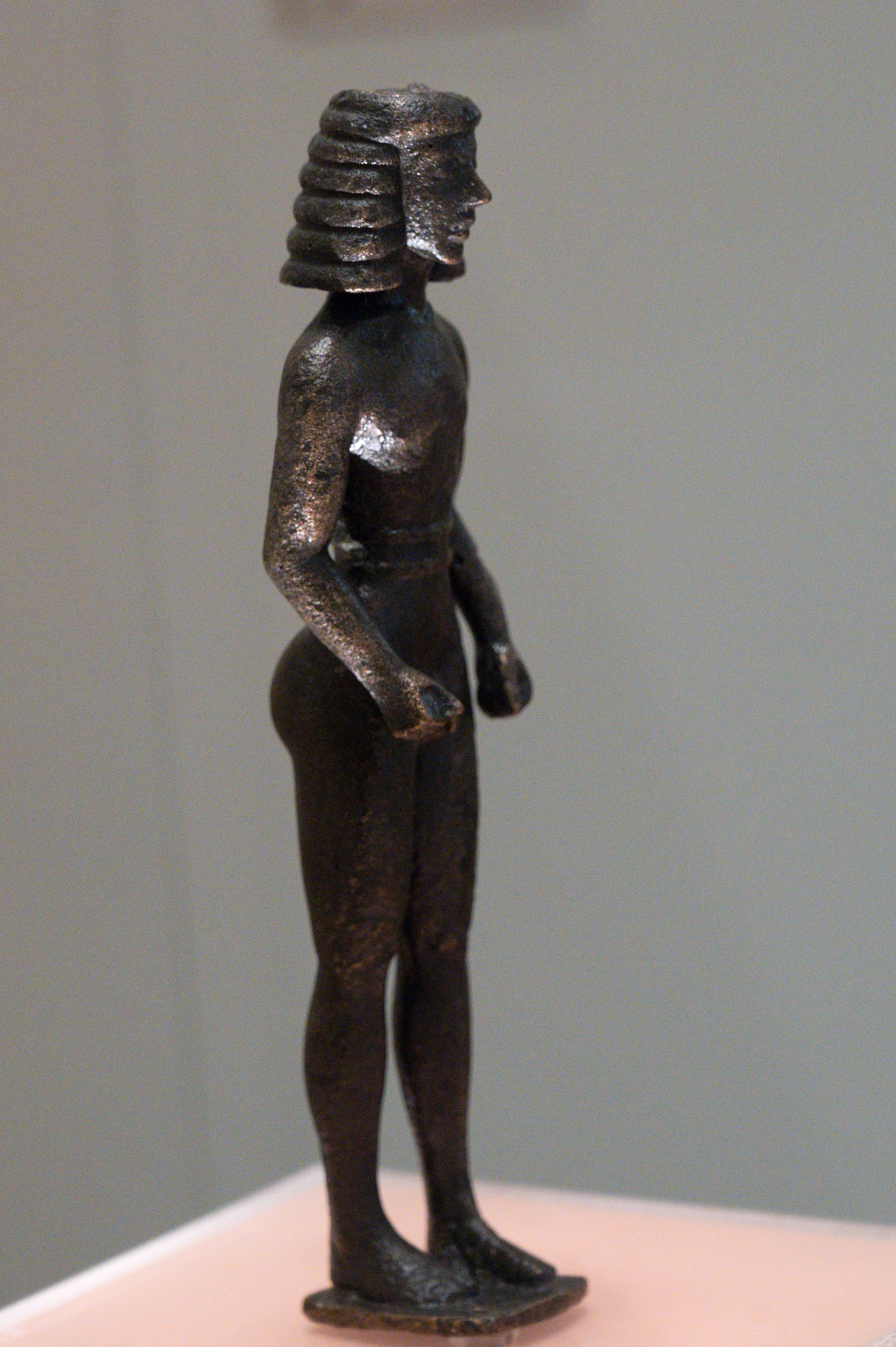
Bronze figurine of a kouros, or possibly Apollo, in the Daedalic style. Archaeological Museum of Delphi.
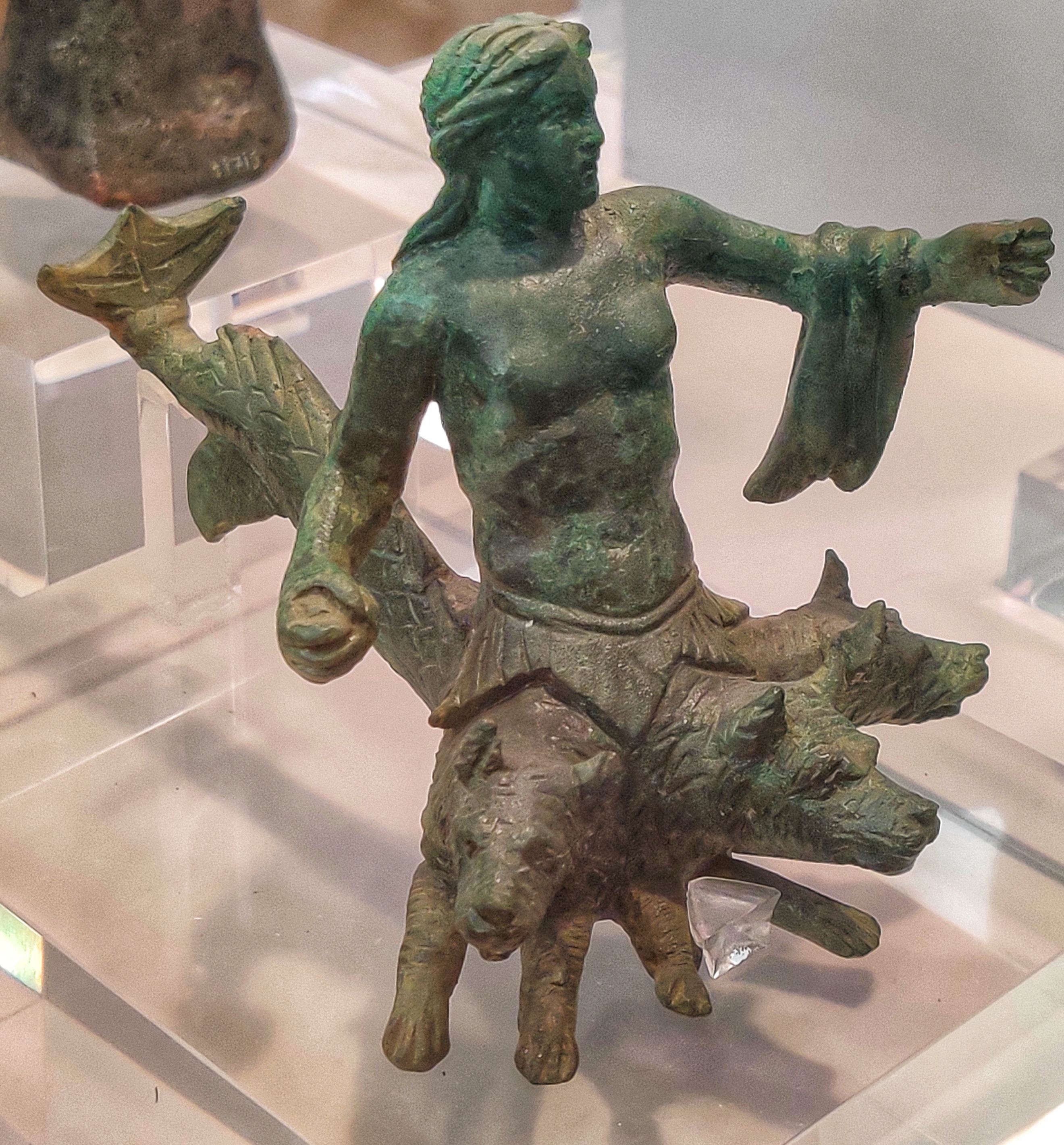
Bronze figurine of Scylla found in Katafylli, Karditsa, Greece. National Archaeological Museum Athens X21084.
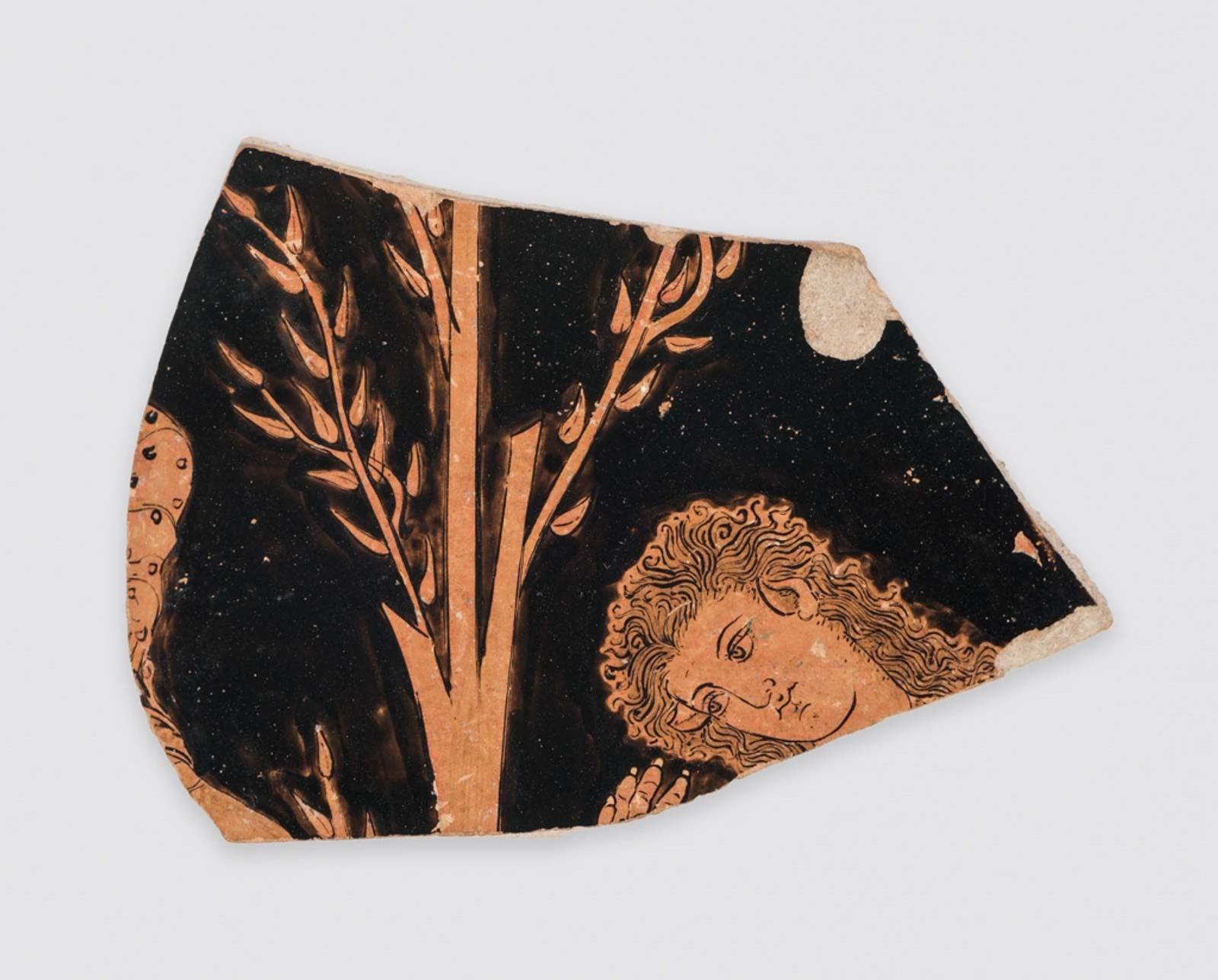
Callisto turning into a bear. Fragment of an Apulian red-figure krater. Museum of Fine Arts Boston, Bartlett Collection, 13.206.
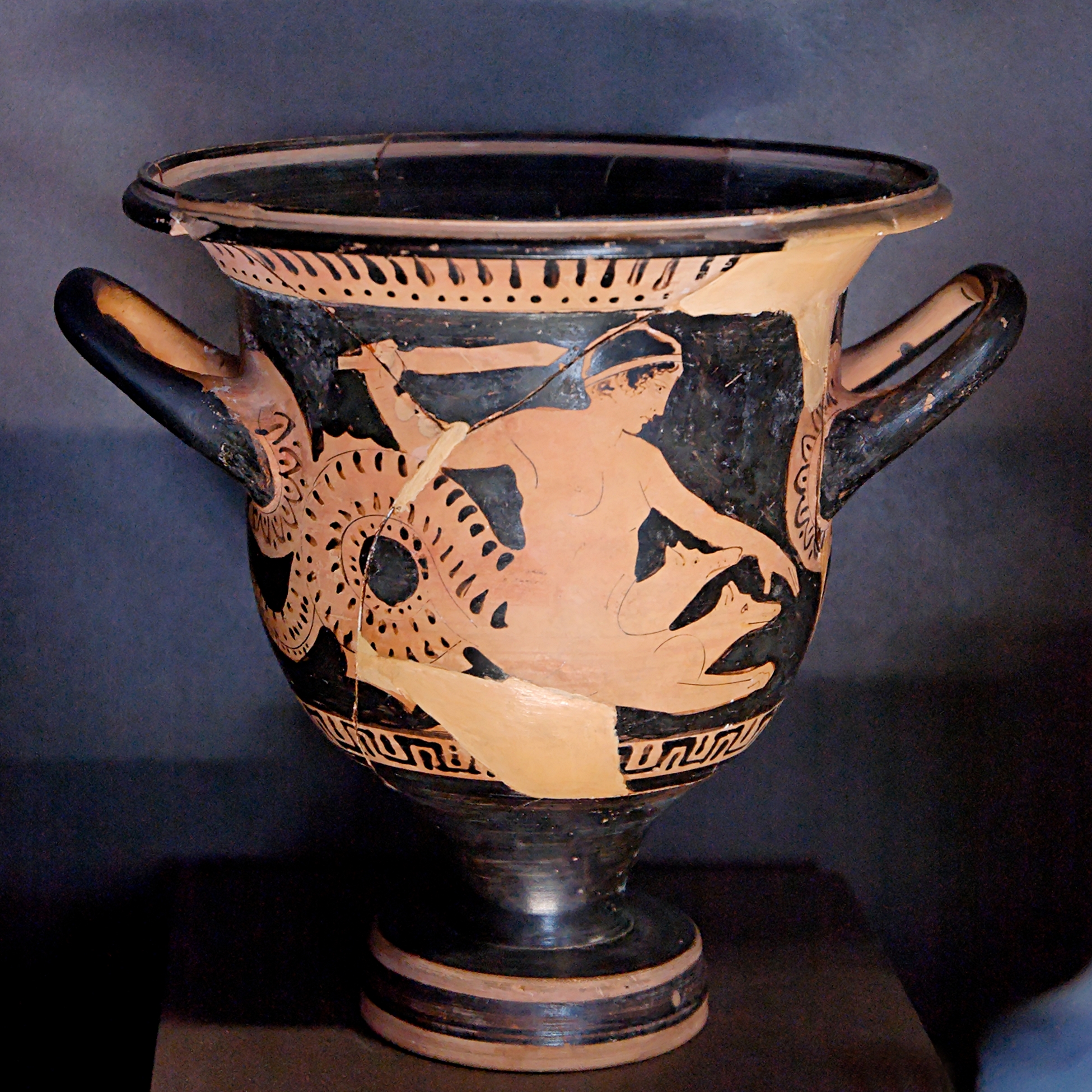
Reconstructed Boetian red-figure bell krater. Musée du Louvre CA 1341.
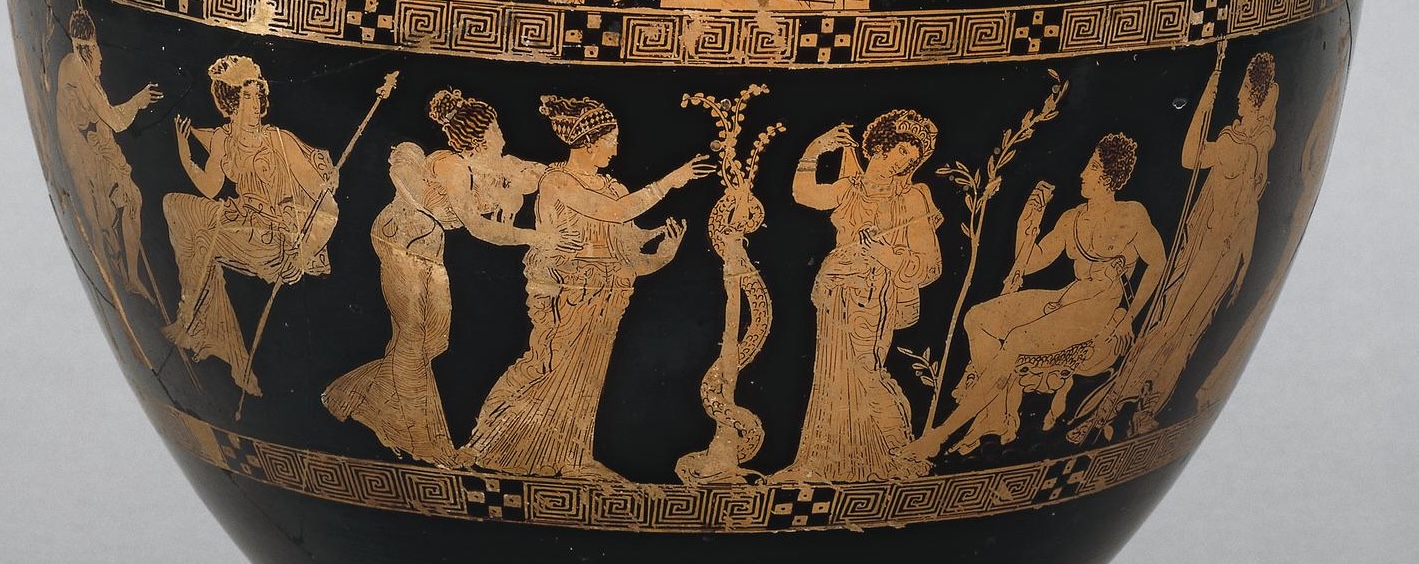
Detail of the lower register of an Attic red-figure hydria. At far left Hygieia sits on a small hill or rock. At center, is the apple tree, a snake wrapped around it. Chrysothemis and Asterope stand to the left of the tree, Lipara to the right. Heracles sits on his lion skin to the right of Lipara; Iolaos stands behind him at far right. All the figures are identified by Attributed to the Meidias Painter.
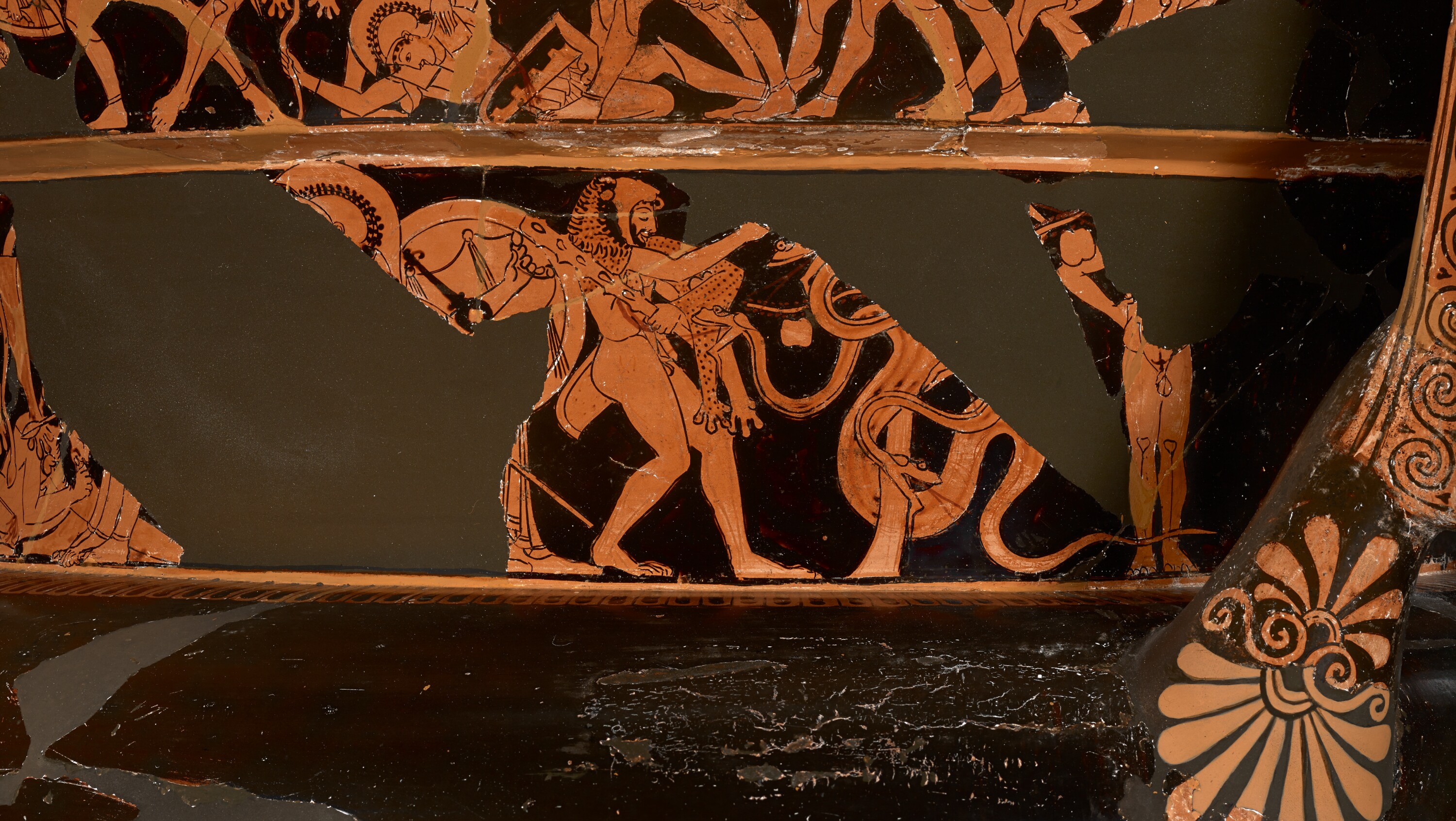
Detail of an attic red-figure volute krater (mixing vessel) depicting Heracles fighting the dragon Ladon to retrieve the apples of the Hesperides. The partial figure to the right of the tree has been identified as Atlas. The krater is reconstructed and restored from multiple fragments. Attributed to the Kleophrades Painter.
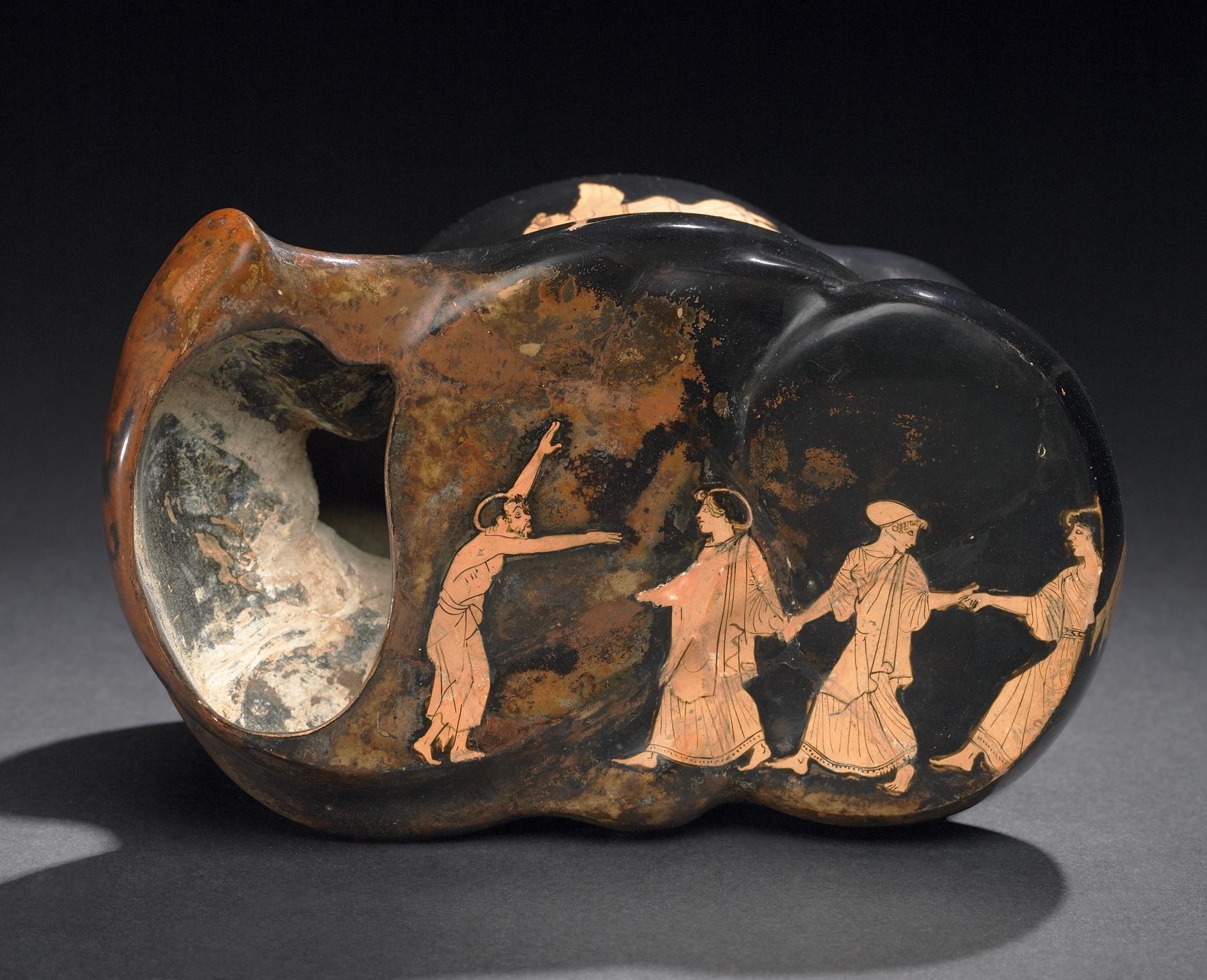
Side A of an Attic red-figure vessel in the shape of a knucklebone (astragalos), perhaps depicting Aeolus directing the dance of the clouds. The opening of the vessel may double as a representation of Aeolus' cave. Found on Aegina; attributed to the Sotades Painter.
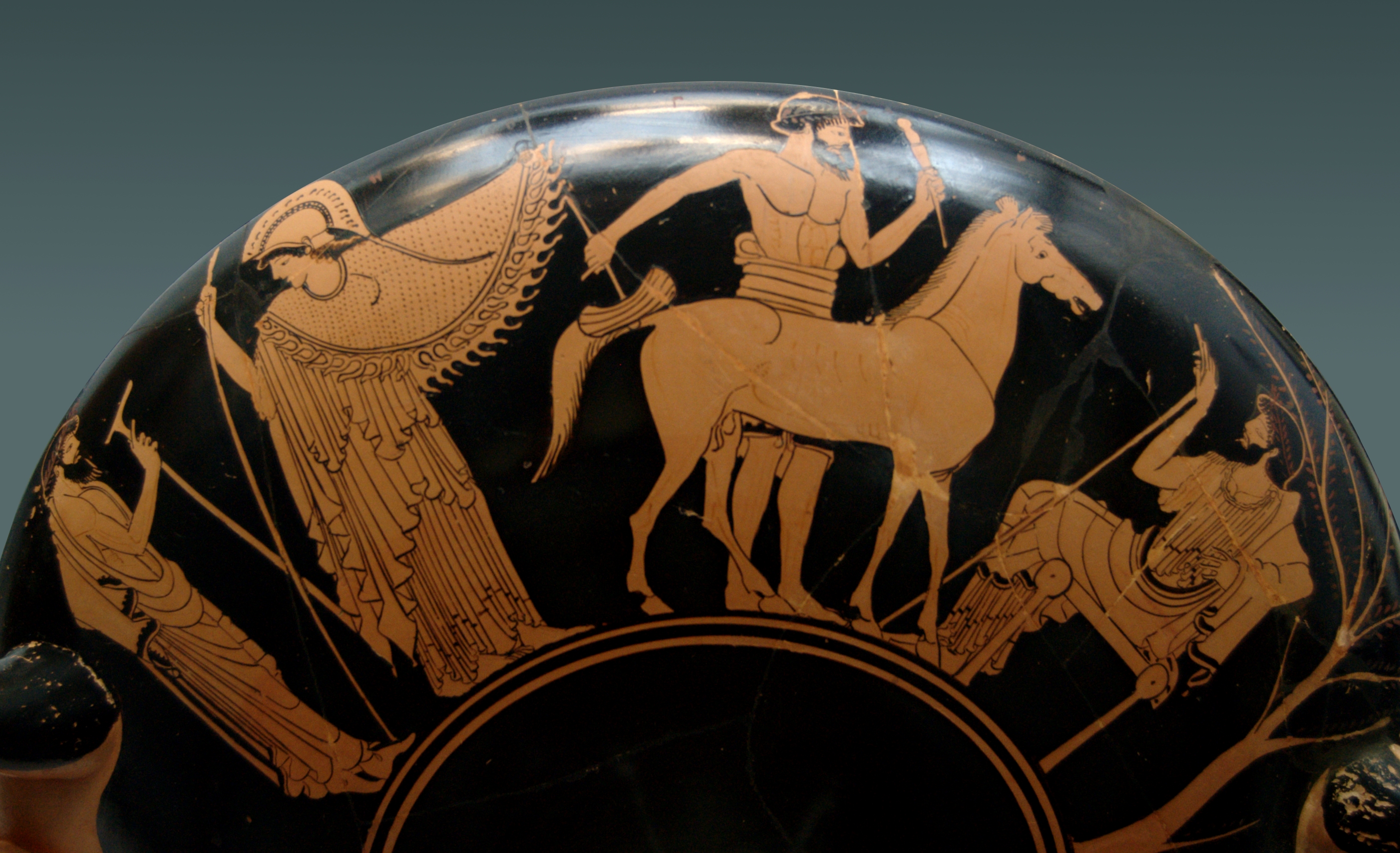
Detail of the exterior of an Attic red-figure kylix (cup). Athena visits a craftsman sculpting a horse. The craftsman might be Epeios building a model of the Trojan horse. Made by Euphronios; painted by the Foundry Painter. Excavated from Vulci. Staatliche Antikensammlungen 2650.
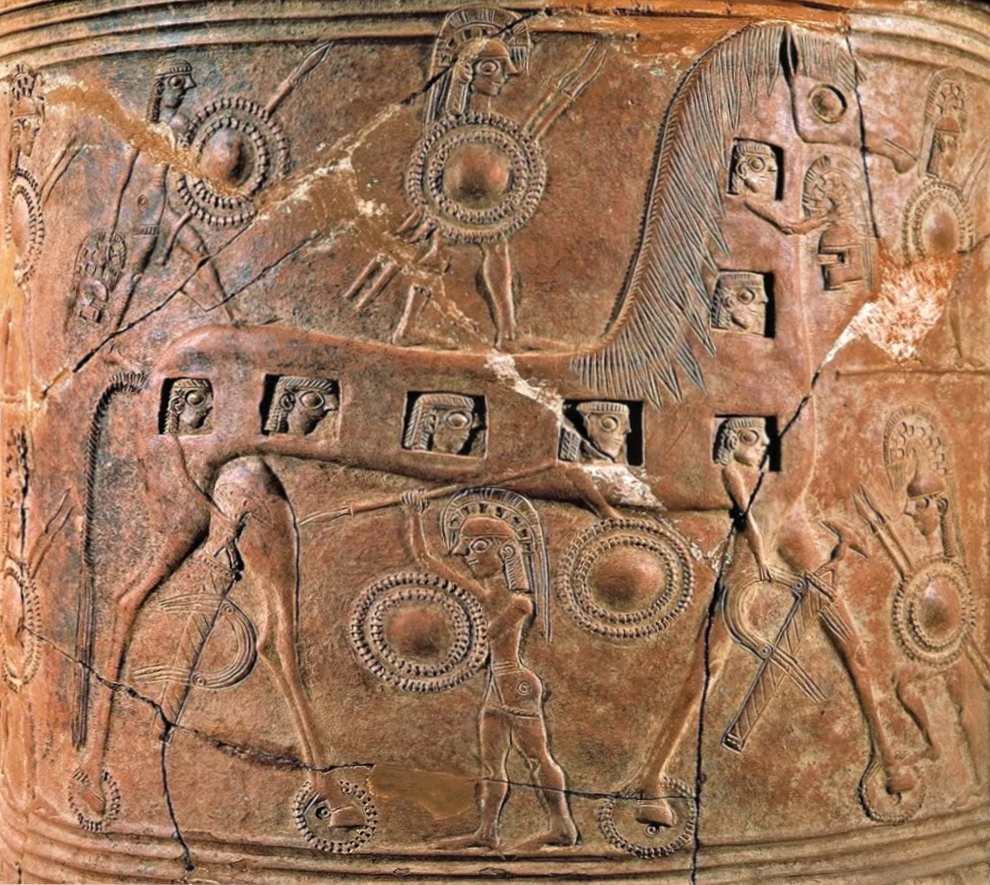
Detail of the neck of a relief pithos showing the Trojan horse. Archaeological Museum of Mykonos, Inv. 2240
Black-figure Caeretan hydria showing Europa riding the bull. Attributed to the Eagle Painter. Excavated from Cerveteri. Museo Nazionale Etrusco di Villa Giulia 50643.