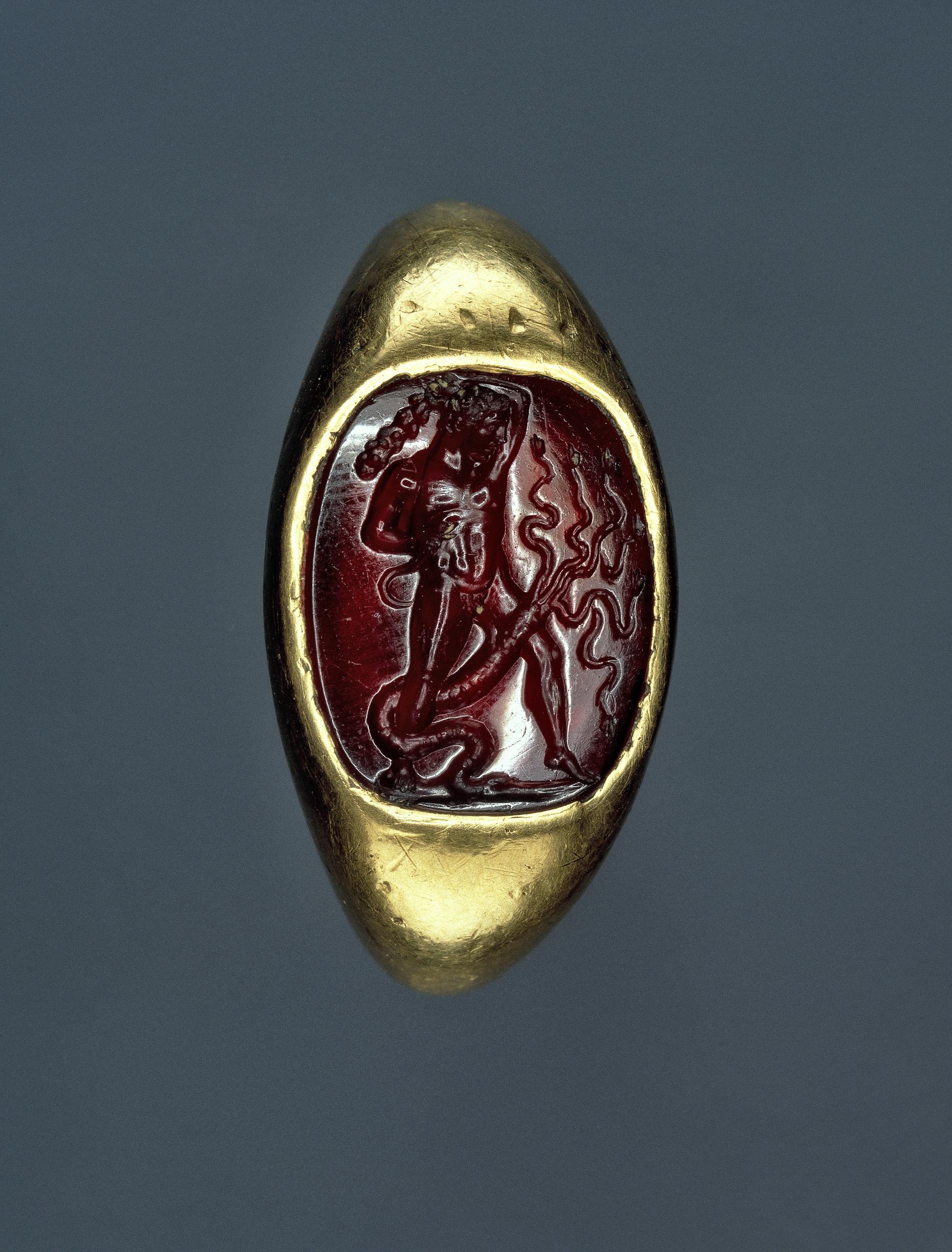
Intaglio of Heracles fighting the Hydra

    Fourth century BCE Greek garnet intaglio set in a second century CE Roman gold ring. Found in Agrigento, Sicily. British Museum 1814,0704.1292.

    Subjects
    Type
    Image
    License
    Creative Commons Attribution-NonCommercial-ShareAlike
    Agent
    Date
    ca. 4th century BCE
    Culture
    Medium
    Dimensions
    h. 3.25 cm; l. 1.30 cm
    Location
    British Museum

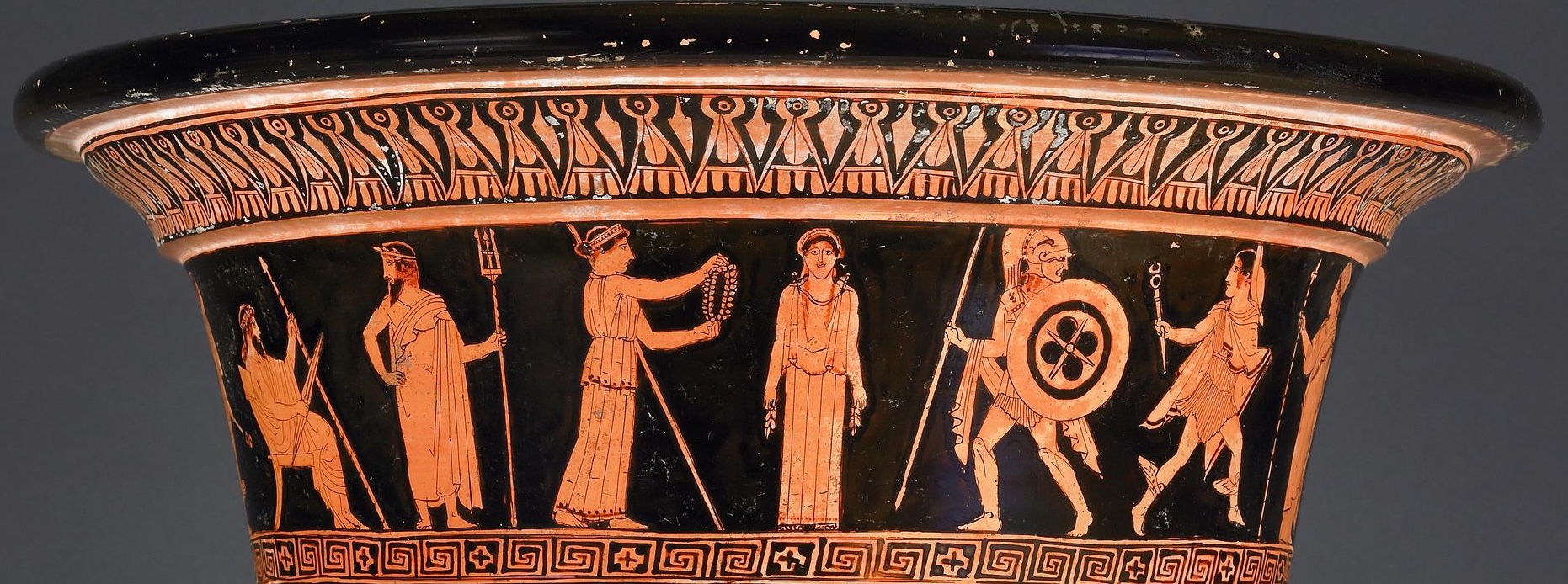
    Creation of Pandora, Red-Figure Calyx Krater

      Detail of the top band of decoration on an Attic red-figure calyx krater (a large two-handled type of vase used for mixing wine and water), showing the creation of Pandora. From left to right are: Zeus (seated, bearded, holding thunderbolt in his right hand, scepter in his right), Poseidon (standing, bearded, trident in left hand, right hand on hip), Athena, Pandora, Ares, Hermes (walking right, looking back at Ares, caduceus in his right hand, wearing winged boots and traveler's hat), and Hera (standing, facing left, scepter in right hand).

      Type
      Image
      License
      Creative Commons Attribution-NonCommercial-ShareAlike
      Date
      ca. 460–450 BCE
      Culture
      Medium
      Dimensions
      h. 49 cm; diameter 50 cm
      Location
      British Museum

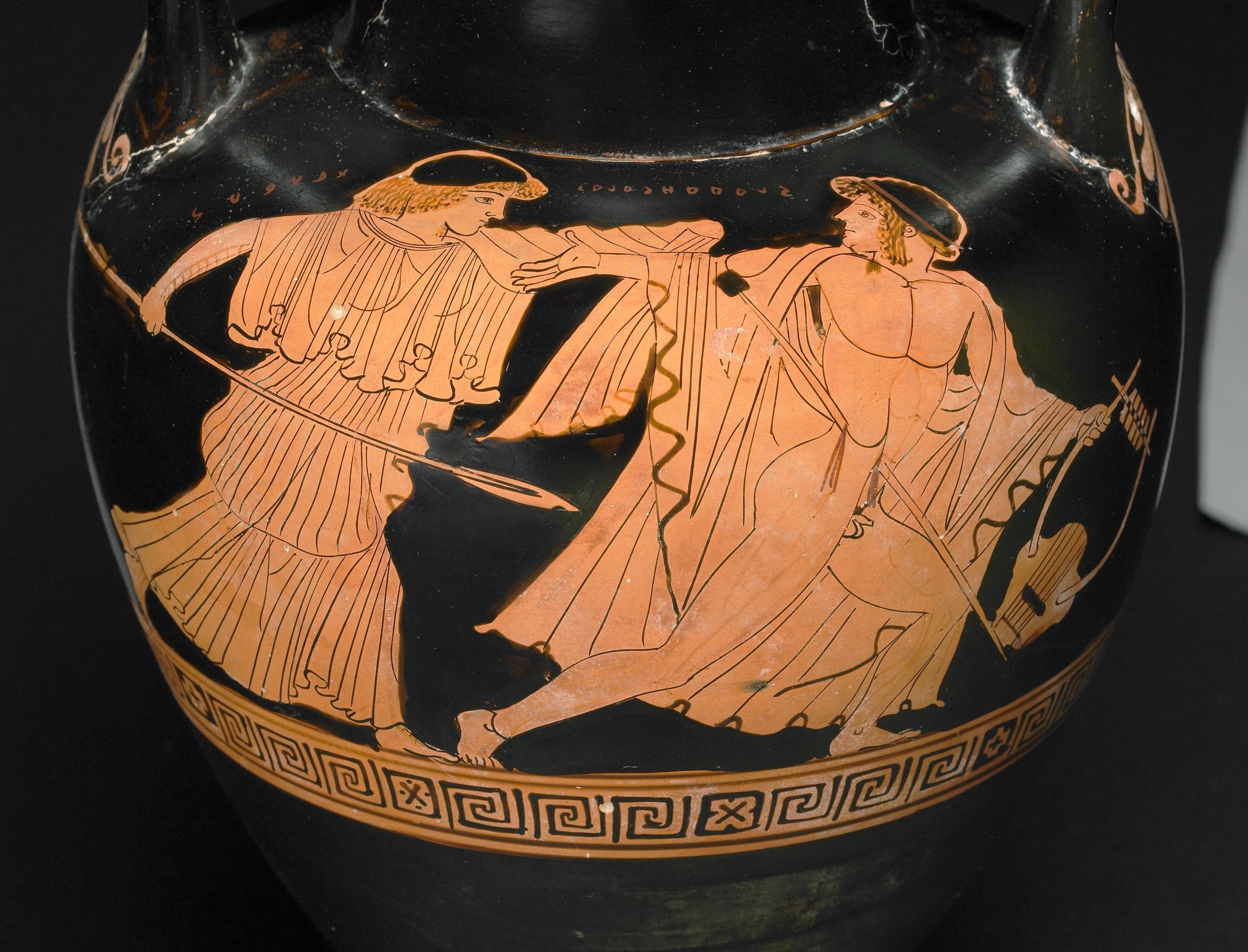
      Death of Orpheus, Red-Figure Neck Amphora

        Attic red-figure neck amphora depicting the killing of Orpheus by a Maenad/Thracian woman. Discovered in Capua, Italy.

        License
        Creative Commons Attribution-NonCommercial-ShareAlike
        Date
        ca. 470 BCE
        Culture
        Medium
        Dimensions
        h. 33.02 cm; diameter 19 cm
        Inscription
        Two inscriptions, one each above the Maenad and Orpheus, but both are nonsense.
        Location
        British Museum

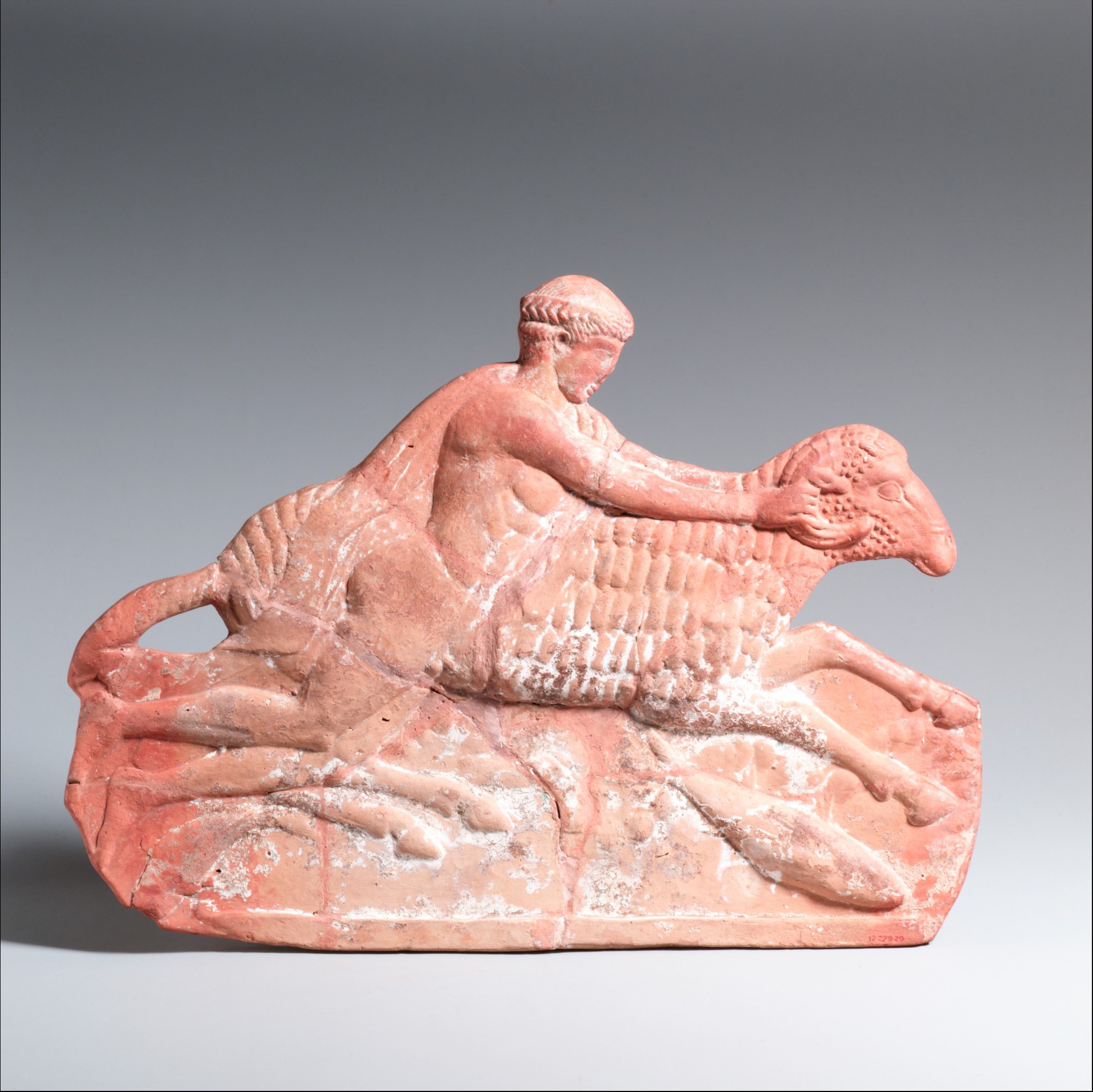
        Phrixus and the ram, terracotta plaque

          A terracotta plaque depicting Phrixus being carried over the Hellespont by the ram with the golden fleece. Perhaps Melian in origin.

          Type
          Image
          License
          Creative Commons Attribution-ShareAlike
          Agent
          Date
          ca. 450 BCE
          Culture
          Medium
          Dimensions
          7 1/8 × 9 11/16 in. (18.1 × 24.6 cm)
          Location
          Metropolitan Museum of Art, New York

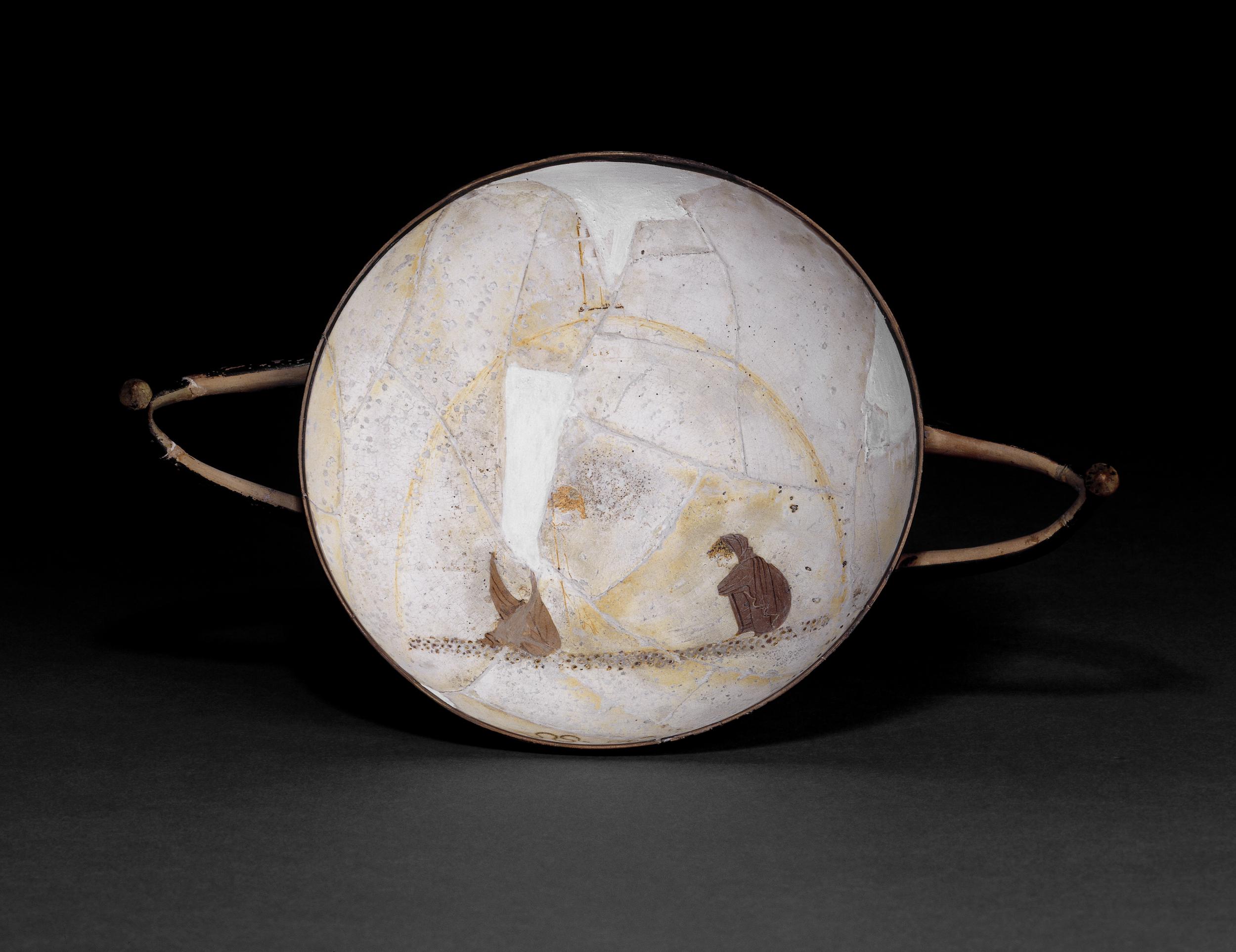
          Glaucus and Polyidos, white-ground kylix

            Glaucos and Polyidos inside a tumulus. Polyidos' name is inscribed to the left of him and Glaucus' above him. The conical dome of the tumulus is depicted by a yellow line. The tripod on top is only partially preserved. Reconstructed Attic white-ground kylix (drinking vessel).

            Type
            Image
            License
            Creative Commons Attribution-NonCommercial-ShareAlike
            Date
            ca. 460–450 BCE
            Culture
            Medium
            Dimensions
            h. 7.60, diameter 13.30
            Location
            British Museum

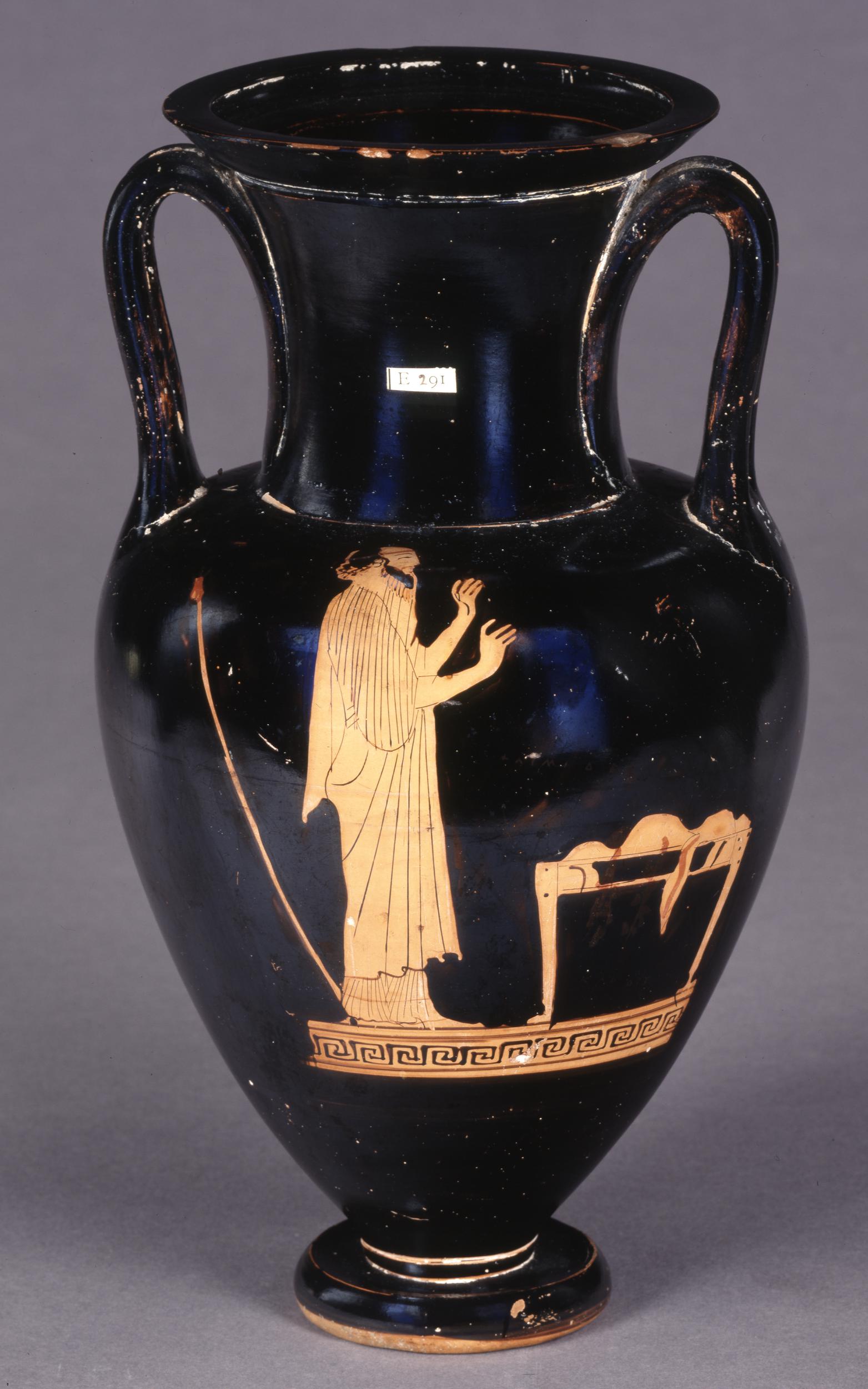
            Phineus red-figure amphora

              Phineus offering to the gods. The word "Theoi" is inscribed in front of his mouth. Attic red-figure neck amphora, found in Nola, Italy. Attributed to the Painter of the Yale Lekythos. British Museum 1867,0508.1113.

              Subjects
              Type
              Image
              License
              Creative Commons Attribution-NonCommercial-ShareAlike
              Date
              ca. 470–450 BCE
              Culture
              Medium
              Dimensions
              h. 34.29 cm
              Inscription
              ΘΕΟΙ (or perhaps Θεώ)
              Location
              British Museum

              The Meidias Hydria

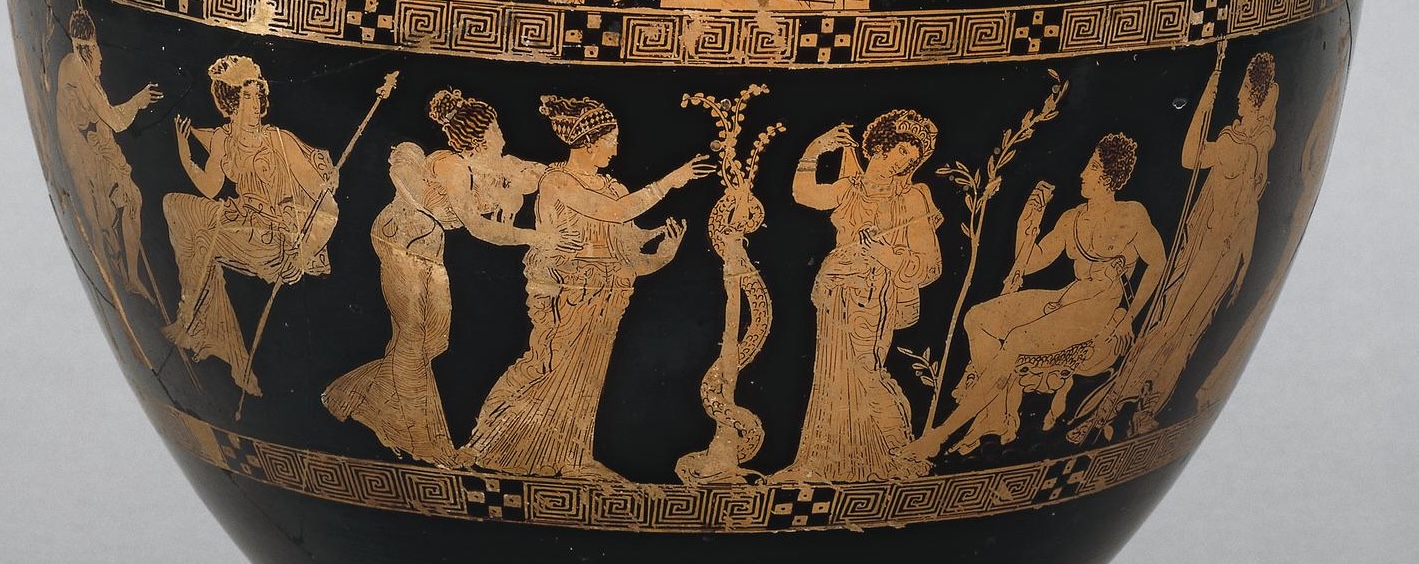
                Detail of the lower register of an Attic red-figure hydria. At far left Hygieia sits on a small hill or rock. At center, is the apple tree, a snake wrapped around it. Chrysothemis and Asterope stand to the left of the tree, Lipara to the right. Heracles sits on his lion skin to the right of Lipara; Iolaos stands behind him at far right. All the figures are identified by  Attributed to the Meidias Painter.

                Type
                Image
                License
                Creative Commons Attribution-NonCommercial-ShareAlike
                Date
                ca. 420–400 BCE
                Culture
                Medium
                Dimensions
                h. 52 cm, w. 47.30 cm
                Inscription
                Mεδιας έποίησεν (Medias made it)
                Location
                British Museum

                Satyr as Heracles in the Garden of the Hesperides

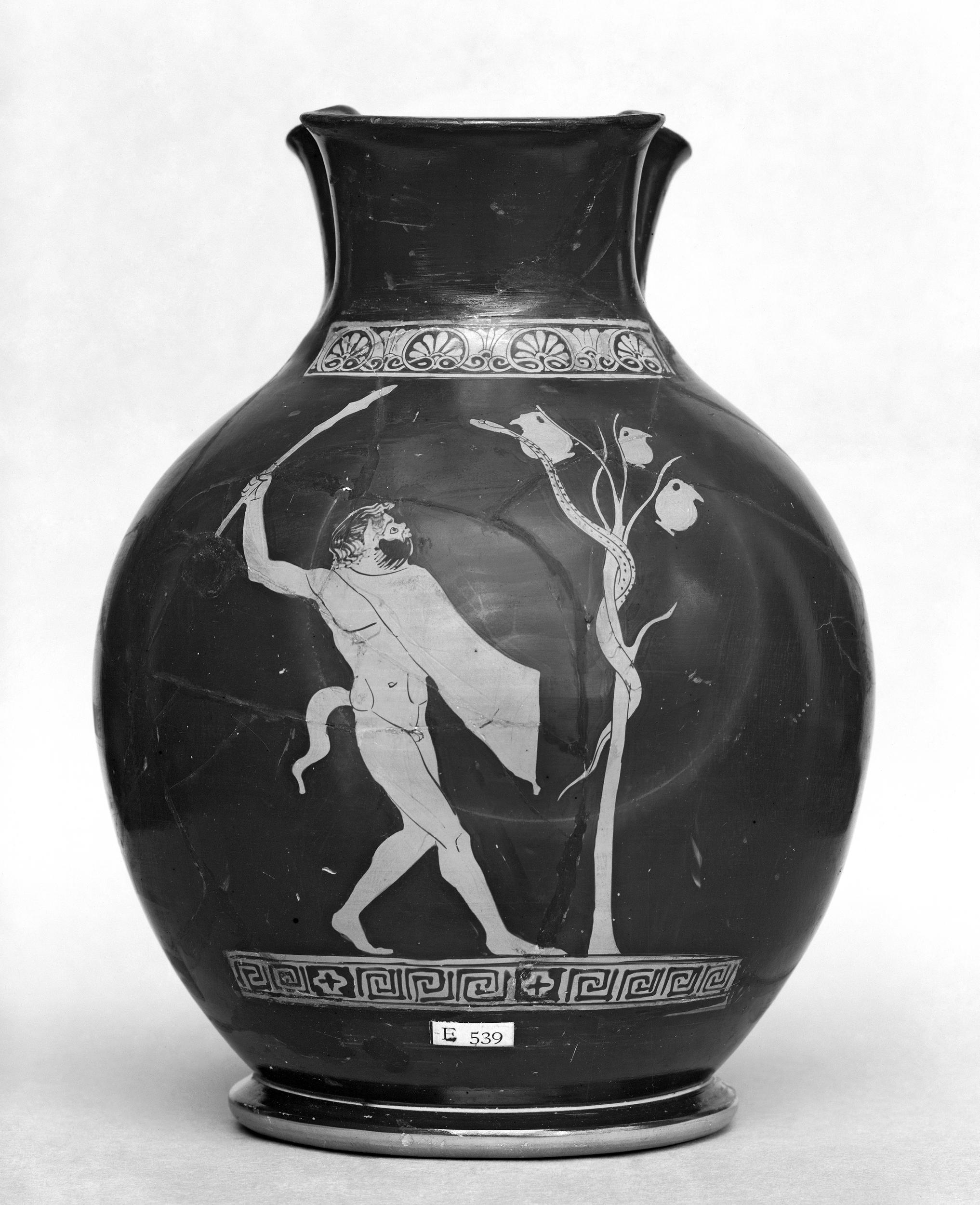
                  Attic red-figure chous (wine-jug) depicting a satyr as Heracles retrieving the apples of the Hesperides. Instead of apples, the tree has sprouted wine jugs. Found in Capua. Attributed to the Group of Berlin 2415.

                  Subjects
                  Type
                  Image
                  License
                  Creative Commons Attribution-NonCommercial-ShareAlike
                  Date
                  ca. 460 BCE
                  Culture
                  Medium
                  Dimensions
                  h. 24.13 centimetres
                  Location
                  British Museum