Pliny the Younger and his Mother at Misenum, 79 A.D., 1785

    As Mount Vesuvius erupts in the distance, the young Pliny continues his studies at his family’s villa—despite being urged to flee. Meanwhile, his uncle, Pliny the Elder, is sailing toward Vesuvius and will die trying to rescue a friend. Pliny’s letters comprise one of the great records of the catastrophe that destroyed Pompeii and Herculaneum. In one, he tells of being able to "hear the wails of women, the cries of children, the shouts of men . . . others were reaching to the gods . . . others declared the gods no more." This is one of three large-scale history paintings Kauffmann produced in Italy in 1785 for a Mr. Bowles, an English patron. As was noted when the work was first exhibited at London’s Royal Academy in 1786, Pliny has two left feet. The reason for this may be that Kauffmann, then among the most popular artists in Rome, evidently relied on her less-talented husband, Antonio Zucchi, to complete many of her commissions. (Princeton University Art Museum)
    Associated Passages
    Subjects
    Type
    Image
    License
    Creative Commons Attribution-ShareAlike
    Date
    1785
    Medium
    Dimensions
    103 × 127.5 cm (40 9/16 × 50 3/16 in.) frame: 116 × 140.5 × 6.7 cm (45 11/16 × 55 5/16 × 2 5/8 in.)
    Location
    Princeton University Art Museum
    Image Credit

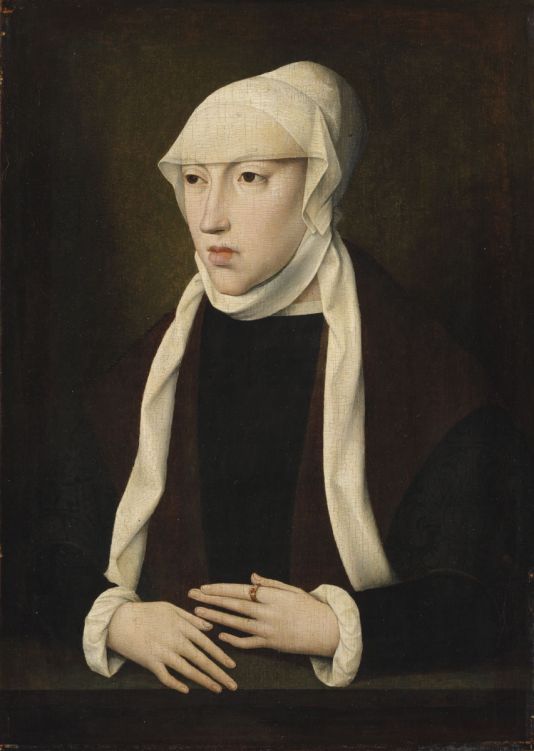
    Portrait of Maria of Hungary as widow

      oil on oak panel

      Master of the Legend of the Magdalene

      ca. 1528

      Museum of Fine Arts, Budapest 54.1941


      Associated Passages
      Subjects
      Type
      Image
      License
      Creative Commons Attribution
      Date
      ca. 1528
      Dimensions
      height: 33.4 cm (13.1 in) Edit this at Wikidata; width: 24 cm (9.4 in)
      Location
      Museum of Fine Arts, Budapest 54.1941
      Image Credit

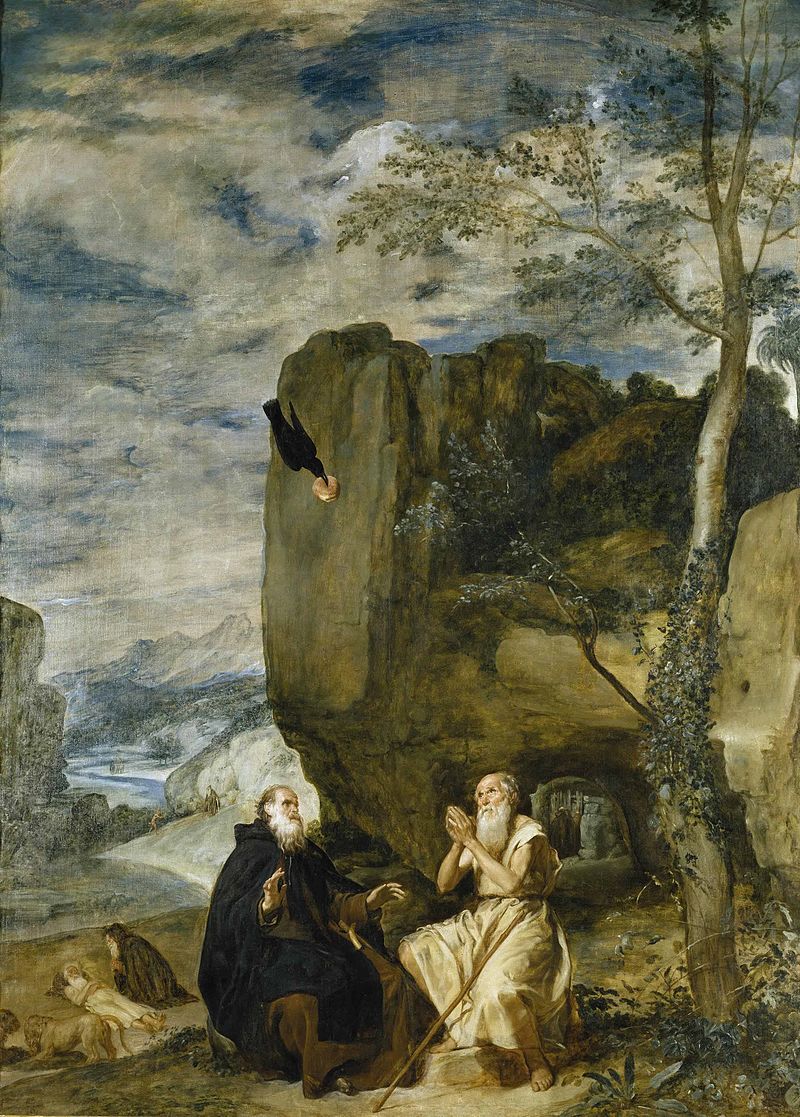
      Velasquez: Saint Anthony the Great and Saint Paul the Anchorite

        The raven brings bread to St. Paul the Hermit and St. Antony

        Painting by Diego Velázquez (c. 1634) showing the raven bring bread.

        Jerome, Life of Paul the Hermit (10): "While talking they noticed with amazement a raven, which had settled onto a branch of a tree, and was now flying down until it laid a loaf of bread in front of them. They were amazed, but after it left Paul said, 'Behold, The loving and merciful Lord has sent us a meal. For the last sixty years I have always received half a loaf, but because you are here Christ has sent double rations.'"

        Comments

        From The Prado Museum website:

        The subject is drawn from the narration in Jacobo de la Voragine`s 13th-century Golden Legend of Saint Anthony the Abbot`s voyage to the Egyptian desert to visit Saint Paul, the first Christian hermit (4th century). Saint Anthony, whom Velázquez presents dressed in the black-hooded, brown habit of the Hospitallers of Saint Anthony, appears five times in the painting. In the background, he asks his way from a centaur and also converses with a satyr. In a hollow among boulders that recall Patinir`s huge, rocky Landscape with Saint Jerome (already in the Royal Collection at that time, and now at the Museo del Prado), he is depicted knocking on the holy Anchorite`s door. In the foreground, he converses with Saint Paul and is surprised by the raven that brings Paul his daily bread. The final episode is shown at the left: after hearing that Paul has died, he discovers two lions digging the hermit`s tomb.

        Velázquez based his depiction of the two saints` meeting on Dürer`s engraving of the same subject, although he must also have known Sánchez Coello`s painting for one of the two altars at the basilica of El Escorial. In his consideration of possible visual sources for this work, Diego Angulo (1946) observed that the breadth of the setting and the valley`s pale blue lighting recall the landscape of northern Madrid and were Velázquez`s own contribution. More recently (Brown), parallels have been drawn with frescoes of Roman landscapes by Pietro da Cortona at the Villa Sacchetti in Castelfusano, which Velázquez may have seen in 1630-1631. The application of a very thin coat of paint over a light-colored base generates notably luminous and translucent effects. Various pentimenti are clearly visible, for example, in the figure of Saint Paul and in Saint Anthony`s crosier. The top of this work originally ended in a semicircular arch (the two upper corners were added and painted when the canvas was lined, possibly in the 19th century), indicating that it was conceived for an altar. It was probably commissioned for the hermitage of San Pablo -one of several constructed in the gardens of Madrid`s buen Retiro Palace- whose altarpiece, now lost, was completed in May 1633 and included a sculpture of Saint Paul the Hermit by Italian artist Giovanni Antonio Ceroni. First documented in the hermitage of San Antonio de los Portugueses in 1701, this painting may have been moved there when the hermitage of San Pablo was renovated and redecorated between 1659 and 1661.

        Type
        Image
        License
        Creative Commons Attribution-NonCommercial-ShareAlike
        Date
        1634
        Medium
        Location
        Madrid, Prado Museum
        Image Credit

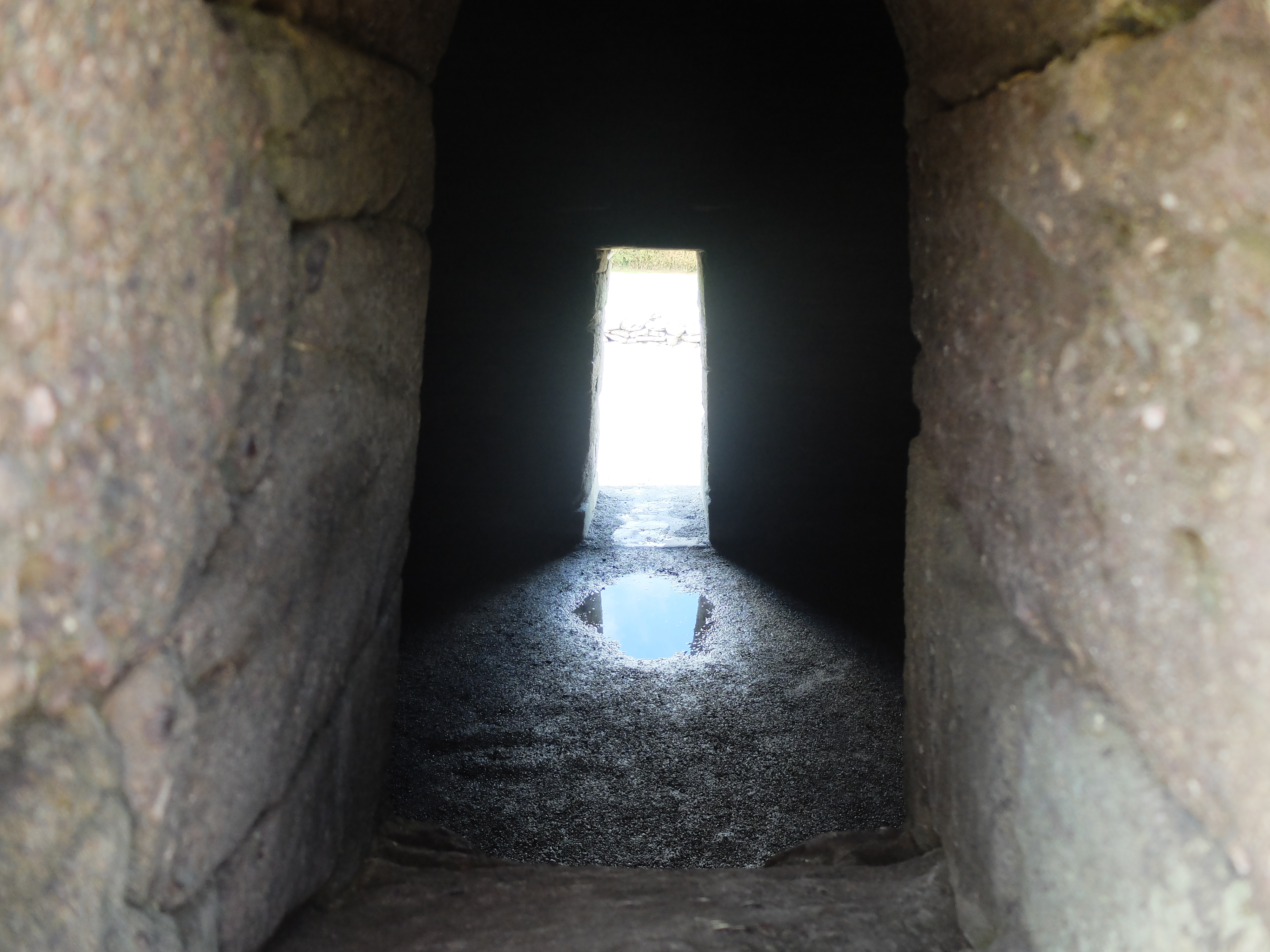
        The Gallarus Oratory, interior

          A view of the interior, taken from outside the one small window facing the door.

          Navigatio Brendani 2.1:

          conclūsit sē in ūnō ōrātōriō 

          The oratory at Brendan's monastery in Clonfert was probably as simple as the famous Gallarus Oratory, on the Dingle Penninsula, though early churches were not all made from stone.  The date and purpose of the Gallarus Oratory have been disputed, but Tomaás Ó Carragáin, Churches in Early Medieval Ireland: Architecture (2010) considers it one of a number of drystone churches built sometime between 700 and 1100.

          Associated Passages
          Type
          Image
          License
          Creative Commons Attribution-ShareAlike
          Image Credit

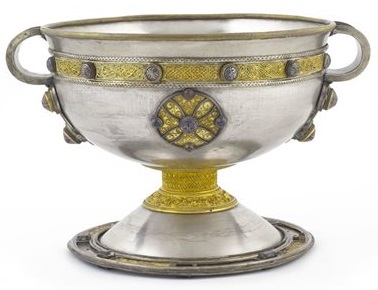
          The Ardagh Chalice

            This chalice, dating to c. 750 CE, is considered one of the most impressive examples of medieval Irish metalwork; it is made from silver, copper and bronze, with decorations in gold and enamel. It was found in 1868 in an Irish ringfort in Reerasta, near Ardagh, Co. Limerick.

            Associated Passages
            Type
            Image
            License
            Creative Commons Attribution-ShareAlike
            Location
            National Museum of Ireland
            Image Credit

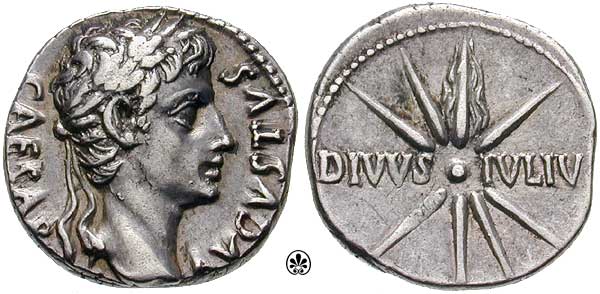
            Augustan Denarius showing Caesar's comet

              Augustus. 27 BC-14 AD. AR Denarius (3.88 gm). Struck circa 19-18 BC. Caesaraugusta mint. CAESAR AVGVSTVS, laureate head right / DIVVS IVLIV[S], comet of eight rays with tail upward. RIC I 37a; BMCRE 323; RSC 98.

              Associated Passages
              Type
              Image
              License
              Creative Commons Attribution
              Date
              19-18 BC
              Culture
              Inscription
              CAESAR AVGVSTVS, laureate head right / DIVVS IVLIV[S], comet of eight rays with tail upward
              Image Credit