Perseus and the Graia Etruscan Bronze Mirror
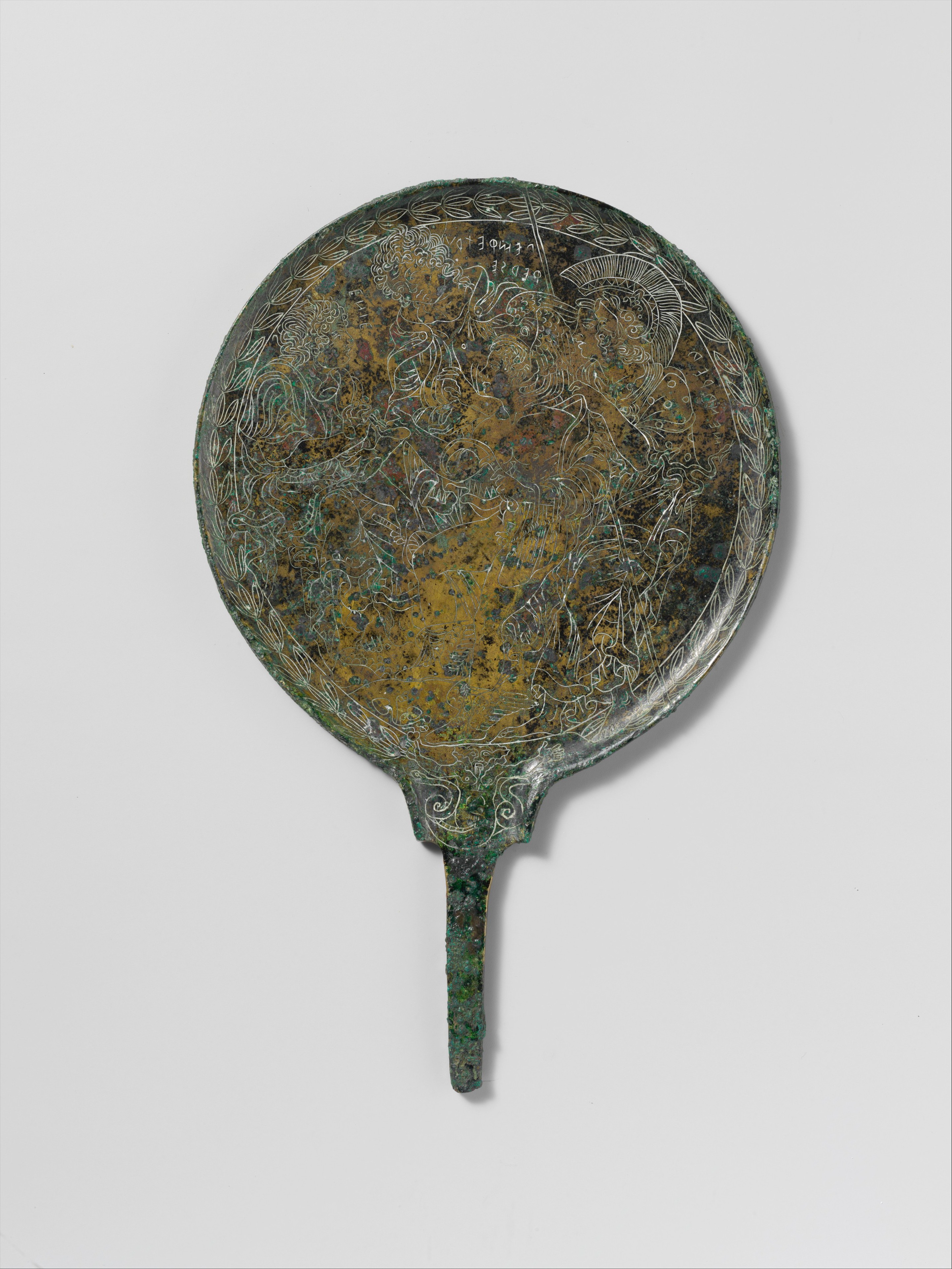
    Etruscan bronze mirror featuring Perseus and the Graiai. Only Enyo and Pemphredo are depicted, perhaps following the tradition in Hesiod's Theogony. The Etruscan names of Perseus, Minerva, Enyo, and Pemphredo are inscribed around them in retrograde. Metropolitan Museum of Art 26.60.63.

    Type
    Image
    License
    Creative Commons Attribution
    Date
    ca. 400–350 BCE
    Culture
    Medium
    Dimensions
    l. 9 11/16 in. (24.6 cm.); diameter 6 3/16 in. (15.7 cm.)
    Inscription
    Pherse (Perseus), Menarea (Minerva), Enie (Enyo), Pemphetru (Pemphredo)
    Location
    Metropolitan Museum of Art, New York

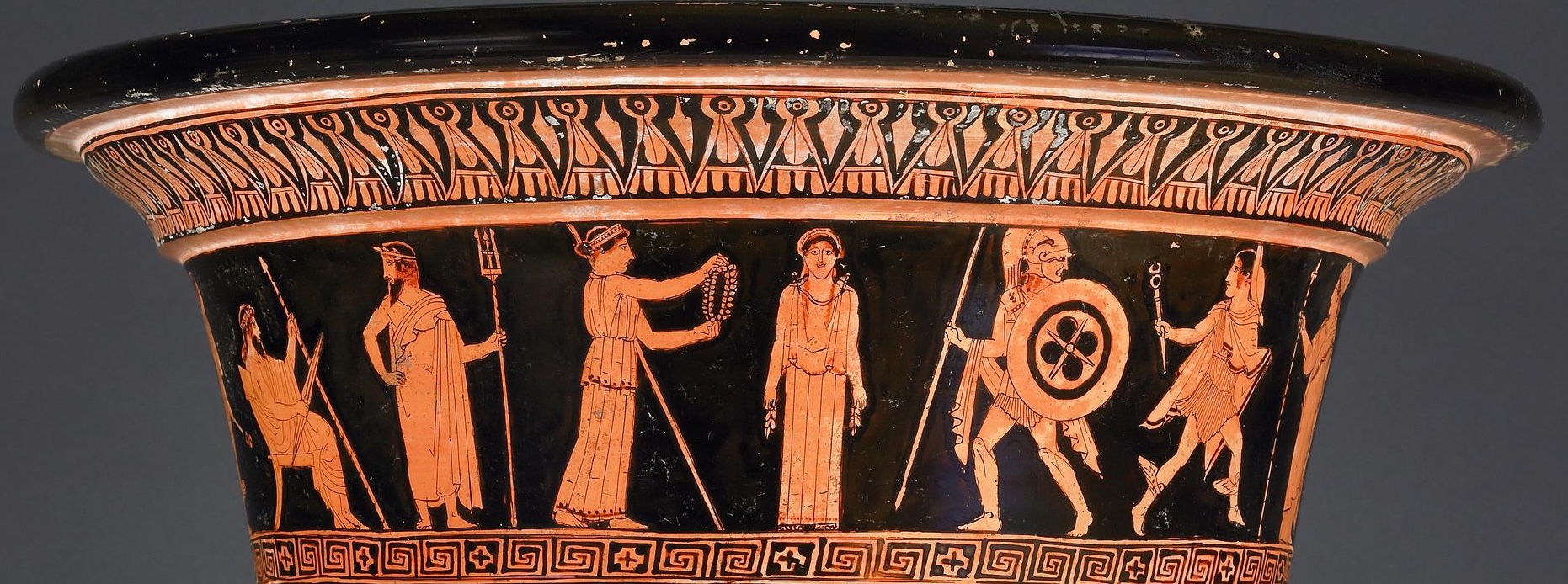
    Creation of Pandora, Red-Figure Calyx Krater

      Detail of the top band of decoration on an Attic red-figure calyx krater (a large two-handled type of vase used for mixing wine and water), showing the creation of Pandora. From left to right are: Zeus (seated, bearded, holding thunderbolt in his right hand, scepter in his right), Poseidon (standing, bearded, trident in left hand, right hand on hip), Athena, Pandora, Ares, Hermes (walking right, looking back at Ares, caduceus in his right hand, wearing winged boots and traveler's hat), and Hera (standing, facing left, scepter in right hand).

      Type
      Image
      License
      Creative Commons Attribution-NonCommercial-ShareAlike
      Date
      ca. 460–450 BCE
      Culture
      Medium
      Dimensions
      h. 49 cm; diameter 50 cm
      Location
      British Museum

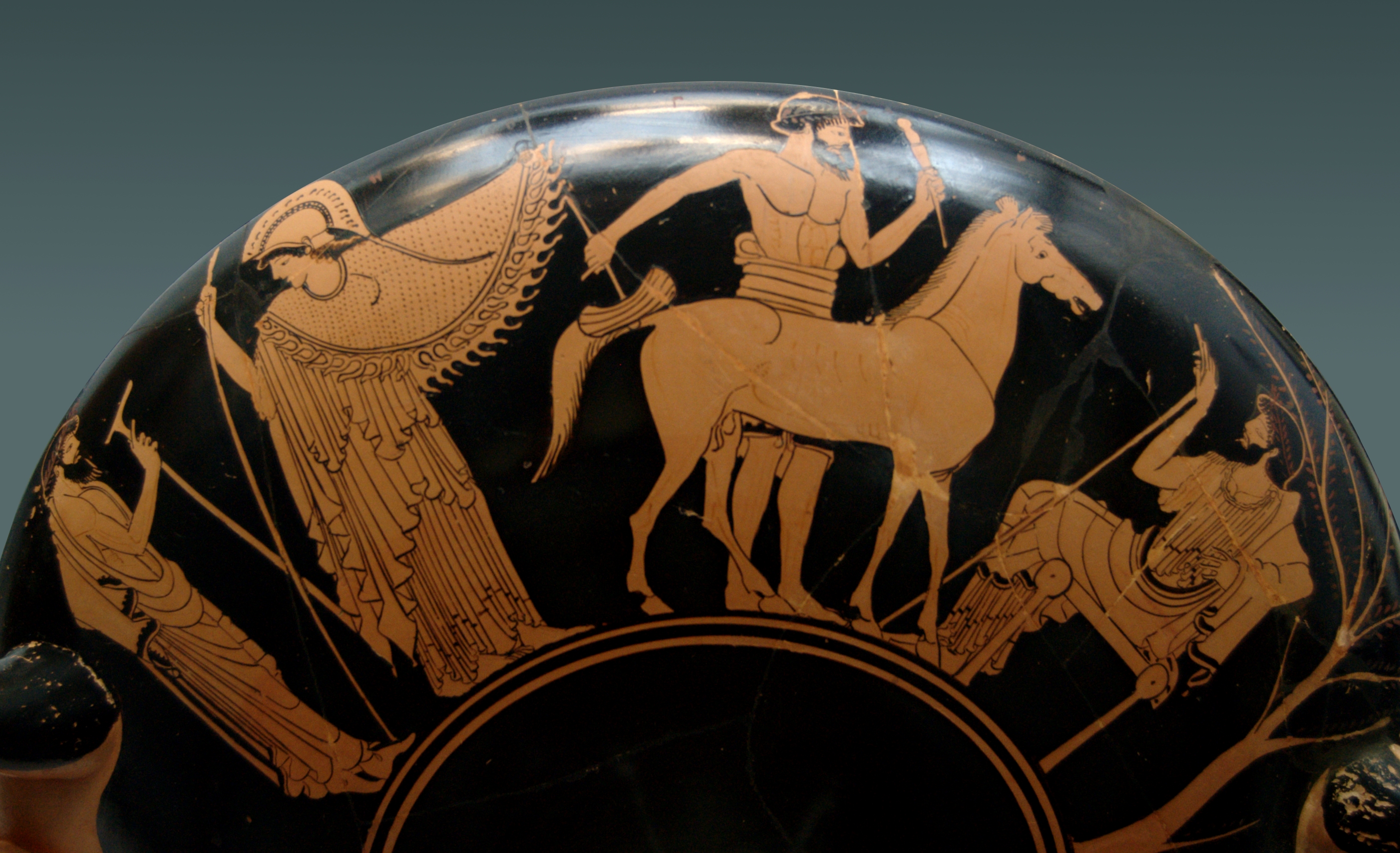
      Athena in a Workshop, red-figure kylix

        Detail of the exterior of an Attic red-figure kylix (cup). Athena visits a craftsman sculpting a horse. The craftsman might be Epeios building a model of the Trojan horse. Made by Euphronios; painted by the Foundry Painter. Excavated from Vulci. Staatliche Antikensammlungen 2650.

        Type
        Image
        License
        Creative Commons Attribution
        Date
        ca. 480 BCE
        Culture
        Medium
        Dimensions
        h. 12 cm (4.7 in), diameter: 44 cm (17.3 in)
        Location
        Staatliche Antikensammlungen, München

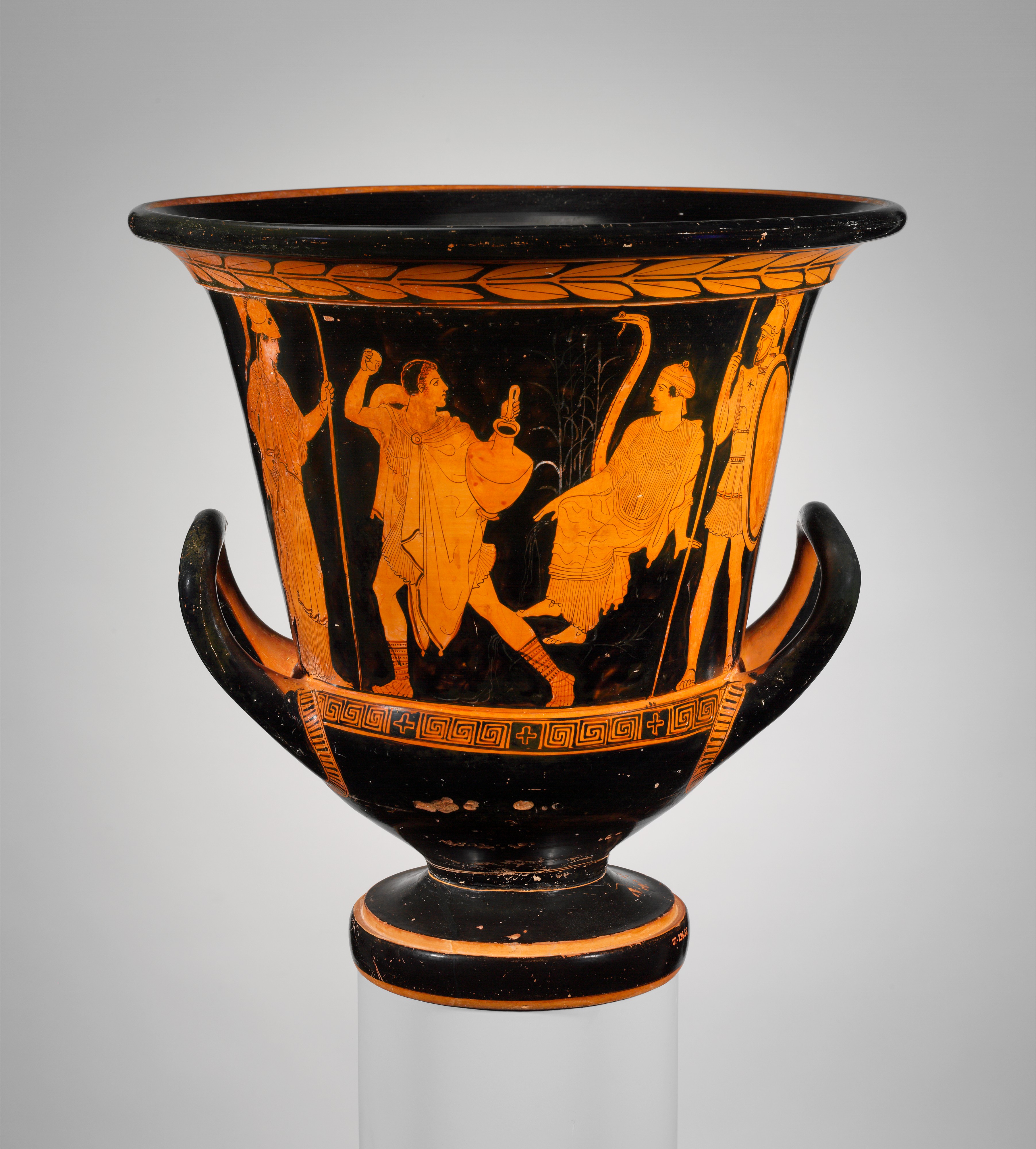
        Cadmus fetching water

          Attic red-figure calyx krater depicting Cadmus fetching water from a spring guarded by a snake, the son of Ares. The seated woman may represent the nymph associated with the spring. Background vegetation and the rock upon which she is seated are rendered by faintly visible incised lines.

          Subjects
          Type
          Image
          License
          Creative Commons Attribution
          Date
          ca. 450 BCE
          Culture
          Medium
          Dimensions
          H. 18 in. (45.7 cm), diameter of mouth 17 5/8 in. (44.7 cm)
          Inscription
          Inscribed: "Eualkos is fair" and "Alones [misspelled] is fair"
          Location
          Metropolitan Museum of Art