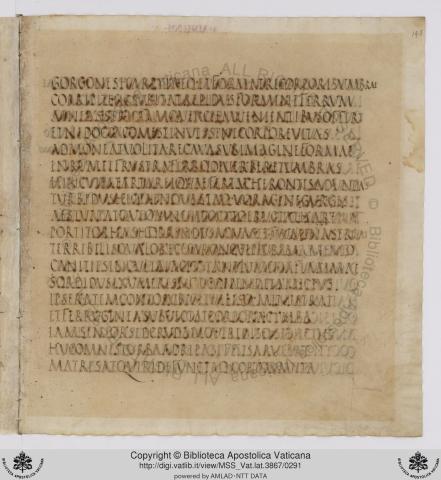
Hinc via Tartareī quae fert Acherontis ad undās.295
Turbidus hīc caenō vāstāque vorāgine gurges
aestuat atque omnem Cōcӯtō ērūctat harēnam.
Portitor hās horrendus aquās et flūmina servat
terribilī squālōre Charōn, cui plūrima mentō
cānitiēs inculta iacet, stant lūmina flammā,300
sordidus ex umerīs nōdō dēpendet amictus.
Ipse ratem contō subigit vēlīsque ministrat
et ferrūgineā subvectat corpora cumbā,
iam senior, sed crūda deō viridisque senectūs.
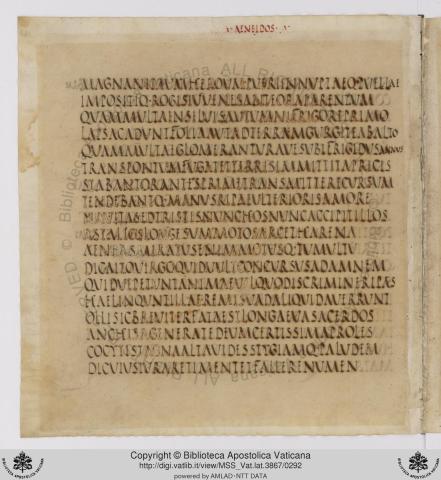
Hūc omnis turba ad rīpās effūsa ruēbat,305
mātrēs atque virī dēfūnctaque corpora vītā
magnanimum hērōum, puerī innūptaeque puellae,
impositīque rogīs iuvenēs ante ōra parentum:
quam multa in silvīs autumnī frīgore prīmō
lāpsa cadunt folia, aut ad terram gurgite ab altō310
quam multae glomerantur avēs, ubi frīgidus annus
trāns pontum fugat et terrīs immittit aprīcīs.
Stābant ōrantēs prīmī trānsmittere cursum
tendēbantque manūs rīpae ulteriōris amōre.
nāvita sed trīstis nunc hōs nunc accipit illōs,315
ast aliōs longē summōtōs arcet harēnā.
Aenēās mīrātus enim mōtusque tumultū
'Dīc,' ait, 'ō virgō, quid vult concursus ad amnem?
quidve petunt animae? vel quō discrīmine rīpās
hae linquunt, illae rēmīs vada līvida verrunt?'320
Ollī sīc breviter fāta est longaeva sacerdōs:
'Anchīsā generāte, deum certissima prōlēs,
Cōcӯtī stāgna alta vidēs Stygiamque palūdem,
dī cuius iūrāre timent et fallere nūmen.
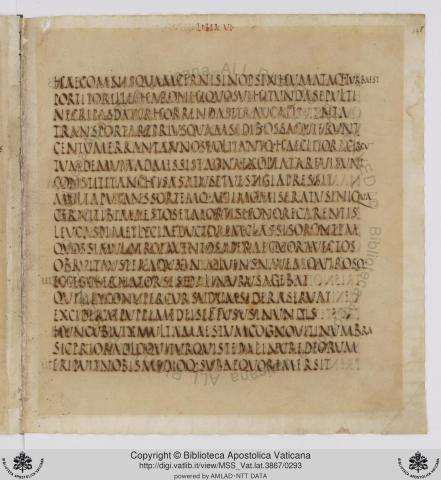
Haec omnis, quam cernis, inops inhumātaque turba est;325
portitor ille Charōn; hī, quōs vehit unda, sepultī.
nec rīpās datur horrendās et rauca fluenta
trānsportāre prius quam sēdibus ossa quiērunt.
Centum errant annōs volitantque haec lītora circum;
tum dēmum admissī stāgna exoptāta revīsunt.'330
Cōnstitit Anchīsā satus et vēstīgia pressit
multa putāns sortemque animō miserātus inīquam.
Cernit ibī maestōs et mortis honōre carentēs
Leucaspim et Lyciae ductōrem classis Orontēn,
quōs simul ā Trōiā ventōsa per aequora vectōs335
obruit Auster, aquā involvēns nāvemque virōsque.
notes
Manuscripts: M 295-320, 321-336 | P 295-301, 302-324, 325-336 | R 295-306, 307-324, 325-336
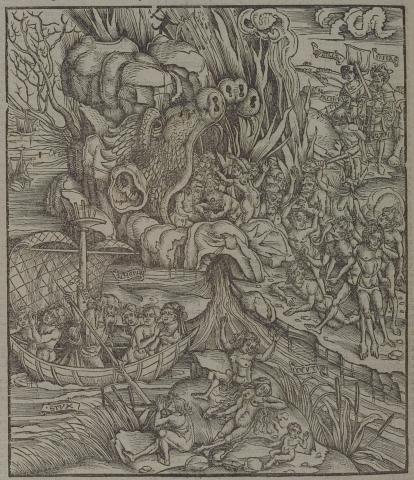
Aeneas and the Sibyl approach the ferry over the Styx and the Sibyl explains that the throng of ghosts eager but unable to cross are the unburied, who must therefore wander a hundred years upon its banks (Page). Aeneas grieves over the fate of the unburied, recognizing among them his comrades lost in the wreck between Sicily and Africa (Conington).
"How do you get to the underworld? In particular, how do you get there while you’re still alive?..."
- read full essay by Meghan Reedy
-
[click here to open in new tab]
How do you get to the underworld? In particular, how do you get there while you’re still alive?
The answer unfolds in careful, effective increments over the course of these lines, Aeneid 6.295–416.
In the lines just prior to these, Aeneas and the Sibyl, after completing the appropriate rituals, walked and walked through the dark in the woods until they reached an enormous elm tree—a truly enormous elm tree, surrounded by fantastical woodland beings (268–94).
From here, the way to the underworld begins simply: there is a path to the waters of Acheron, the river of Tartarus, hinc via Tartarei quae fert Acherontis ad undas (295). However, our attention is not drawn to it, since there is no description of this path.
Instead, in the very next line, it is as though the path has already been followed: in 296–97 we are given a description of what the shore is like, here where the river Acheron spills into the Cocytus. It sounds a frightening, dramatic place, where these two rivers meet. The Acheron is a wild, eddying whirl of water that boils out of a huge, muddy chasm and spews huge amounts of sand all into the Cocytus: turbidus hic caeno vastaque voragine gurges aestuat atque omnem Cocyto eructat harenam. This brief description is on the one hand simple scene setting, laying out key markers of the place where the next stage of Aeneas’ and the Sibyl’s journey will happen—the sand on the shore, for example, will be mentioned again (316). On the other hand, this place is extraordinarily dynamic: the water continually belching out of that chasm and the sand continually spreading and muddying the water it spews into. Even more than the fact of the sand or the fact of the rivers meeting, this inexorable motion establishes what this dreadful place feels like.
Now, though, starting in 298, we get to what really matters—which is the people (is that the right word?) who are here, or come through here. A full seven lines describe the one person who works here, the portitor Charon. He is as awful as the shore! He and the water are put very close together: portitor has horrendus aquas … servat (298). After the description of the place just above, the adjective horrendus seems apt for the water as easily as for the ferry-man—and indeed it is applied a little later to the banks themselves, ripas horrendas (327). There are details about the ferryman, so that we can picture Charon with some precision. What’s horrible is his frightful squalor: horrendus … terribili squalore (298–99), a squalor that shortly turns out to be as dynamic and vigorous as the horrible, mud-spewing shore. He has unruly white hairs growing from his chin (plurima mento canities inculta iacet, 299–300), his clothes are filthy and tied where they should be buckled (sordidus ex umeris nodo dependet amictu, 301), and he’s old (iam senior, 304)—but not in a human way. His eyes have a fire in them, stant lumina flamma (299), and he’s old in the harsh, fresh, spring-vigorous way the gods get old (cruda deo viridisque senectus, 304).
The huge crowd, whom we see next, are like the water of Acheron in 296–97; they are in constant, fluid motion: omnis turba ad ripas effusa ruebat (305). They are ‘poured out’ along the whole shore, effusa; they are rushing down, like water, ruebat.
What is eerie, however, and what Vergil shows us in three different ways, is that this turba is made up of distinct individuals … there are just so many. The first way this fact is shown is through a list of the sorts of people (is that the right word?) who make up the crowd. The list moves from adults towards increasingly young children, but it excludes the very old, starting rather with ‘wives and husbands,’ matres atque viri (306). The list ends with ‘children put onto the pyre before the parents’ eyes,’ impositique rogis iuvenes ante ora parentum (307). The people listed here are all distinguished by their roles among other people, their family roles. The people in the list, in short, are people we can sympathize with.
The anomaly in the list are the heroes in 306–7. They too are implicitly linked with their community, distinguished not by their family role but by their great-heartedness (magnanimum heroum, 307)—but the phrasing highlights not their anima but their lifeless bodies: defuncta corpora vita (306). Through the description of the heroes, we are tipped off that everyone in the list is dead.
Two similes follow—two further means of showing us what the dead on the shore of the Styx are like. First, they are like leaves in the fall (quam multa … lapsa folia, 309–10). Dead, as dead leaves fall, and so many at once … but harmless, light, dry. Second, they are like birds coming in a flock off the cold ocean, arriving on a sunny shore (quam … aves ubi … terris immittit apricis, 311–12). They are so many, but they are active, moving with a purpose, aiming at the warmth of the other shore.
In the four quick lines that follow we glimpse how Charon and this huge, rushing, fluttery crowd interact: they are constantly asking to go across to the other shore (orantes transmittere cursum, 313–14), and he accepts some, but others he sends back far from the shore (315–16).
Until this point, we have been watching directly, so to speak; Vergil has been describing the place, the people, and their interactions. However, starting in 317, we are invited to see this place and its people through the eyes of people who are there: Aeneas’ (317–20, 331–36) and the Sibyl’s (321–30).
First, Aeneas is dazzled, miratus (317), and he doesn’t understand what is happening. In 318–20, he asks why Charon is taking some but not others––and in so doing he focuses our attention on this business of choosing. The Sibyl gives him a very full answer (321–30), explaining what this place is called, who it is that makes up the crowd, and what Charon is doing—he’s taking the buried across (sepulti, 326); the unburied have to wait on the shore for a hundred years, (centum errant annos, 329)—but when she is finished Aeneas’ attention returns to the business of choosing. He really thinks it over: constitit … multa putans (331–32), and the way the choice is not a choice but dumb luck (sortem, 332) upsets him, it seems unfair: sortemque animo miseratus iniquam (332).
Aeneas’ interpretation of what he has seen, and what has been explained to him, shapes our view of, and prepares us for, what comes next: Aeneas has friends among the unburied dead (333–36). Thus, Aeneas’ encounter with the dead has in every respect already begun, even though he has only reached the crossing place, the border.
Now that we know how it works normally, and that not even all of the dead get to go to the underworld, we come to the exception: how do the living get across?
Charon bars the way and cites damaging precedents that support the prohibition on living people being taken to the world of the dead (385–97); the Sibyl in return offers assurances that the precedents he cites do not apply, and she shows him the Golden Bough, which is what it takes for a living person to go to the underworld (398–407). Charon agrees at once. (Aeneas says and does nothing throughout the interchange.) Once you have the ticket, it turns out, it’s easy.
Thus, when the negotiation ends, all of the elements so carefully laid out up to this point come together, and everything gets used.
Charon turns his bluish boat and brings it over to the shore (caeruleam advertit puppim ripaeque propinquat, 410). Its benches are already full of other souls (alias animas, quae per iuga longa sedebant, 411), but Charon pushes them together, pushes them out of the way, deturbat (412; he ‘de-crowds’ the crowd), and he takes on board the enormous bulk that is Aeneas, accipit ingentem Aenean (413–14). Thus is Aeneas, huge with life, aboard the tiny boat thick with the light, dry, fluttery souls of the dead––and the boat groans under the weight, gemuit sub pondere cumba sutilis (414; even to the end we learn more, the boat is like Charon’s outfit, patched).
The final detail: the water, that muddy, murky water that was the first thing we saw of this place, seeps in through the leaky boat, multam accepit rimosa paludem (414).
Then they are across, and safe on the other shore (trans fluvium incolumis …, 415–16). Like the path from the elm down to the shore, the crossing itself happens between one line and the next.
Further Reading
Braund, S. ‘Virgil and the cosmos: Religious and philosophical ideas’ in The Cambridge Companion to Virgil, ed. C. Martindale (Cambridge, 1997) 204-21
Clark, R.J. ‘How Vergil expanded the underworld in Aeneid 6’ Proceedings of the Cambridge Philological Society 47 (2001) 103-16
Johnston, P.A. ‘Juno’s Anger and the Sibyl at Cumae’ Vergilius 44 (1998) 13-23
Segal, C. ‘Aeternum per saecula nomen: the golden bough and the tragedy of history. Part 2’ Arion 5 (1966) 34-72
West, D. ‘The bough and the gate’ 17th Jackson Knight Memorial Lecture, Exeter University Publications (1987), reprinted in Oxford Readings in Vergil’s Aeneid, ed. S. Harrison (Oxford, 1990) 224-38
Williams, R.D. ‘The sixth book of the Aeneid’ Greece and Rome 11 (1964) 48-63, reprinted in Oxford Readings in Vergil’s Aeneid, ed. S. Harrison (Oxford, 1990) 191-207
295: hinc: “hence”; i.e. on pursuing one’s way beyond the vestibulum (273). The realm of Pluto is conceived as being approached through an entrance court (vestibulum), at the far side of which is the līmen (279), with the doors (forēs, 286), admitting to the interior. Once within the forēs Aeneas finds a vast domain, divided into several parts. He first follows a path leading to Acheron (F-B). fert: “leads” (Comstock). Acherontis: Acheron “the joyless,” is the stream that embraces the whole of the lower world. In Virgil's mind it is not kept distinct from the other infernal rivers Cōcӯtus (“Wailing Lamentation”) and Styx (“Squalid Grief”), line 323 (G-K).
296: turbidus hīc caenō…: “this torrent, mingled with slime, and of unfathomable depth, boils up…” (Frieze); “here, thick with mire and unfathomable in depth, the gulf of waters seethes.” The language well expresses the terrifying appearance of the stream (F-B). Caenō is ablative of means (AG 409) (G-K). hīc: may be either adjective or pronoun, perhaps better the former (Conington); probably the adverb (Comstock). vastā vorāgine: ablative of quality / description (AG 415) (Pharr).
297: Cōcӯtō ēructat: = in Cōcӯtum, dative of direction (AG 428 note h) (Pharr); “belches / disgorges into the Cocytus” (F-B). Vergil’s arrangement of the infernal rivers admits of no explanation: the river here called Acheron, over which Charon ferries the souls, is usually called the Styx, and so 385 (Page). Acheron seems to empty itself into Cocytus, which in line 323 is identical with Styx (P-H).
298: portitor: properly a person who collects the portōria, duties on exports and imports, or tolls; hence a person who receives toll for carrying passengers or goods, and so, as here, a ferryman. In later Latin it came to be used for a “porter” (Conington). servat: “haunts” (P-H) (L-S s.v. servō II.B).
299: terribilī squalōre: ablative of quality / description (AG 415) with Charōn; some, however, join it with horrendus (Frieze). Filth and unkemptness were characteristic signs of ancient mourning, hence they were especially appropriate in the ferryman of the dead (Carter). Dante (Inferno iii.82 ff.) imitates Virgil's description of Charon (G-K). Charōn: who carried the dead across the Acheron in his boat (Carter). Charon is later than Homer, who employs only the agency of Hermes for transporting the dead to the shades, while the living cross the Ocean river in ships (Conington).
299-300: cui plūrima…canitiēs: “whose long-white beard” (Carter). cui plūrima mentō…iacet: “on whose chin (literally, ‘to whom on his chin’) lies a mass of unkempt, hoary hair” (F-B); “on his chin there grows (literally, ‘lies’) a mass of unkempt white beard” (Comstock).
300: canitiēs: for canī (Conington) (L-S s.v. canus I.B). stant lūmina flammā: stant implies fixedness of stare; flammā is an instrumental ablative (AG 398) (F-B); “his staring eyes aflame with fire” (Knapp); “his eyes are fixed and gleaming with fire” (Carter); “his eyes stare with flame” (Page).
301: nōdō: “with a knot” (Page). His chlamys (see L-S s.v. chlamys) was not fastened with the usual clasp (fibula) on his left shoulder (Frieze); another indication of neglect (and therefore a sign of mourning) (G-K).
302: ipse: “with his own hand” (G-K); “unaided.” Though old, he works the boat himself (F-B). contō subigit: “pushes along with a pole”: the force of sub- is clear; he starts the boat by pushing against the bottom (Page). vēlīs ministrat: after he gets away from the bank he “attends to the sails” (taking vēlīs as dative) (Page); “he manages (it) with the sails” (taking vēlīs as ablative of means) (Frieze).
303: ferrūgineā cumbā: “a barge of murky hue” (F-B); the boat is covered with dark rust (Carter). subvectat: sub- seems to be used of bringing up to the bank they wish to reach (Page). The prefix seems to express the difficulty of the exertion (Conington).
304: iam senior…viridis: senior is not the same as senex. In its technical sense among the Romans it was applied to those who were between forty-five and sixty (Conington); iam gives the idea of his gradually growing old (G-K). crūda: full of blood, fresh, full of sap, vigorous, sturdy; the opposite of aridus “wizened” (Page). deō senectūs: supply est; deō is dative of the possessor (AG 373) (Pharr); “the old age of a god” (Chase). viridis: a common epithet of youth (Page); its connection with senectūs is a kind of oxymoron (Conington).
305: ad rīpās effūsa: effūsa qualifies ruēbat (Conington); “streaming to the banks” (F-B).
306-308: mātrēs atque virī, etc.: These verses (repeated from the Georgics 4.475–7 (Frieze)) are suggested by a passage in the Odyssey (11.38 ff.), but Vergil emphasizes the pathos, for there is no equivalent in Homer to 308 (F-B).
306: virī: “husbands” (Comstock). dēfuncta: “that have done with” (Comstock). corpora: = formae (Frieze). vītā: ablative with dēfuncta (AG 410) (Pharr).
307: magnanimum: = magnanimōrum, modifying hērōum (Pharr); an archaism (F-B).
308: ante ōra parentum: i.e., inverting the natural order of death (Carter).
309-312: observe how skillfully “leaves” and “birds” are selected in this comparison with ghosts and their movements (Page).
309: quam multa: = tot sunt quot (Comstock): “as many (as)” (Pharr). frīgore: ablative of time when (AG 423) (Pharr).
310: gurgite ab altō: “from the seething deep”; gurgite implies a storm (F-B); i.e., as they reach land in their migrations (G-K).
311: quam multae…avēs: note the anaphora with 309 (F-B). The comparison here seems to be simply between the assembling, or “thronging together” (glomerantur), of the ghosts and that of the birds; not at all between the localities in which they are gathered. The shades flock to the river; the birds to the sea-shore (Frieze). The birds are apparently supposed to have accomplished their voyage over the sea, and to be just alighting in a mass in the warmer clime that is to receive them. A more natural comparison might be that the flocking together of the birds took place before their departure (Conington). frigidus annus: = hiems (Knapp); “the chilly / winter season” (F-B); “the cold part of the year” (Conington).
312: fugat: supply eās (Chase).
313: stābant ōrantēs trānsmittere: the usual construction with ōrō is ut + subjunctive (AG 563); here the infinitive depends on the sense of desire (ōrantēs = cupientēs (Knapp)) contained in it (Page); trānsmittere is understood as intransitive = trānsīre (Chase). prīmī: by attraction for sē prīmōs, under Greek influence (F-B). cursum: “channel” or “stream,” or, as some take it, the “voyage” itself, or “passage over,” thus “to make their course or way across” (Frieze); the accusative object of trāns in trānsmittere (Pharr).
314: amōre: “yearning” (Comstock). rīpae: objective genitive (AG 348) (Pharr). Compare 1.171 magnō tellūris amōre (“with great desire for the land”) (Conington).
315: nāvita trīstis: “the grim boatman” (F-B); nāvita is an old form of nauta (Knapp). accipit: each shade longs to be first, but he takes some early, some late, some not at all (Conington).
316: summōtōs arcet: = submovet et arcet (Pharr): “wards off and keeps away” (Comstock). Submovēre is technically used of the lictors who clear a way for the consul or make a crowd “move on” (Page). For the construction, compare 1.69: submersās obrue (“overwhelm and sink”) (Conington). harēnā: ablative of separation (AG 381): “the bank,” literally the sand (of the bank) (Carter).
317: enim: not “for,” but adding emphasis to the word it follows (Page).
318: quid vult: = quid sibi vult (Page); “what means?” (Pharr) (L-S s.v. volo I.E.1.d “mean,” “signify”).
319: quō discrīmine: here in its strict sense = id, quod discernit: “by what rule of choice” (Page); “according to what distinction” (Carter); “by what choice,” i.e., criterion (G-K). rīpās linquunt: i.e., not received in the boat and driven away from the banks (Carter).
320: hae: supply animae: i.e., those refused passage by Charon (Pharr). linquunt: “retire from”; being refused admission to Charon’s skiff (Bennett). vāda: here “waters”; they are not shallow, as we see from 296 (Knapp). līvida: of turbid water (Conington): “the dull dark waters” (P-H). verrunt: hardly appropriate here, where there is no suggestion of vigorous motion (Knapp).
321: ollī: = illī (dative), an archaic form (AG 146 note 4). longaeva: the Sibyl, said the legend, had received the gift of as many years as the grains of sand which she held in her hand, but without the boon of youth (Ovid, Metamorphoses 14.132–153) (G-K).
322: Anchīsā: ablative of source / origin (AG 403) with generāte. certissima: “undoubted” (Comstock). He is one of the privileged dīs genitī (Knapp). Because there were pretenders to the honor, as even mythology itself admitted, doubts about parentage forming the staple of some of the mythological stories (Conington). deum: = deōrum.
323: Cōcӯtī…palūdem: “This that you see is the pool of Cocytus.” Cocytus and Styx are mentioned almost as if they were the same river. The infernal rivers were supposed to form or flow into lakes or marshes; so they are spoken of as if lakes or marshes themselves, being turbid and sluggish (Conington). Note Vergil’s love of variety, seen here in giving two names in one verse to the same river (Knapp).
324: dī…nūmen: iūrō takes a cognate accusative of the deity or thing which forms the oath (Page); the construction iūrāre nūmen (= per nūmen) is due to Greek influence (F-B); “by whose divine power the gods fear to swear and (then) break their oath” (Chase). Vergil vaguely assigns a divinity to the river, just as all earthly rivers had a god (G-K). iurāre et fallere: hendiadys (P-H); “to swear and (then) to dupe (those to whom they have sworn) (Knapp). The poet uses the double expression (“to swear falsely”) for the single but unmetrical periūrāre (F-B).
325: haec: opposed to hī (326) (Frieze). inops: “helpless” (Sidgwick); “poor”—the reference is to the coin usually placed between the lips of the dead with which to pay their passage (Page); because no one has paid them the rites of burial (Carter). inhumāta: the notion that the unburied were not received among the shades is Homeric (cf. Odyssey 11.51 ff.) (F-B).
326: ille: “yon” (Comstock). sepultī: in contrast to the inhumāta turba (Carter).
327: nec datur: = nec licet; supply Charontī: “nor is it permitted (for Charon)…” (Frieze). rīpās et fluenta trānsportāre: = ex rīpā trāns flūmen portāre. Rīpās and fluenta are accusative objects of the preposition trāns in trānsportāre (Pharr).
328: sēdibus: supply in, ablative of place where (AG 421); the “last resting-place,” the grave, man’s “long home” (Page). ossa quiērunt: syncope for quiē(vē)runt (Pharr); i.e., not before their bones have had proper interment and so have found peace in a resting-place (sēdibus) (Bennett).
329: centum errant annōs: “they (the unburied) wander” (Frieze), perhaps because the span of human life was counted at a hundred years (cf. Plato, Republic 10.615) (F-B). It is not known whether this specification of 100 years is due to any earlier authority or to Vergil’s invention (Conington). haec lītora circum: = circum haec lītora, anastrophe.
330: tum dēmum: “not till then” (Comstock). admissī revīsunt: i.e., they came back again to the bank and this time Charon takes them over (Carter). stagna exoptāta: i.e., the river from which they had at first been driven away (Chase).
331: Anchīsā satus: “son of Anchises”; Anchīsā is ablative of source / origin (AG 403) with satus; cf. line 322 (Pharr). vestīgia pressit: = repressit (Pharr): “checked his steps” (Carter); “stayed his step” (Comstock).
332: multa putāns: “meditating” (Carter); “in deep meditation.” Multa is a cognate accusative (AG 390) (Comstock). animō: “in his heart” (F-B). Animī has a little better MS. authority, though the genitive seems very improbable (Frieze). inīquam: “hard” (Comstock).
333: mortis honōre: “the honor paid to death” (Carter); “death’s honor,” i.e. burial (F-B); honōre is ablative of separation with carentēs (AG 402).
334: Leucaspim: he is not elsewhere mentioned by Vergil; he seems to have perished along with Orontes (G-K). The name is a Greek one, as are many of those assigned by Vergil, and even by Homer, to the inferior Trojans (Conington). classis: = nāvis (F-B). Orontēn: lost in the storm (Pharr). The death of Orontes and his Lycians was mentioned in 1.113–119.
335: simul vectōs: simul = sēcum, “while on their voyage” (Comstock); “while sailing together,” i.e., on the same ship (F-B); “after all their voyage with him (i.e., Aeneas) over the wind-swept seas” (P-H). The absence of a present passive participle in Latin renders it necessary not infrequently to use the perfect participle in a present sense (Page). Simul may either be taken with obruit, meaning that Leucaspis and Orontes died together, or with vectōs, meaning that they were fellow-voyagers of Aeneas (Conington).
336: virōs: “crew” (Bennett).
vocabulary
Tartareus, a, um: adj. (Tartarus), pertaining to Tartarus; Tartarean, 6.551; in a general sense, infernal, Tartarean, 6.295.
Acherōn, ontis, m.: the Acheron, a river of Hades, 6.295; (met.), the lower world, 5.99.
turbidus, a, um: adj. (turbō), confused; mingled, foul, 6.296; dismal, dark, 6.534; whirling, 5.696; of the mind, sad, troubled, 4.353; startled, in alarm, 11.814; furious, 11.742.
caenum, ī, n.: dirt, mud, mire, slime, 6.296.
vāstus, a, um: (adj.), empty, void, wild, waste, 9.323; vast, unbounded, 1.118; huge, enormous, immense, 3.647; deep-, vast-, sounding, 1.245.
vorāgō, inis, f.: a chasm, abyss, gulf, whirlpool, 6.296; torrent, 9.105. (vorō)
gurges, itis, m.: a whirlpool, gulf, 3.421; flood, 2.497; wave, billow, 3.564; rolling, raging sea, abyss, 1.118; sea, ocean, 7.704.
aestuō, āvī, ātus, 1, n.: to glow, to be dried up or parched; boil up; heave, foam, 6.297; fume, 8.258; rage, seethe, 12.666. (aestus)
Cōcȳtus, ī, m.: the Cocytus, “the river of lamentation,” in the lower world, 6.132.
ēructō, āvī, ātus, 1, n. and a.: to belch out; to vomit, throw forth or out, 3.632; discharge, 6.297.
harēna, ae, f.: sand, 1.112; sandy shore, strand, 1.540; sandy ground, arena; space for races; an arena, 5.336.
portitor, ōris, m.: a carrier; ferryman, boatman. (portō)
horrendus, a, um: to be shuddered at; dreadful, fearful, 2.222; awe-inspiring, venerable, 6.10; strange, wonderful, 8.565; fierce, warlike, 11.507. (horreō)
terribilis, e: adj. (terreō), frightful, appalling, terrible, fearful, 6.299, et al.
squālor, ōris, m.: foulness, roughness, filth, squalor, 6.299. (squāleō)
Charōn, ōntis, m.: son of Erebus and Night, and ferryman of the Styx, 6.299.
mentum, ī: the chin, 4.250; the beard, 6.809. (minor, to project)
cānitēs, ēī, f.: hoaryness, grayness; gray hair, 6.300; gray hairs, old age, 10.549. (cānus)
incultus, a, um: (adj.), uncared for, neglected, unshorn, 6.300; wild; subst., inculta, ōrum, n. pl., waste, desert regions, 1.308.
sordidus, a, um: adj. (sordēs, filth), unclean, filthy, unsightly, squalid, 6.301.
umerus, ī, m.: the upper bone of the arm; the shoulder, 1.501, and freq.
nōdus, ī, m.: a knot, 1.320, et al.; of a tree, 11.553; bond, 1.296; coil, 2.220; (fig.), difficult point; center of strife, 10.428.
dēpendeō, 2, n.: to hang down; hang, 1.726.
amictus, ūs, m.: a veiling or draping of the person; an upper garment, covering; cloak, mantle, veil, 3.405; 5.421. (amiciō)
ratis, is, f.: a raft, float; bark, boat, ship, 1.43, et al.
contus, ī, m.: a pole, 5.208.
subigō, ēgī, āctus, 3, a.: to drive under or up; drive, push, force, drive on, urge, compel, 5.794; subdue, subject, conquer, 1.266; urge on, exasperate, 12.494. (sub and agō)
vēlum, ī, n.: a cloth; sail, 1.103, et al.; a curtain, canvas, covering, 1.469.
ministrō, āvī, ātus, 1, a.: to serve, attend to, manage, 6.302; to minister, give, furnish, supply, 1.150. (minister)
ferrūgineus, a, um: adj. (ferrūgō), of the color of iron rust; dusky, dark, 6.303.
subvectō, 1, freq. a.: to carry up often, carry up, bring up, 11.474; transport, convey, 11.131; carry across, 6.303.
cymba, ae, f.: a boat, skiff, 6.303.
senex, senis: (adj.), old, aged, hoary, 7.180; (comp.) senior, ōris, older; very aged, 5.179; hoary, 5.704.
crūdus, a, um: (adj.), bloody, raw; of untanned hide, of raw hide, 5.69; covered with blood, bloody, 12.507; fresh, strong, vigorous, 6.304; rough, green, 9.743; deadly, cruel, fatal, 10.682.
viridis, e: adj. (vireō), verdant, green, 3.24; green wood-, 7.677; fresh, blooming, 5.295; vigorous, 6.304.
senectūs, ūtis, f.: old age, 5.416; personified, 6.275. (senex)
effundō, fūdī, fūsus, 3, a.: to pour out or forth; shed, 2.271; throw, cast out, 7.780; cast, 6.339; overthrow, 11.485; bring out, 9.68; unbind, dishevel, 4.509; dissolve, 2.651; let loose, throw out, 5.818; spend, lose, waste, 5.446; of words, utter, 5.780; (pass.), effundī, dart, 5.145; flow, 6.686. (ex and fundō)
ruō, ruī, rutus, 3, n. and a.: to fall with violence; tumble down, fall, freq.; fall in battle, 10.756; of the sun, go down, set, 3.508; rush forward, 2.64; of the chariot of Nox, hasten up; ascend, rise, 2.250; advance, 10.256; plunge, rush, 2.353; flee, 12.505; tremble, quake, 8.525; hasten, pass away, 6.539; cause to fall; cast down, 9.516; plow, 1.35; cast, throw up, 1.85; throw up or together, 11.211.
dēfungor, fūnctus sum, 3, dep. n.: to complete, finish a duty, etc.; go through with, 6.83; to have done with, 6.306; used absolutely; to get through, fulfill one’s destiny or course, 9.98.
māgnanimus, a, um: adj. (māgnus and animus), possessing a great soul; noble-minded; great, generous, noble, 5.17; brave, 10.139; mighty, 12.144; of animals, high-spirited, highbred, 3.704.
hērōs, ōis, m.: a demigod; a hero, 6.192, et al.; an illustrious man, champion, hero, 5.453.
innūptus, a, um: (adj.), not veiled; unmarried, virgin-, 2.31.
rogus, ī, m.: a funeral pile, 4.640.
autumnus, ī, m.: the season of increase; autumn, 6.309, et al. (cf. augeō)
frīgus, oris, n.: cold, frost, 6.309; cold weather, a cold storm; coolness, cool breeze; frost; chilling, paralyzing fear, 1.92; the chill of death, 12.951. (rel. to frīgeō)
lābor, lapsus sum, 3, dep. n.: to slide, glide down, or slip, freq.; fall down, 2.465; ebb, 11.628; pass away, 2.14; descend, 2.262; glide, sail, skim along, 8.91; flow, 3.281; fall, perish, 2.430; decline, 4.318; faint, 3.309.
folium, iī, n.: a leaf, 1.175.
glomerō, āvī, atus, 1, a.: to gather into a ball or mass; roll, whirl, 3.577; collect; assemble, gather, 2.315; (pass.), glomerārī, in mid. signif., to throng, gather; troop, flock, 1.500. (glomus, ball)
frīgidus, a, um: adj. (frīgeō), cold, 7.715; chilling, benumbing; chill, shuddering, 3.29; cool; (fig.), without spirit, slow, w. dat., 11.338.
trāns: (prep. w. acc.), across, with verbs of motion, over, beyond, across; through, athwart, 7.65; of rest, on the other side of, beyond, 3.403.
immittō, mīsī, missus, 3, a.: to send upon or to; drive to, 6.312; bring upon, 4.488; let in, 2.495; let fly, go, loosen, 6.1; hurl, fling, cast, 11.562; (with sē), rush into, 6.262; p., immissus, a, um, of the reins of horses, let loose; hence, (fig.), swiftly running, 5.146; unchecked, unbridled, 5.662; of the hair or beard, descending, left growing, neglected, long, 3.593.
aprīcus, a, um: adj. (aperiō), open to the sun; sunny; sun-loving, 5.128.
trānsmittō, mīsī, missus, 3, a. and n.: to send across; bear or convey across or over, 3.403; give over, 3.329; to cross, pass over, fly over, with acc. of the space crossed over, 4.154; to make across, of a passage or voyage, 6.313.
manus, ūs, f.: the hand, 1.487; freq.; (meton.), action, movement of the hand; work, art, handiwork, 3.486; prowess, heroic deed, action, 2.434; force, violence, 2.645; a collection of persons; a band, crew, troop; an army, 2.29; forces, 5.623; multitude, 6.660; pl., manūs, workmen, 11.329; dare manūs, to yield, 11.558; extrēma manus, the finishing hand or touch, 7.572.
ulterior, ius: (adj.), that is beyond; farther, 6.314; (adv.), ulterius, farther, 12.806; superl., ultimus, a, um.
nauta, ae, m.: a boatman, ferryman, 6.315; sailor, mariner, 3.207. (nāvis)
summoveō, mōvī, mōtus, 2, a.: to move from beneath; remove, drive away, 6.316; separate, 7.226. (sub and moveō)
arceō, uī, 2, a.: to inclose, shut in; restrain, bind, 2.406; debar, keep off, repel, 1.435; protect, save from, 8.73.
Aenēās, ae, m.: 1. A Trojan chief, son of Venus and Anchises, and hero of the Aeneid, 1.92. 2. Aenēās Silvius, one of the Alban kings, 6.769.
tumultus, ūs, m.: commotion; uproar; outcry, 9.397; shouting, cries, 3.99; haste, 11.447; uprising, 6.857. (tumeō)
ō: (interj. expressing joy, grief, astonishment, desire, or indignation), O! oh! ah! w. voc., 2.281, et al.; w. sī and the subj., oh that, 11.415; sometimes placed after the word to which it relates, 2.281.
concursus, ūs, m.: a running together; thronging, 6.318; concourse, multitude, throng, 5.611. (concurrō)
discrīmen, inis, n.: a separating interval, space, 5.154; separation, division, 10.382; distance, 3.685; difference, distinction, 1.574; variation, division, of sound; note, 6.646; crisis, danger, peril, 1.204; pl., difference, 10.529. (discernō)
linquō, līquī, 3, a.: to leave, 1.517, and freq.; desert, abandon, flee from, 3.213; pass by, 3.705; depart from, leave, 3.124; of death, yield up, 3.140; give up or over, desist from, 3.160.
rēmus, ī, m.: originally steering-oar; an oar, 1.104.
vadum, ī, n.: a ford; a shallow, shoal, 1.112; sand-bank, 10.303; shallow water, 11.628; bottom, depth, 1.126; water, tide, stream, 6.320; water of the sea, 5.158; wave, sea, 7.198.
līvidus, a, um: adj. (līveō), lead-colored, livid, dusky, 6.320.
verrō, no perf., versus, 3, a.: to sweep; snatch, bear, sweep away, 1.59; sweep over, 3.208.
longaevus, a, um: adj. (longus and aevum), of advanced age; aged, 2.525, et al.
Anchīsēs, ae, m.: son of Capys and Themis, and father of Aeneas by Venus, 2.687, et al.
generō, āvī, ātus, 1, a.: to beget, w. abl. of source, 7.734; produce; p., generātus, a, um, descended, sprung from, 5.61. (genus)
prōlēs, is, f.: that which springs forth; offspring, race, progeny, 1.75; lineage, 3.180.
stāgnum, ī, n.: a collection of standing water; a pond, pool, lake; sluggish water or stream, 6.323; pl., stāgna, ōrum, deep waters of the sea, 1.126; waters, 6.330. (stō)
Stygius, a, um: adj. (Styx), pertaining to the Styx; of Hades; Stygian, 4.638, et al.
palūs, ūdis, f.: a marsh, swamp, moor, fen, 6.107; water, 6.414; pond, lake, 8.88.
inops, inopis: (adj.), without means; poor, needy; wretched (destitute of means to pay Charon), 6.325; of things, meager, mean, humble, 8.100; of the mind, w. gen., bereft of, 4.300.
inhumātus, a, um: (adj.), unburied, 4.620.
sepeliō, pelīvī or peliī, pultus, 4, a.: to perform the rites of sepulture, whether by interring (humāre), or cremation (cremāre); to bury, 3.41; p., sepultus, a, um, buried, 4.34; of slumber, 6.424, et al.
nec or neque: (adv. and conj.), and not; neither, nor, 1.643, et al.; in prohibition, 3.394, et al.; neque (nec) — neque (nec), neither — nor, 5.21, et al.; nec — et, or -que, may be rendered neither — nor, 12.801; 2.534; nec nōn, and also, nor less, 6.183; nec nōn et, and also, 1.707.
raucus, a, um: (adj.), rough-sounding, hoarse; screaming, 7.705; roaring, resounding, 2.545; (adv.), rauca, hoarsely, 9.125.
fluentum, ī, n.: a stream, river, 4.143; current, water, 12.35. (fluō)
trānsportō, āvī, ātus, 1, a.: to carry across or over, governing the acc. of the space crossed, 6.328.
volitō, āvī, ātus, 1, freq. n.: to fly about, whirl about, hover, flit, 6.329; ride or gallop around, 12.126; circulate, pass rapidly, fly. (1. volō)
circum: (adv.), about, around; (prep. with acc.), around, about.
dēmum: (adv.), at length, at last, 1.629; at least, indeed, especially. (dē with n. superl. ending -mum, hence, perhaps meaning downmost)
admittō, mīsī, missus (pass inf. admittier, 9.231), 3, a.: to allow to go to a place; to admit, 6.330.
exoptō, āvī, ātus, 1, a.: to choose out; wish exceedingly, long for, desire much, 2.138.
revīsō, 3, a. and n.: to look at again; visit again, return to see; return to, 2.760; revisit, 3.318.
serō, sēvī, satus, 3, a.: to sow or plant; with indefinite object omitted, 6.844; scatter, spread, disseminate, 12.228.
miseror, ātus sum, 1, dep. a.: to express, manifest, or feel pity for; compassionate, pity, 1.597. (miser)
inīquus, a, um: unequal; uneven in surface, rounding, 10.303; of the sun, torrid, 7.227; too narrow, dangerous, 5.203; treacherous, 11.531; morally, unfavorable, hard, inequitable, 4.618; unjust, cruel, 1.668, et al.
Leucaspis, is, m.: Leucaspis, a companion of Aeneas, 6.334.
Lycius, a, um: adj. (Lycia), Lycian, 6.334, et al.; pl., Lyciī, ōrum, m., the Lycians, 1.113.
ductor, ōris, m.: a leader, 1.189; captain, commander, 5.133; prince, king, 9.691. (dūcō)
Orontēs, is, ī, or ae: a leader of the Lycians and companion of Aeneas, 6.334.
Trōia, ae, f.: 1. Troy, the capital of the Troad, 2.625, et al. 2. A city built by Helenus in Epirus, 3.349. 3. A part of the city of Acesta in Sicily, 5.756. 4. The name of an equestrian game of Roman boys, 5.602.
ventōsus, a, um: adj. (ventus), windy, stormy, 6.335; fleeting, unreal, inflated, windy, noisy, 11.390; empty, vain boasting, 11.708; fleet as the wind, 12.848.
obruō, uī, utus, 3, a.: to cover over; bury; overwhelm, 1.69; overpower, 2.424; destroy, 5.692.
Auster, trī, m.: the southerly or south wind, opposite to Aquilo; wind in general, 3.70; (meton.), the south.
involvō, volvī, volūtus, 3, a.: to roll on or in; cast upon, 12.292; roll along, carry, 12.689; cover up, obscure, 3.198; conceal, involve, 6.100.