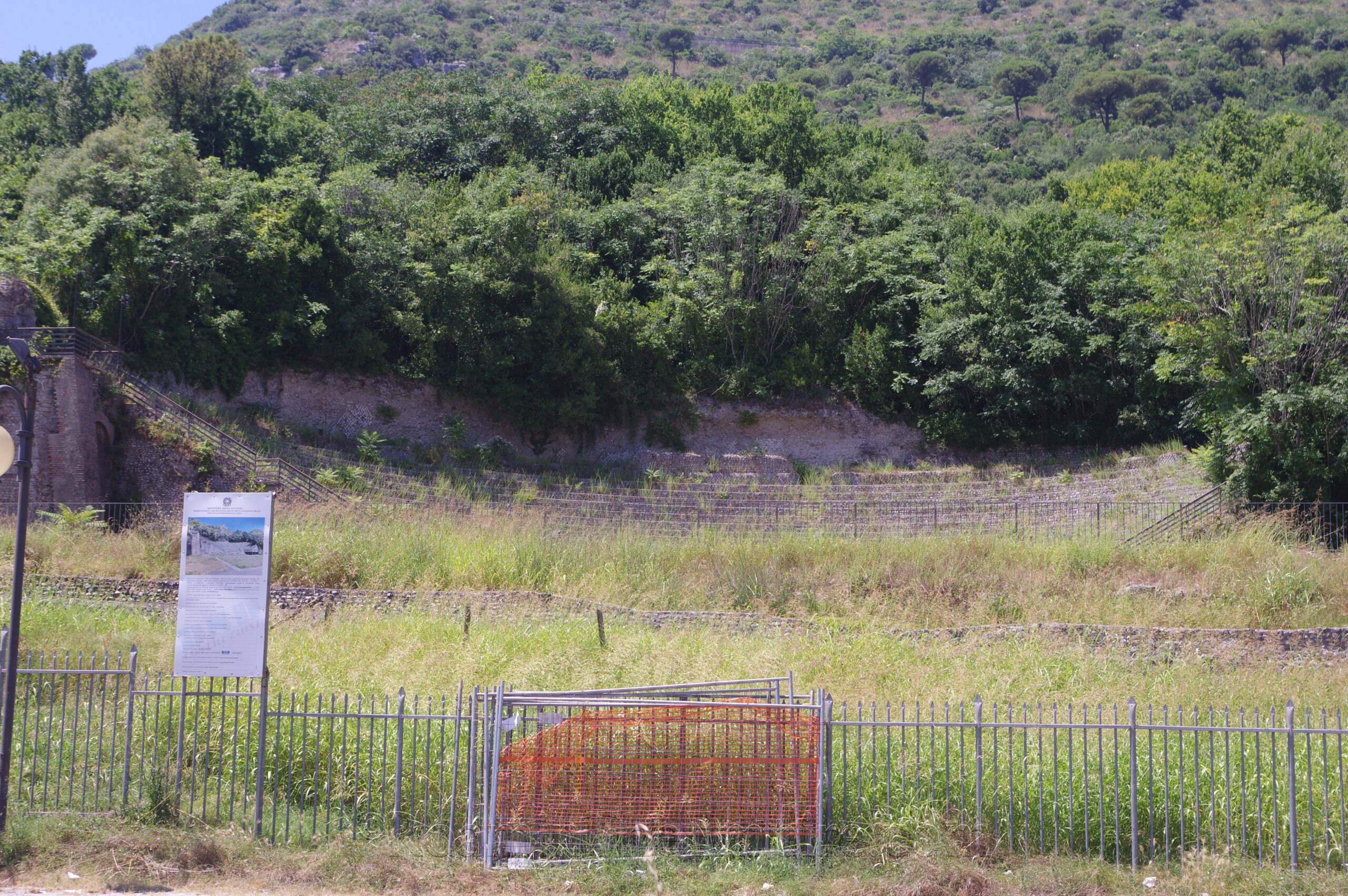
Casinum Theater

    Most of the remains of ancient Casinum are contained within the archaeological park attached to the Museo Archeologico Nazionale G. Carettoni, with a couple exceptions. The first is the ancient theater, which is adjacent to the museum and archaeological area, but is separate and not currently accessible. The theater was likely built early in the reign of Augustus. An inscription attributes a renovation of the theater in the second half of the 1st century CE to Ummidia Quadratilla, whose father was responsible for the original construction of the theater. The theater is somewhat visible from the parking lot, it’s not a great view. Performances are supposedly conducted here in the summers, but it was quite overgrown and didn’t look like it had been used for those purposes in a while. Some remains of a Roman road are visible at points running south of the museum. (Rob@roamintheempire.com)
    Associated Passages
    Subjects
    Type
    Image
    License
    Creative Commons Attribution-ShareAlike
    Date
    1st century AD
    Culture
    Location
    Casinum

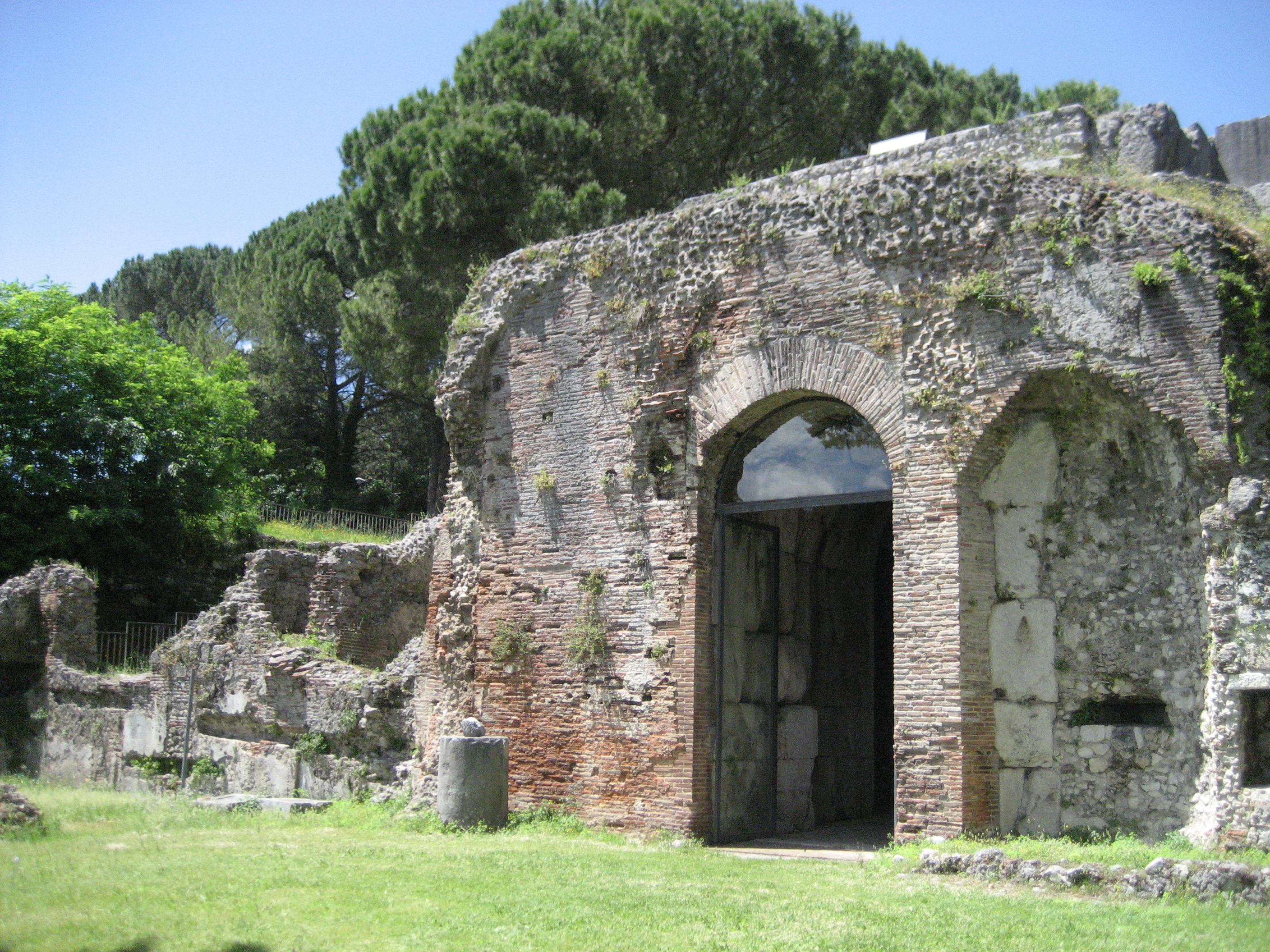
    Mausoleum of Ummidia Quadratilla

      The mausoleum of Ummidia is unique, with a cella in opus quadratum, on a central plan with a cupola, a pronaos facing - with Italic Corinthian columns covered in stucco. (Princeton Encyclopedia of Classical Sites, Casinum)

      Associated Passages
      Subjects
      Type
      Image
      License
      Creative Commons Attribution-ShareAlike
      Date
      1st century AD
      Culture
      Location
      Casinum, Italy

      Casinum Amphitheater

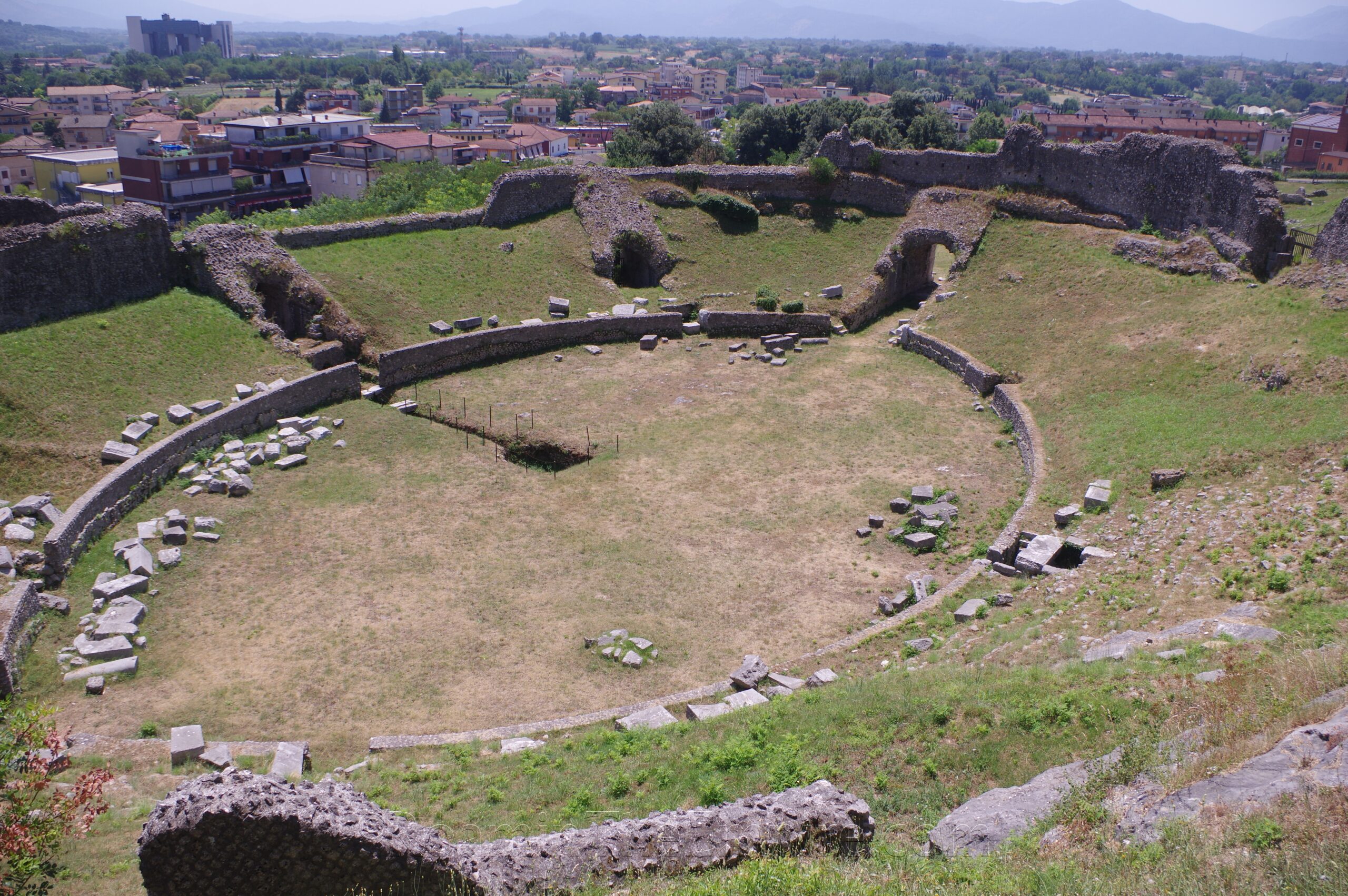
        The amphitheater was constructed in the latter half of the 1st century CE. An inscription records that it was constructed, along with a temple, by Ummidia Quadratilla (the very same patron of the theater) with her own money for the citizens of Casinum. The temple which is referred to in the inscription has not yet been found. The amphitheater was located outside the walls of the city, built abutting the slopes of Monte Cassino. The amphitheater is estimated to have had a capacity of about 4,500 spectators. (Rob@roamintheempire.com)

        Associated Passages
        Subjects
        Type
        Image
        License
        Creative Commons Attribution-NonCommercial-ShareAlike
        Date
        second half of the 1st c. A.D.
        Culture
        Location
        Casinum

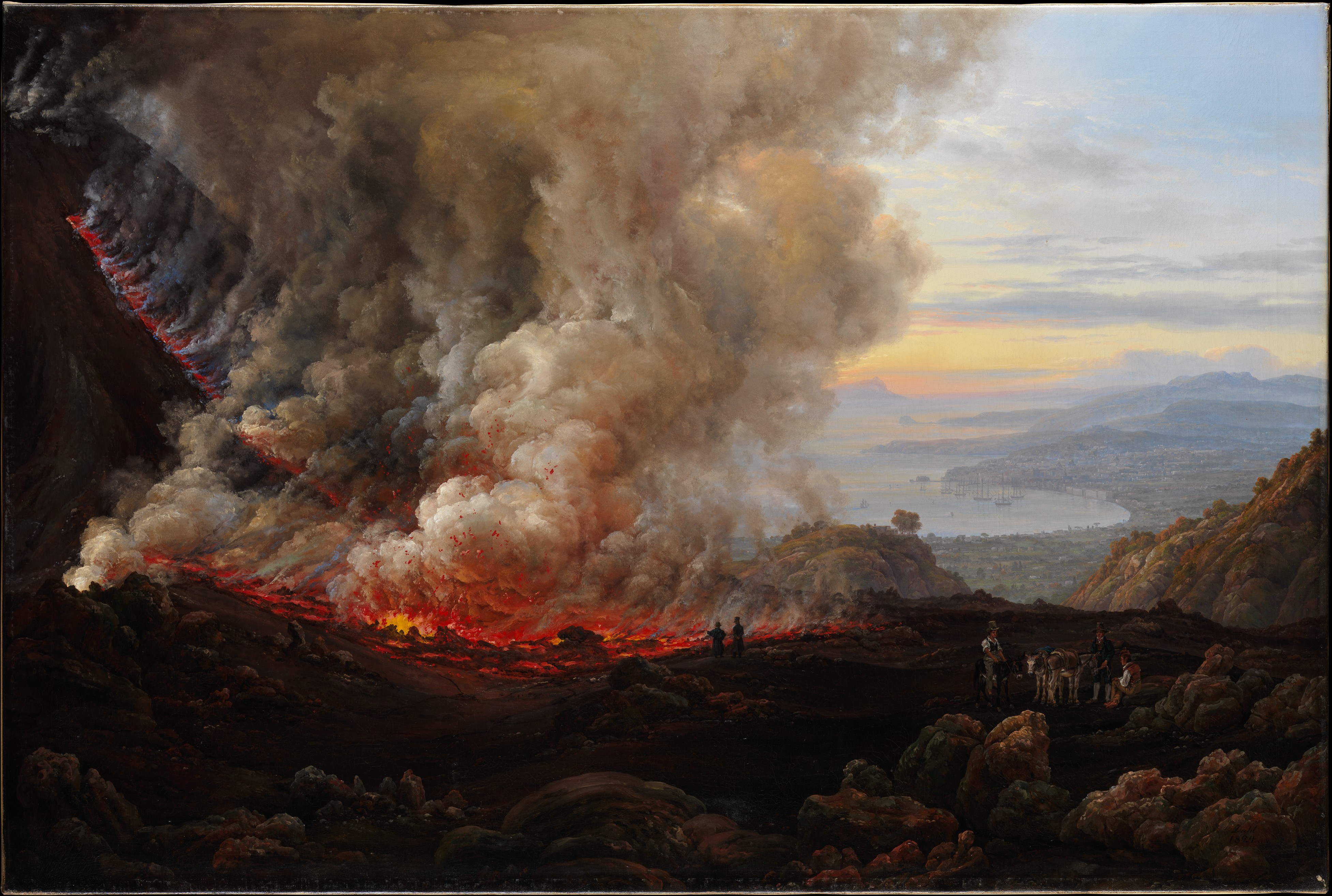
        An Eruption of Vesuvius

          Dahl visited Vesuvius just before Christmas 1820 to witness its eruptions at close-hand. He immediately made an oil sketch (Statens Museum for Kunst, Copenhagen) that served as the basis for the present work, completed four years later for Prince Christian Frederik, later King Christian VIII of Denmark. Vesuvius had attracted artists and Grand Tourists alike since the rediscovery of Pompeii in the mid-eighteenth century, offering a vision of the Sublime that served as a counterpoint to the austerity of Neoclassicism. (Metropolitan Museum of Art),

          Comments

          Title: An Eruption of Vesuvius
          Artist: Johan Christian Dahl (Norwegian, Bergen 1788–1857 Dresden)
          Date: 1824
          Medium: Oil on canvas
          Dimensions: 37 x 54 3/4 in. (94 x 139.1 cm)
          Classification: Paintings
          Credit Line: Gift of Christen Sveaas, in celebration of the Museum's 150th Anniversary, 2019
          Object Number: 2019.167.1

          Associated Passages
          Subjects
          Type
          Image
          License
          Creative Commons Attribution-ShareAlike
          Date
          1824
          Medium
          Dimensions
          37 x 54 3/4 in. (94 x 139.1 cm)
          Location
          Metropolitan Museum of Art

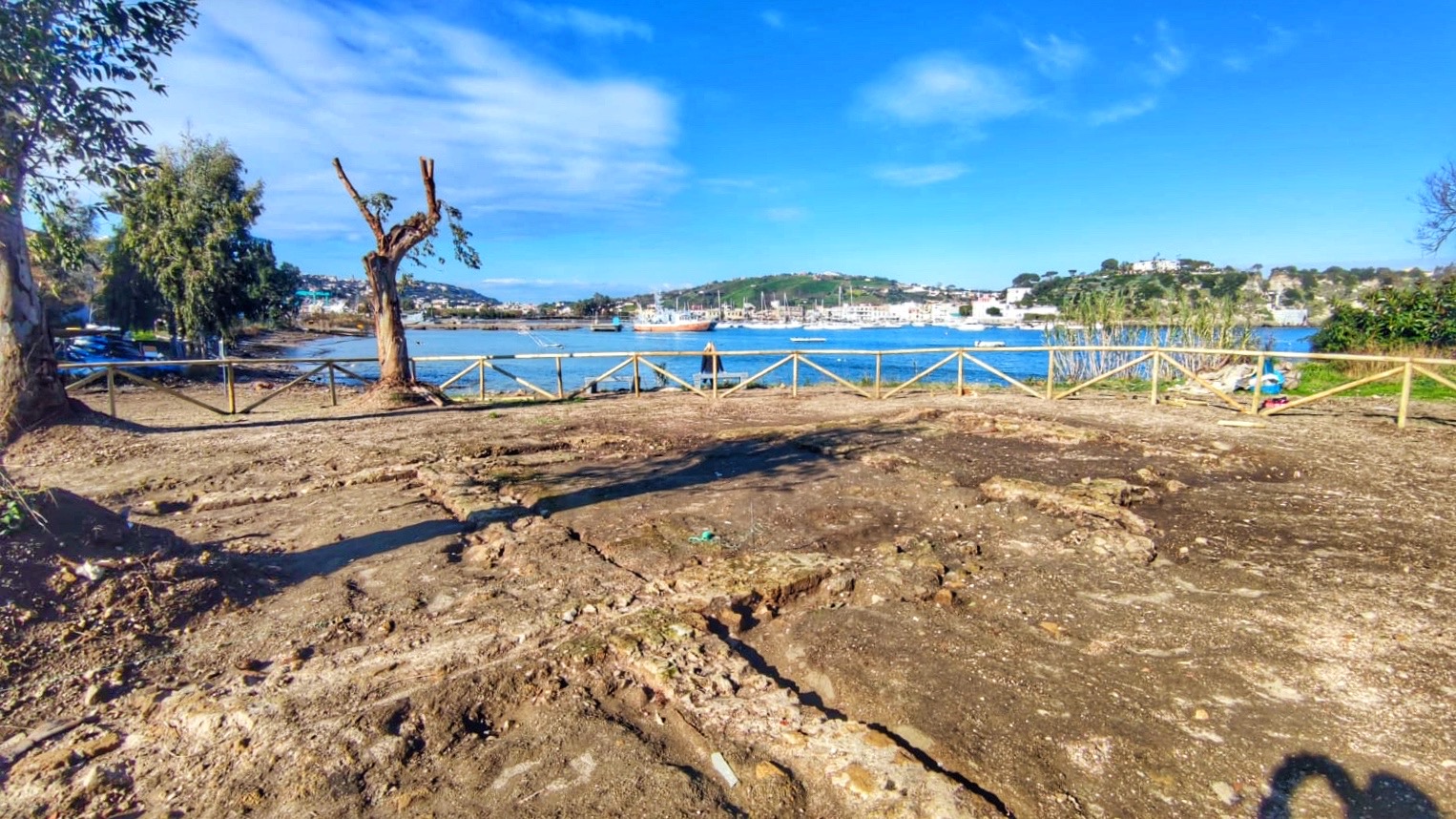
          Possible site of Pliny the elder's villa at Misenum

            Recent cleanup efforts on an overgrown section of the beach at Bacoli uncovered the remains of a monumental Roman villa which may (or may not) have been that of Pliny the elder. According to the 2024 announcement of the local archaeological soprintendenza, "Dating to around the first century AD, the villa was constructed in opus reticulatum, using carefully laid tufa blocks, and extends uninterrupted as far as the beach and into the seabed offshore. About ten large rooms have been identified, displaying several phases of construction, along with floor surfaces and traces of wall revetment."

            Associated Passages
            Subjects
            Type
            Image
            License
            Creative Commons Attribution-NonCommercial-ShareAlike

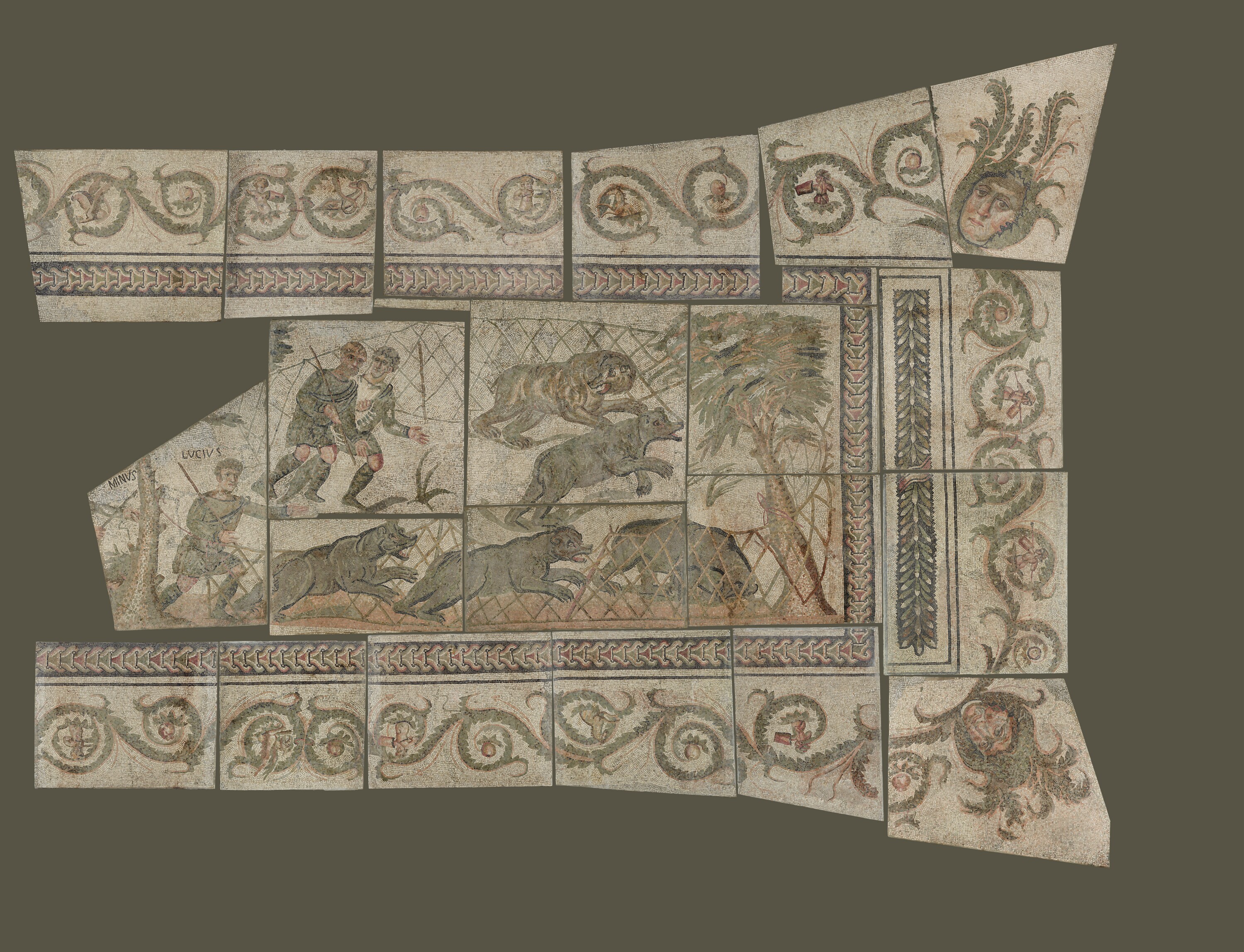
            Fragmentary Mosaic Floor with Bear Hunt

              Enough of the fragmentary floor survives to identify the subject as a bear hunt. The figures of three hunters are preserved, and one of them has his name, Lucius, inscribed above his head. The arm of another hunter is preserved along the left edge, along with his name, Minus. The hunters are driving four bears into a net; a fifth has already been captured. The net is set in a semi-circle and tied to trees at the right and left edges of the scene. The hunting scene is surrounded on three sides by a border of loop guilloche, and another vertical border of a foliate garland with a central ribbon frames the right end. The outermost border is a luxurious acanthus scroll. Heads emerge from elaborate leaf complexes in the corners, and smaller figures of erotes with armor, fruits and animals (both real and imaginary) are tucked into the scrolling acanthus along the edges (Getty website).

              Getty Museum 72.AH.76

              Subjects
              Type
              Image
              License
              Creative Commons Attribution-ShareAlike
              Date
              4th century AD
              Culture
              Dimensions
              661 × 869 cm (260 1/4 × 342 1/8 in.)
              Inscription
              Inscribed near the head of the beardless figure in the lower left, "LUCIUS", and on the other side of the tree behind this figure, inscribed "MINUS".
              Location
              "Stufe di Nerone", near Lago Lucrino, near Pozzuoli, Italy (Place Found)
              Image Credit

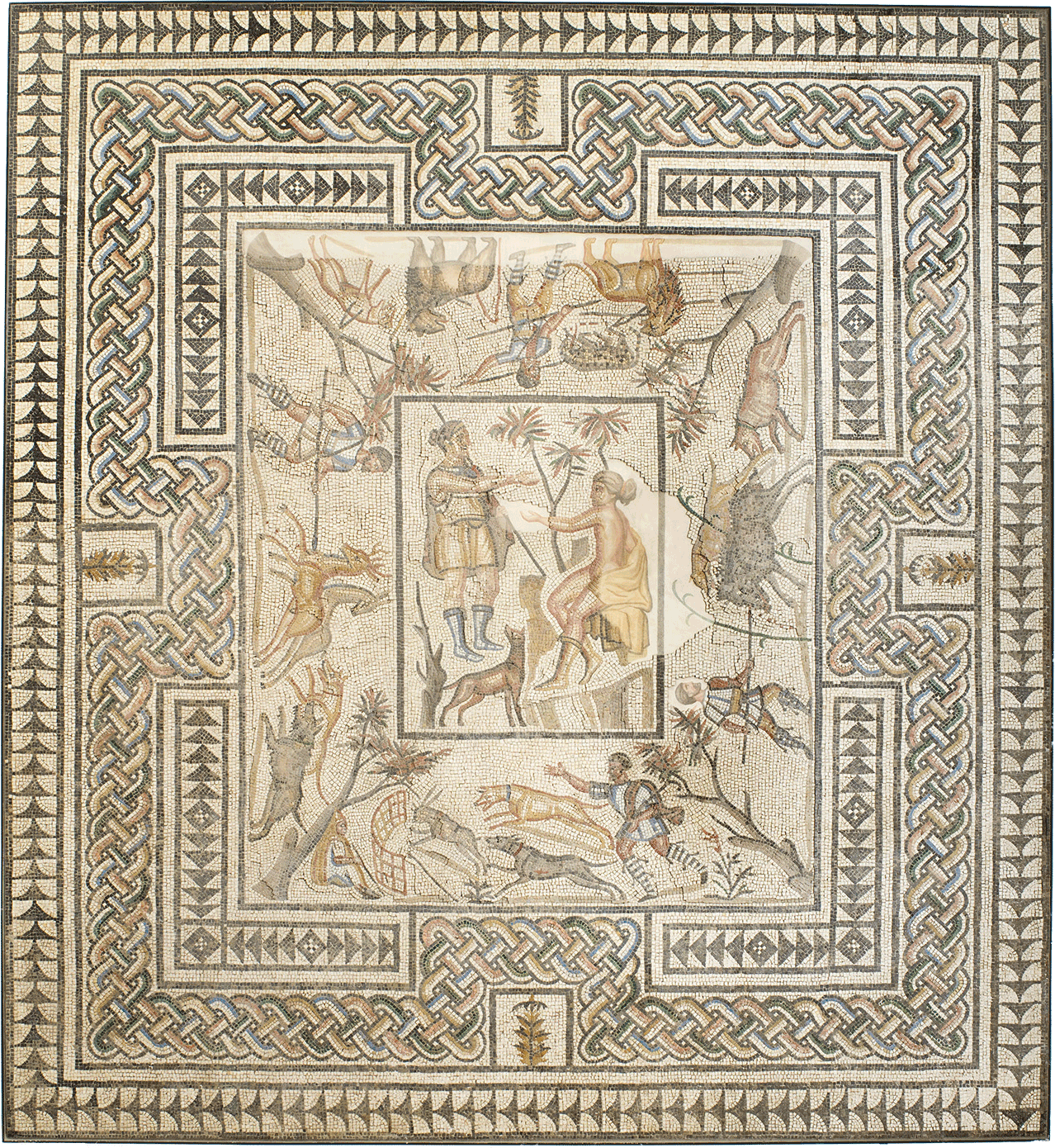
              Mosaic Floor with Diana and Callisto Surrounded by Hunt Scenes

                Mosaic Floor with Diana and Callisto Surrounded by Hunt Scenes, Gallo-Roman, AD 175–200. Found in Villelaure, France, 1832. Stone and glass tesserae, 300 × 270 cm. Los Angeles County Museum of Art, M.71.73.99

                Comments

                Scenes of hunters forcing bears and other animals into nets and traps are depicted on mosaics throughout the Roman Empire, including examples from Carthage, El Kef, Hippo Regius, and Utica in North Africa; Centcelles in Spain; and this one, found in Villelaure in France; and Rome (including one from the Esquiline Hill) and Ravenna in Italy. (Getty Museum Catalogue)

                Associated Passages
                Subjects
                Type
                Image
                License
                Creative Commons Attribution-ShareAlike
                Date
                AD 175–200
                Dimensions
                300 × 270 cm
                Location
                Los Angeles County Museum of Art, M.71.73.99
                Image Credit

                Pliny the Younger and his Mother at Misenum, 79 A.D., 1785

                  As Mount Vesuvius erupts in the distance, the young Pliny continues his studies at his family’s villa—despite being urged to flee. Meanwhile, his uncle, Pliny the Elder, is sailing toward Vesuvius and will die trying to rescue a friend. Pliny’s letters comprise one of the great records of the catastrophe that destroyed Pompeii and Herculaneum. In one, he tells of being able to "hear the wails of women, the cries of children, the shouts of men . . . others were reaching to the gods . . . others declared the gods no more." This is one of three large-scale history paintings Kauffmann produced in Italy in 1785 for a Mr. Bowles, an English patron. As was noted when the work was first exhibited at London’s Royal Academy in 1786, Pliny has two left feet. The reason for this may be that Kauffmann, then among the most popular artists in Rome, evidently relied on her less-talented husband, Antonio Zucchi, to complete many of her commissions. (Princeton University Art Museum)

                  Associated Passages
                  Subjects
                  Type
                  Image
                  License
                  Creative Commons Attribution-ShareAlike
                  Date
                  1785
                  Medium
                  Dimensions
                  103 × 127.5 cm (40 9/16 × 50 3/16 in.) frame: 116 × 140.5 × 6.7 cm (45 11/16 × 55 5/16 × 2 5/8 in.)
                  Location
                  Princeton University Art Museum
                  Image Credit

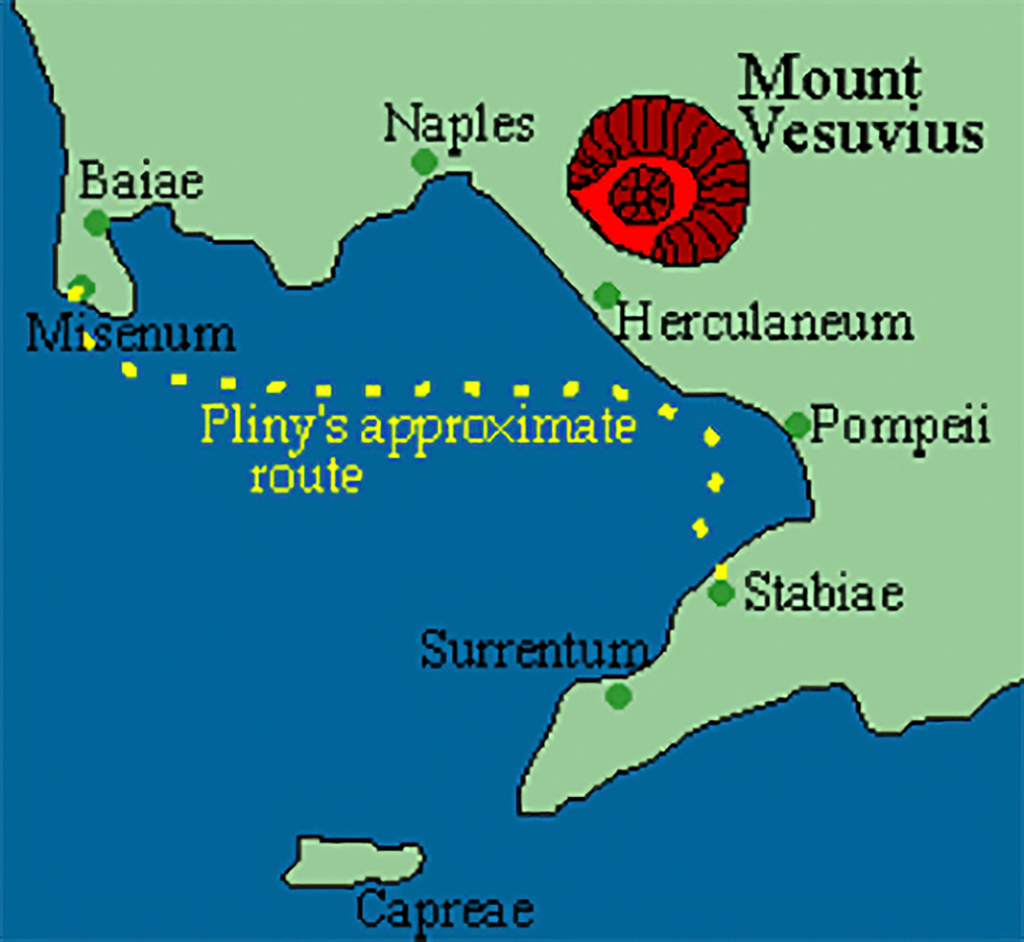
                  Sketch of Bay of Naples in 79AD showing the approximate route taken by Pliny the Elder

                    Sketch of Bay of Naples in 79AD showing the approximate route taken by Pliny the Elder from Misenum to Stabiae in his attempted rescue mission.

                    Comments

                    The low resolution pictures on Pompeii In Pictures are copyright © of Jackie and Bob Dunn and MAY NOT IN ANY CIRCUMSTANCES BE USED FOR GAIN OR REWARD COMMERCIALLY. On concession of the Ministero della Cultura - Parco Archeologico di Pompei. It is declared that no reproduction or duplication can be considered legitimate without the written authorization of the Parco Archeologico di Pompei.

                    Associated Passages
                    Subjects
                    Type
                    Map
                    License
                    Creative Commons Attribution-NonCommercial
                    Image Credit