Terracotta Sphinx relief
Annotations
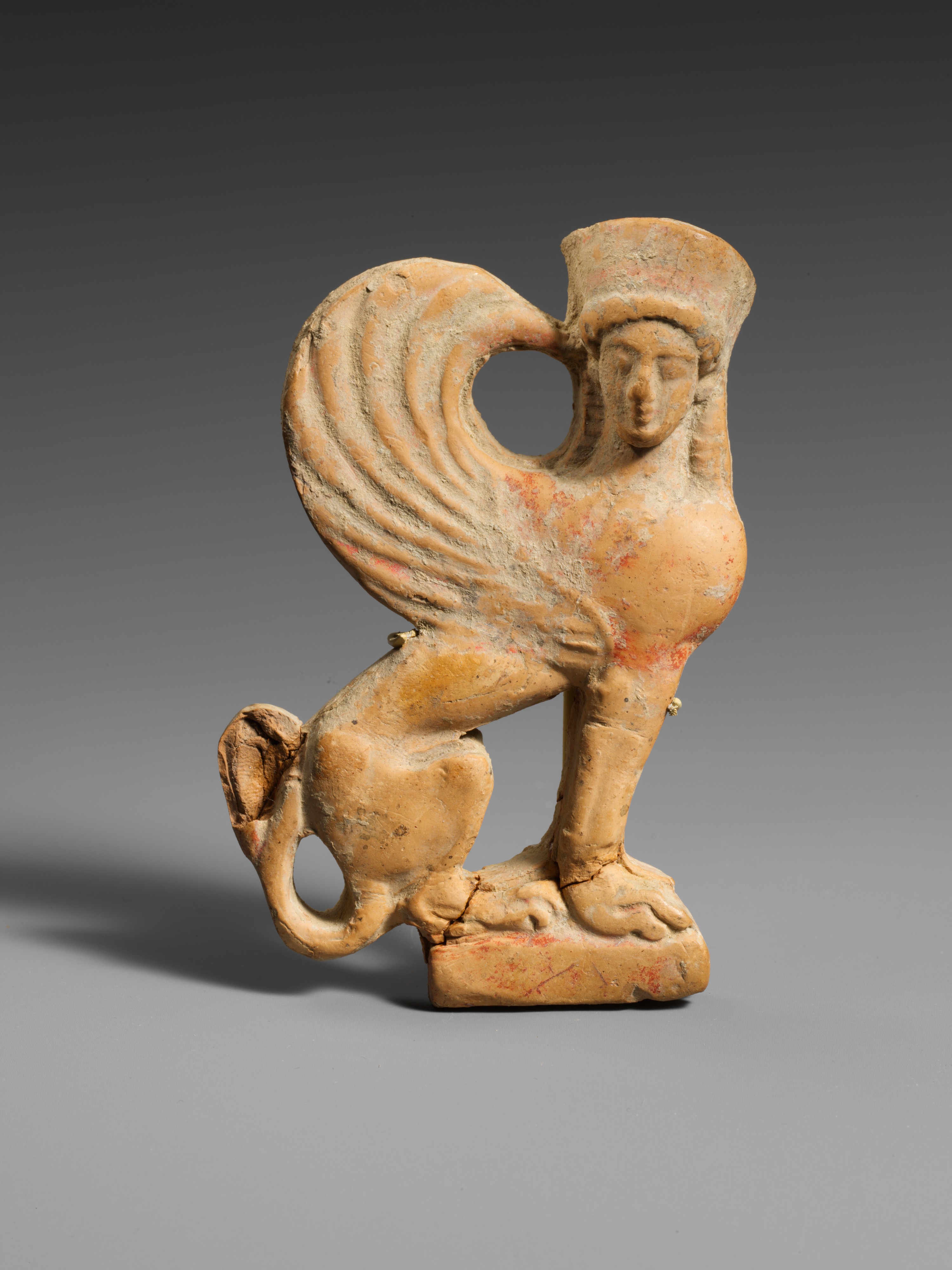
Terracotta relief decoration in the shape of a sphinx, similar to those found in Corinthian temples and shrines.
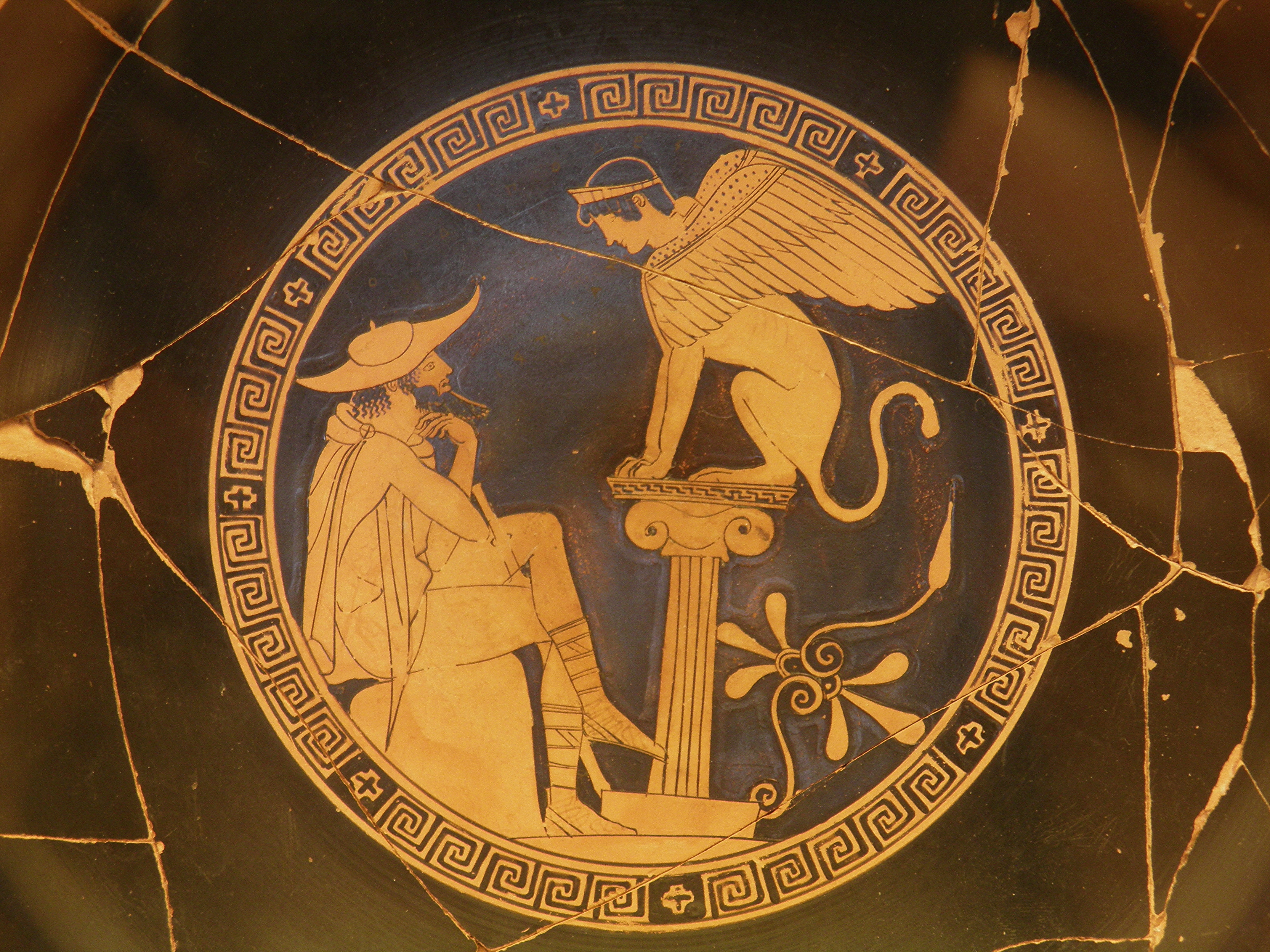
Detail of the interior of an Attic red-figure kylix. Oedipus appears to be contemplating the Sphinx's riddle. Excavated in Vulci.
Proto-Attic hydria. The women and men around the neck may be performing a dance.
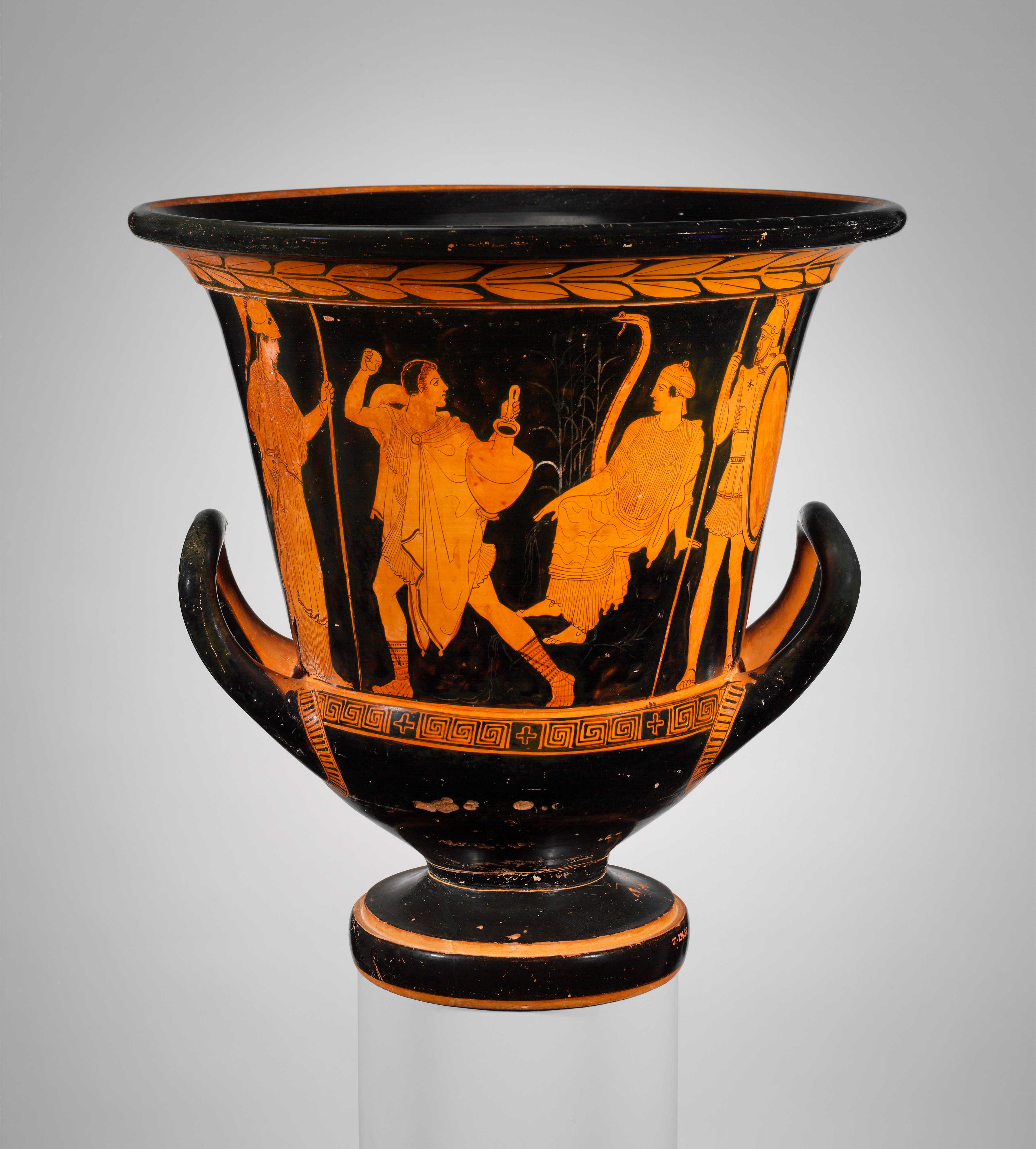
Attic red-figure calyx krater depicting Cadmus fetching water from a spring guarded by a snake, the son of Ares. The seated woman may represent the nymph associated with the spring. Background vegetation and the rock upon which she is seated are rendered by faintly visible incised lines.
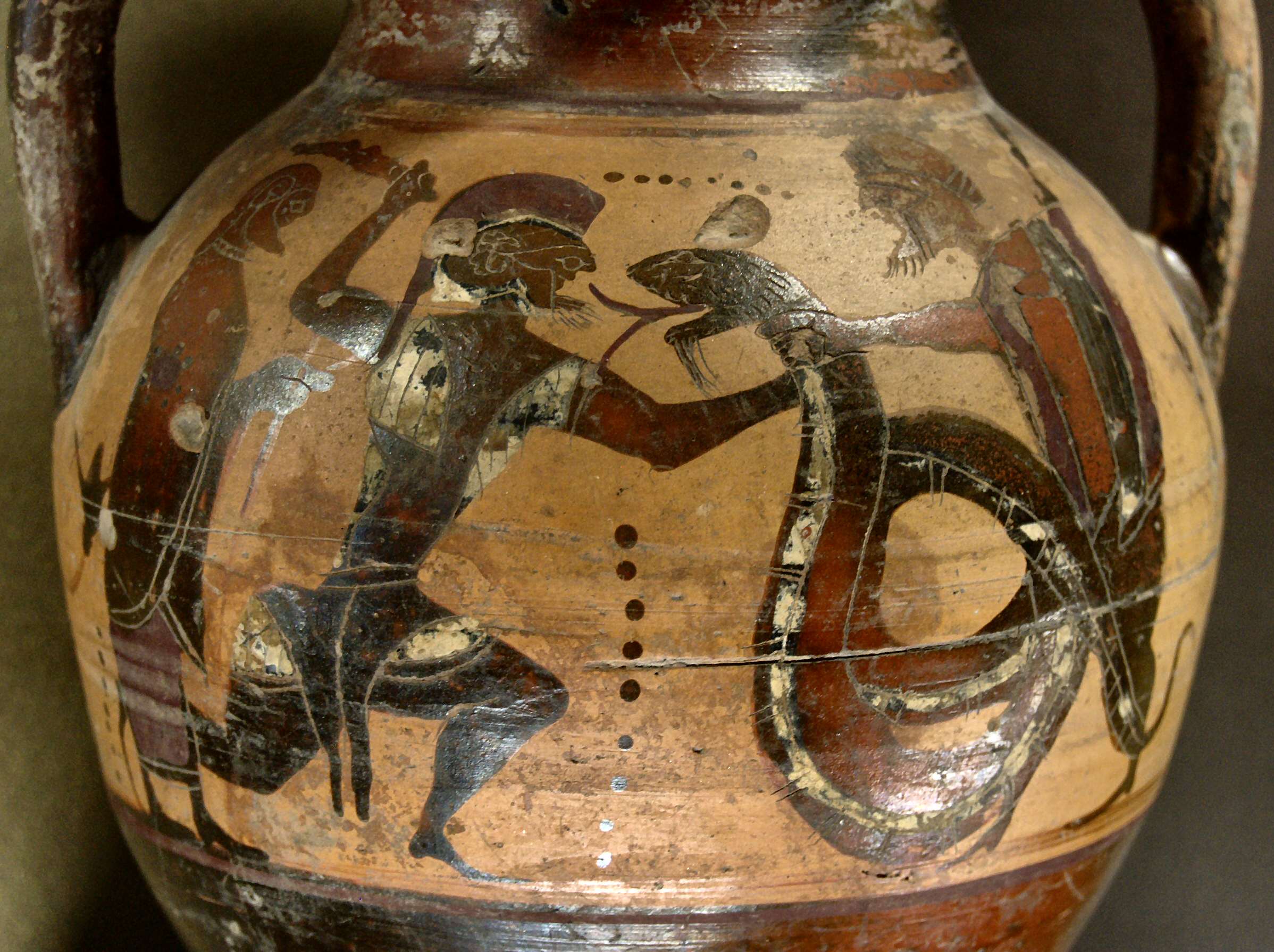
Body decoration of a Greek amphora, perhaps depicting Cadmus fighting the dragon. Musée du Louvre collection number Cp 266, catalogue number E 707.
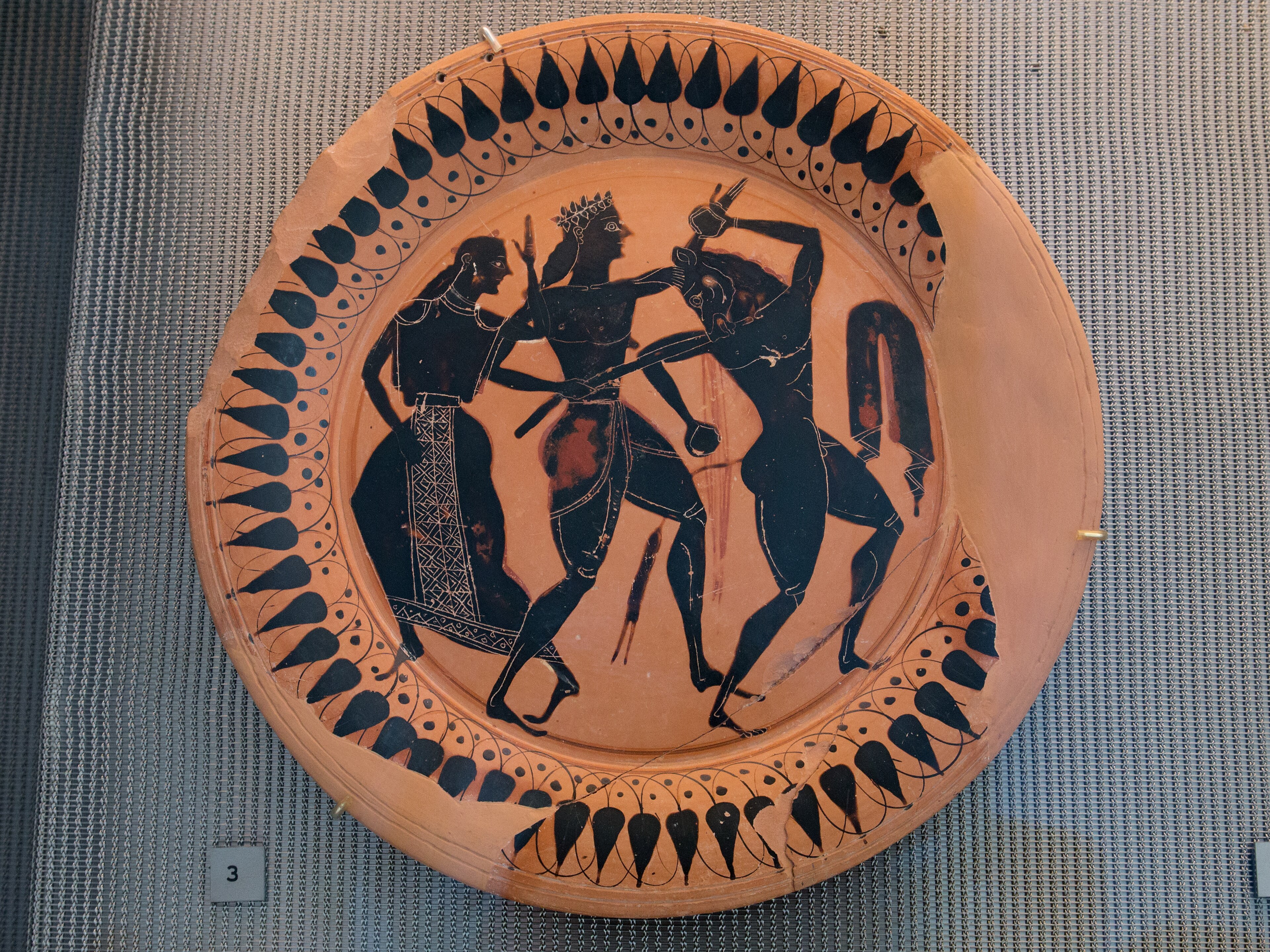
Interior of an Attic black-figure plate showing Theseus killing the Minotaur. The plate was found in pieces, reassembled, and restored. Acropolis Museum, Ακρ. 13808.
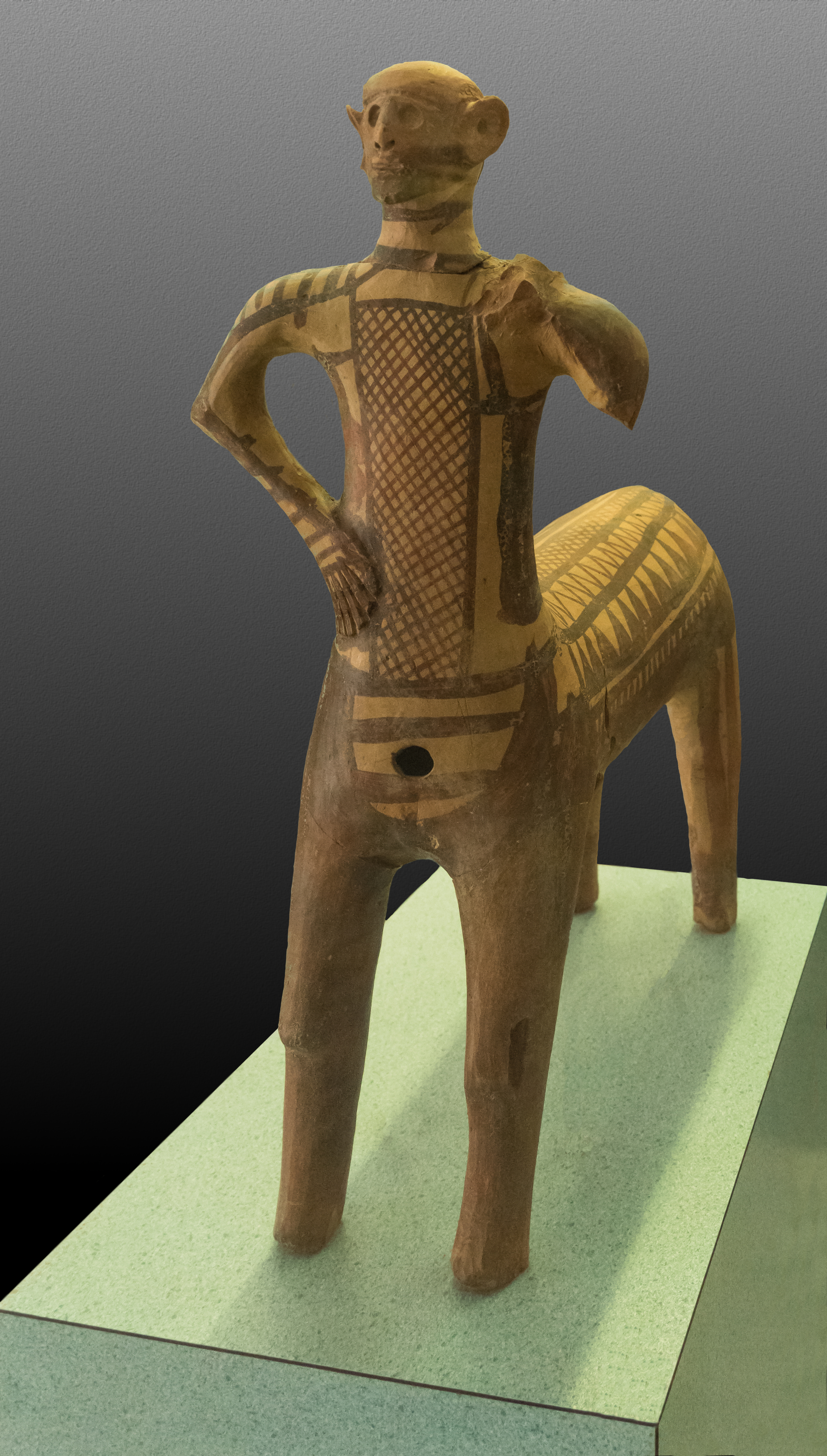
Terracotta figurine of a centaur, possibly intended to depict Chiron based on the gash incised on the lower left front leg. Excavated from Toumba cemetery, Lefkandi, Euboea.
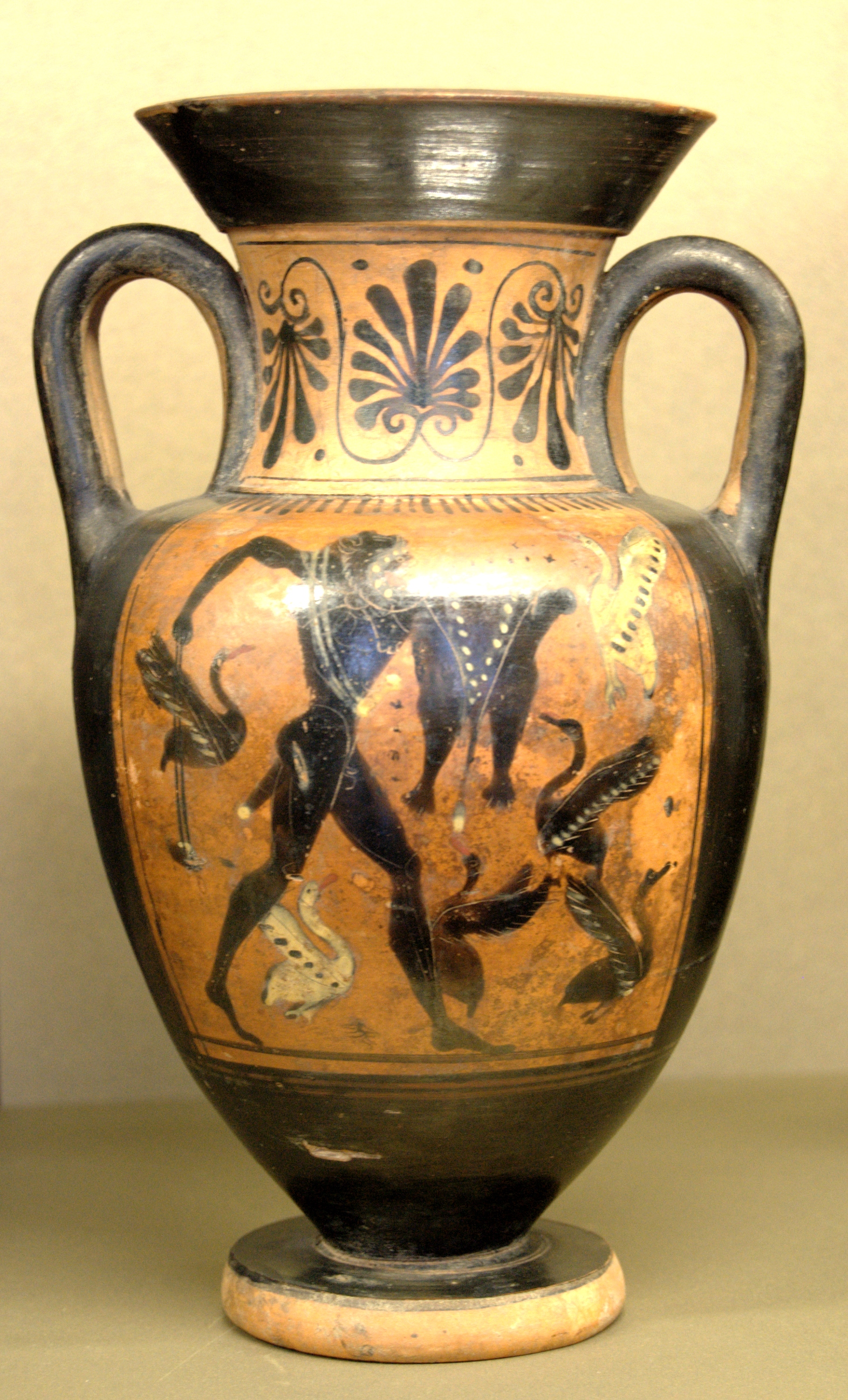
Herakles and the Stymphalian birds. Attic black-figure amphora attributed to the Diosphos Painter, Louvre F 387. Photo by Bibi Saint-Pol via Wikimedia Commons.
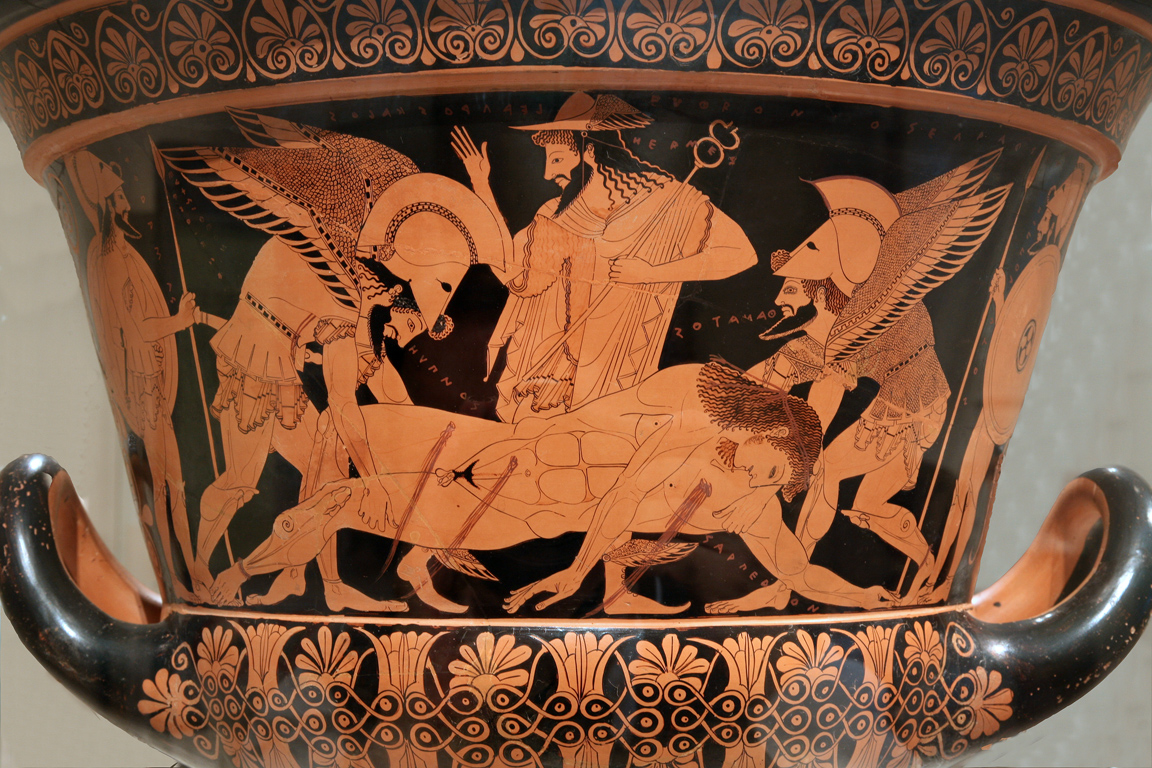
Hypnos and Thanatos (Sleep and Death) carry the body of Sarpedon off the battlefield while Hermes watches. Red-figure calyx krater by Euphronios (painter) and Euxitheos (potter).Formerly Museo Nazionale Etrusco di Villa Giulia L.2006.10, now in the Museo Nazionale Archeologico Cerite. Photo by Jaime Ardiles-Arce via Wikimedia Commons.
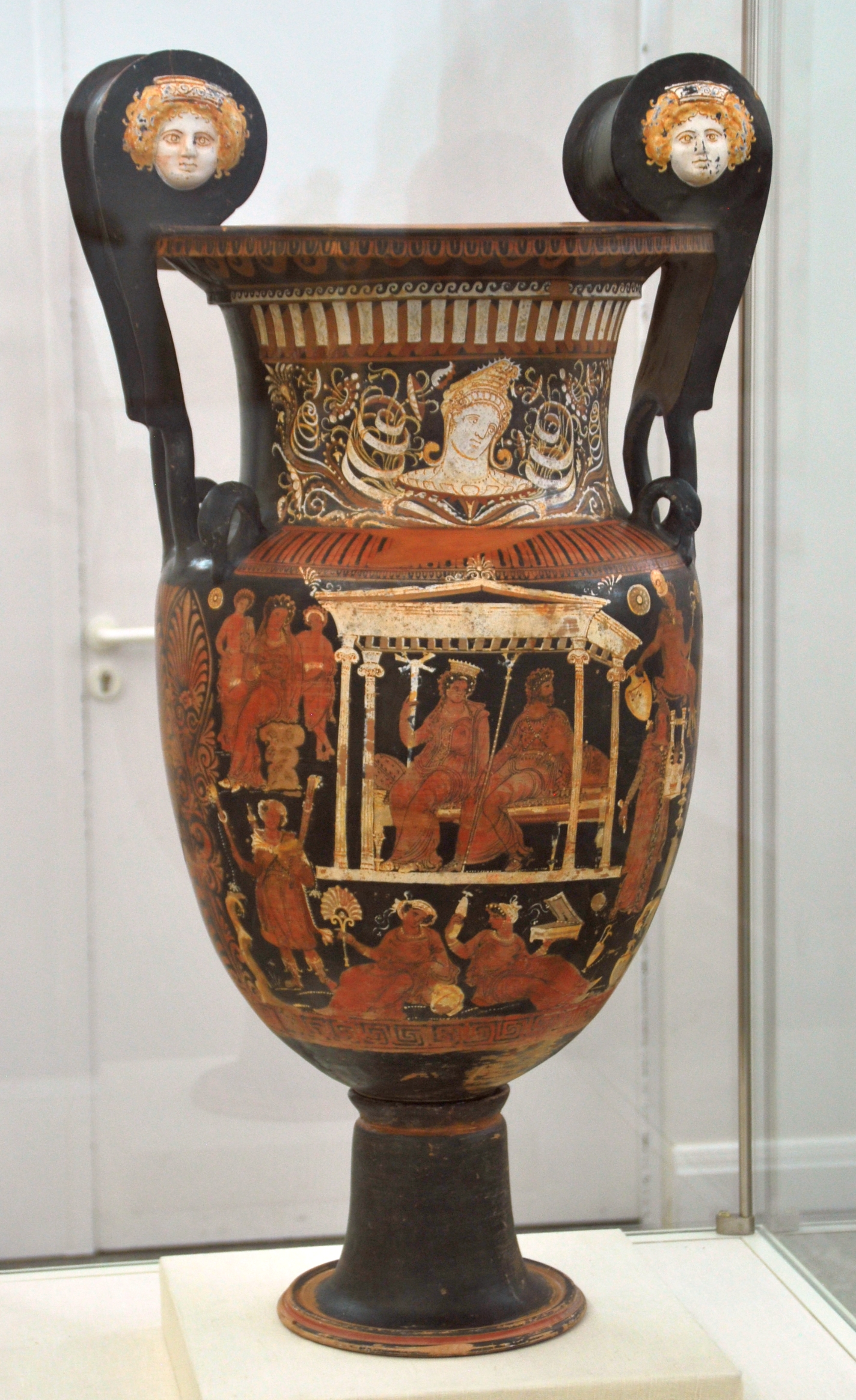
Hades and Persephone holding court from their palace. Detail from an Apulian red-figure volute krater attributed to White Sakkos Painter, Antikensammlung Kiel Inv. B 585. Photo by Marcus Cyron via Wikimedia Commons CC BY-SA 3.0