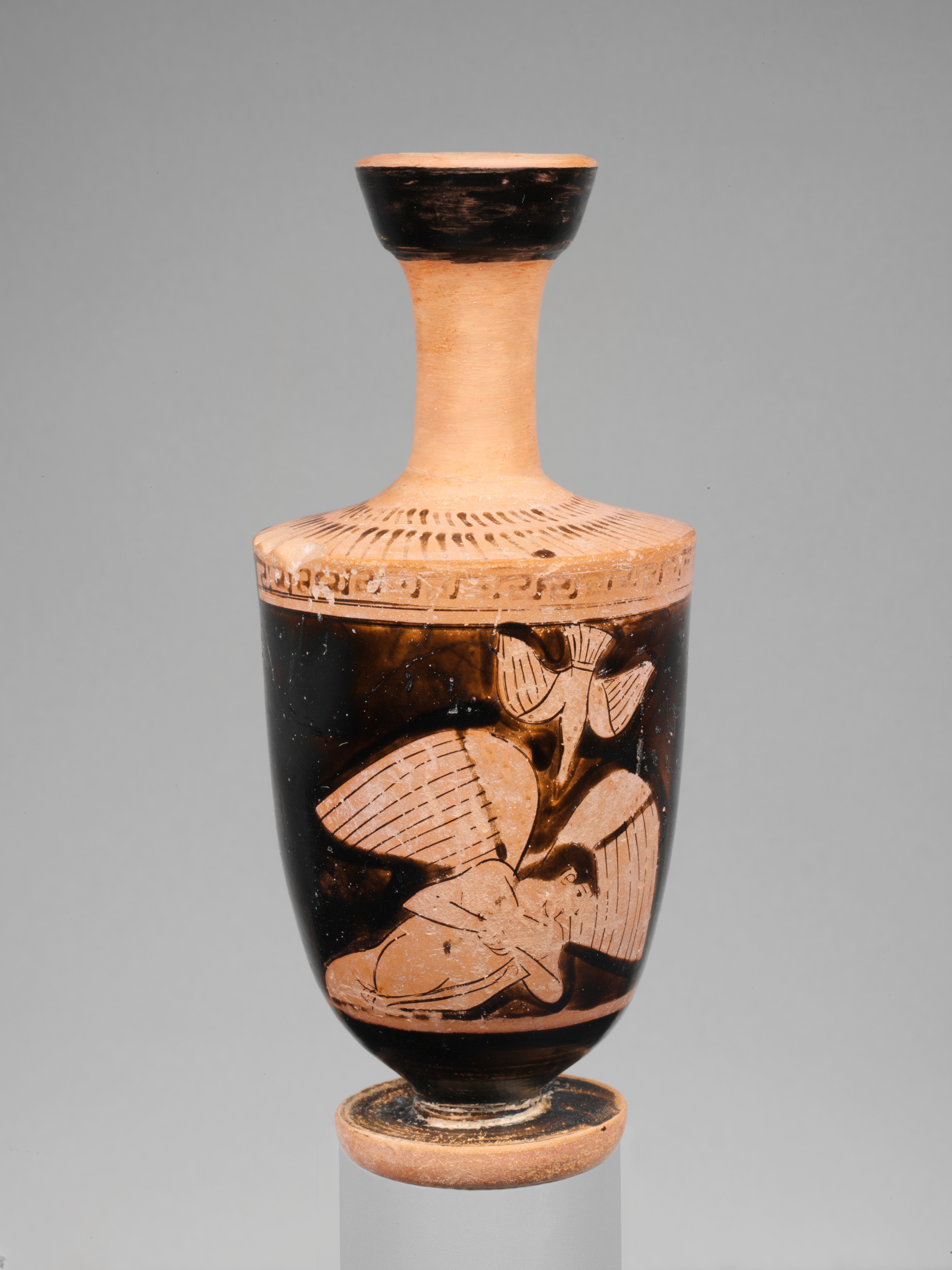
Winged Youth Lekythos

    Terracotta red-figure lekythos (oil flask) attributed to the Icarus Painter. The winged youth has been identified as either Icarus or Hypnos.

    Subjects
    Type
    Image
    License
    Creative Commons Attribution
    Date
    2nd quarter of the 5th century BCE
    Culture
    Medium
    Dimensions
    h. 5 1/2 in. (14 cm)
    Location
    Metropolitan Museum of Art

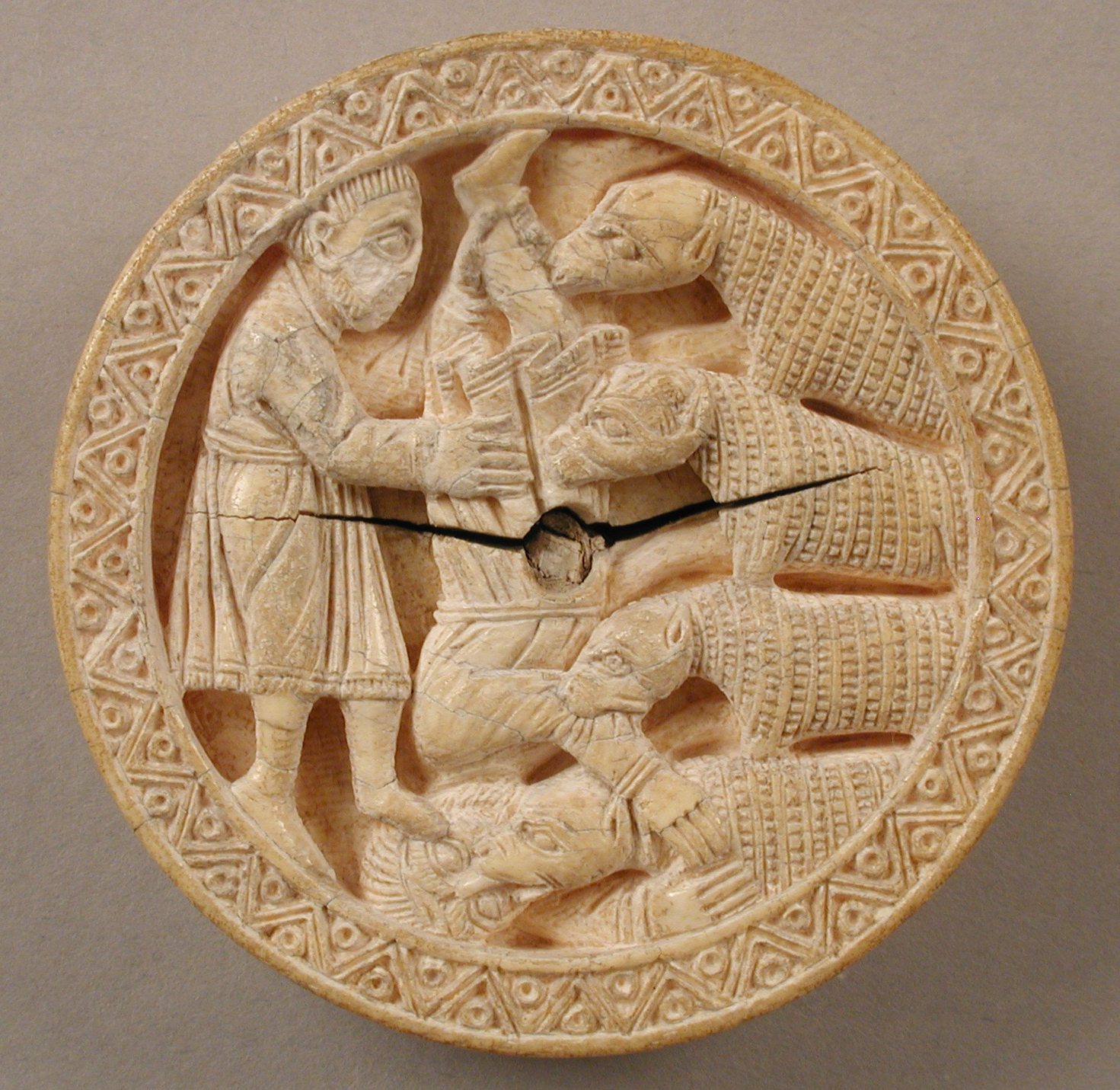
    Game Piece with Hercules Feeding Diomedes to His Horses

      Ivory game piece showing Heracles feeding Diomedes to his horses. Made in Cologne, Germany. Metropolitan Museum of Art 16.106.

      Type
      Image
      License
      Creative Commons Attribution
      Date
      ca. 1150 CE
      Culture
      Dimensions
      diameter 2 3/4 x 13/16 in. (7 x 2 cm)
      Location
      Metropolitan Museum of Art

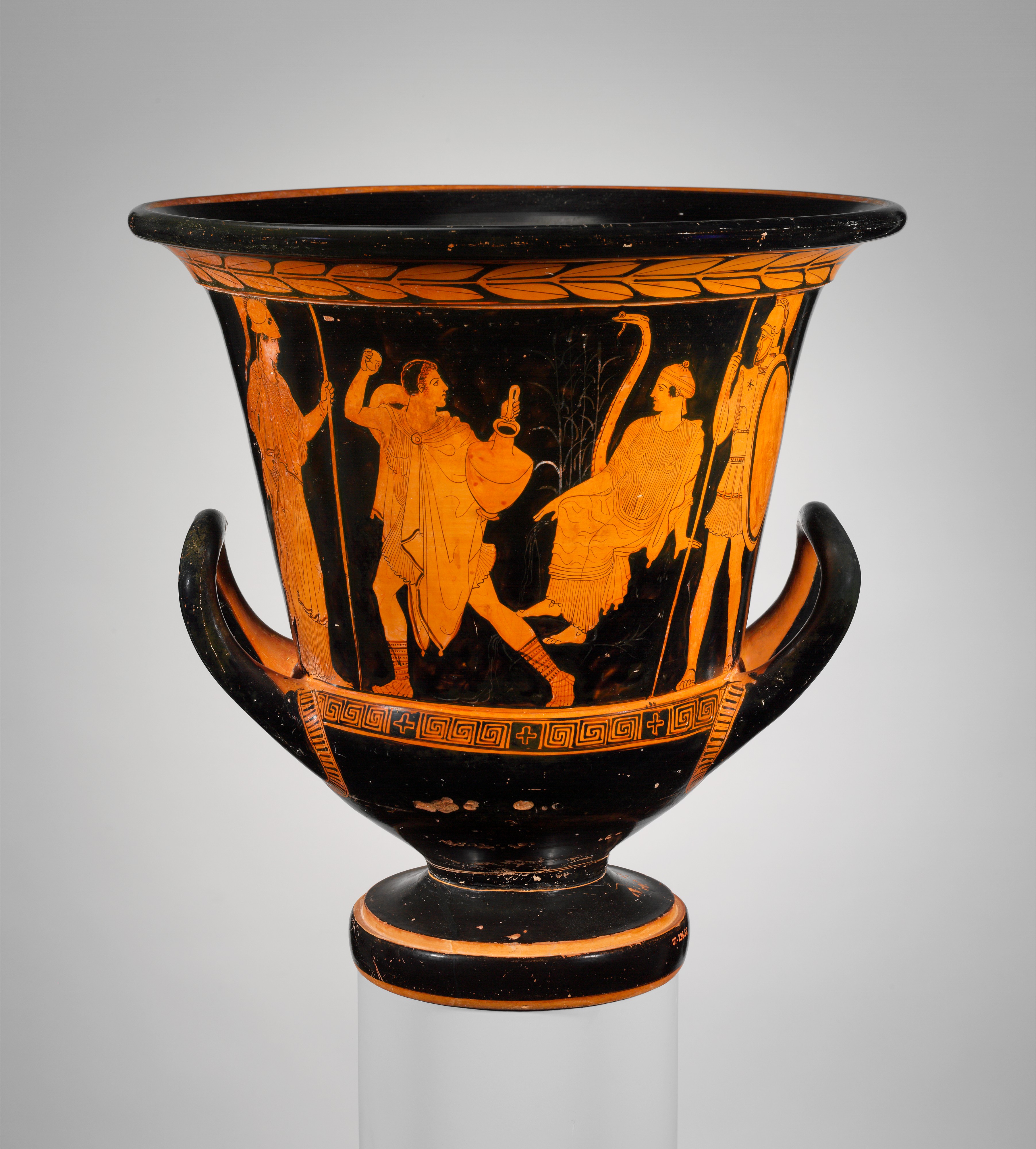
      Cadmus fetching water

        Attic red-figure calyx krater depicting Cadmus fetching water from a spring guarded by a snake, the son of Ares. The seated woman may represent the nymph associated with the spring. Background vegetation and the rock upon which she is seated are rendered by faintly visible incised lines.

        Subjects
        Type
        Image
        License
        Creative Commons Attribution
        Date
        ca. 450 BCE
        Culture
        Medium
        Dimensions
        H. 18 in. (45.7 cm), diameter of mouth 17 5/8 in. (44.7 cm)
        Inscription
        Inscribed: "Eualkos is fair" and "Alones [misspelled] is fair"
        Location
        Metropolitan Museum of Art

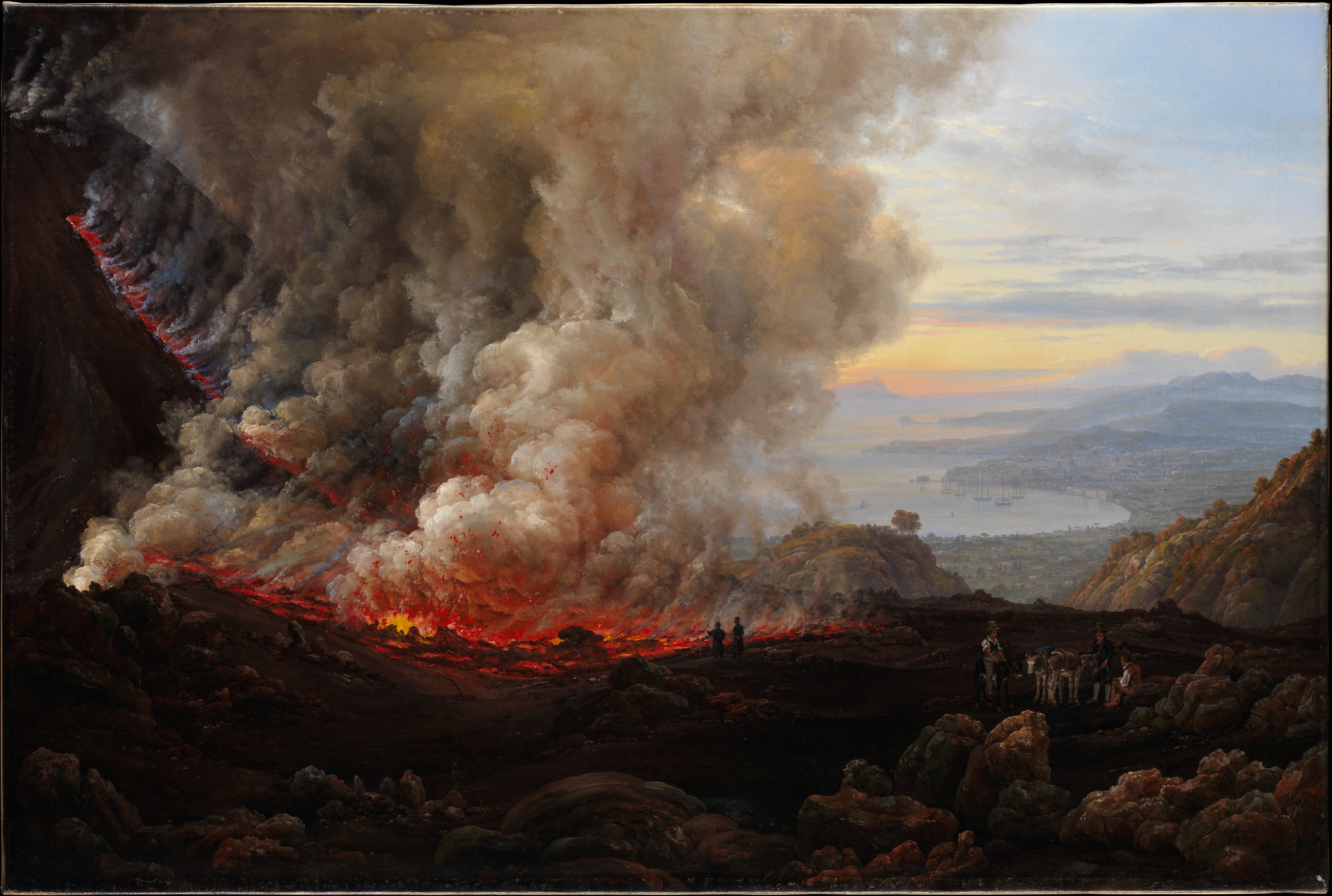
        An Eruption of Vesuvius

          Dahl visited Vesuvius just before Christmas 1820 to witness its eruptions at close-hand. He immediately made an oil sketch (Statens Museum for Kunst, Copenhagen) that served as the basis for the present work, completed four years later for Prince Christian Frederik, later King Christian VIII of Denmark. Vesuvius had attracted artists and Grand Tourists alike since the rediscovery of Pompeii in the mid-eighteenth century, offering a vision of the Sublime that served as a counterpoint to the austerity of Neoclassicism. (Metropolitan Museum of Art),

          Comments

          Title: An Eruption of Vesuvius
          Artist: Johan Christian Dahl (Norwegian, Bergen 1788–1857 Dresden)
          Date: 1824
          Medium: Oil on canvas
          Dimensions: 37 x 54 3/4 in. (94 x 139.1 cm)
          Classification: Paintings
          Credit Line: Gift of Christen Sveaas, in celebration of the Museum's 150th Anniversary, 2019
          Object Number: 2019.167.1

          Associated Passages
          Subjects
          Type
          Image
          License
          Creative Commons Attribution-ShareAlike
          Date
          1824
          Medium
          Dimensions
          37 x 54 3/4 in. (94 x 139.1 cm)
          Location
          Metropolitan Museum of Art

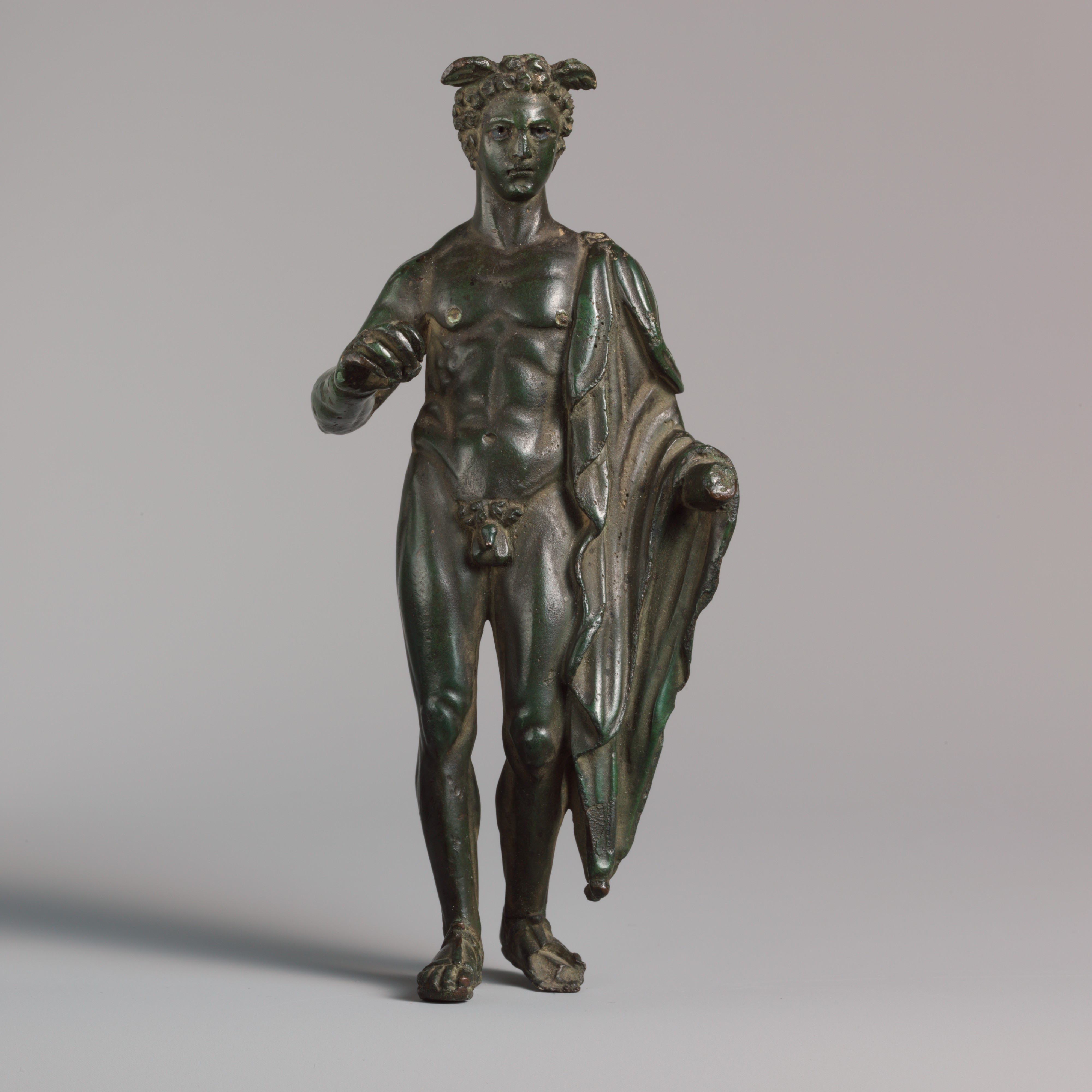
          Bronze statuette of Mercury

            He stands with his weight resting on the right leg, with the left foot drawn back.

            Metadata from the Met website:

            Title: Bronze statuette of Mercury

            Period: Early Imperial

            Date: 1st century CE

            Culture: Roman

            Medium: Bronze

            Dimensions: Overall: 6 3/16 x 2 3/4 x 1 7/8 in. (15.7 x 6.9 x 4.8 cm)

            Classification: Bronzes

            Credit Line: Rogers Fund, 1906

            Object Number: 06.1057

            Associated Passages
            Type
            Image
            License
            Creative Commons Attribution-ShareAlike
            Date
            1st century AD
            Culture
            Medium
            Dimensions
            6 3/16 x 2 3/4 x 1 7/8 in. (15.7 x 6.9 x 4.8 cm)
            Location
            Metropolitan Museum of Art

            Poetry, a woman with a laurel crown

              Title: Poetry, a woman with a laurel crown

              Artist: Raphael Morghen (Italian, Naples 1758–1833 Florence)

              Artist: Intermediary draftsman Pietro Ermini (Italian, Arezzo 1774–1850 Arezzo)

              Artist: After Carlo Dolci (Italian, Florence 1616–1687 Florence)

              Printer: Luigi Bardi (Italian, active Florence, 1814–43)

              Date: 1827

              Medium: Engraving; fourth state of five

              Dimensions: Plate: 12 11/16 × 8 15/16 in. (32.3 × 22.7 cm)
              Sheet: 21 11/16 × 15 5/16 in. (55.1 × 38.9 cm)

              Classification: Prints

              Credit Line: Gift of Harry Shaw Newman, 1941

              Accession Number: 41.97.81

              Associated Passages
              Subjects
              Type
              Image
              Date
              1827

              Striding Pan

                The satyr stands upright and majestically strides forward. His powerfully muscled torso closely resembles Riccio’s heroic nudes, like the beggar in the Saint Martin relief in this gallery. He is most probably Pan, the satyr deity who reigns over the material world. Designed to stand on a scholar’s desk, he carried the attributes of a flaming conch-shell lamp and an ink-filled vase, perhaps symbolizing Pan’s dominion over the elements. Such pairings of figure and function are rare in Riccio’s work, but the extraordinary balance of the topheavy figure on just two small hooves is typical of Riccio’s technical mastery.

                Associated Passages
                Subjects
                Type
                Image
                License
                Creative Commons Attribution-ShareAlike
                Date
                1530–1539

                Sylvanus from The Rural Gods

                  This engraving is from a set of six oval-shaped prints that depict Pastoral Gods. It was published by Hieronymus Cock (ca. 1510–1570) whose name is inscribed on the rock at the right. Cock began publishing in Antwerp in 1548, and his firm became the most important one outside Italy. He made a few of the plates himself, but most were commissioned from designers and engravers. The author of this composition, Frans Floris, designed many prints for Cock. Cort may also have been an apprentice within Cock’s establishment. The series of Pastoral Gods were made in Antwerp in 1565, the year Cort left for Italy. (Metropolitan Museum)

                  Associated Passages
                  Subjects
                  Type
                  Image
                  License
                  Creative Commons Attribution-ShareAlike
                  Date
                  1565