[51] ὁρῶν δὲ Φράστωρ αὐτὴν οὔτε κοσμίαν οὖσαν οὔτ᾽ ἐθέλουσαν αὑτοῦ ἀκροᾶσθαι, ἅμα δὲ καὶ πεπυσμένος σαφῶς ἤδη ὅτι Στεφάνου μὲν οὐκ εἴη θυγάτηρ, Νεαίρας δέ, τὸ δὲ πρῶτον ἐξηπατήθη, ὅτ᾽ ἠγγυᾶτο ὡς Στεφάνου θυγατέρα λαμβάνων καὶ οὐ Νεαίρας, ἀλλὰ τούτῳ ἐξ ἀστῆς αὐτὴν γυναικὸς οὖσαν πρότερον πρὶν ταύτῃ συνοικῆσαι, ὀργισθεὶς δ᾽ ἐπὶ τούτοις ἅπασιν, καὶ ὑβρίσθαι ἡγούμενος καὶ ἐξηπατῆσθαι, ἐκβάλλει τὴν ἄνθρωπον ὡς ἐνιαυτὸν συνοικήσας αὐτῇ, κυοῦσαν, καὶ τὴν προῖκα οὐκ ἀποδίδωσιν.

[52] λαχόντος δὲ τοῦ Στεφάνου αὐτῷ δίκην σίτου εἰς Ὠιδεῖον κατὰ τὸν νόμον ὃς κελεύει, ἐὰν ἀποπέμπῃ τὴν γυναῖκα, ἀποδιδόναι τὴν προῖκα, ἐὰν δὲ μή, ἐπ᾽ ἐννέ᾽ ὀβολοῖς τοκοφορεῖν, καὶ σίτου εἰς Ὠιδεῖον εἶναι δικάσασθαι ὑπὲρ τῆς γυναικὸς τῷ κυρίῳ, γράφεται ὁ Φράστωρ Στέφανον τουτονὶ γραφὴν πρὸς τοὺς θεσμοθέτας, Ἀθηναίῳ ὄντι ξένης θυγατέρα αὐτῷ ἐγγυῆσαι ὡς αὑτῷ προσήκουσαν, κατὰ τὸν νόμον τουτονί. καί μοι ἀνάγνωθι αὐτόν.

ΝΟΜΟΣ

“ἐὰν δέ τις ἐκδῷ ξένην γυναῖκα ἀνδρὶ Ἀθηναίῳ ὡς ἑαυτῷ προσήκουσαν, ἄτιμος ἔστω, καὶ ἡ οὐσία αὐτοῦ δημοσία ἔστω, καὶ τοῦ ἑλόντος τὸ τρίτον μέρος. γραφέσθων δὲ πρὸς τοὺς θεσμοθέτας οἷς ἔξεστιν, καθάπερ τῆς ξενίας.”

[53] τὸν μὲν τοίνυν νόμον ἀνέγνω ὑμῖν, καθ᾽ ὃν ἐγράφη Στέφανος οὑτοσὶ ὑπὸ τοῦ Φράστορος πρὸς τοὺς θεσμοθέτας. γνοὺς δ᾽ ὅτι κινδυνεύσει ἐξελεγχθεὶς ξένης θυγατέρα ἠγγυηκέναι καὶ ταῖς ἐσχάταις ζημίαις περιπεσεῖν, διαλλάττεται πρὸς τὸν Φράστορα καὶ ἀφίσταται τῆς προικός, καὶ τὴν δίκην τοῦ σίτου ἀνείλετο, καὶ ὁ Φράστωρ τὴν γραφὴν παρὰ τῶν θεσμοθετῶν. καὶ ὡς ἀληθῆ λέγω, τούτων ὑμῖν μάρτυρα αὐτὸν τὸν Φράστορα καλῶ, καὶ ἀναγκάσω μαρτυρεῖν κατὰ τὸν νόμον.

    Phrastor, when he realized that Phano was not actually Stephanos’ daughter, kicked her out of his house, though she was pregnant, and refused to give back her dowry. Stephanos then brought a suit against Phrastor for the dowry, to which Phrastor responded by alleging that Stephanos betrothed a non-citizen girl to him.

    51

    κοσμίαν: “well-behaved,” “decent.”

    πεπυσμένος < πυνθάνομαι.

    ἐξηπατήθη < ἐξαπατάω.

    ὅτ(ε) ἠγγυᾶτο “when he got engaged to her,” i.e., at the time of the betrothal, < ἐγγυάομαι (mid.) = “have a woman betrothed to one.”

    οὖσαν: governed by the earlier ὡς, “on the grounds that she (Phano) was . . .”

    τούτῳ ἐξ ἀστῆς . . . γυναικός “(the daughter) of this man (Stephanos) by a citizen woman.” See LSJ ἐκ III.2.

    πρίν . . . συνοικῆσαι: πρίν + infinitive = “before” (G. 568, S. 2431). Because the preceding πρότερον flags the upcoming πρίν (S. 2440), it is unnecessary to translate both words. Understand Stephanos as subject of συνοικῆσαι.

    ἐκβάλλει: a technical (if harsh) way of saying “to divorce.” All that was required for divorce in Athens was for the woman to move out of the house. Either party could initiate.

    ὡς ἐνιαυτόν: ὡς + a numeral (vel sim.) can mean “about," "nearly.”

    τὴν προῖκα οὐκ ἀποδίδωσιν: this is very unusual, in that generally after a divorce the dowry was given back to the woman (or more precisely to her κύριος); in this case, Phrastor is withholding it because he felt deceived.

    52

    λαχόντος < λαγχάνω. λαγχάνω δίκην = “to obtain permission to bring a suit” by handing in a statement of the charge to the appropriate magistrate. See §45.

    δίκην σίτου: if the husband did not return his wife’s dowry, the κύριος could bring a lawsuit (either a δίκη σίτου or a δίκη προικός). In a δίκη προικός, one sued for the return of the dowry at once; in a δίκη σίτου (literally a suit for “bread,” i.e., the maintenance of the woman), one sued for the husband to pay interest on the dowry, which was now considered “on loan” to him.

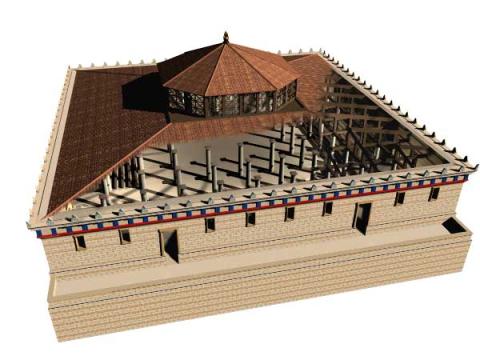
    Ὠιδεῖον: the Odeon, a roofed theater built by Pericles, was near the Theater of Dionysos and used for musical competitions. It also seems to have served as a courthouse.

    ἀποπέμπῃ: supply a subject like τις.

    ἐπ’ ἐννέ(α) ὀβολοῖς: at a (high) rate of 9 obols per mina per month (i.e., 18% interest). 

    εἶναι: with its impersonal sense, “it is possible, permitted” + dat. (in this case, τῷ κυρίῳ). 

    σίτου . . . δικάσασθαι: “to sue for maintenance,” genitive of charge (G. 514). 

    γράφεται . . . γραφήν: Phrastor brings this (more serious) counter-suit as a way of getting Stephanos to drop his charges. It works.

    ὡς αὑτῷ προσήκουσαν “as if she were his own kin” (LSJ προσήκω III.3).

    νόμος: as mentioned above, Kapparis 1999: 198 argues that this and the law in §16 are authentic and are two parts of the same law.

    δήμοσια: the property is to be public in the sense that it is confiscated by the state.

    τοῦ ἑλόντος “(shall belong to) the one who secures his conviction” < αἱρέω (LSJ A.II.4.c). 

    γραφέσθων “let (anyone who wishes) indict (him).”

    καθάπερ: καθά + περ = “just as.”

    τῆς ξενίας: genitive of charge or crime (see §5); the charge in a γραφὴ ξενίας is posing illegally as a citizen.

    53 

    ἐξελεγχθείς: conditional circumstantial participle (S. 2067), “if convicted of” + infin. ἠγγυηκέναι 

    ἠγγυηκέναι καί: the infinitive ἠγγυηκέναι is dependent on ἐξελεγχθείς (“convicted of having betrothed”); Dilts 2009 brackets the καί, following Reiske.

    περιπεσεῖν < περιπίπτω; governed by κινδυνεύσει.

    ἀφίσταται “gives up his claim on” + gen. < ἀφίστημι (LSJ B.1).

    ἀνείλετο < ἀναιρέω (middle) “removed, canceled”; supply this verb again in the next clause.

    51

    κόσμιος [–α] –ον: well-ordered, regular, moderate

    ἀκροάομαι: to hearken to, listen to; to heed, obey

    ἐξαπατάω ἐξαπατήσω ἠξαπάτησα ἠξαπάτηκα ἠξαπάτημαι ἠξαπατήθην: deceive

    ἐγγυάω: to betroth

    ἀστή –ῆς ἡ: fem. of ἀστός

    συνοικέω συνοικήσω συνῴκησα συνῴκηκα συνῴκημαι συνῳκήθην: to dwell together, live together

    ὀργίζω ὀργιῶ ὤργισα ––– ὤργισμαι ὠργίσθην: to make angry, provoke to anger, irritate; (mid.) become angry

    ὑβρίζω ὑβριζιῶ ὕβρισα ὕβρικα ὕβρισμαι ὑβρίσθην: insult, offend, disrespect

    ἐκβάλλω ἐκβαλῶ ἐξέβαλον ἐκβέβληκα ἐκβέβλημαι ἐξεβλήθην: throw, cast out; divorce

    ἐνιαυτός –οῦ ὁ: year

    κυέω κυήσω ἐκύησα κεκύηκα κεκύημαι ἐκυήθην: to bear in the womb, to be pregnant with

    προίξ προικός ἡ: gift; dowry

    52

    λαγχάνω λήξομαι ἔλαχον εἴληχα ––– –––: to obtain by lot; to file suit (absol. and with δίκην)

    σῖτος –ου ὁ: grain; bread

    ᾨδεῖονOdeon, a building built for music, singing exercises, musical shows, poetry competitions, and the like

    ἀποπέμπω ἀποπέμψω ἀπέπεμψα ἀποπέπομφα ἀποπέπεμμαι ἀπεπέμφθην: send away

    ὀβολός –οῦ ὁ: an obol

    τοκοφορέω: to pay interest

    δικάζω δικάσω ἐδίκασα δεδίκακα δεδίκασμαι ἐδικάσθην: to judge, sit in judgment; (mid.) plead a case, go to law; δίκην δικάζεσθαί τινι go to law with someone

    κύριος –ου ὁ: lord, master

    θεσμοθέτης: a lawgiver; at Athens, οἱ θεσμοθέται = the six junior archons

    Ἀθηναῖος –α –ον: Athenian

    ξένη: a female guest, a foreign woman

    ἀναγιγνώσκω ἀναγνώσομαι ἀνέγνων ἀνέγνωκα ἀνέγνωσμαι ἀνεγνώσθην: to read

    ἐκδίδωμι ἐκδώσω ἐξέδωκε ἐκδέδωκα ἐκδέδομαι ἐξεδόθην: to give in marriage

    ἄτιμος –ον: dishonored; deprived of civic rights, disenfranchised

    δημόσιος –α –ον: belonging to the people

    ἔξεστι: it is possible

    καθά: just as

    ξενία –ας ἡ: guest-friendship

    53

    κινδυνεύω κινδυνεύσω ἐκινδύνευσα κεκινδύνευκα κεκινδύνευμαι ἐκινδυνεύθην: to risk

    ἐξελέγχω ἐξελέξω ἐξέλεξα ἐξέλεχα ἐξέλεγμαι ἐξελέχθην: to convict; to verify, to prove

    ἔσχατος –η –ον: extreme, severe

    ζημία –ας ἡ: punishment, penalty

    περιπίπτω περιπεσοῦμαι περέπεσον: to fall into (+ dat.), be caught in

    διαλλάσσω: reconcile one to another, come to a negotiated settlement

    Φράστωρ: Phrastor

    ἀφίστημι ἀποστήσω ἀπέστησα (or ἀπέστην) ἀπέστηκα ἀπέσταμαι ἀπεστάθην: remove; revolt/cause to revolt

    ἀναγκάζω ἀναγκάσω ἠνάγκασα ἠνάγκακα ἠνάγκασμαι ἠναγκάσθην: force, compel, constrain

    μαρτυρέω μαρτυρήσω ἐμαρτύρησα μεμαρτύρηκα μεμαρτύρημαι ἐμαρτυρήθην: witness to

    article nav
    Previous
    Next

    Suggested Citation

    Deborah Kamen, Pseudo-Demosthenes: Against Neaira. Carlisle, Pennsylvania: Dickinson College Commentaries, 2018. ISBN: 978-1-947822-10-8.https://dcc.dickinson.edu/ro/against-neaira/51-53