
Annotations
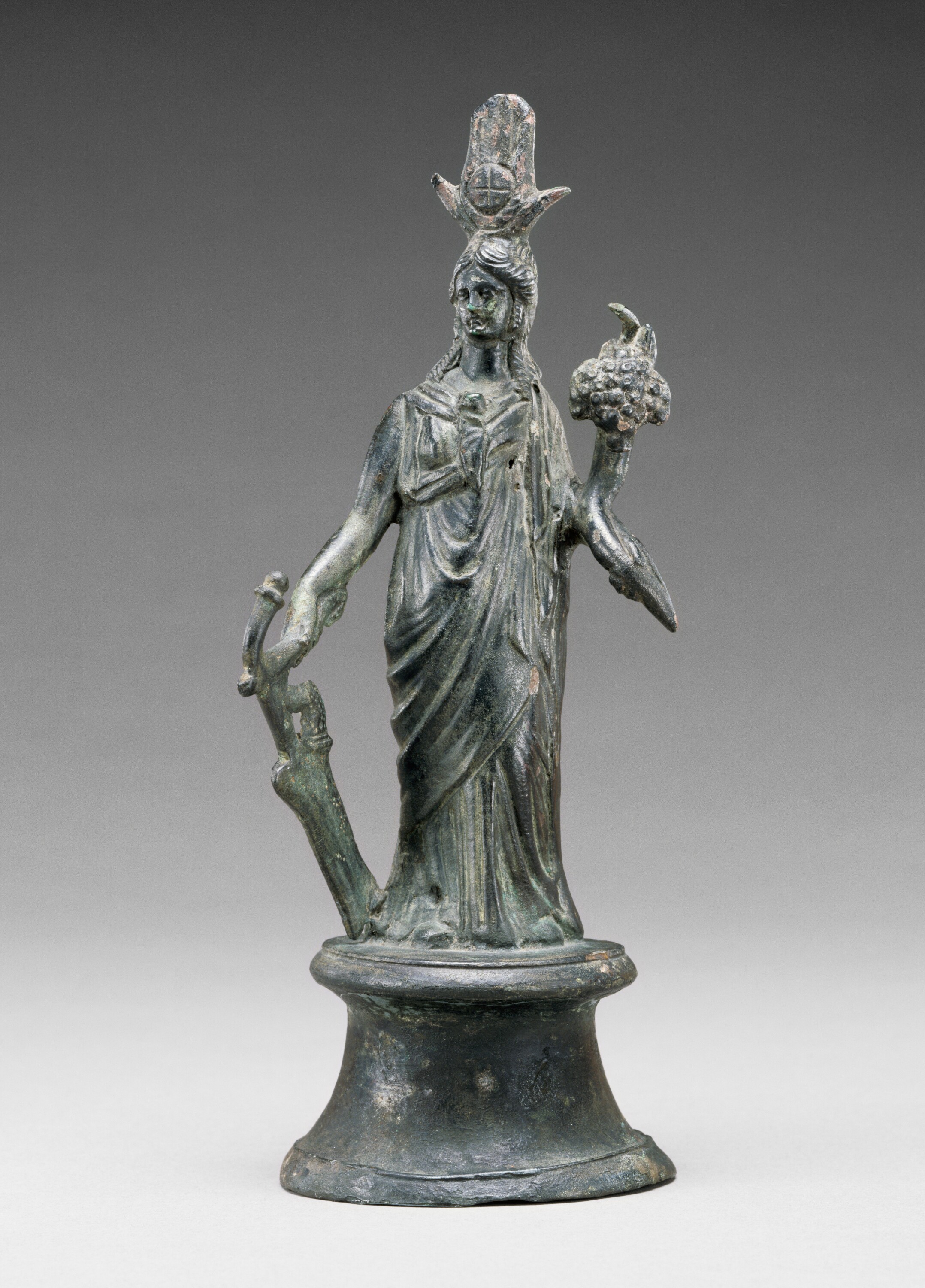
The Egyptian goddess Isis was adopted into Roman religion in the first century B.C. She possessed a wide range of powers, including the ability to offer her followers a better afterlife. In Roman religion, she was often merged with other Roman goddesses, creating new composite deities. This statuette portrays Isis combined with Fortuna, a fertility goddess who controlled the fate of both individuals and cities. This statuette has attributes of both goddesses: she wears the elaborate headdress of Isis, a lunar disk between horns or feathers, and the front of her long dress is tied in a knot on her chest, the so-called Isis knot. She also holds the usual attributes of Fortuna: the rudder in her right hand refers to her control over the course of human lives, and the cornucopia in her left arm is a symbol of abundance and prosperity (Getty Museum).