Home

  • About
  • Home
  • Search
  • Greek Texts
  • Latin Texts
  • Reference Works
  • Core Vocabulary
  • Images
  • Image Sets
  • Video
  • Audio
  • What's New
  • Blog

Latin Core Vocabulary Images
 

created by Dickinson Classics Summer Interns


P–R


  • A–C
  • D–F
  • G–I
  • M–O
  • P–R
  • S–U
  • V–X
  • Credits

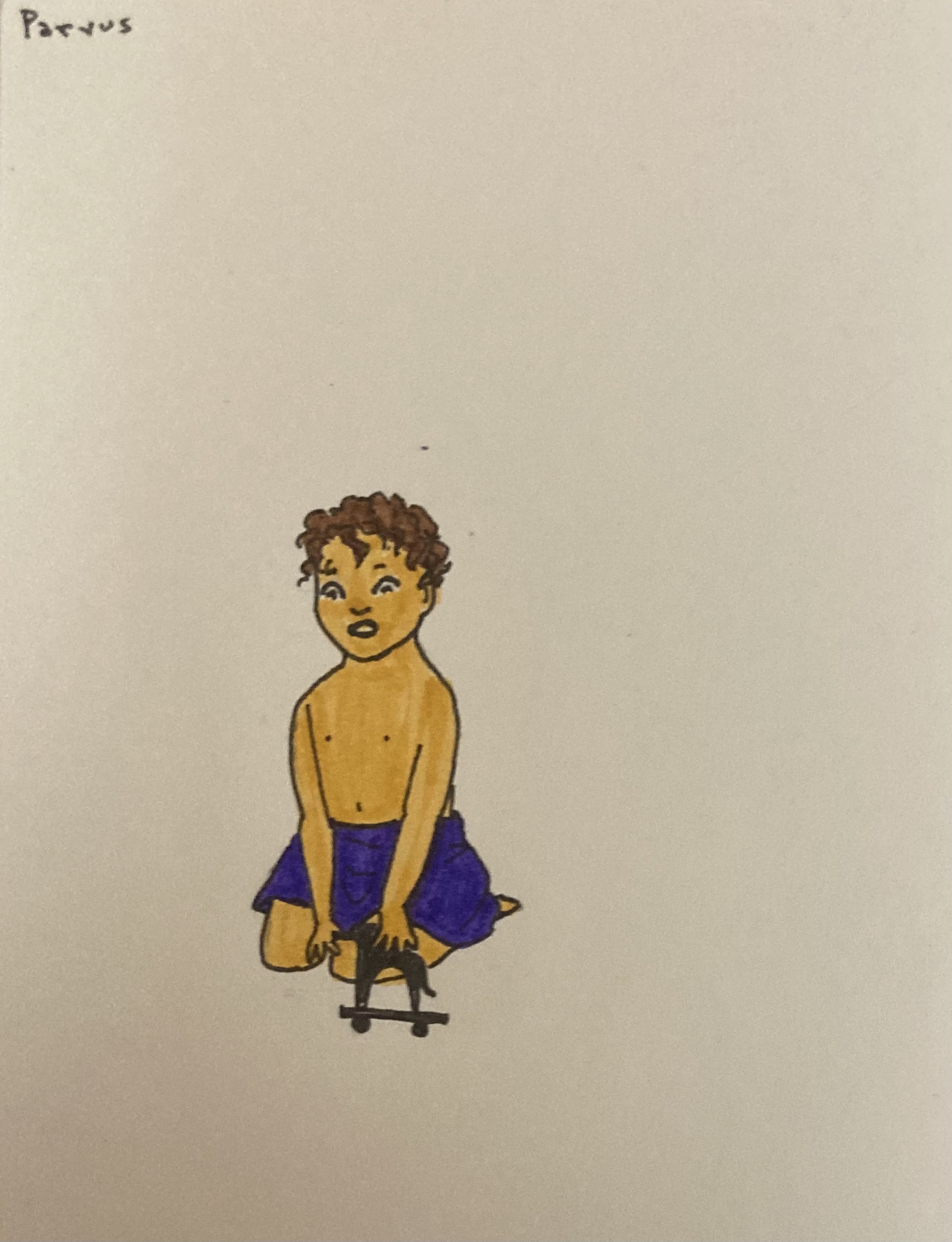
Parvus

Pen and marker drawing of a light-skinned young child with curly brown hair, bare-chested, wearing a purple skirt. They kneel facing forward and play with a small toy horse. The horse is mounted on a small wheeled base. The word parvus is= written in the upper left-hand corner,


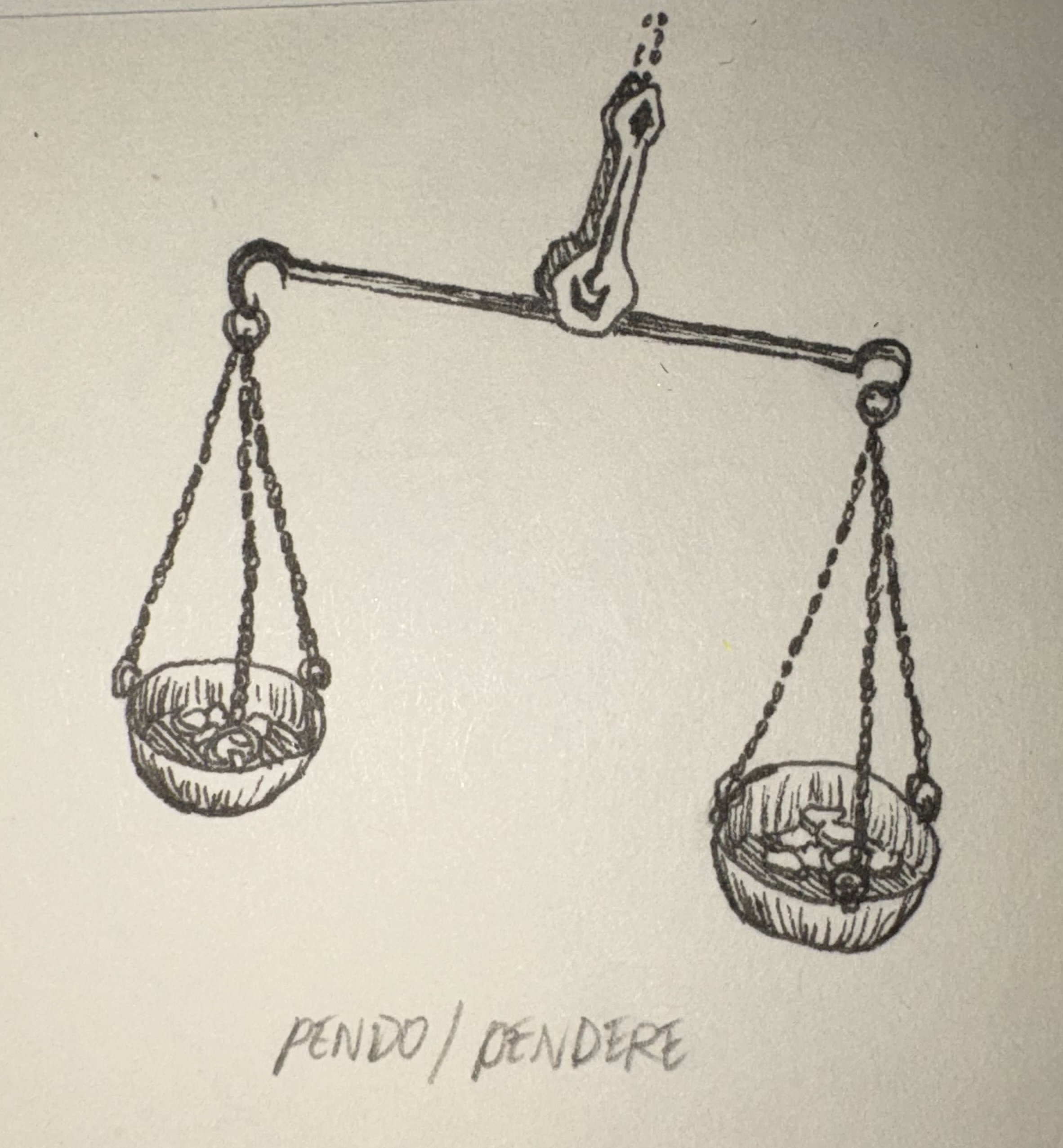
Pendō

A set of balance scales hang in mid-air. Both pans are partially filled, but the right pan is heavier and the scales are tilted to that side. Written below the image is pendo/pendere.


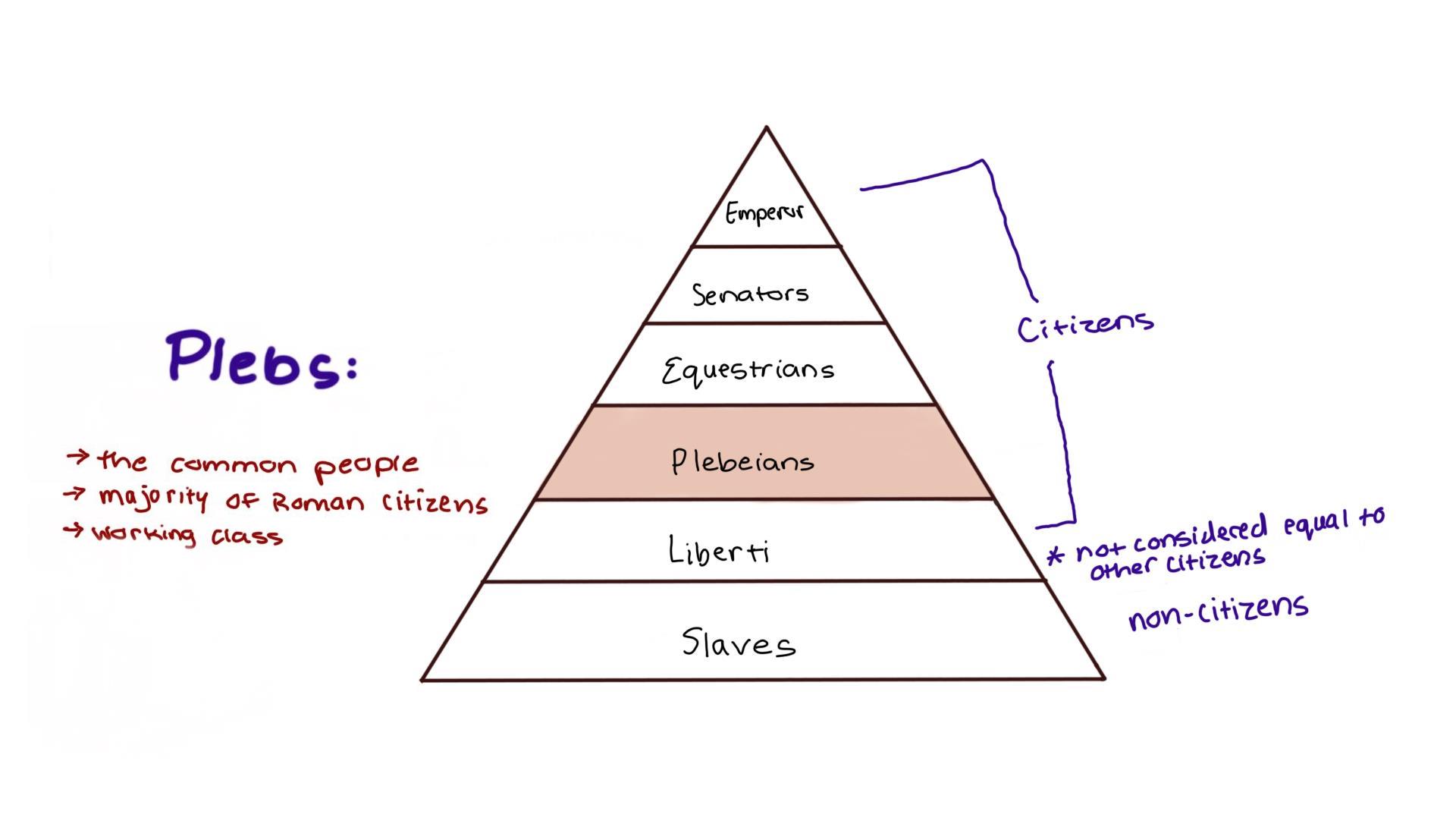
Plēbs

Drawing of the hierarchy of society under the Roman Empire. The base of the pyramid is enslaved people, then liberti, plebeians, equestrians, senators, and the emperor at the top. To the left of the pyramid is the notation, Plebs: the common people, majority of Roman citizens, working class. To the right of the pyramid the levels from emperor through liberti are bracketed with the notation citizens. The liberti are asterisked with the notation, not considered equal to other citizens.


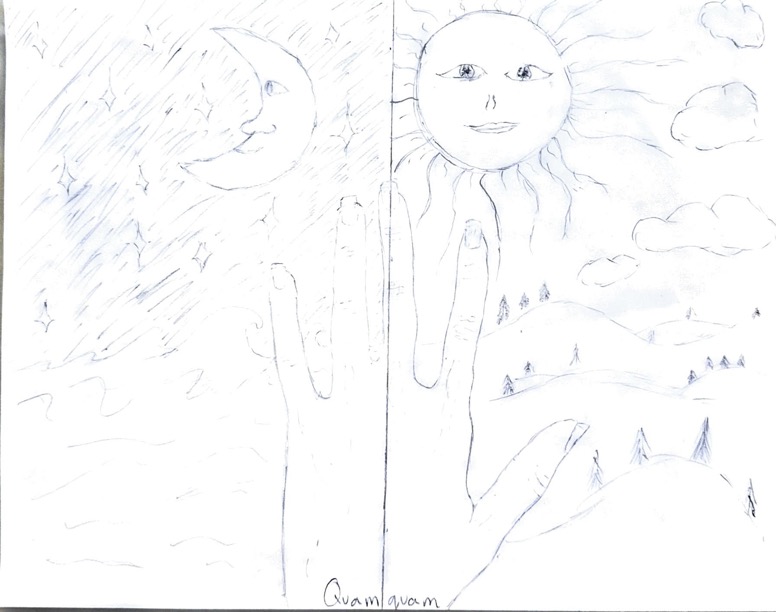
Quamquam

Ink drawing day and night scene. On the right side is a hilly landscape with evergreen-like trees under a partly cloudy sky with a smiling sun. On the left hand side is a night scene of open water. Several stars and a smiling crescent moon. In the foreground, spanning the dividing line between the scenes is a the back of lefthand with manicured fingernails.


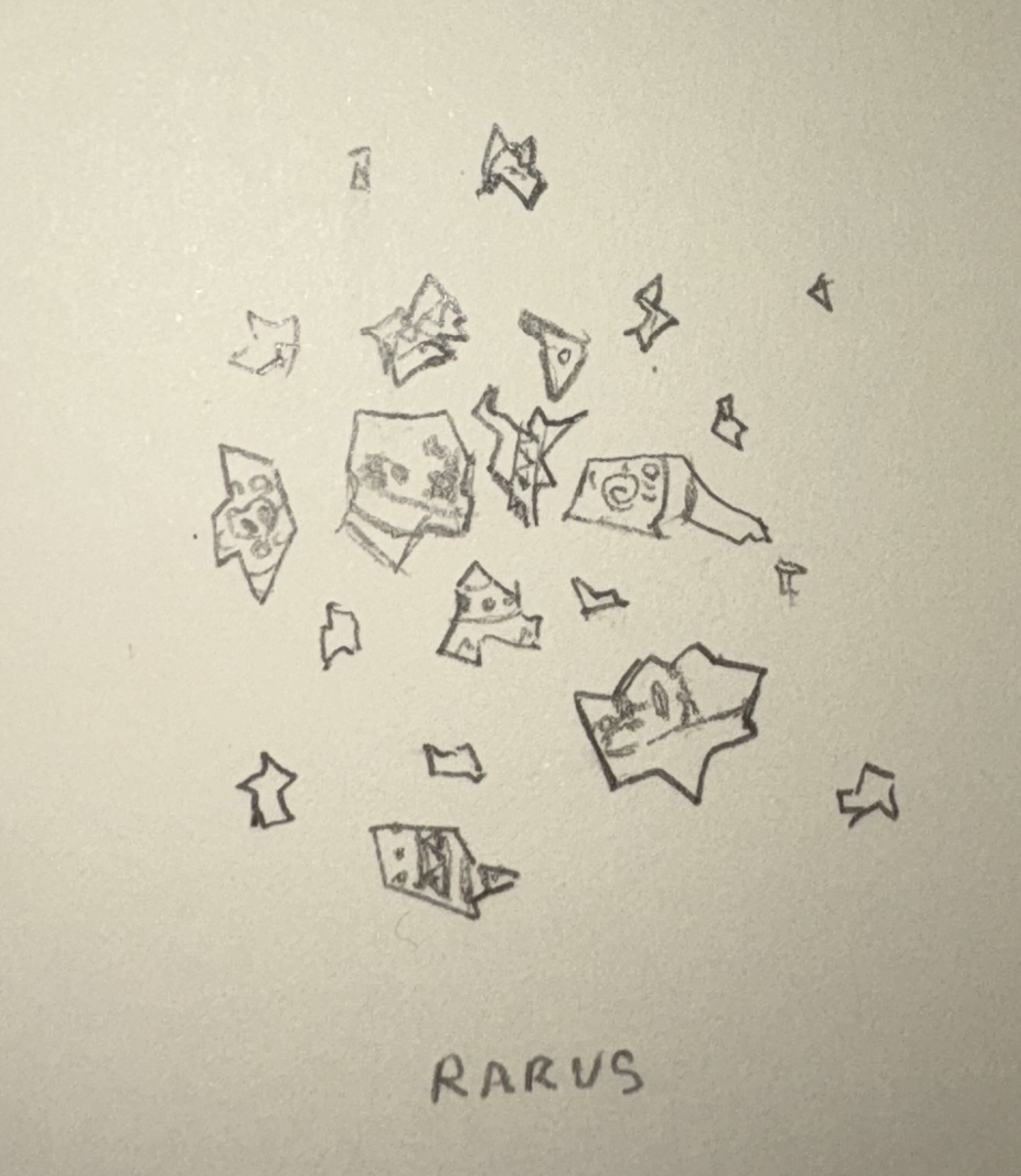
Rarūs

Pencil drawing of a scattering of torn pieces of paper.


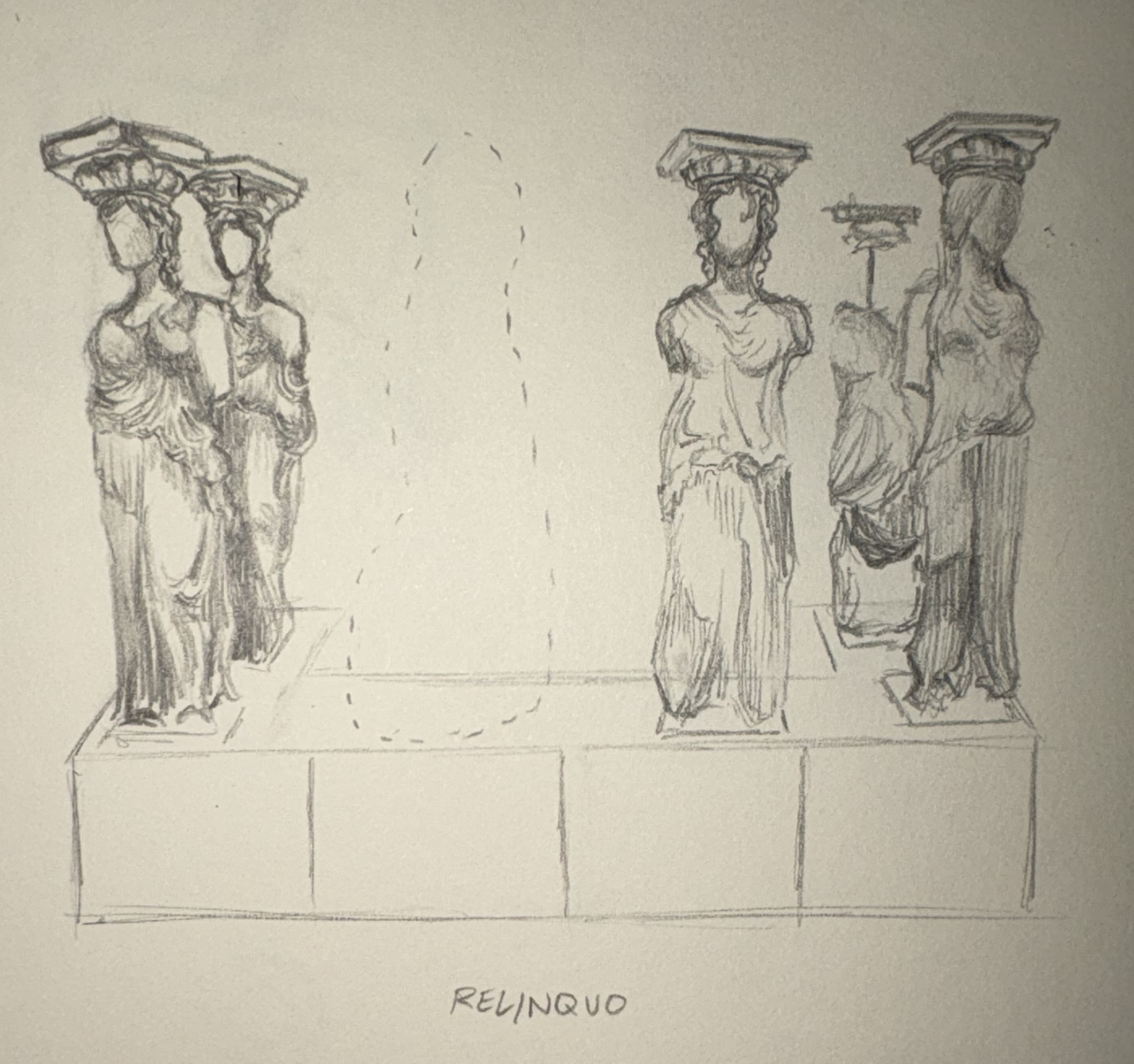
Relinquō

Pencil drawing of several columns in the shape of women dressed in ancient Greek chitons and standing on a plinth. One column is missing, its outline denoted by a dotted line.


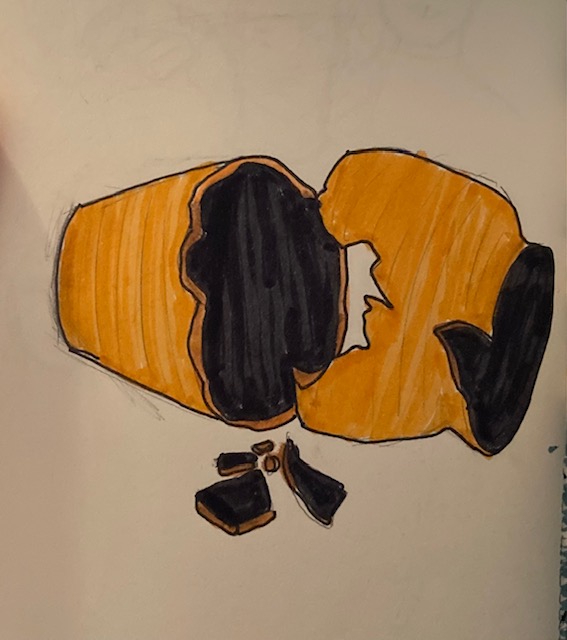
Rumpō

Pen and marker drawing of a terracotta-colored vase lying on its side broken into pieces. Five small pieces of varying sizes from the body of the vase are grouped together in foreground. The base and rim of the vase lay behind them broken into two large pieces.

Previous
M–O
Next
S–U

dcc logo

Dickinson
College
Commentaries

Terms of use
Login

Mission


To provide readers of Greek and Latin with high interest texts equipped with media, vocabulary, and grammatical, historical, and stylistic notes.

Contact Us


Dickinson College Commentaries
Department of Classical Studies
Dickinson College
Carlisle, PA  17013 USA
dickinsoncommentaries@gmail.com
(717) 245-1493 


Dickinson College Seal

sfy39587stp18